Watch it: here.
Caligula, 7
The final chapters of Roldán’s book, which revolve around the assassination of Caligula by patriotic Romans (like the patriots who killed Julius Caesar) are the most intense. The previous chapters, which I won’t quote either, show how the young Gaius became a sort of cruel, unjust and crazy Joffrey Baratheon, the 18th king to rule from the Iron Throne in George R.R. Martin’s fantasy world.
In one of the final pages of Calígula we see that the Roman Senate apparently had a golden opportunity to reinstate the Republic, but according to the author it was already very decadent times and there was no way back for the Empire. Claudius was made the new Emperor.
One of the reasons I don’t like the art of writing is that I can only think in visual terms. As some people know, when I was a kid I wanted to be a film director. If I can’t see the ethnic group to which the Roman Senate belonged from centuries before our era until its abolition in the Christian era, I can’t know what was going on. I need the picture.
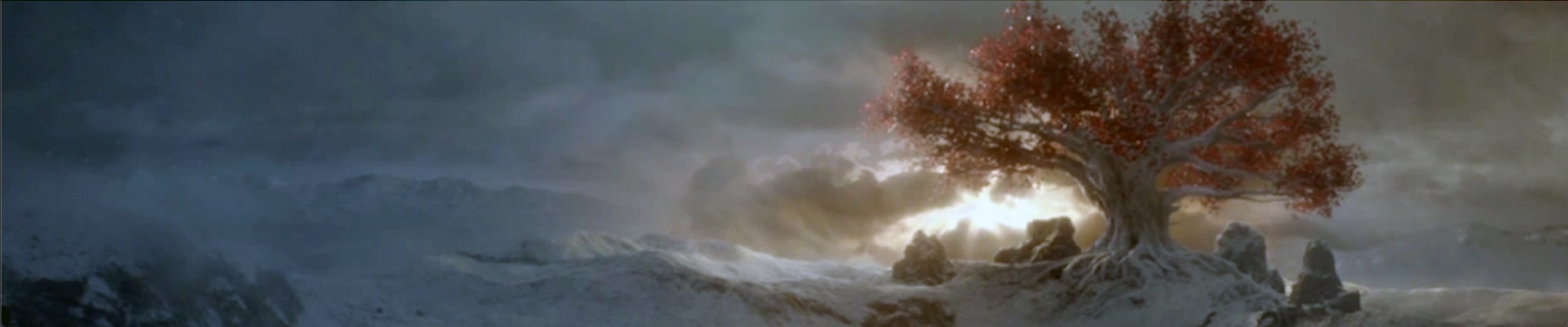
That’s why I got so hooked on Martin’s metaphor of the Weirwood to see the historical past of Westeros. What if, in the real world, I could see how Nordic the early Roman kings, senators and aristocracy of the Republican period were, and finally see, in full colour as Martin’s greenseers could, the skin, eye and hair of later eras? This would mean visiting Rome thirteen or fourteen times, with leaps of one visit per century from the 8th century b.c.e. to the 5th century c.e.
The reason I am not interested in Roldán’s prose or any other conventional historian is that I am tremendously influenced by William Pierce, Eduardo Velasco and Arthur Kemp as far as history is concerned (they all appear in The Fair Race). These authors say that, gradually, the Greeks and Romans interbred with mudbloods losing their Nordic look after a few centuries.
What’s the use of reading dry words from Roldán’s book if I can’t see the senators from the time before the Punic Wars and the senators of Caligula’s time? The loyalty one feels for almost identical people is not the same as with mixed people. Now I am reminded of a 1962 film, Advise & Consent about American Senators, based on a Pulitzer Prize-winning novel of the same title: white male senators. Compare that black-and-white film with today’s senatorial Babel in the same country, where ethnicity matters and dictates the agenda.
I can only think, as I said, in visual terms but normie historians live in a world of abstract ideas insofar as they don’t know that race, and ethnic allegiance of a homogeneous group, matters.
If I had the financial means, my way of doing history would be to try to find the tombs of these ancient Romans, date them with carbon-14 and reconstruct their faces (in much the same way as above we can see the face of Caligula) to see if we can corroborate the thesis of Pierce, Velasco and Kemp.
At the academic level, Martin Nilson (1874-1967), the Swedish scholar of the classical world, went so far as to say that the mixing of blood was the ultimate cause of the decline and fall of Rome. Such research is forbidden today. But only from such a premise, and with the consequent images such as the reconstructed heads of the ancient Romans from their skulls could I, with the technological means we already possess, approach the fantastic idea of seeing the past as it happened.
Pseudo-apostates
The interview between Derek, whom I have already mentioned this month, and biblical scholar Dr Robert Cargill is interesting. In the beginning, Cargill claimed that his life in a fanatically Christian family and town had been idyllic, without any trauma. But after some time, it became clear that Cargill was simply repressing his traumatic past. He told a horrifying anecdote when he was just a child about his endless fears of the doctrine of damnation (I can well understand this as it was exactly what was done to me too as a teen).
Both interviewer and interviewee are people who think they are apostates but who, in reality, are clinical cases of what we have been saying: that the apostasy of Christianity leads to an axiological neo-Christianity. For example, I interrupted the interview after the hour because I was extremely annoyed that Derek, as neo-Christian as Cargill though unbeknownst to him, commented that poor LGBT people commit suicide because of social ostracism. Cargill had said that, although he is one hundred per cent straight, he helped homos overcome their moralistic traumas, and even supported the misnamed gay marriage.
Watching the interview for at least more than the hour I saw gives a sense of how the (pseudo) apostasy from Christianity is transfigured into neo-Christianity.
Caligula, 6
If, as the sticky post implies, the aim of this site (remember: he who controls the past controls the future) is to find the Weirwood to see the past as it happened, we will understand why historical revisionism is vital to save the white race.
In this instalment of the series on Roldán’s book, I would just like to comment on the thought that came to me when I came across the phrase on page 244 of his book: ‘Gauls disguised as Germans, whose hair he [Caligula] dyed blond’ to transport them to Rome.
What Ridley Scott’s blockbuster film Gladiator shows us in its opening scene, epic by the way, was Romans under Marcus Aurelius fighting dark-haired Germans (in that subsequent century of Caligula’s reign the Germans were still blond): an inversion of the facts for propaganda purposes. Typical Hollywood.
Scott is a gentile, but it reminds me of what the Jewish producers of the film Ben-Hur, to which I referred in yesterday’s post, did. This 1959 film, awarded as many Oscars as possible, dared to reverse everything. It cast Judah Ben-Hur, a Jewish prince from Jerusalem, as the handsome, Nordish-looking Charlton Heston, and the Roman Messala (Stephen Boyd) not only with dark hair. In real life, Stephen Boyd had blue eyes.
To film Ben-Hur, the Aryan Boyd was forced to wear dark contact lens so that his eyes would not compete with the light eyes of the Jew interpreted by Heston! This is revealed by the producers themselves on the DVDs that now accompany the film with commentary.
This inversion is typical of the way the story has been told to us, including Aryan depictions of Jesus and his holy family in Christian iconography, especially from the Renaissance onwards. 1st century Palestinian Jews looked like sandniggers: the opposite to Heston. No wonder that, if the collective white unconscious has been programmed in this way, they have taken the New Testament as the founding scripture of their race, when in fact it is a rabbis’ scripture for gentile consumption (again, read our latest PDF). And the 1959 film aggravates the matter by casting the Jews of first-century Palestine as white Europeans, including Jesus’ carefully coiffed straight brown hair that is only seen from behind.
Much of the psychological healing of the Aryan consists precisely in finding the Weirwood to see the real past, not the toxic myth our enemies have been telling us for two millennia.
Returning to Roldán’s phrase, could we imagine an epic scene with blond Germans fighting the Roman mudbloods of a couple of centuries after Caligula’s reign? What effect would a film shot by someone who has already touched the Weirwood have on an audience of white-skinned, blue-eyed, light-haired people?
Taylor
See the recent video of Jared Taylor criticising the sexual psychosis affecting the West. Taylor’s point of view is infinitely more sane than Andrew Doyle’s and Peter Boghossian’s POV mentioned in a previous post today. Unlike those liberals, Taylor calls a spade a spade: homosexualism, in the sense of indulge in homo behaviour all your life, is plain and simple psychopathological.
Sadly, this sort of thing can no longer be said on YouTube, which has been taken over by the radical left. But at least today Taylor’s video can be watched, in addition to Rumble, on BitChute, and Odysee.
Caligula, 5

Ordinary people, moulded by Hollywood, have a lofty idea of the Roman Empire (as a child, for example, I was impressed by the scene in which Ben-Hur arrives in the triumphal chariot with Quintus Arrius, first consul of Rome, before the emperor Tiberius) and no idea of the Roman Republic, betrayed by Caesar, Augustus, Tiberius and Caligula. As we have seen, the subtitle of Roldán’s Calígula is ‘The Immature Autocrat.’ In the chapter ‘The First Crisis’ the author speaks of the tyrannical behaviour of the emperor and how, unlike in the times of the Roman Republic, in imperial times senators had to behave in the most crawling manner on pain of death. On page 222 we read:
A collective such as the senatorial one, torn by envy, jealousy, resentment and ambition, could only react with vileness to the challenge of imperial tyranny. Meeting the next day, now without Gaius [i.e., Caligula who was in his twenties], they found no other way out than to humiliate themselves lowly, pretending to regard him as a sincere and loyal prince, who had condescended to spare their lives and who, for that, deserved thanks expressed in the granting of new honours. Accordingly, they voted to offer annual sacrifices [of animals] in honour of his clementia, on the anniversary of the day on which he had addressed them, and, to celebrate it, a golden image of the emperor was carried in procession from the Palatine to the Capitol, accompanied by a choir of children from the noblest families, who sang commemorative hymns. [my translation]
Since the Principate was a de facto monarchy the senators could not counteract but react with creeping flattery. Then Roldán adds that Augustus and Tiberius had done the same, but with more hypocrisy: not as blatantly as Caligula did. Since Julius Caesar the Senate had been reduced to the role of a mere coryphaeus willing to endure the worst humiliations, although this situation only became obvious with Caligula’s so-called Principate. On page 131 we read:
The condemned, whose names Gaius took care that they should be publicly exposed, ended up either in prison or hurled down the rock of Tarpeia unless they tried to escape public shame by committing suicide. There were no guarantees even for those sent into exile, who could die en route or during the time of exile. Of the few known cases, one senator, Titius Rufus, was prosecuted for denigrating the Senate as an institution by accusing the House of thinking one way and acting another. Such statements were permitted only to the emperor. For the rest of the mortals it meant death, which Titius anticipated by committing suicide. [my translation]
Imperial Rome was a joke. From Julius Caesar onwards there were problems with Jewish empowerment, as William Pierce tells us. If we recall Eduardo Velasco’s masterful essay in The Fair Race on Judea’s surreptitious war against Rome, one Aulus Avilius Flaccus was appointed governor of Roman Egypt from 33 c.e. until the reign of Caligula (Flaccus grew up with the sons of Augustus’ daughters and was a friend of Tiberius). His rule coincided with the riots against the Jewish population of Alexandria and in Velasco’s essay he is portrayed as a hero. Although Caligula undertook anti-Semitic measures because of the tremendous problems caused by the Alexandrian Jewry, he finally consented to the killing of Flaccus. The Jew Philo portrays the execution this way (page 242 of the Roldán’s book):
The officers therefore pursued him without stopping to take breath and arrested him; and then immediately some of them dug a ditch, and the others dragged him on by force in spite of all his resistance and crying out and struggling, by which means his whole body was wounded like that of beasts that are despatched with a number of wounds; for he, turning round them and clinging to his executioners, who were hindered in their aims which they took at him with their swords, and who thus struck him with oblique blows, was the cause of his own sufferings being more severe; for he was in consequence mutilated and cut about the hands, and feet, and head, and breast, and sides, so that he was mangled like a victim, and thus he fell, justice righteously inflicting on his own body wounds equal in number to the murders of the Jews whom he had unlawfully put to death.
And the whole place flowed with blood which was shed from his numerous veins, which were cut in every part of his body, and which poured forth blood as from a fountain. And when the corpse was dragged into the trench which had been dug, the greater part of the limbs separated from the body, the sinews by which the whole of the body is kept together being all cut through.
Can you see why I say that the paradigm is Hitler’s Third Reich and not Rome? It was only until the 20th century that the Aryans became authentically Jew-wise, at least for a brief historical moment.
The homo and the hetero
On the first of this month I commented on an interview that a liberal dude with his hair painted blue did this year with Richard Spencer. Sometimes you need to have the patience to watch such things just to probe what is wrong not only with today’s liberals, but with the racial right. Exactly the same can be said of those who complain about the Woke monster and who, at least for now, YouTube allows them to air their grievances. The best known are people like Ben Shapiro, Jordan Peterson and Matt Walsh for the latter’s documentary What’s a Woman? But other voices are interesting to listen to because all these people don’t realise that they themselves are involved in the genesis of Wokism.
Yesterday I watched a YouTube conversation between a homosexual Englishman, Andrew Doyle, and the American Peter Boghossian.
If we take into account what Tom Holland says in Dominion (for those who don’t want to read the whole book I have highlighted some crucial sentences in bold), which resonates with what Alexis de Tocqueville predicted of the US (that the principle of equality always demands more and more equality), I find it incredible that these people don’t see the elephant in their room.
Doyle for example, who looks like an individual with a higher than average IQ and who has a broad literary and European culture, twice or three times mentioned the Nazis repeating the eternal slogans of our time (and he errs in saying that David Irving is a holocaust denier in his books). While Doyle acknowledged that Woke people don’t understand art and that Greek and Renaissance statuary is superb, he said that our age has moved beyond the way the ancient Greeks treated women (i.e., he tacitly endorsed the feminism of our age). Doyle doesn’t like Huckleberry Finn being taken off library shelves for its racist language, but he believes that today’s West has moved beyond the racial prejudices of the past. I could cite more double-think examples, but the talk between homo and hetero is rife with such things.
But what Peter Boghossian, the straight American, does is a thousand times worse than what the homo said. At the beginning of the conversation I was unaware that Boghossian, a well-known figure in the circle of critics of trans activism, had adopted a Chinese baby. That kind of behaviour is what I have called on this site the sin against the holy spirit of life: an unforgivable sin. (At least the English homo is not causing irreparable damage to the next generation with cuckoldry-like behaviour: raising a child of a foreign race!)
What can be learned from the surreal conversation between the homo and the hetero? While Christian racialists are also scared of the Woke monster, none of them has the slightest insight. To Christian racialists I would remind a passage from gentile David Skrbina quoted in the Neo-Christianity PDF linked above, a few words I highlighted in bold: ‘You Gentile Christians don’t even know what you’re worshipping—which in fact is us [Jews]’. That is: conservatives are afraid of the monster but fail to realise that they fed the monster until it finally grew up. It originated like a mustard seed with Paul’s letters and now the tree is so huge that even birds nest among its branches not because of Jewish subversion, but because whites have given themselves over to evil by believing the Jews who wrote the Bible. Indeed, Holland’s book shows how the seedbed of Christianity grew into the baobab that, following that metaphor from Saint-Exupéry’s book, grew to burst the planet of the little prince.
In the conversation embedded above, the homo and the hetero agree that the Woke tolerate no debate. But do they, the homo and the hetero tolerate it with people to their right, say questioning anti-racism, feminism and the anti-Nazi narrative of the time (e.g., here)? And what about today’s racialists: are they capable of responding to Skrbina or Holland? At least Kevin MacDonald reviewed the former’s book, but the strength of my latest PDF shows how the egalitarian virus of Christianity mutated into the super-egalitarian virus of neo-Christianity (Holland’s book).
When will white nationalists debate these issues?
Caligula, 4

On page 90 of Calígula, José Manuel Roldán speaks of Livia, ‘the richest woman in Rome and also the most influential’. According to the legislation enacted by Augustus, she enjoyed full freedom to administer her property without the need for male guardianship. On the same page the author mentions Alexander Lysimachus, a Jewish potentate, brother of Philo of Alexandria. If we remember that, centuries later, wealthy women and Jews would play a central role in the empowerment of Judeo-Christianity, it is clear that I am repulsed by Imperial Rome insofar as in Republican Rome women had no such power and neither did Jews (see this tough article from the book On Beth’s Cute Tits). Studying the causes of the decline and fall of the Roman Empire sheds light on the Western world today, which reminds me of Hegel’s phrase ‘History only teaches us that man learns nothing from history.’
But we must still try to tell the story as it happened. On a footnote on page 211 Roldán tells us that there is no historical basis for ‘the revolting scene in I, Claudius, the novel by R. Graves—and, subsequently, in the television series based on it—that presents Caligula as the murderer of his sister in a fatal game in which, disguised as Jupiter, he opens Drusilla’s womb to eat the child inside her.’
It is most unfortunate that, in today’s prolefeed for the proles, the Roman era is presented through Hollywood as exclusively that of the Caesars, concealing centuries of Republican Rome. Now we complain about the culture of cancellation, but such a culture was started by Augustus.
On pages 153-154 of Calígula Roldán tells us that from Augustus onwards the burning of books began as a result of new censorship laws, and that this policy of repression was reinforced by Tiberius. Naturally, Roman intellectuals complained. Aulus Cremutius Cordus wrote a History of the Civil Wars of Rome which was burned by senatorial order because it praised Caesar’s assassins, Brutus and Cassius. (Those who have read William Pierce’s Who We Are will guess that those who killed Caesar to defend the Republic were the good guys and Julius Caesar, the perpetrator of a veritable holocaust of nordish Gauls, the bad guy.) A few centuries later, Constantine and subsequent Christian emperors took advantage of the culture of cancellation, initiated by the early Caesars, to burn all criticism of Judeo-Christianity: which is why the triumph of the imperial church was so overwhelming.
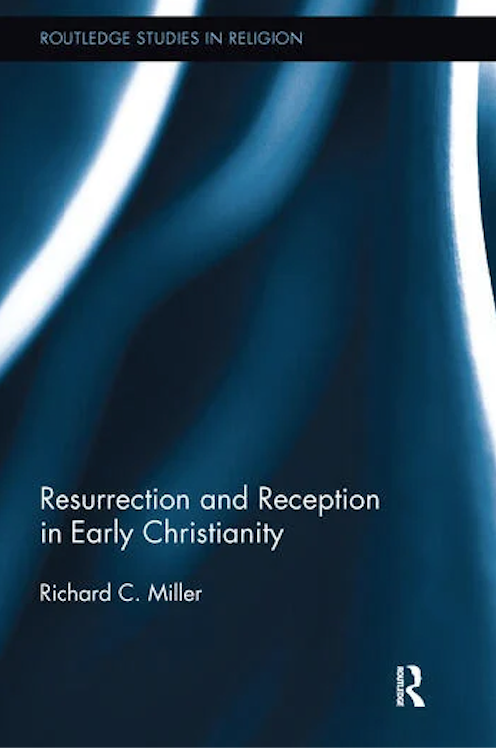
In my posts on Friday last week and Monday this week, I linked to videotaped interviews with Richard Miller, a New Testament scholar. Since in the foreword to Neo-Christianity I mentioned Miller in an important paragraph, I felt compelled to order his super-scholarly book, which I hope to read as soon as it arrives. But even in the linked videos we can see that Miller, along with other NT scholars, has been trying to understand these early Christian writings from the point of view of the 1st century Gentile world (as opposed to the studies of the fundamentalist schools which approach the NT solely from the POV of 1st century Judaism). Miller studied the deifications in the classical world. A passage from Roldán’s book about one of the deifications contextualises the deification that the evangelists would make a few decades later (but this time deifying a Jew).
The inordinate and gratuitous honours that Caligula decreed in memorial of Drusilla not only represented to public opinion—and, especially, to the senatorial order—the devotion bordering on the madness of a bereaved brother. Divinisation, whether it was a matter of innocent comedy or was indeed felt in all its theological dimension, had hitherto been an extraordinarily restrictive honour, only granted to two personages, Caesar and Augustus, whom, moreover, the popular imagination had already endowed with superhuman traits. [my translation]
Let us remember that by this time the Romans were no longer as purely Aryan as they had once been. This imperial devotion to the monarch (monarchy was forbidden in the Roman Republic) would also be suffered by the Russians in later centuries, who, historically, have been able to tolerate tyrants. I find it incredible that, in the beautiful streets of St. Petersburg, small busts with effigies of Lenin and Stalin are still sold to tourists! Like the Romans of imperial times, since the Mongol invasions* Russians haven’t been as genetically pure as they were before the Asian invasions.
________
(*) Bear in mind that Mongol terror ruled Russians for a quarter of a millennium, enough to spoil their Aryan blood due to interbreeding (see The Fair Race, pages 268ff).
everything you know about
World War II is wrong
by Ron Unz
Speaking of the System hiding from us, and often reversing, the most important historical truth, it is worth listening to these articles by Ron Unz (originally published as texts).
Caligula, 3

The West’s Darkest Hour isn’t a news site. But it is still difficult not to say at least a word about what has happened in the last few hours regarding Yevgeny Prigozhin’s mutiny in Russia. Media misinformation is such that it is as difficult to know exactly what is happening this very day as it is to make a reliable biography of Caligula: both sources, some from the 1st century and some from the 21st century, are compromised by propaganda.
But back to our topic these days. José Manuel Roldán received his doctorate in 1968 and a few years later obtained the Chair of Ancient History at the University of Granada, and later that of Salamanca. His work has focused on the history of Rome. Despite his credentials, the Spanish historian is a normie. Unlike what William Pierce wrote in Who We Are, much of what we read in Calígula isn’t useful to us. Nevertheless, the book allows me to explain some very important issues.
If the conquest of Germania up to the Elbe was regarded by Caligula as an un-renounceable family legacy (his father wanted to avenge Rome for the defeat of Hermann), the positive image I had of him, after reading that sentence by Eduardo Velasco quoted in the first instalment of this series, immediately collapses. I confess that on this site I stopped quoting Gore Vidal’s novel Julian when I came across the pages in which Julian the Apostate fought against the Germans. (If we recall Who We Are, as quoted in The Fair Race, the pure Aryans were the Germans, not the 4th-century Romans.)
Calígula is reminding me of what Tom Holland said in Dominion: that, although he was an absolute fan of the Greco-Roman world, when he began to study it he noticed some barbaric customs. Pages 40-41 of Calígula for example describe the essential triumphal ceremony in Rome, where white bulls whose horns were gilded and entwined with garlands were then immolated. Caligula himself, at the age of five, went to one of these ceremonies in the triumphal chariot when his father Germanicus was honoured in Rome. But even as emperor the number of animal victims sacrificed during the first three months of his reign has been calculated at one hundred and sixty thousand (page 139 of Calígula).
Regarding humans, an anecdote collected by Tacitus alarmed me. When Tiberius punished the remaining sons of the traitor Sejanus, an innocent daughter of Sejanus repeatedly asked for what crime she was being dragged off for. Historians of the time say that being a virgin she couldn’t suffer capital punishment, so the executioner raped her and then he could legally strangle her! Furthermore, influenced by the histories of William Pierce and Arthur Kemp, I have always sided with Republican Rome and against Imperial Rome. But on pages 178-179 of Calígula we are informed that gladiatorial combats, of Etruscan origin, had been introduced in the middle of the 3rd century b.c.e. And by the end of the 2nd century b.c.e. they had become so popular that the Senate found it necessary to admit them among the public spectacles!
This is not to say that I am, like Holland, making concessions to Christian morality insofar as what we, in Day of Wrath, have called psychogenic emergence is a development of empathy that evolved without the need for Semitic religions. But it’s clear that both Eduardo Velasco, who blogged in his webzine Evropa Soberana, and William Pierce, were wrong to believe that Sparta was the model for the Aryan man when the obvious choice was none other than Hitler’s Third Reich. See what I wrote on pages 481-482 of The Fair Race about the Vikings and the extreme Yang exemplified in Sparta (exactly the same could be said about the ancient Romans).
This prompted me this day to publish a new page, ‘The Sacred Words’ which can be read in red letters at the very top of this site, as well as changing the subtitle once again to The West’s Darkest Hour (the site of the priest of the sacred words).
Precisely because I am a priest of those words, Roldán’s Calígula is having a very different impact on me than I imagined when I bought it (funnily enough, it was the last copy they had at Amazon Books, so I had no choice but to buy it). If anyone has already assimilated my version of Psychohistory in Day of Wrath, he will understand my repudiation of much of classical culture in favour of Hitler’s Third Reich. It is obvious that recent advances in psychogenesis have determined me, and this reminds me of the seminal essay ‘The Red Giant’ (collected in my anthology On Exterminationism), in which a Swede said that some values had to be transvalued to Greco-Roman values and other values to more recent times (say, to Jane Austen’s world).
Like Tom Holland, familiarity with the dark side of the classical world makes me see things about it that I find disturbing and unacceptable. But unlike Holland, I reiterate, I do so not because of Christian morality but because of what we in Day of Wrath call psychogenesis.