web analytics
Categories
Antiochus IV Epiphanes Catholic Church Christendom Individualism Inquisition Jerusalem Kevin MacDonald Philosophy of history Racial studies Universalism

Kevin MacDonald’s trilogy

The second book of Kevin MacDonald’s study on Jewry, Separation and its Discontents: Toward an Evolutionary Theory of Anti-Semitism (1994/2002), the first of his trilogy to be translated to German, is my favorite of MacDonald’s three academic works that I read in more than two years. Professor MacDonald is the foremost scholar on the Jewish question. In Separation and its Discontents (hereafter SAID) he wrote:

Western societies, unlike prototypical Jewish cultures, do not have a primitive concern with racial purity. Rather, concern about racial purity emerges only in the late stages of Jewish-gentile group conflict…

Despite a great deal of commonality among Western anti-Semitic movements, there was a great difference between the universalistic, assimilatory tendencies of traditional Western Christianity and the exclusivistic, racialist program of National Socialism. Indeed, we have seen that beginning in the 19th century an important aspect of German anti-Semitic ideology was a criticism of Western universalism and the development of peculiarly German conceptions of Christianity. A critical component of official National Socialist ideology, as represented in the thought of Alfred Rosenberg, was the idea that “the twin forces of disintegration, namely universalism and individualism, act in perpetual conflict with the Germanic concept of race.” In this regard, National Socialism was indeed profoundly anti-Western. In rejecting both universalism and individualism, National Socialism resembled, much more closely than did medieval Western collectivist Christianity, its mirror image rival, Judaism. [page 196]

In a previous chapter MacDonald had written:

We shall see that with the rise of the National Socialist movement in Germany, the universalist themes of Western Christianity were completely overthrown in favor of a full-blown racialist ideology of the ingroup. In Chapter Five I will argue that National Socialism is a true mirror-image of Judaism. Not surprisingly, it was also the most dangerous enemy that Judaism has confronted in its entire existence. [page 133]

One of the hypothesis advanced in SAID provides food for thought. MacDonald wrote, “I propose that the Christian church in late antiquity was in its very essence the embodiment of a powerful anti-Semitic movement…” (page 112). This is something I had never heard of, and reminds me my first readings of psychohistory and Lloyd deMause’s insights on why the Christ archetype galvanized the population of the ancient world, although MacDonald’s hypothesis is totally distinct and is presented from an altogether distant point of view. But after digesting what both deMause and MacDonald say, for the first time I feel I am starting to comprehend facets of Christianity that would have never occurred to me from a conventional reading to history. If MacDonald is right, the Roman Catholic Church was the earliest attempt toward a type of society that we may call collectivism for European-derived peoples.

Although Christianity always held universalist ideals at its core, it nonetheless fulfilled its role of impeding, as did the Muslim nations, that Judaism became a destructive force for the indigenous culture of the Late Roman Empire and the Early Middle Ages. One of the facts that I learnt in SAID is that most restrictions enacted against Jewry, initiated in the period from Eusebius to Justinian, were still active throughout Christendom until the French Revolution hit the continent with its egalitarian fury. It was precisely the so-called Enlightenment (that presently some Western dissidents are starting to call “the Dark Enlightenment”) what inspired the founding fathers of the United States of America. And contrary to those white nationalists who still insult the memory of Adolf Hitler and the movement he created, I would claim that the mortal sin of the French Revolution, the emancipation of Jewry, was not properly atoned in Europe until the arrival of a specifically racial ideology: National Socialism.

But not only Nazi Germany has been demonized in the public mind. The Inquisition is widely regarded as a black page in the history of the Church even by the most Catholic individuals that I know. In contrast to such view MacDonald presents us with a radical reevaluation of what was precisely the role of the Inquisition. On page 147 he states: “I here develop the view that the Spanish Inquisition was fundamentally an authoritarian, collectivist, and exclusionary movement that resulted from resource and reproductive competition with Jews, and particularly crypto-Jews posing as Christians.” One could even argue that, thanks to the Inquisition, for three-hundred years before the movement of independence that gave birth to Mexico, New Spain (1521-1821) was Judenfrei.

While reading SAID I could not escape the thought that whites are un-insightful because, unlike the Jews and with the exception of William Pierce and Arthur Kemp (see the long chapters in this book quoting them), very few have knowledge of the history of their race. If we take into account that, in one of their holydays, New York Hassidic Jews celebrate their victory over the ancient Greeks who tried to assimilate them millennia ago, a basic question comes to mind: Why don’t we celebrate the victory of Antiochus IV over the Jews, or Titus’ conquest of Jerusalem?

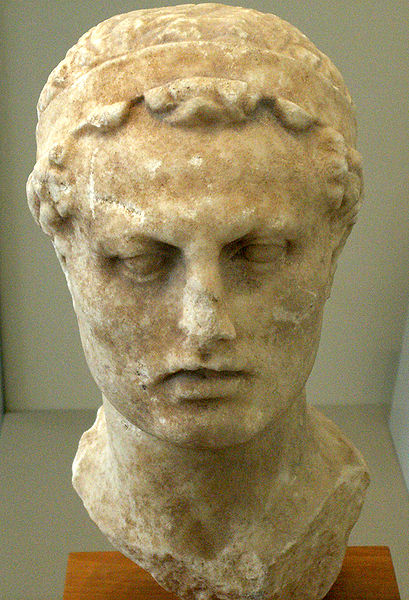
Bust of Antiochus IV

We do not celebrate these victories precisely for the reason that both Kemp and Pierce explain so well: neither the Greeks nor the Romans exist today. What we call contemporary Greeks or Romans are the product of centuries of blood mixing that devalued not only the genotype of the original Indo-European population, but their extended phenotype as well: the Greco-Roman hard ethos and their galvanizing mythos mostly reflected in the Homeric tales. The Greeks and Romans who embraced Christianity were a totally different breed of the pure Aryans of Sparta or the austere Latins of the Roman Republic (see e.g., the essays that I translated from Evropa Soberana in later chapters of this book).

MacDonald himself acknowledges on page 190 that “the Jews have continued as a creative race into the present, while the Greeks gradually merged with the barbarians and lost their distinctiveness—a point remarkably similar to Chamberlain’s ‘chaos of peoples’ in which the decline of the ancient world is attributed to loss of racial purity.” Conversely, I would say that since the Jews have conserved their genotype almost intact throughout the millennia they are able to celebrate their Maccabean revolt as if it was yesterday. In other words, had whites preserved their genes intact, some of us might still be celebrating Antiochus’ victories over the subversive tribe; or, if we knew our history with the same passion that Jews know theirs, we might still be celebrating the fall of the Temple of Jerusalem in 70 AD, or the more recent expulsion of the tribe from the Iberian peninsula.

What conventional historians ignore is that, once the Church lost its power to sell a worldview after the late 18th and early 19th centuries, our genetic individualism placed us at the mercy of a collectivist tribe.

Fortunately, the ethno-traitorous West has committed financial blunders in the 20th and 21st centuries. The dollar and all fiat currencies of the West will crash probably in this decade (I am reviewing this essay in 2014), which means that there is hope that some of us will start to understand the Jewish problem in a post-crashed world. On page 10 of SAID MacDonald says that “in congruence with the results of social identity research, anti-Semitism is expected to be most prominent among those most in competition with the Jews and during times of economic crisis.”

Although most readers of MacDonald treasure The Culture of Critique, the third and last of his trilogy on Jewry as their favorite book of this collection, I believe that MacDonald’s work should be read from the beginning. A People that Shall Dwell Alone, Separation and its Discontents and The Culture of Critique can help us, using William Pierce’s metaphor, to “see the forest” with crystal-clear vision.

Remember Pierce’s words? If we don’t try to understand the Jews we can never really understand what is happening to our race and our civilization. Professor MacDonald’s voluminous texts have done the hard work for us—both the trilogy and his webzine The Occidental Observer—in a scholarly and yet entertaining way.

Categories
Literature

Chechar’s ten must-reads


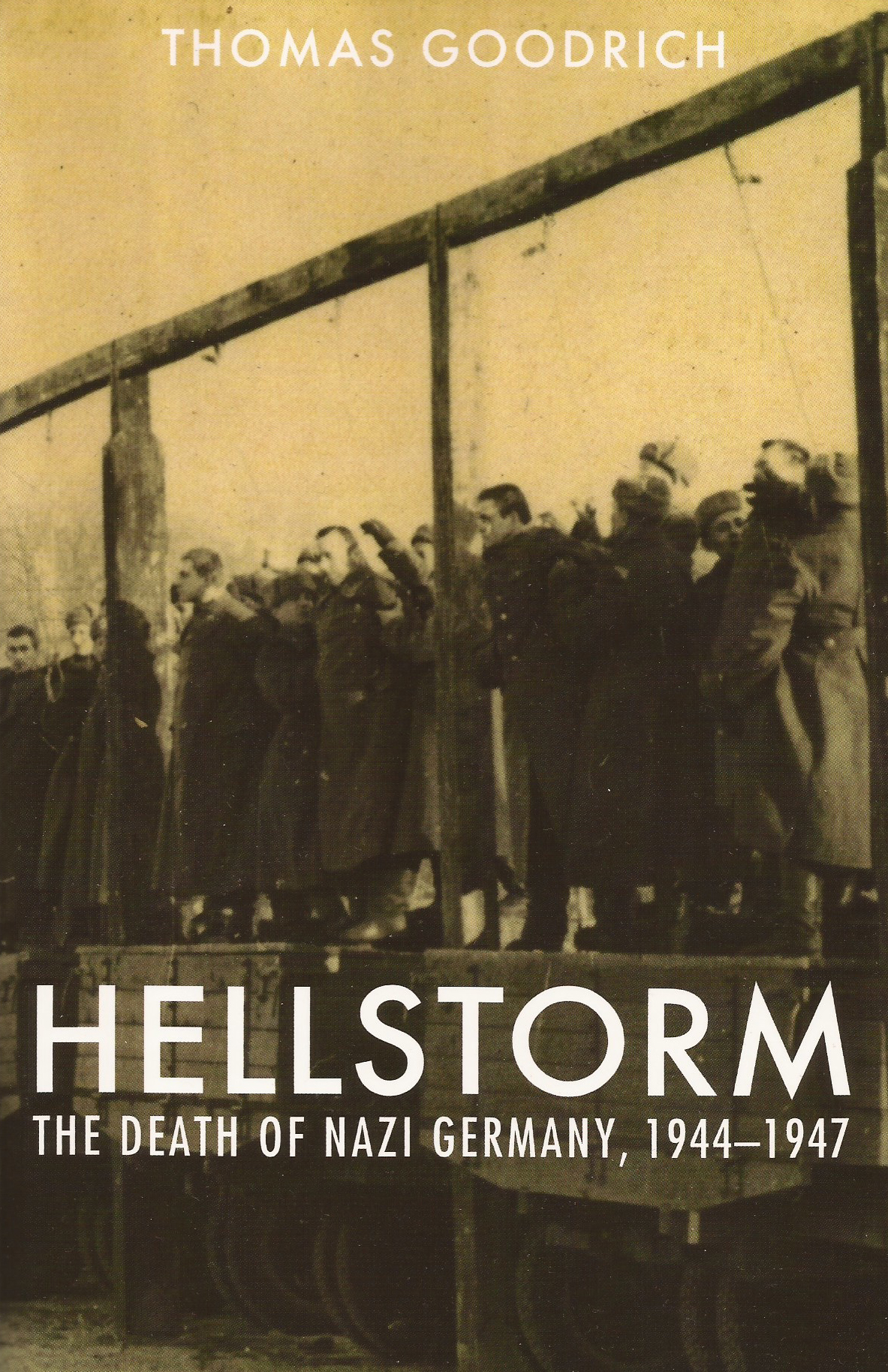
1. Hellstorm (excerpts here)

Hellstorm is the first book in my list for the reasons explained below this post. Whites will not regain a proper self-esteem unless and until the big lies of omission about the Second World War are exposed with all our heart and being. If the Allied crime is not understood, assimilated and atoned for, my prediction is that the white people will perish.

2. Who We Are (excerpts here)

3. March of the Titans (excerpts here)

It is not enough to know the real history of the century when we were born, as well as the astronomic lies of omission of the academia and the media about the wars. The fact is that, unlike the other races—brown, black and yellow—in the last millennia whites have managed to find themselves as an endangered species more than once, and this has paramount importance to understand our times. I find it incredible that only a few white nationalists have been interested in the history of their race; proof of it is that these two splendid books by Arthur Kemp and William Pierce are not the main bestsellers in the community. (Unlike Kemp’s 2011 edition of March of the Titans, Pierce’s Who We Are is not available in book form—he died before sending the manuscript to the printers.)


4. A People that Shall Dwell Alone

5. Separation and its Discontents

6. The Culture of Critique

The Jewish problem is one of the greatest problems in the western world, and, pace counter-jihadists and other naïve conservatives, no man can be considered mature until he has striven to face it. Therefore, besides readable and very entertaining histories of the white race, a specific study on the Jewish question is fundamental. The above books comprise Kevin MacDonald’s magnum opus on Jewry.

MacDonald’s preface to The Culture of Critique (see link above), which he wrote four years after finishing the trilogy, can be read as a didactic introduction to the whole trilogy.

Presently I am reading the sections of the second book on how otherwise individualist whites elaborated collectivist group strategies in the form of the Early Medieval Church and, more recently, the (aborted) National Socialist movement in Germany. These are mirror images of Judaism as a reaction to a perceived group conflict, precisely what the blogger Svigor has been calling “towards white Zionism.” Although MacDonald’s study is academic, what I am reading now in Separation and its Discontents is pretty captivating. It seems to me that a future movement of white collectivism inspired in these precedents is the only way to racial preservation.


7. The Turner Diaries

8. The Brigade

Objective scholarship is not enough to get the picture of what white nationalism is. We also need a thoroughgoing subjective vision, what I call soul-building. We need novels depicting future reactions or group conflicts against the tribe, other non-white invaders and the white traitors. William Pierce’s Turner Diaries inaugurated a literary genre that fills the gap. For those who have no stomach for Pierce’s extermination fantasies I would recommend the best novel of Harold Covington’s quintet, The Brigade, an absolute treat.


9. Toward the White Republic (excerpts here)

This collection of essays authored by Michael O’Meara is the best pamphlet to date on white nationalism. Like the Hellstorm book, we can even send gifts of this slim book to our friends and acquaintances. Unlike most white nationalists, O’Meara is a genuine revolutionary, not a mere reactionary. It is a shame that after being fired by the academia for political incorrectness, as far as I know Professor O’Meara has not found a sponsor within the white movement.


10. Collected essays by F.R. Devlin (example here)

The last “book” of my list has not been published all together, not even online. It’s an imaginary book in my mind containing the best essays of F. Roger Devlin on how feminism has been destroying our morals, our white genotype, phenotype and even our extended phenotype in the latest decades. (Yes: I am old enough to remember the times when the institution of marriage was rock-solid among my relatives.) Those editors in the white movement who are promoting homosexuality ought to mend their ways and, instead of publishing books claiming that “homophobia” is part of the Jewish culture of critique, they should be collecting Devlin’s essays under a single cover. (I confess that hetero-sexual family values are exactly the conscious and unconscious force that drives my mind into the white movement.)

I wish that Devlin’s Collected essays as well as Pierce’s Who We Are be published in hardcovers before the currency crash (coming under Obama’s second term) makes unaffordable any gathering of the best pro-white literature in the market.

Enjoy the reading! After the dollar crashes and the internet is censored you will regret not having a home library!

Categories
Holocaust Holodomor Thomas Goodrich

The Death of Nazi Germany

Excerpts of the book can be read here.


Categories
Thomas Goodrich

Hellstorm • chapter 10

In almost any war one side can be dishonestly demonized even by a truthful enumeration of its crimes, if the crimes of its adversaries are suppressed. —Irmin Vinson


Excerpted from Thomas Goodrich’s 2010 book

Hellstorm:
The Death of Nazi Germany
(1944-1947)


The Halls of Hell

Because their knowledge of the language and culture was superb, many of the intelligence officers accompanying US and British forces into the Reich were Jewish refugees who had fled Nazi persecution in the late 1930s.

In theory, “de-Nazification” was a simple transplanting of Nazi officials with those of democratic, socialist or communist underpinnings. In practice, the purge became little more than a cloak for an orgy of rape, torture and death.

One man opposed to the vengeance-minded program was George Patton. “Evidently the virus started by Morgenthau and Bernard Baruch of a Semitic revenge against all Germans is still working,” wrote the general in private. “I am frankly opposed to this war-criminal stuff. It is not cricket and it is Semitic… I can’t see how Americans can sink so low.”

Horrific as de-Nazification was in the British, French and, especially, the American zones, it was nothing compared to what took place in Poland, behind the Soviet lines. In hundreds of concentration camps sponsored by an apparatus called the “Office of State Security,” thousands of Germans—male and female, old and young, high and low, Nazi and anti-Nazi, SS, Wehrmacht, Volkssturm, Hitler Youth, all—were rounded up and imprisoned. Staffed and run by Jews, with help from Poles, Czechs, Russians, and other concentration camp survivors, the prisons were little better than torture chambers where dying was a thing to be prolonged, not hastened. While those with blond hair, blue eyes and handsome features were first to go, anyone who spoke German would do.

After barely surviving his “interrogation,” one fourteen-year-old was taken to the camp infirmary. “My body was green, but my legs were fire red,” the boy said. “My wounds were bound with toilet paper, and I had to change the toilet paper every day. I was in the perfect place to watch what went on… All the patients were beaten people, and they died everywhere: at their beds, in the washroom, on the toilet. At night, I had to step over the dead as if that were normal to do.”

At the larger prison camps, Germans died by the hundreds daily.

“You pigs!” the commandant then cried, and he beat the Germans with their stools, often killing them. At dawn many days, a Jewish guard cried, “Eins! Zwei! Drei! Vier!”

The guard then cried, “Get undressed” and, when the Germans were naked, he beat them, poured liquid manure on them, or, catching a toad, shoved the fat thing down a German’s throat, the German soon dying.

Some Germans were forced to crawl on all fours and eat their own excrement as well as that of others. Many were drowned in open latrines. Hundreds were herded into buildings and burned to death or sealed in caskets and buried alive.

When a smattering of accounts began to leak from Poland of the unspeakable crimes being committed, many in the West were stunned. “One would expect that after the horrors in Nazi concentration camps, nothing like that could ever happen again,” muttered one US senator, who then reported on beatings, torture and “brains splashed on the ceiling.” Wrote author Freda Utley, who learned of the horror after speaking with American jurist Edward van Roden:

Van Roden said: “All but two of the Germans in the 139 cases we investigated had been kicked in the testicles beyond repair. This was standard operating procedure with our American investigators.”

When criticism such as Utley’s and van Roden’s surfaced, and even as victims were being hung by the hundreds, those responsible defended their methods. “We couldn’t have made those birds talk otherwise,” explained Colonel A.H. Rosenfed. “It was a trick, and it worked like a charm.”

Certainly no anti-Semite herself, as fervently anti-Nazi as she was anti-communist, journalist Freda Utley gave substance to the growing mood in her book, The High Cost of Vengeance: “It is the American Jews (often of Polish or Russian origin) and the returned exiles who seem determined to avenge the agony of the Jewish people in Hitler’s Reich by punishing the whole German people.”

One year after war’s end, the former Reich was still a land of “troglodytes” with urban-dwellers clinging precariously to their caves and cracks. After viewing for himself conditions in Hamburg, Victor Gollancz was horrified. Penned the Jewish publisher to his wife in England:

She [a German survivor] looked fifty but I suspected she was about twenty-five. This was an extraordinary creature, with a huge nose, a bony, emaciated face, and several front teeth missing. She also appeared to be pretty crippled, and her hand was shaking terribly, I suppose of hunger.

On their own, orphans aged fast, and little girls aged fastest of all. Like their older sisters, the children soon discovered that selling themselves could stave off starvation.

In his Christmas Eve 1945 message, Pope Pius XII appealed to the world to end the “ill-conceived cruelty” that was secretly destroying the German people. As powerful as the Pope’s plea undoubtedly was, a report later filed by Herbert Hoover was perhaps more shocking and had greater implications. After visiting Germany, the former US president told of homeless children freezing to death by the hundreds.

Also sifting to the surface were horrific tales of Allied torture chambers. “AMERICANS TORTURE GERMANS TO EXTORT CONFESSIONS,” ran British headlines. “An ugly story of barbarous tortures inflicted in the name of allied justice… strong men were reduced to broken wrecks ready to mumble any admission demanded by their prosecutors.”

Embarrassed and aghast, many Americans were horror-stuck. Viewing Allied atrocities against Germany as a whole, it was, said Henrick Shipstead on the floor of the US Senate, “America’s eternal monument of shame, the Morgenthau Plan for the destruction of the German-speaking people.” Although Henry Morgenthau was gone—ousted by President Truman—and although some of the more savage aspects of the plan had been shelved, the agreement signed by the victorious Allies at Potsdam was in many aspects even more draconian than the original.

Even as the chorus of critics over the sadistic treatment of Germany grew, a nightmare of almost unbelievable proportions was developed behind the Iron Curtain.


____________________________

Educate yourself about the Holocaust perpetrated on the German people by the Allied forces that the mainstream media has covered up for nearly seventy years.

Hellstorm is still available from the publisher.

Categories
Otto von Bismarck Real men

The Führer’s

way is the only way

Or:

Niflson responds to Linder

Last month during the second hour of Carolyn Yeager’s radio show, Severus Niflson convincingly rebutted Alex Linder’s libertarian stance against fascism and, although Niflson didn’t mention it, I believe his critique also applies to Greg Johnson’s “New Right” philosophy.

I cannot write shorthand, so forgive me the errors in the following transcriptions of the interview. Specifically addressing what Linder wrote, Niflson said that he, Niflson, is a militarist; and that we cannot have a State without centralization “because it won’t function.”

After a peroration on political sciences, Niflson rephrased Max Weber’s definition of the State: “The State is simply a territory with the monopoly of power,” that is to say, the monopoly of the use of force. Yes, the government runs the State but is not the State.

After Niflson mentioned Bakunin’s critique of Marx he responded to Yeager’s question about clarifying his previous statement:

herrmann_die_fahne“I believe in the esthetics, and I believe in the morality, and I believe in the functionality of military power and of a militarized State. And of course: our ancestors did it historically. Even the modest tribes had basically a war chief, the monopoly of force. The culture of the tribe would be militarized [emphasis in Niflson’s voice]. Everything was focused on making spears, making knives, making swords.”

Using the words “structure” and “hierarchy,” he added that “a glorious thing to do is a militarized society,” and that every State worth of something was militarized; even Bismarck who was not a military guy dressed like one. We never made statues to laypeople but of knights on horses because that’s the only way a nation can defend itself. And there’s the rub:

“Militarism requires strong centralization in the sense that you require the government to focus militaristically on values of marshal heroism.”

That’s why, Niflson added, we are attracted to the military esthetics of National Socialism. After an input by Carolyn, Niflson claimed that libertarians wanted:

“A civilian society of consumers and basic chronic relaxation—in other words: America.”

This, even though the US used to be far more stoic in the past. It is making now a transition toward a bourgeoisie civil society where:

“Civilians make every decision; civilians think everything; civilians decide everything and militarism is related to fighting wars that civilians decide should be fought.”

And it’s far worse today since not even civilian Anglo-Saxons but Jews are ultimately deciding which war must be fought. Nevertheless, Niflson added:

“You cannot have a society without the mechanism of war. Libertarians tend to forget that without militarist ideology you cannot survive—especially us [nationalists after the ethno-state is formed] who will be attacked by everyone.”

And he added that in an ethno-state even the engineers and the architects would wear militarized uniforms because “everything they do they do for military objectives” —i.e., we will have to fight to survive for a long time.

“Every male would have to be ready to pick up a rifle and fight. Because I am a militarist I cannot agree with this naïve libertarianism, which is somehow Utopian—this idea that without a centralized State we can survive.

I have always said that the dynamics of power require structures of power, and the structures of power are militarism. Successful nations are militarized; that’s the truth.”

Keep in mind Egypt, Mesopotamia, Athens, Sparta and Rome. An hypothetical nation of anarchists would easily lose before an organized nation of fascists in a war between the two nations. After Carolyn wrought the subject of Linder’s views again, Niflson added:

“It’s because he is thinking in a non-military context. He is thinking like a civilian. Most of these libertarians believe in pluralism, because we live in a pluralistic society. But at least in the first hundred years we won’t have the luxury of being pluralistic at all.”

Which reminds me of course what the Führer said so clearly during his intimate table talks. Niflson continues:

“We will have to be single-minded, highly structured, hierarchical—and militarized—to be able to survive. We can’t be pluralistic. We can’t have multiple groups bargaining for power in your own nation state…”

This evokes Johnson’s plain antipathy toward NS-like totalitarianism as a template for the coming ethno-state.

“…because the State is the monopoly of the use of force. And that means that others will have to submit.”

After another comment of Carolyn, Niflson added:

“This country [the US] is a civilian democracy of lazy welfare queens. It is a nation of consumers—fat consumers that all they want is to be entertained and satisfied…”

That’s why they don’t want to live in a dictatorship, but be free:

“…inject themselves with garbage; get drunk, etc. These are the types of liberties that are desired.”

After some minutes Carolyn brought back the subject of Linder again. Niflson answered:

“The only effective way is to grow and centralize Federal power; grow and centralize, grow and centralize.”

I guess he said this to confront Linder’s idea of mere “White mania” after whites win their right to an ethno-state, insofar the State would go:

“…after your children, put in them a rifle and say you’ll fight today.”

Linder’s idea—and I’d add Johnson’s stance against genocide as well—is a fantasy because in a new civilization everything is about war; in a federal world these libertarians (or New Righters) won’t have any say on it, no participation in the power of the State. Niflson then satirizes these ideologies:

“I won the war [the creation of an ethno-state] but I’ll make myself weaker. I’ll go for communes and people will run these communes; they will have chickens there.”

Carolyn then made the insightful remark that in the US everyone is afraid of collectivism, that they are even afraid of the word “collective.” But in the past of the US the people had a collectivist vision. Not today adds Niflson, because:

“…people are retreating into their homes, retreating into their fantasies and they don’t want to come out.”

If we are in a middle of a war and a successful nation has been built, the whole point is not “to be a Man” (to use Linder’s term) but simply to win, and that just cannot happen in a pluralistic society insofar as every child will have to be indoctrinated.

Niflson echoing Michael O’Meara:

“Every nation has a myth. The population will grow with this myth and this myth will become reality.”

Though we can speculate about the coming myth, no one knows it because it is a myth that will develop in a given moment. In one of his last thoughts about libertarianism, Niflson added that the majority of us are libertarians, but that it is a delusion because we are all living:

“…under an invisible tyranny: the tyranny of entertainment and consumption, because we are basically forced into our homes; we didn’t want to get out.”

And that fantasy-world is precisely the tyranny, the Matrix that controls us: a fear of the real world.

Categories
Adolf Hitler Miscegenation

Damned Anglos!

The Anglo-Saxons, in their attempt to destroy Germany, ended up destroying themselves. Instead of being Germany’s right hand man in a National Socialist Europe, Great Britain became a triple colony, first a military colony of the United States, second an economic colony of the European Union and finally a sexual and biological colony of Jamaica and Pakistan.

How many of the brave lads who burned thousand year-old cities to the ground and roasted white Christian women and children alive lived long enough to see their grand-daughters pushing their mongrel bastards around in baby carriages, and how many came to the realization that Uncle Adolf maybe wasn’t such a bad guy after all?

Prussiancroat

Categories
Audios Real men

Alex Linder today

Listen to today’s interview: here

Categories
Civil war Ethnic cleansing Holocaust Justice / revenge William Pierce

Just an email

Or:

Where is the Pierce of the 21st century?


Mark:

In his most recent article, “New Right vs. Old Right” Greg Johnson said:

The North American New Right is founded on the rejection of Fascist and National Socialist party politics, totalitarianism, terrorism, imperialism, and genocide… For instance, latter-day National Socialist William Pierce routinely pooh-poohed the Holocaust. But he was willing to countenance real terrorism, imperialism, and genocide on a scale that would dwarf anything in the 20th century. [Chechar’s note: see e.g., here] That spirit is what we reject.

While I am closer to David Irving, Mark Weber and Matt Parrott about the so-called “holocaust” than Pierce and most people in the movement, I am tempted to write a short rebuttal to Johnson’s piece because:

1. Fascist and National Socialist party politics would become handy after the crash (cf. Covington)

2. Totalitarianism could be useful for a while to completely eradicate The Enemy and all of our Enemy Worldview after the ethnostate is founded

3. Terrorism is imperative: Without a little revenge (Rope Day) no hard lesson will be learnt by deracinated whites

4. Imperialism will be a must. After the astronomic blunder of exporting Western technology to non-Western nations, some of which are nuclear by now, the only way to make sure that Caucasians will survive with such aggressive competitors is to conquer entire continents for our white children, starting e.g. with Africa and Latin America

5. Comparatively humane genocide—e.g., by separating nonwhite males from nonwhite females, thus preventing mass reproduction—will be unavoidable if such continents are to be fully conquered (as was unavoidable when the Anglo-Saxons conquered your precious lands).

Tempted to write a refutation I said, but these days that I want to study Gibbon seriously don’t have time for a formal rebuttal to Johnson’s reactionary, non-revolutionary article. Nonetheless, I’m so fed up by those unbelievable cheers that his article got in the commentariat section that something must be said anyway. Would you like to write an in-depth article or should I just publish at WDH this email?

We need someone of the stature of William Pierce to write a proper rebuttal to Johnson’s piece. Where the hell are Pierce’s intellectual followers, Mark? Gosh! I only have a couple of years in the movement and it looks to me like the new breed of white nationalists are a sort of typical feminized bourgeois males, unfit for the tough job coming ahead (cf. what Breivik has recently said about the currency crash that’s just around the corner).

Is this a fair appraisal of 21st century White Nationalism?

C.

Categories
Quotable quotes Swastika

The specter of Nazism

eagle-and-swastika-reichadler-und-hakenkreuz-national-socialist-posters-third-reich-deutschland

People who wet their beds at the specter of Nazis and the KKK are just too shallow in their understanding of the forces arrayed against us, and too beholden to the enemy’s moral outlook and status system, to be of any use in our struggle.

Greg Johnson

Categories
Ancient Greece Arcadia Architecture Art Arthur C. Clarke Beauty Child abuse Christendom Civilisation (TV series) Counter-Reformation Demography Free speech / association Friedrich Nietzsche Homosexuality Industrial Revolution Islamization of Europe Kali Yuga Kenneth Clark Mainstream media Martin Luther Michelangelo Montaigne New York Philosophy Philosophy of history Protestantism Real men Reformation Rembrandt St Francis William Shakespeare

On Kenneth Clark’s “Civilisation”

Kenneth Clark may have been clueless about the fact that race matters. Yet, that our rot goes much deeper than what white nationalists realize is all too obvious once we leave, for a while, the ghetto of nationalism and take a look at the classics, just as Clark showed us through his 1969 TV series Civilisation.

Compared to the other famous series, Clark’s was unsurpassed in the sense that, as I have implied elsewhere, only genuine art—not science—has a chance to fulfill David Lane’s fourteen words.

By “art” I mean an evolved sense of beauty which is almost completely absent in today’s nationalists. Most of them are quite a product of Jewish modernity whether with their music, lifestyles or Hollywood tastes, to a much greater degree than what they think. For nationalism to succeed an evolved sense of female beauty has to be the starting point to see the divine nature of the white race. In Clark’s own words, “For all these reasons I think it is permissible to associate the cult of ideal love with the ravishing beauty and delicacy that one finds in the madonnas of the thirteenth century. Were there ever more delicate creatures than the ladies on Gothic ivories? How gross, compared to them, are the great beauties of other woman-worshiping epochs.”

Below, links to excerpts of most of the chapters of the 1969 series, where Clark followed the ups and downs of our civilisation historically:

“The Skin of our Teeth”

“The Great Thaw”

“Romance and Reality”

“Man—the Measure of all Things”

“The Hero as Artist”

“Protest and Communication”

“Grandeur and Obedience”

“The Light of Experience”

“Heroic Materialism”