web analytics
Categories
Adolf Hitler Architecture Heinrich Himmler Philosophy of history Real men Table talks Third Reich

Uncle Adolf’s table talk, 83

the-real-hitler

4th February 1942, evening

SPECIAL GUEST: HIMMLER

Improving living conditions—For the Reich no sacrifice is too great.

 
We’ll transform the spaces of the East into a country in which human beings will be able to live. We must not forget that over there are found iron, coal, grain and timber. We’ll build there welcoming farms, handsome roads. And those of our people who thrust as far as that will end by loving their country and loving its landscapes—as the Germans on the Volga used to do.

You’ll understand, Himmler, that if I want to establish a genuine civilisation to the North and East, I’ll have to make use of men from the South. If I were to take official architects of the Prussian Government to beautify Berlin, for example, I’d do better to abandon the project!

In our ambition to play a rôle on the world level, we must constantly consult Imperial history. All the rest is so new, so uncertain, so imperfect. But Imperial history is the greatest epic that’s been known since the Roman Empire. What boldness! What grandeur! These giants thought no more of crossing the Alps than crossing a street.

The misfortune is that none of our great writers took his subjects from German Imperial history. Our Schiller found nothing better to do than to glorify a Swiss cross-bowman! The English, for their part, had a Shakespeare—but the history of his country has supplied Shakespeare, as far as heroes are concerned, only with imbeciles and madmen.

Immense vistas open up to the German cinema. It will find in the history of the Empire—five centuries of world domination—themes big enough for it.

When I meet the heads of other Germanic peoples, I’m particularly well placed—by reason of my origin—to discuss with them. I can remind them, in fact, that my country was for five centuries a mighty empire, with a capital like Vienna, and that nevertheless I did not hesitate to sacrifice my country to the idea of the Reich.

I’ve always been convinced of the necessity of welcoming into the Party only truly sturdy fellows, without taking heed of numbers, and excluding the lukewarm. In the same way as regards the new Reich, wherever there are wholesome Germanic elements in the world, we shall try to recover them. And this Reich will be so sturdy that nobody will ever be able to attempt anything against it.

Categories
Egalitarianism French Revolution Inquisition Liberalism Napoleon Wikipedia

Liberalism, 7

The French Revolution

Historians widely regard the French Revolution as one of the most important events in history. The Revolution is often seen as marking the “dawn of the modern era,” and its convulsions are widely associated with “the triumph of liberalism.”

The French Revolution began in 1789 with the convocation of the Estates-General in May. The first year of the Revolution witnessed members of the Third Estate proclaiming the Tennis Court Oath in June, the Storming of the Bastille in July.

bloody_frenchThe two key events that marked the triumph of liberalism were the Abolition of feudalism in France on the night of 4 August 1789, which marked the collapse of feudal and old traditional rights and privileges and restrictions, and the passage of the Declaration of the Rights of Man and of the Citizen in August. The rise of Napoleon as dictator in 1799 heralded a reverse of many of the republican and democratic gains. However, Napoleon did not restore the Ancien Régime. He kept much of the liberalism and imposed a liberal code of law, the Code Napoleon.

Outside France the Revolution had a major impact and its ideas became widespread. Furthermore, the French armies in the 1790s and 1800s directly overthrew feudal remains in much of western Europe. They liberalized property laws, ended seigneurial dues, abolished the guild of merchants and craftsmen to facilitate entrepreneurship, legalized divorce, and closed the Jewish ghettos. The Inquisition ended as did the Holy Roman Empire. The power of church courts and religious authority was sharply reduced, and equality under the law was proclaimed for all men.

Categories
Adolf Hitler Table talks

Uncle Adolf’s table talk, 84

the-real-hitler


6th February 1942, evening

 
For the first time, we have on our side a first-rate military power, Japan. We must therefore never abandon the Japanese alliance, for Japan is a power upon which one can rely.

There’s one thing that Japan and Germany have absolutely in common—that both of us need fifty to a hundred years for purposes of digestion: we for Russia, they for the Far East.

Whites don’t mind

by Jack Frost

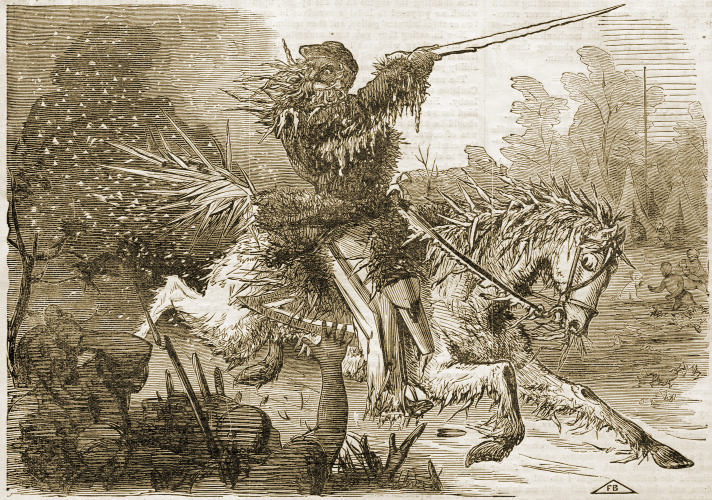
19th-century cartoon depicting Jack Frost

“Most Americans think that illegal immigration is bad but legal immigration is good. A slow start to awakening White Americans. It doesn’t do much good if we let them come here legally and they still go on welfare, do poor in school and commit crimes.”

Even more Americans think that assimilation is good and failure of immigrants to assimilate is bad. But actually, though it might, at least in the short term, be good for civilization, assimilation would only speed race mixing and hasten the extinction of the white race.

This is rather obvious, but whites don’t seem to mind.

An examination of history will show that whites are actually much more loyal to the civilization they’ve built than they are to their own existence as a race. Forced to choose between the two, they invariably try to preserve their civilization at the expense of race.

For example, the states they have built, which are the political form of this civilization takes, promote racial equality as a matter of good public policy, in order to minimize disruptions to the system caused by racial friction, while at the same time making the best use of human capital.

That such an arrangement spells the doom of discrete races is built in, but it’s apparently a result to which whites, some of them albeit reluctantly, have become reconciled. Certainly it’s a result which the Christian religion, with its teachings of racelessness, the moral value of self-sacrifice, and fanatic belief in a continued life after death, has amply prepared them to accept.

Categories
Adolf Hitler Catholic Church Protestantism Table talks

Uncle Adolf’s table talk, 85

the-real-hitler


8th February 1942, midday

The solution of the religious problem.


The evil that’s gnawing our vitals is our priests, of both creeds. I can’t at present give them the answer they’ve been asking for, but it will cost them nothing to wait. It’s all written down in my big book. The time will come when I’ll settle my account with them, and I’ll go straight to the point.

I don’t know which should be considered the more dangerous: the minister of religion who play-acts at patriotism, or the man who openly opposes the State. The fact remains that it’s their manœuvres that have led me to my decision. They’ve only got to keep at it, they’ll hear from me, all right. I shan’t let myself be hampered by juridical scruples. Only necessity has legal force. In less than ten years from now, things will have quite another look, I can promise them.

We shan’t be able to go on evading the religious problem much longer. If anyone thinks it’s really essential to build the life of human society on a foundation of lies, well, in my estimation, such a society is not worth preserving. If, on the other hand, one believes that truth is the indispensable foundation, then conscience bids one intervene in the name of truth, and exterminate the lie.

Periods that have endured such affronts without protesting will be condemned by people of the coming generations. Just as the pyres for heretics have been suppressed, so all these by- products of ignorance and bad faith will have to be eliminated in their turn.

Categories
American Revolutionary War Liberalism Wikipedia

Liberalism, 6

The American Revolution

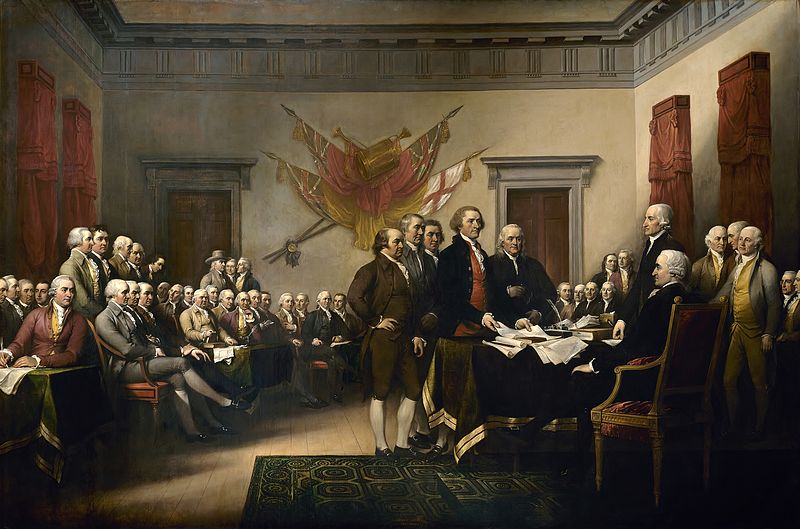
Political tension between England and its American colonies grew after 1765 over the issue of taxation without representation, culminating in the Declaration of Independence of a new republic.

The Declaration of Independence, written by Thomas Jefferson, echoed Locke: “We hold these truths to be self-evident, that all men are created equal, and are endowed by their creator with certain unalienable rights, that among these are life, liberty, and the pursuit of happiness”.

Declaration_independence

After the war, the leaders debated about how to move forward. The Articles of Confederation, written in 1776, now appeared inadequate to provide security, or even a functional government. The Confederation Congress called a Constitutional Convention in 1787 to write a new Constitution of the United States.

In the context of the times, the Constitution was a republican and liberal document. It established a strong national government with clear separation of the executive, the legislative, and the judicial. The first ten amendments to the constitution, known as the United States Bill of Rights, guaranteed some of the natural rights liberal thinkers used to justify the Revolution.

Categories
Adolf Hitler Beauty Goethe Richard Wagner Table talks

Uncle Adolf’s table talk, 86

the-real-hitler


17th February 1942, evening

The birthplaces of great men.


It’s my view that, simply for the sake of their beauty, the great noblemen’s estates should be preserved. But they must retain their size, otherwise only the State would be capable of maintaining them as private country-houses. And the ideal thing is that they should remain not only in private hands, but also in the family that has traditionally lived in them—else they lose their character. Thus these great monuments of the past, which have retained their character as living organisms, are also centres of culture. But when the country-house is occupied by a caretaker acting as a guide, a little State official with a Bavarian or Saxon accent, who ingenuously recites his unvarying piece of claptrap, things no longer have a soul—the soul is gone.

Wahnfried, as in Wagner’s lifetime, is a lived-in house. It still has all its brilliance, and continues to give the effect of a lover. Goethe’s house gives the impression of a dead thing.

And how one understands that in the room where he died he should have asked for light—always more light! Schiller’s house can still move one by the picture it gives of the penury in which the poet lived.

Categories
Enlightenment Liberalism Monarchy Voltaire Wikipedia

Liberalism, 5

Era of enlightenment

The development of liberalism continued throughout the 18th century with the burgeoning Enlightenment ideals of the era. This was a period of profound intellectual vitality that questioned old traditions and influenced several European monarchies throughout the 18th century. In contrast to England, the French experience in the 18th century was characterized by the perpetuation of feudal payments and rights and absolutism. Ideas that challenged the status quo were often harshly repressed. Most of the philosophes of the French Enlightenment were progressive in the liberal sense and advocated the reform of the French system of government along more constitutional and liberal lines.

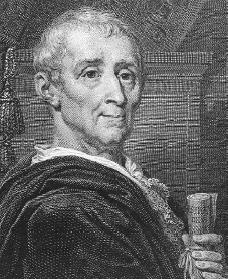
Montesquieu

Baron de Montesquieu wrote a series of highly influential works in the early 18th century, including Persian Letters (1717) and The Spirit of the Laws (1748). The latter exerted tremendous influence, both inside and outside of France.

Montesquieu pleaded in favor of a constitutional system of government, the preservation of civil liberties and the law, and the idea that political institutions ought to reflect the social and geographical aspects of each community. In particular, he argued that political liberty required the separation of the powers of government.

Building on John Locke’s Second Treatise of Government, he advocated that the executive, legislative, and judicial functions of government should be assigned to different bodies. He also emphasized the importance of a robust due process in law, including the right to a fair trial, the presumption of innocence and proportionality in the severity of punishment.

Another important figure of the French Enlightenment was Voltaire. Initially believing in the constructive role an enlightened monarch could play in improving the welfare of the people, he eventually came to a new conclusion: “It is up to us to cultivate our garden”. His most polemical and ferocious attacks on intolerance and religious persecutions began to appear a few years later. Despite much persecution, Voltaire remained a courageous polemicist who indefatigably fought for civil rights—the right to a fair trial and freedom of religion—and who denounced the hypocrisies and injustices of the Ancien Régime.

Categories
Adolf Hitler Literature Table talks

Uncle Adolf’s table talk, 87

the-real-hitler


7th February 1942, evening

Books for young people.


I’ve just been reading a very fine article on Karl May. I found it delightful. It would be nice if his work were re-published. I owe him my first notions of geography, and the fact that he opened my eyes on the world. I used to read him by candle-light, or by moonlight with the help of a huge magnifying-glass. The first thing I read of that kind was The Last of the Mohicans. But Fritz Seidl told me at once: “Fenimore Cooper is nothing; you must read Karl May.” The first book of his I read was The Ride through the Desert. I was carried away by it. And I went on to devour at once the other books by the same author. The immediate result was a falling-off in my school reports.

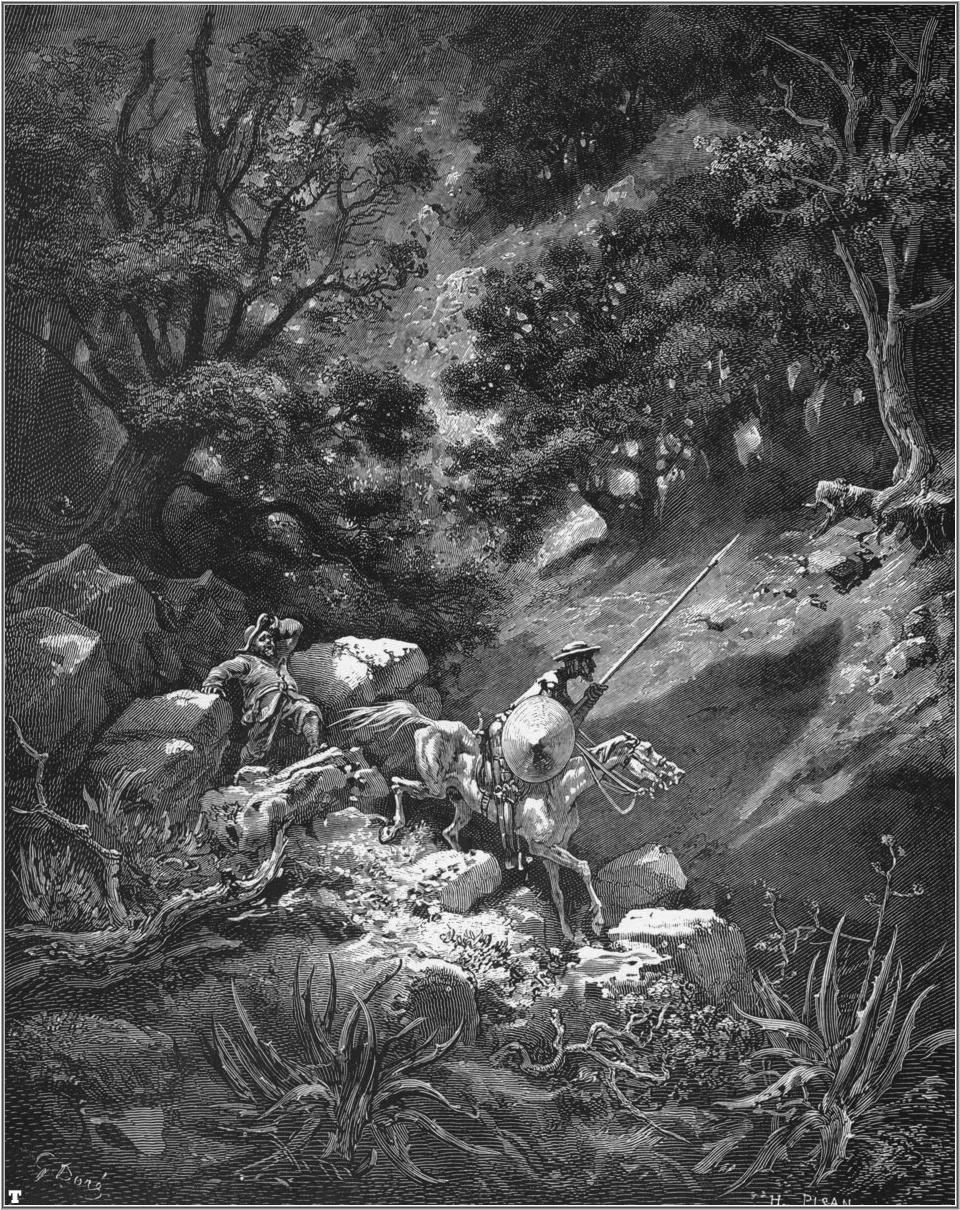
don-quixoteApart from the Bible, Don Quixote and Robinson Crusoe are the two most often read books in the world. Cervantes’ book is the world’s most brilliant parody of a society that was in process of becoming extinct. At bottom, the Spaniards’ habits of life have scarcely changed since then. Daniel Defoe’s book gathers together in one man the history of all mankind. It has often been imitated, but none of these desert-island stories can compete with the original. One Christmas I was given a beautiful illustrated edition. Cervantes’ book has been illustrated by Gustave Doré in a style of real genius.

Categories
Liberalism Wikipedia

Liberalism, 4

The Glorious Revolution

The impact of these ideas steadily increased during the 17th century in England, culminating in the Glorious Revolution of 1688 which enshrined parliamentary sovereignty and the right of revolution, and led to the establishment of what many consider the first modern, liberal state.

Significant legislative milestones in this period included the Habeas Corpus Act of 1679 which strengthened the convention that forbade detention lacking sufficient cause or evidence.

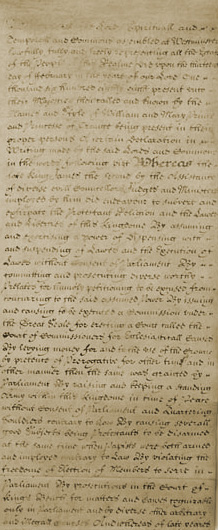
bill-rights

The Bill of Rights (photo left) formally established the supremacy of the law and of parliament over the monarch and laid down basic rights for all Englishmen. The Bill made royal interference with the law and with elections to parliament illegal, made the agreement of parliament necessary for the implementation of any new taxes and outlawed the maintenance of a standing army during peacetime without parliament’s consent. The right to petition the monarch was granted to everyone and “cruel and unusual punishments” were made illegal under all circumstances.

This was followed a year later with the Act of Toleration, which drew its ideological content from John Locke’s four letters advocating religious toleration. The Act allowed freedom of worship to Nonconformists who pledged oaths of Allegiance and Supremacy to the Anglican Church. In 1695, the Commons refused to renew the Licensing of the Press Act 1662, leading to a continuous period of unprecedented freedom of the press.