web analytics
Categories
Racial right Who We Are (book)

Misguided sons of Bentham

I hadn’t listened to Mark Weber in years. I like him because, unlike many in the pro-white movement, like David Irving Weber is willing to change his opinion about what our enemies call the ‘holocaust’ if the historical evidence points in that direction.

In his recent interview with Greg Johnson and another guy, Weber said interesting things. But like his interlocutors, the ‘operating system’ of his mind, so to speak, remains neochristian.

I recently talked about Michael O’Meara and linked a couple of his articles. Although Michael never broke as openly with Christianity as we do on this site, he knew much better how the collective unconscious of the white race works than the authors of today. He knew that what we need is a myth that galvanises the Aryans to the point of producing a new religion. Unlike Savitri Devi, Michael failed to realise that this new myth, this new religion, had already been born in Germany and that Hitler had been its prophet. But at least Michael had a much better notion of what moves the collective imagination of races than today’s racialists.

The case of Weber and his interlocutors exemplifies this. After 1:41 Weber warned us not to view history as good guys versus bad guys. What a tremendous mistake, as we are about to see. At the end of the Johnson-led show, Weber pointed to two places where we can buy important books (here and here). But Weber’s failure is precisely not to see things in a mythical way, as the Jews do.

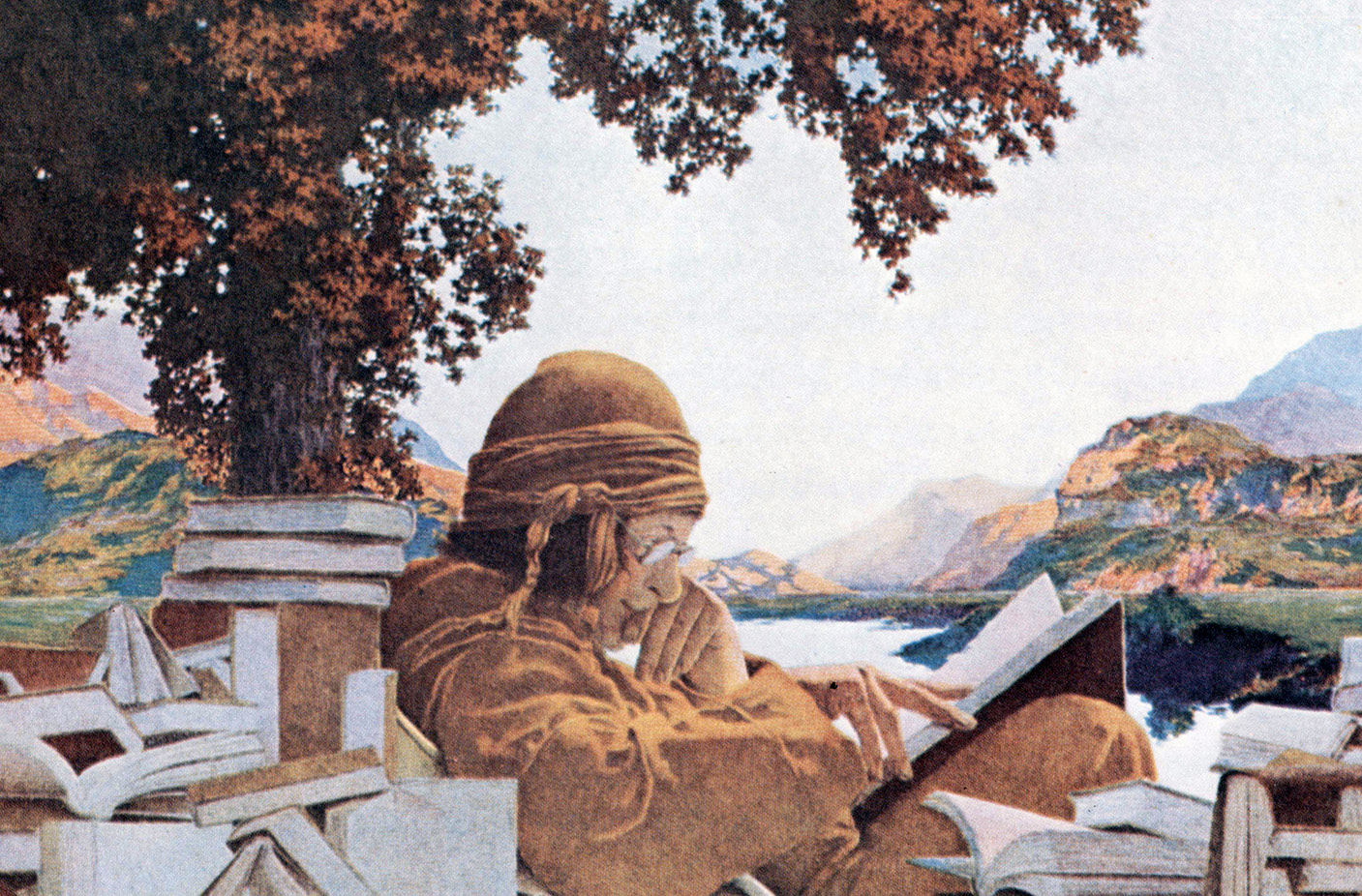
Although Jews have been repeating their myths for thousands of years, even white racists are reluctant to recover their history. If I use the metaphor of George R.R. Martin of ‘a man merged with a weirwood’ it is because this site, unlike the others, provides just the historical myth that the white man needs (summarised in The Fair Race). The great mistake of Weber and other racialist scholars is that they read Christian or neochristian historians. If there is something in which I distinguish myself from all of them, it is in my claim that we must rewrite the history of the white man to save him: hence the metaphor of the three-eyed crow, an old man fused with the tree of historical wisdom that, retrocognitively, could see the past.

The first attempt to rewrite history from the POV of the new myth occurred in Nazi Germany. I have already said, for example, that when I was living in Gran Canaria, a Spanish island next to Africa, I learned that Himmler’s scholars had travelled to the island to collect information on the aboriginal blonds who had lived in the Canary Islands before the arrival of the Spaniards.

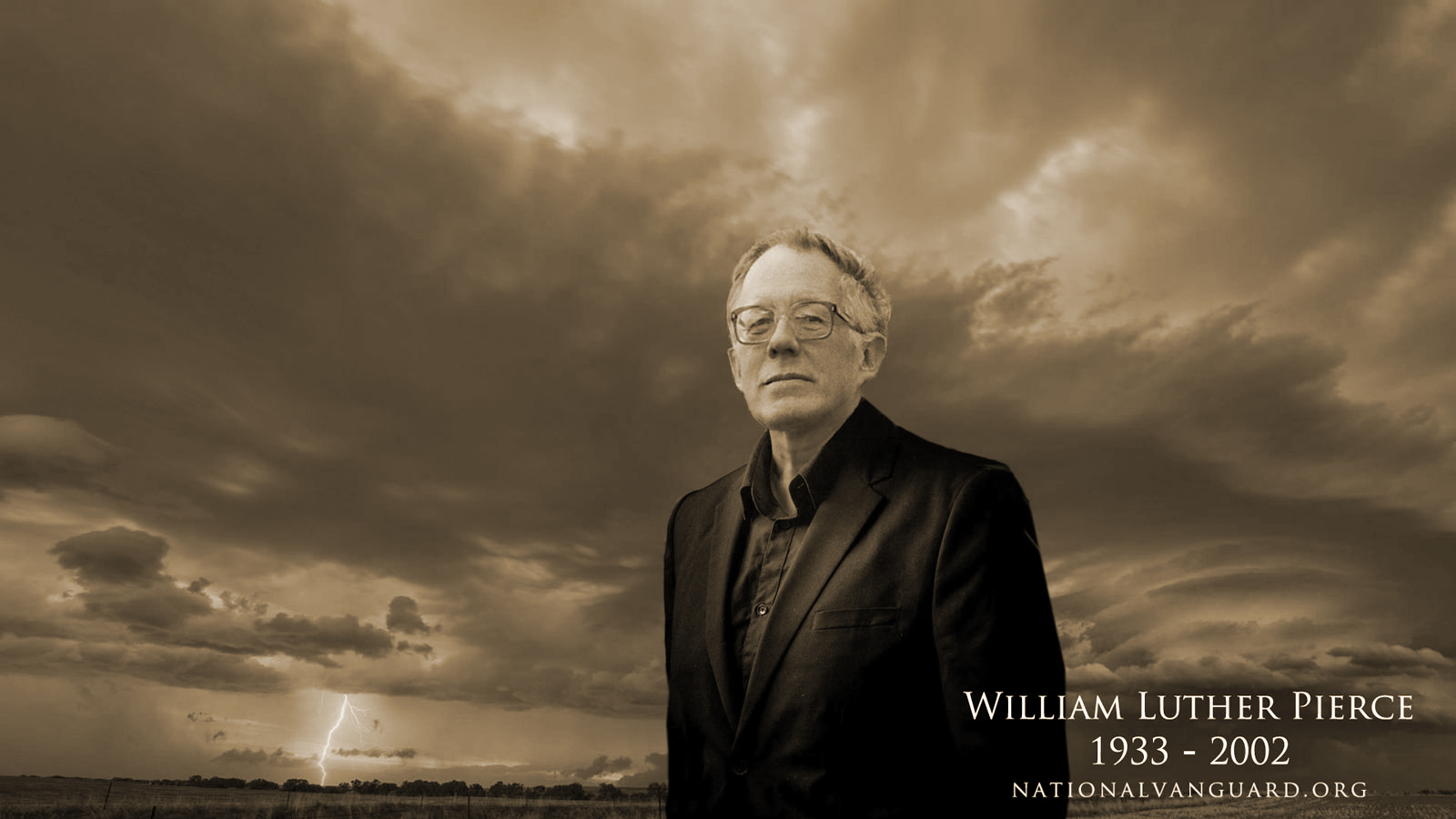
On this side of the Atlantic, only William Pierce that I know of began to rewrite the history of the white man: a book that apparently does not appear in the two book sites linked above. It is true that Pierce’s book is merely a ‘story’, in the sense of a preliminary readable essay on the more erudite histories to be written about the race. But that’s how the rewriting begins: with a simple, inspiring and captivating story, not with huge volumes that few will read.

Who We Are is the myth that would emerge in a movement that leaves behind the failed methods that Michael O’Meara warned us about a decade ago. The only thing that will return the soul to the European-descended peoples will be a pro-white myth, something analogous to LOTR but that did happen in the real world. And that myth begins with stories (the current story of the West is good for Jews, not for Aryans: egalitarianism for all).

Is this so hard to see? Apparently yes. Like Jared Taylor, Weber appeals to the intellect, not to the numinous aspect of the human soul. I remember that some time ago Weber wrote texts and then read them on his radio podcasts. Even Carolyn Yeager, who had her own podcast, warned him that such practice could result in burnout. But neither Weber nor those who read Johnson’s webzine can see something so obvious.

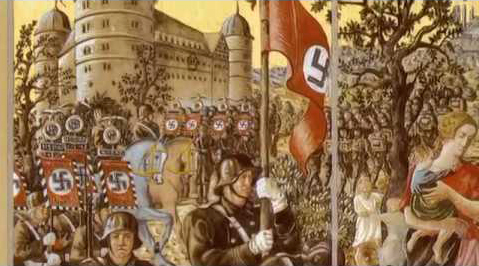
What the Nazis did was to appeal to the numinous side of the Aryan race, with all those quasi-religious rituals that they did on the streets and, even more numinously, at Himmler’s castle in Nuremberg.

The mistake of virtually all the pundits of American racialism reminds me of an anecdote by Octavio Paz. In a meeting between American writers and a Russian in which Paz participated, he immediately realised that ‘the sons of Bentham’ were on completely different wavelengths, according to the phrase he later used, of that of the Russian: a fan of a Russian poet who appealed to numinosity whose name I don’t remember. Mixing Anglo-Saxon pragmatists with a spiritual Russian was like mixing water with oil.

Many of the pundits of white nationalism today resemble these sons of Bentham, ignoring what Michael tried to tell us: It is the poet who creates nations, not the scientist.

Categories
Adolf Hitler Heinrich Himmler Welfare of animals

NS and neo-paganism

by Savitri Devi

An entirely new culture can hardly be conceived among people who retain the same religion as before. The Programme proclaimed at Hofbräuhaus states, it is true, that ‘the Party as such stands for a positive Christianity’. But, as I have said before—and as all the most intelligent National Socialists I met have admitted to me—it was well-nigh impossible, in 1920, to say anything else, if one hoped at all to gather a following. And it also remains true that the very fact of replacing, as we did, the link of common faith by the link of common blood—the creedal conception of community by the racial one—is contrary to the spirit of Christianity, no less than to its practice, always and everywhere, up to this day. It remains true, in other words, that if whatever religion that is ‘a danger to the national State’ is to be banned, then, Christianity must go—for nothing is more incompatible with the fundamental principles upon which rests the whole structure of any National State.

However, apart from the fact that this could not be said in a political programme in 1920—or even in 1933—it could still less be done in a day. Christianity could not be too openly and too bitterly opposed, before the Nazi philosophy of life had become widely accepted as a matter of course; before it had firmly taken root in the subconscious reactions of the German people, if not also of many foreign Aryans, so as to buttress the growth of the new—or rather of the eternal—religious conception which naturally goes hand in hand with it.

Until then, it would have been premature to suppress the Christian faith radically, however obsolete it might appear to many of us. ‘A politician’, our Führer has said, ‘must estimate the value of a religion not so much in connection with the faults inherent in it, as in relation to the advantages of a substitute which may be manifestly better. But until some such substitute appears, only fools and criminals will destroy what is there, on the spot’.

One had to prepare the ground slowly, by creating anew a thoroughly Aryan soul in the young people, through their whole education; and, at the same time—for the elder folk—by giving a precise meaning (as National Socialistic as possible) to the expression ‘positive Christianity’. That is what Alfred Rosenberg has endeavoured to do in his famous book, The Myth of the Twentieth Century. His ‘positive Christianity’ is something indeed very different from the Christianity of any Church, nay, from the Christianity of the Bible, based as it is solely upon Rosenberg’s interpretation of what is obviously the least Jewish in the New Testament and upon Rosenberg’s own National Socialist philosophy.

The Christians themselves soon discovered that it was no Christianity at all. And of all the prominent men of the Party, Alfred Rosenberg is surely the one whom they dislike the most to this day—although they are probably wrong in doing so, for there were and still are National Socialist thinkers far more radical than he. And he was, moreover, far too much a theoretician to be a real danger to the power of the Churches.

But it is certain that, under all this talk about ‘positive Christianity’, there was, from the beginning, in every thoughtful National Socialist, the feeling that Germany in particular and the Aryan world at large need a new religious consciousness, entirely different from and, in many ways, in vigorous contrast to the Christian one; nay, that such a consciousness is already lurking in the general discontent, disquiet, and scepticism of the modern Aryan, and that the Nazi Movement must sooner or later help it to awake and to express itself.

Although he too speaks of ‘positive Christianity’ and insists on the fact that ‘nothing is further removed from the intentions of the NSDAP than to attack the Christian religion and its worthy servants’; and although he is very careful to separate the Movement from every endeavour to revive the old Germanic cult of Wotan, Gottfried Feder cannot help mentioning that slowly rising new consciousness, and ‘the questions, the hopes, and the wishes whether the German people will, one day, find a new form by which to express their knowledge of God and religious life’, if only to say that such questions, hopes, etc. are ‘far beyond the frame even of such a revolutionary programme as the one National Socialism proclaims’.

And it is no less certain that, although no attempt was ever made officially to overthrow the power of the Churches and to forbid the teaching of the Christian doctrine, books inspired through and through, not by the desire to revive any particular Cult of old—that of Wotan or any other God—but by the love and spirit of eternal Nordic Heathendom, some of which are exceedingly beautiful, were published under the Third Reich, and read, and sympathetically commented upon in Nazi circles; and that this was the first time that the real Heathen soul of the North—the undying Aryan soul—fully realised, after nearly fifteen hundred years, that it is alive; more so, that it is immortal, invincible.

I have already quoted Heinrich Himmler’s short but splendid book, The Voice of the Ancestors, that masterful condensation of our philosophy in thirty-seven pages, which only an out-and-out Pagan could write. It contains, among other things, a bitter criticism of the Christian attitude to life—meekness, self-abnegation, delectation in the feeling of guilt and misery; ‘aspiration towards the dust’—and, in opposition to it, a profession of faith of the proud and of the strong and free: ‘We do not exhibit our faults to anyone, we Heathens—least of all to God. We keep quiet about them; and try to make good for our mistakes’.

Of the many other books of similar inspiration, I shall recall only two far less well-known than Alfred Rosenberg’s famous Mythus but, I must say, far more radical, and deserving undoubtedly more, both the pious hatred that so many Christians of all persuasions waste upon that work and the wholehearted admiration and gratitude of all real modern Heathens: one is Ernst Bergmann’s Twenty-Five Theses of the German Religion, and the other, Johann von Leers’ History on a Racial Basis. There, the incompatibility of the National Socialist view of life and the Christian is shown as clearly, once for all, as any uncompromising devotee of either of the two philosophies could desire:

A people that has returned to its blood and soil, and that has realised the danger of international Jewry, can no longer tolerate a religion which makes the Scriptures of the Jews the basis of its Gospel. Germany cannot be rebuilt on this lie. We must base ourselves on the Holy Scriptures which are clearly written in German hearts. Our cry is: ‘Away with Rome and Jerusalem! Back to our native German faith in present-day form! What is sacred in our home, what is eternal in our people, what is divine, is what we want to build’.

And Thesis Two of the Twenty-Five Theses—the number seems to have been chosen to match the Twenty-Five Points of the National Socialist Party Programme, so as to show that the ‘new’ (or rather eternal) ‘German religion’ is ultimately inseparable from the creation in Germany of a true National State—the second ‘thesis’, I say, states that the German religion is ‘the form of faith appropriate to our age which we Germans would have today, if it had been granted to us to have our native German faith developed, undisturbed, to the present time’. As for Christianity, it is frankly called ‘an unhealthy and unnatural religion, which arose two thousand years ago among sick, exhausted, and despairing men, who had lost their belief in life’, in a word, exactly the contrary of what the German people (or, by the way, any Aryan people) need today.

I do not remember any writer having more strongly and decisively pointed out the contrast between the everlasting Aryan spirit and that of Christianity and, especially, having more clearly stressed the nature of the Aryan religion of the future. There is no question of reviving the Wotan cult, or any other national form of worship from Antiquity, as it was then. The wheel of evolution never turns backwards. The religion of resurrected Germany can only be that which would have been flourishing today, as the natural product of evolution of the old Nordic worship, had not ‘that Frankish murderer Karl’, as Professor Bergmann calls Charlemagne, destroyed the free expression of German faith and forced Christianity upon the Germanic race by fire and sword, in the eighth and ninth centuries; or rather, had not Rome herself fallen prey to what her early emperors called ‘the new superstition’, introduced by the Jews. And what can be said of the new German religion is no less true of the desirable new religion of every regenerate Aryan people, organised under a real national State.

The only international religion—if such a thing is to exist at all—should be the extremely broad and simple Religion of Life, which contains and dominates all national cults and clashes with none (provided they be true cults of the people, and not priestly distortions of such); the spontaneous worship of warmth and light—of the Life energy—which is not the natural religion of man alone, but that of all living creatures, to the extent of their consciousness. In fact, all the national religions should help to bring men to that supreme worship of the Godhead in Life; for nowhere can Divinity be collectively experienced better than in the consciousness of race and soil. And no religion definitely stamped with local characteristics, geographical or racial, should ever become international.

When such a one does—as Christianity did; as Islam did—the result is the cultural enslavement of many races to the spirit of that one whence the religion sprang, or through which it first grew to prominence.

An Indian Muslim, to the extent he is thoroughly Muslim, is outside the pale of Indian civilisation. And, to the extent he accepts Christianity, a European accepts the bondage of Jewish thought. And a Northern European, to the extent he accepts Christianity, and especially Catholicism, accepts, in addition to that, the bondage of Rome. Germany, the first Aryan nation that has rebelled on a grand scale against the Jewish yoke—cultural, no less than economical—is also the first Nordic nation to have shaken off, partly at least, in the sixteenth century, the less foreign (while Aryan) but still foreign bondage of Rome. Nothing shows better the spirit of the religious revolution—of the religious liberation—slowly preparing itself under the influence of National Socialism, than the outcry of Ernst Bergmann which I have quoted above: ‘Away with Rome and Jerusalem! Back to our native German faith in its present-day form!’

* * *

The same inspiration—the same quest of the eternal Aryan faith under its present-day Germanic form—fills Johann von Leers’ History on a Racial Basis which I mentioned. There too one finds, applied to the domain of religion and culture, that passionate assertion of the rights of the Aryan North which constitutes, perhaps, the most characteristic feature of National Socialism on the political plane.

For a political awakening of the type that Adolf Hitler provoked, stirring a whole nation to its depth, cannot go without a parallel awakening in all fields of life, especially in that of culture and religion—of thought, generally speaking. There too, one finds—based this time upon the extensive researches of Hermann Wirth in ancient lore—a protest against the idea, current in all the Judeo-Christian world, that the old Aryan North was something ‘primitive’ and ‘barbarous’; and a vision of the future in which Germany in particular and the Aryan race at large will rise again to unprecedented greatness, having re-discovered their glorious, eternal collective Self.

The passage of Johann von Leers’ book which comes a few pages after his tribute to Hitler as ‘the greatest regenerator of the people for thousands of years’ is worth quoting in extenso:

After a period of decadence and race-obliteration we are now coming to a period of purification and development which will decide a new epoch in the history of the world. If we look back on the thousands of years behind us, we find that we have arrived again near the great and eternal order experienced by our forefathers. World history does not go forward in a straight line, but moves in curves. From the summit of the original Nordic culture in the Stone Age, we have passed through the deep valleys of centuries of decadence, only to rise once more to a new height. This height will not be lesser than the one once abandoned, but greater, and that, not only in the external goods of life…. We did not pass through the great spiritual death of the capitalistic period in order to be extinguished. We suffered it in order to rise again under the Sign that never yet failed us, the Cross of the great Stone Age, the ancient and most sacred Swastika.

The form and particulars of a modern Aryan religion destined to rule consciences in the place of obsolete Christianity are not yet laid out—and how could they be? But the necessity of such a religion could not be more strongly felt and expressed; and its spirit and main features are already defined. It is the healthy religion of joy and power—and beauty—which I have tried to suggest in the beginning of this book. In other words, it is the eternal aspect of National Socialism itself or (which means the same) National Socialism extended to the highest sphere of life.

I have previously recalled the Führer’s words of wisdom concerning the growth of a new religion, better adapted than Christianity to the requirements of the people, namely, that ‘until such a new faith does appear, only fools and criminals will hurry to destroy what is there, on the spot’.

In 1924—when he wrote Mein Kampf—he obviously felt that the time was not yet ripe for such a revolution.

From what one reads in the famous Goebbels Diaries, published by our enemies in 1948 (and therefore, no one knows to what extent genuine) he would appear to have been in perfect agreement with the Reich Propaganda Minister’s radical opposition to the Churches at the same time as with his cautious handling of the religious question during the war. As long as the war was on, it was, no doubt, not the time to promote such changes as would, perhaps, make many people realise too abruptly that they were fighting for the establishment of something which, maybe, they did not want.

But, when victory would be won, then, many things that looked impossible would be made possible. According to the Diaries, the Führer was even planning, ‘after the war’, to encourage his people, gradually, to alter their diet, with a view to doing away with the standing horror of the slaughter-houses—one of the most laudable projects ever seriously considered in the history of the West, which, if realised, would have at once put Germany far ahead of all other nations, raising her conception of morality much above the standard reached by Christian civilisation. He was certainly also planning the gradual formation of a religious outlook worthy of the New Order that he was bringing into being.

Already, the most devotedly radical among the active Party members, the corps d’Élite; the SS men—were expected to find in the National Socialist Weltanschauung alone all the elements of their inner life, without having anything to do with the Christian Churches and their philosophy. And if one recalls, not the Führer’s public statements, but some of the most striking private statements attributed to him, one feels convinced that he was aware of the inadequacy of Christianity as the religion of a healthy, self-confident, proud, and masterful people no less than any of the boldest of the National Socialist thinkers, nay, no less than Heinrich Himmler himself and those whom he had in mind when he repeatedly wrote, in his brilliant booklet, ‘Wir Heiden’—’We Heathens’.

I know that the sayings attributed to a man, either by an admiring devotee in a spirit of praise or by an enemy, in a spirit of hatred, are, more often than not, of doubtful authenticity. Yet, when, while quoted in order to praise the one alleged to have uttered them, they in reality condemn him, or when, while quoted as ‘awful’ utterances, with the intention of harming him, they in reality constitute praise; and when, moreover, they happen to be too beautiful, or too true, or too intelligent for the reporter to have invented them wholesale, then one can, I believe, accept them as authentic or most probably so.

Of the many books written purposely to throw discredit upon our Führer, I have only read one through and through; but that one—the work of the traitor Rauschning, translated into English under the title Hitler Speaks—I read not merely with interest, but with elation, for it is (much against the intention of its author) one of the finest tributes paid to the Saviour of the Aryan race. Had I come from some out-of-the-way jungle and had I never even heard of the Führer before, that book alone would have made me his follower—his disciple—without the slightest reservation.

Should I characterise the author of such excellent propaganda as a scoundrel? Or is he not just a perfect fool: a fellow who joined the National Socialist Movement when he had no business to do so, and who recoiled in fright as soon as he began to realise how fundamentally opposed his aspirations were to ours? His aspirations were, apparently, those of a mediocre ‘bourgeois’. After he turned against us, he did not actually lie; he did not need to. He picked out, in the Führer’s statements, those that shocked him the most—and that were likely to shock also people who resemble him.

And he wrote Hitler Speaks, for the consumption of all the mediocre ‘bourgeois’ of the world. As there are millions of them, and as the world they represent was soon to wage war on the Führer, the book was a commercial success at the same time as an ‘ideological’ one—the sort of success the author had wanted: it stirred the indignation of all manner of ‘decent’ Untermenschen against National Socialism. But one day (if it survives) a regenerate Aryandom will look upon it as the unwilling tribute of an enemy to the greatest European of all ages.

And Hitler’s words about Christianity, reported by Rauschning in the fourth chapter of his book, would be admired—not criticised—in an Aryan world endowed with a consistently National Socialist consciousness, for they are in keeping with our spirit—and ring too true not to be authentic. ‘Leave the hair-splitting to others’, said the Führer to Hermann Rauschning before the latter turned renegade:

Whether it is the Old Testament or the New, or simply the sayings of Jesus according to Houston Stewart Chamberlain, it is all the same Jewish swindle. It will not make us free. A German Church, a German Christianity, is a distortion. One is either a German or a Christian. You cannot be both. You can throw the epileptic Paul out of Christianity—others have done so before us. You can make Christ into a noble human being, and deny his divinity and his rôle as a saviour. People have been doing it for centuries. I believe there are such Christians today in England and America—Unitarians, they call themselves, or something like that. It is no use. You cannot get rid of the mentality behind it. We do not want people to keep one eye on life in the hereafter. We need free men, who feel and know that God is in themselves.

Indeed, however clever he might have been, Rauschning was not the man to concoct this discourse out of pure imagination. As many other statements attributed to the Führer in his book, this one bears too strongly the stamp of sincerity, of faith—of truth—to be just an invention. Moreover, it fits in perfectly with many of the Führer’s known utterances, with his writings, with the spirit of his whole doctrine which is, as I said before, far more than a mere socio-political ideology. For, whatever might be said, or written, for the sake of temporary expediency, the truth remains that National Socialism and Christianity, if both carried to their logical conclusions—that is to say, experienced in full earnest; lived—cannot possibly go together.

The Führer certainly thought it premature to take up, publicly, towards the Christian doctrine as well as the Churches, the attitude that the natural intolerance of our Weltanschauung would have demanded; but he knew that we can only win, in the long run, if, wherever essentials are concerned, we maintain that intolerance of any movement sincerely ‘convinced that it alone is right’. And he knew that, sooner or later, our conflict with the existing order is bound to break out on the religious and philosophical plane as well as on the others. This is unavoidable. And it has only been postponed by the material defeat of Germany—perhaps (who knows?) in accordance with the mysterious will of the Gods, so as to enable the time to ripen and the Aryan people at large, and especially the Germans, to realise, at last, how little Christianity can fulfil their deeper aspirations, and how foolish they would be to allow it to stand between them and the undying Aryan faith implied in National Socialism.

That Aryan faith—that worship of health, of strength, of sunshine, and of manly virtues; that cult of race and soil—is the Nordic expression of the universal Religion of Life. It is—I hope—the future religion of Europe and of a part at least of Asia (and, naturally, of all other lands where the Aryan dominates). One day, those millions will remember the Man who, first—in the 1920s—gave Germany the divine impetus destined to bring about that unparalleled resurrection; the Man whom now the ungrateful world hates and slanders: our Hitler.

Imprisoned here for the love of him, my greatest joy lies in the glorious hope that those reborn Aryans—those perfect men and women of the future Golden Age—will, one day, render him divine honours.

___________

This extract from Savitri Devi, Gold in the Furnace, ed. R.G. Fowler (Uckfield, England: Historical Review Press, 2005), ch. 11, ‘The Constructive Side’, pages 211-22 originally appeared in Racial Nationalist Library.

Categories
Aristotle Conservatism Welfare of animals

Two Counter-Currents articles

After all the terrible atrocities humans have perpetrated and continue to perpetrate against animals I think we should abolish all human history and exterminate all humans to make the world a better place for the rest of the living. Lets end speciesism and human supremacy. – Joseph Walsh

I concluded my entry yesterday by saying that because of pride whites don’t want to see the cause of their misfortune: the axiological reversal that Christianity caused in their collective mind. A paradigm of such pride is exemplified by libertarian Americans.

Three months ago I realised that the ideology advocated by the former youtuber John Mark was cuckoldry. I wrote: ‘Mark says that, unlike the alt-right, propertiarianism represents the “scientific” approach and that those who practice it “love all people” [including non-whites]’. One of CC’s articles, the one about Mark and his pathetic libertarian mentor, is as funny as what a couple of years ago happened to the two Matts, who wanted to create an impossible chimera between Orthodox Christianity and racism. The grotesque event of this July 4 in which John Mark and his mentor imploded has been well illustrated with the Dodo metaphor in the CC article. The comments section is fascinating.

In my post yesterday, I also said that I consider the issue of child abuse my forte, although in recent years I have realised that this issue is inseparable from the animal abuse that humans perpetrate. Now I think both are two sides of the same coin. The other CC article addresses the issue of animal rights, but in a very flawed way.

I don’t want to expand too much because my yesterday post is important, and instead of adding a lot of posts on top of it I would like to give it time, to see if I get more replies (about the pederasty in Homer’s poetry nobody has said a peep).

Simply put, abuse of children or animals cannot be addressed by the intellect alone, as that second CC article does. It is necessary to involve emotions. In my soliloquies I call ‘hemiplegic’ those who believe that only by using the left hemisphere of the brain can understand a man-made tragedy.

As Aristotle saw well, the purpose of the Greek tragedy was to produce a catharsis in the spectator: as my friend Teresa cried in the car, all the way back, when many years ago we went to see Iphigenia. I didn’t cry, but the tragedy of the teenage Iphigenia, whom her father sacrifices to the gods, shocked me to the point of including that Greek film among one of my ten favourites.

The CC article is analogous to the Iphigenia theme… without any emotion (see Walsh’s quote above)! In my books in Spanish I address the same topic—sacrificing your child or an animal—with the equivalent of Teresa’s sea of tears that night. In addition to my cold argumentation after such catharsis, the alternation of both hemispheres results in a balanced understanding: Apollo dancing with Dionysus so to speak, compared to the hemiplegic approach we see in this second CC article and the following comments.

Categories
Degenerate art

What happened to Michael Colhaze?

In the comments section of my recent piece about Parsifal I said: ‘This is the Verwandlungsmusik and the first version of Parsifal that I saw when I was still in my thirties. Nonetheless, without a couple of good speakers, almost all of the magnificence of Wagner’s music is lost in this YouTube video. And even with a couple of speakers the numinosity is lost if you are not in an elegant opera house’.

I omitted to add something fundamental. Currently, the scenery they use in most of the theatres is pure mud and one has to look hard to find a representation that respects the traditional scenery: a lotus, among all the mud.

Michael Colhaze had already complained about this profanation of Wagner in a 2012 article I copied and pasted from The Occidental Observer. Unfortunately, all the articles by this German, Colhaze, have been deleted in The Occidental Observer. Why?

Parsifal, which premiered at Bayreuth on July 26, 1882, is Wagner’s most numinous work. It was performed sixteen times that first year and was the most carefully prepared premiere of an opera in history. European royalty made the pilgrimage to hear Wagner’s new work.

The original sketches for the sets and costumes were designed by German-Russian painter Paul von Joukowsky, who based his design for Act One on the Cathedral of Siena, and for Klingsor’s Magic Garden, in Act Two, on the gardens of the Palazzo Rufolo in Ravello.

After Wagner’s death, this production acquired mythic proportions but in our times the sets have become increasingly dilapidated in most representations, where we see the rubbish scenery that Colhaze complained about another of Wagner’s musical dramas.

Categories
Adolf Hitler Heinrich Himmler Jesus Joseph Goebbels Mein Kampf (book) Nature Reinhard Heydrich Rudolf Hess Schutzstaffel (SS) Swastika

Religious aspects of National Socialism

In the previous post today, I quoted a commenter who explained why the bulk of white nationalists in America don’t admire Hitler. His comment resulted in a sort of eureka moment for me as to solving another mystery: why these nationalists don’t have ‘pagan’ William Pierce’s Who We Are as their leading bestseller.

The sad answer is that these nationalists sold their souls to the devil: Judeo-Christianity, even those secular nationalists who refuse to place their parents’ religion on the bench of the accused.

It’s worth rephrasing what the Wikipedia article, ‘Religious aspects of Nazism’, says, purging from it of all anti-white crap that that damned online encyclopaedia promulgates, and adding some observations of my own:

Historians, political scientists and philosophers have studied National Socialism with a specific focus on its religious aspects.

Among the writers who alluded before 1980 to the religious aspects of National Socialism are Albert Camus, Romano Guardini, Denis de Rougemont, Eric Voegelin, Klaus Vondung and Friedrich Heer. Voegelin’s work on political religion was first published in German in 1938. The French author and philosopher Albert Camus made some remarks about National Socialism as a religion and about Adolf Hitler in particular in L’Homme révolté.

Outside a purely academic discourse, public interest mainly concerns the relationship between National Socialism and Occultism, and between National Socialism and Christianity. The persistent idea that the National Socialists were directed by occult agencies has been dismissed by historians as modern cryptohistory. The interest in the second relationship is obvious from the debate about Adolf Hitler’s religious views—specifically, whether he was a Christian or not.
 

National Socialism and occultism

There are many works that speculate about National Socialism and occultism, the most prominent being The Morning of the Magicians (1960) and The Spear of Destiny (1972). From the perspective of academic history, however, most of these works are ‘cryptohistory’. Academic historians did not consider the question until the 1980s. Due to the popular literature on the topic, National Socialist black magic was regarded as a topic for authors in pursuit of strong sales. In the 1980s, however, two Ph.D. theses were written about the topic. Nicholas Goodrick-Clarke published The Occult Roots of National Socialism (1985) based on his thesis, and the German librarian and historian Ulrich Hunger’s thesis on rune-lore in National Socialist Germany (Die Runenkunde im Dritten Reich) was published in the series Europäische Hochschulschriften.

Goodrick-Clarke’s book is not only considered without exception to be the pioneering work on Ariosophy, but also the definitive book on the topic. The term ‘Ariosophy’ refers to an esoteric movement in Germany and Austria of the 1900s to 1930s. It clearly falls under Goodrick-Clarke’s definition of occultism, as it obviously drew on the western esoteric tradition. Ideologically, it was remarkably similar to National Socialism. According to Goodrick-Clarke, the Ariosophists wove occult ideas into the völkisch ideology that existed in Germany and Austria at the time. Ariosophy shared the racial awareness of völkisch ideology, but also drew upon a notion of root races, postulating locations such as Atlantis, Thule and Hyperborea as the original homeland of the Aryan race (and its purest branch, the Teutons or Germanic peoples).

The Ariosophic writings described a glorious ancient Germanic past, in which an elitist priesthood ‘expounded occult-racist doctrines and ruled over a superior and racially pure society’. The downfall of this hypothesised golden age was explained as the result of the interbreeding between the master race and the untermenschen (lesser races). With the exception of Karl Maria Wiligut, Goodrick-Clarke has not found evidence that prominent Ariosophists directly influenced National Socialism.

But Goodrick-Clarke considers the National Socialist crusade as ‘essentially religious’. His follow-up book Black Sun: Aryan Cults, Esoteric National Socialism and the Politics of Identity examined ‘ariosophic’ ideas after 1945 and ‘neo-völkisch movements’.

 
National Socialism and Christianity

After National Socialist Germany had surrendered in World War II, the US Office of Strategic Services published a report on the National Socialist Master Plan of the Persecution of the Christian Churches. Historians and theologians generally agree about the National Socialist policy towards religion, that the objective was to remove explicitly Jewish content from the Bible (i.e., the Old Testament, the Gospel of Matthew, and the Pauline Epistles), transforming the Christian faith into a new religion, completely cleansed from any Jewish element and conciliate it with National Socialism, Völkisch ideology and Führerprinzip: a religion called ‘Positive Christianity’.

This, of course, was tried before, back in… 144 C.E.! Marcionism depicted the God of the Old Testament as a tyrant or demiurge. Marcion’s canon, the first Christian canon ever compiled, consisted of eleven books: a gospel, which was a form of the Gospel of Luke; and ten Pauline epistles. Marcion’s canon rejected the entire Old Testament, along with all other epistles and gospels. In my opinion, NS Positive Christians failed in this. It was a good try but ultimately it is impossible to combine water with oil. It is a very explainable mistake in the recent nation that had just awakened to the most elemental racialism.

Alfred Rosenberg was influential in the development of Positive Christianity. In The Myth of the Twentieth Century he wrote that:

  • Saint Paul was responsible for the destruction of the racial values from Greek and Roman culture;
  • the dogma of hell advanced in the Middle Ages destroyed the free Nordic spirit;

This is absolutely pivotal to understand white demoralisation (and it is a pity that our site is the only racialist site which has accused this doctrine of the havoc it caused among us)!

  • original sin and grace are Oriental ideas that corrupt the purity and strength of Nordic blood;
  • the Old Testament and the Jewish race are not an exception and one should return to the Nordic peoples’ fables and legends;
  • Jesus was not Jewish, but had Nordic blood from his Amorite ancestors.

The latter point of course was another mistake. Neither Rosenberg nor Hitler or anyone at the top of the elites knew that Jesus didn’t even exist. Only recent scholarship has debunked the idea that Jesus, even an all-too human Jesus, existed (read, e.g., this book).

The National Socialist Party program of 1920 included a statement on religion as point 24. In this statement, the National Socialist party demands freedom of religion (for all religious denominations that are not opposed to the customs and moral sentiments of the Germanic race). Also, the paragraph proclaims the party’s endorsement of Positive Christianity. Historians have described this statement as ‘a tactical measure, cleverly left undefined in order to accommodate a broad range of meanings’, and an ‘ambiguous phraseology’.

This is a topic of some controversy. John S. Conway holds that The Holy Reich has broken new ground in the examination of the relation between National Socialism and Christianity, despite his view that ‘National Socialism and Christianity were incompatible’. The National Socialists were aided by theologians, such as Dr. Ernst Bergmann, who committed suicide after the Allied forces captured Leipzig. Bergmann, in his work, Die 25 Thesen der Deutschreligion (Twenty-five Points of the German Religion), expounded the theory that the Old Testament and portions of the New Testament of the Bible were inaccurate. He proposed that Jesus was of Aryan origin, and that Adolf Hitler was the new messiah.

 
Religious beliefs of leading National Socialists

Within a large movement like National Socialism, it may not be especially shocking to discover that individuals could embrace different ideological systems that would seem to be polar opposites. The religious beliefs of even the leading National Socialists diverged strongly.

The difficulty for historians lies in the task of evaluating not only the public, but also the private statements of the National Socialist politicians. Steigmann-Gall, who intended to do this in his study, points to such people as Erich Koch (who was not only Gauleiter of East Prussia and Reichskomissar for the Ukraine, but also the elected praeses of the East Prussian provincial synod of the Evangelical Church of the old-Prussian Union), and Bernhard Rust, as examples of National Socialist politicians who also professed to be Christian in private.

 
Adolf Hitler’s religious views

Adolf Hitler’s religious beliefs have been a matter of debate; the wide consensus of historians consider him to have been irreligious, anti-Christian and anti-clerical. In light of evidence such as his fierce criticism and vocal rejection of the tenets of Christianity, numerous private statements to confidants denouncing Christianity as a harmful superstition, and his strenuous efforts to reduce the influence and independence of Christianity in Germany after he came to power, Hitler’s major academic biographers conclude that he was irreligious and an opponent of Christianity.

Historian Laurence Rees found no evidence that ‘Hitler, in his personal life, ever expressed belief in the basic tenets of the Christian church’. Ernst Hanfstaengl, a friend from his early days in politics, says Hitler ‘was to all intents and purposes an atheist by the time I got to know him’. However, historians such as Richard Weikart and Alan Bullock doubt the assessment that he was a true atheist, suggesting that despite his dislike of Christianity he still clung to a form of spiritual belief.

Hitler was born to a practising Catholic mother, and was baptised into the Roman Catholic Church. From a young age, he expressed disbelief and hostility to Christianity. But in 1904, acquiescing to his mother’s wish, he was confirmed at the Roman Catholic Cathedral in Linz, Austria, where the family lived. According to John Willard Toland, witnesses indicate that Hitler’s confirmation sponsor had to ‘drag the words out of him almost as though the whole confirmation was repugnant to him’. Rissmann notes that, according to several witnesses who lived with Hitler in a men’s home in Vienna, Hitler never again attended Mass or received the sacraments after leaving home. Several eyewitnesses who lived with Hitler while he was in his late teens and early-to-mid 20s in Vienna state that he never attended church after leaving home at eighteen.

Nonetheless, in Hitler’s early political statements he attempted to express himself to the German public as a Christian. In his book Mein Kampf and in public speeches prior to and in the early years of his rule, he described himself as a Christian.

As we have seen, the National Socialist party promoted Positive Christianity, a movement which rejected most traditional Christian doctrines such as the divinity of Jesus, as well as Jewish elements such as the Old Testament. From this angle, contemporary Christian nationalists in the US are a century behind compared to Nazi Germany! Consider, for example, how the administrators of Occidental Dissent and The Daily Stormer still subscribe to traditional Christianity, not even to a sort of Positive Christianity (as Hitler said, America is Judaised and negrified to the core).

In one widely quoted remark, Hitler described Jesus as an ‘Aryan fighter’ who struggled against ‘the power and pretensions of the corrupt Pharisees’ and Jewish materialism. While a small minority of historians accept these publicly stated views as genuine expressions of his spirituality, the vast majority believe that Hitler was sceptical of religion and anti-Christian, but recognised that he could only be elected and preserve his political power if he feigned a commitment to and belief in Christianity, which the overwhelming majority of Germans believed in.

Privately, Hitler repeatedly deprecated Christianity, and told confidants that his reluctance to make public attacks on the Church was not a matter of principle, but a pragmatic political move. In his private diaries, Goebbels wrote in April 1941 that though Hitler was ‘a fierce opponent’ of the Vatican and Christianity, ‘he forbids me to leave the church. For tactical reasons’.

Hitler’s remarks to confidants, as described in the Goebbels Diaries, the memoirs of Albert Speer, and transcripts of Hitler’s private conversations recorded by Martin Bormann in Hitler’s Table Talk, are further evidence of his irreligious and anti-Christian beliefs; these sources record a number of private remarks in which Hitler ridicules Christian doctrine as absurd, contrary to scientific advancement, and socially destructive.

Once in office, Hitler and his regime sought to reduce the influence of Christianity on society. From the mid-1930s, his government was increasingly dominated by militant anti-church proponents like Goebbels, Bormann, Himmler, Rosenberg and Heydrich whom Hitler appointed to key posts. These anti-church radicals were generally permitted or encouraged to perpetrate the National Socialist persecutions of the churches. The regime launched an effort toward coordination of German Protestants under a unified Protestant Reich Church (but this was resisted by the Confessing Church), and moved early to eliminate political Catholicism. Hitler agreed to the Reich concordat with the Vatican, but then routinely ignored it, and permitted persecutions of the Catholic Church.

Jehovah’s Witnesses were ruthlessly persecuted for refusing both military service and allegiance to Hitler’s movement. Hitler said he anticipated a coming collapse of Christianity in the wake of scientific advances, and that National Socialism and religion could not co-exist long term. Although he was prepared to delay conflicts for political reasons, historians conclude that he ultimately intended the destruction of Christianity in Germany, or at least its distortion or subjugation to a National Socialist outlook.
 

Rudolf Hess

According to Goodrick-Clarke, Rudolf Hess had been a member of the Thule Society before attaining prominence in the National Socialist party. As Adolf Hitler’s official deputy, Hess had also been attracted to and influenced by the biodynamic agriculture of Rudolf Steiner and Anthroposophy. In the wake of his flight to Scotland, Reinhard Heydrich, the head of the security police, banned lodge organizations and esoteric groups on 9 June 1941.

The Thule Society took its name from Thule, an alleged lost land. Sebottendorff identified Ultima Thule as Iceland. In The Myth of the Twentieth Century, the most important National Socialist book after Mein Kampf, Alfred Rosenberg referred to Atlantis as a lost land or at least to an Aryan cultural center. Since Rosenberg had attended meetings of the Thule Society, he might have been familiar with the occult speculation about lost lands; however, according to Lutzhöft (1971), Rosenberg drew on the work of Herman Wirth. The attribution of the Urheimat of the Nordic race to a deluged land was very appealing at that time.
 

Heinrich Himmler

Reichsführer-SS Heinrich Himmler: ‘We believe in a God Almighty who stands above us; he has created the earth, the Fatherland, and the Volk, and he has sent us the Führer. Any human being who does not believe in God should be considered arrogant, megalomaniacal, and stupid and thus not suited for the SS’.

This of course was Himmler’s blunder, as theistic visions of the providence stem from monotheistic Judaism. Also, from my point of view, a personal god—i.e., the mythical Judeo-Christian god—should be written thus: (((God))).

On the other hand, credited retrospectively with being the founder of ‘Esoteric Hitlerism’, and certainly a figure of major importance for the officially sanctioned research and practice of mysticism by a National Socialist elite, Heinrich Himmler, more than any other high official in the Third Reich (including Hitler) was fascinated by pan-Aryan (i.e., broader than Germanic) racialism. Himmler’s capacity for rational planning was accompanied by an enthusiasm for the utopian, the romantic and even the occult. Although Himmler did not have any contact with the Thule Society, he possessed more occult tendencies than any other National Socialist leader. The German journalist and historian Heinz Höhne, an authority on the SS, explicitly describes Himmler’s views about reincarnation as occultism.

The historic example which Himmler used in practice as the model for the SS was the Society of Jesus, since Himmler found in the Jesuits what he perceived to be the core element of any order, the doctrine of obedience and the cult of the organisation. The evidence for this largely rests on a statement from Walter Schellenberg in his memoirs (Cologne, 1956, p. 39), but Hitler is also said to have called Himmler ‘my Ignatius of Loyola’. As an order, the SS needed a coherent doctrine that would set it apart. Himmler attempted to construct such an ideology, and to this purpose he deduced a Germanic tradition from history.

In a 1936 memorandum, Himmler set forth a list of approved holidays based on pagan and political precedents and meant to wean SS members from their reliance on Christian festivities. The Winter Solstice, or Yuletide, was the climax of the year. It brought SS folk together at candlelit banquet tables and around raging bonfires that harked back to German tribal rites.

The Allach Julleuchter (Yule light) was made as a presentation piece for SS officers to celebrate the winter solstice. It was later given to all SS members on the same occasion, December 21. Made of unglazed stoneware, the Julleuchter was decorated with early pagan Germanic symbols. Himmler said, ‘I would have every family of a married SS man to be in possession of a Julleuchter. Even the wife will, when she has left the myths of the church find something else which her heart and mind can embrace’.

Only adherents of theories of National Socialist occultism or the few former SS members who were, after the war, participants in the Landig Group in Vienna would claim that the cultic activities within the SS would amount to its own mystical religion. At the time of his death in 1986, Rudolf J. Mund was working on a book on the Germanic ‘original race-cult religion’. However, what was indoctrinated into the SS is not known in detail.
 

National Socialist archaeology

In 1935 Himmler, along with Richard Walther Darré, established the Ahnenerbe. At first independent, it became the ancestral heritage branch of the SS. Headed by Dr. Hermann Wirth, it was dedicated primarily to archaeological research, but it was also involved in proving the superiority of the ‘Aryan race’.

A great deal of time and resources were spent on researching or creating a popularly accepted historical, cultural and scientific background so the ideas about a superior Aryan race could be publicly accepted. For example, an expedition to Tibet was organised to search for the origins of the Aryan race. To this end, the expedition leader, Ernst Schäfer, had his anthropologist Bruno Beger make face masks and skull and nose measurements. Another expedition was sent to the Andes.

When I lived in Gran Canaria, an island off Africa, a Spanish woman told me that Himmler’s researchers had much interest in researching the Nordic aboriginals of the Canary islands: blonder and lighter than the Spaniards themselves.

 
Das Schwarze Korps

The official newspaper of SS was Das Schwarze Korps (‘The Black Corps’), published weekly from 1935 to 1945. In its first issue, the newspaper published an article on the origins of the Nordic race, hypothesising a location near the North Pole similar to the theory of Hermann Wirth (but not mentioning Atlantis).

Also in 1935, the SS journal commissioned a Professor of Germanic History, Heinar Schilling, to prepare a series of articles on ancient Germanic life. As a result, a book containing these articles and entitled Germanisches Leben was published by Koehler & Amelung of Leipzig with the approval of the SS and Reich Government in 1937. Three chapters dealt with the religion of the German people over three periods: Nature worship and the cult of the ancestors, the sun religion of the Late Bronze Age, and the cult of the gods.

According to Heinar Schilling, the Germanic peoples of the Late Bronze Age had adopted a four-spoke wheel as symbolic of the sun ‘and this symbol has been developed into the modern swastika of our own society [NS Germany] which represents the sun’. Under the sign of the swastika ‘the light bringers of the Nordic race overran the lands of the dark inferior races, and it was no coincidence that the most powerful expression of the Nordic world was found in the sign of the swastika’.

Very little had been preserved of the ancient rites, Professor Schilling continued, but it was a striking fact ‘that in many German Gaue today on Sonnenwendtage (solstice days) burning sun wheels are rolled from mountain tops down into the valleys below, and almost everywhere the Sonnenwendfeuer (solstice fires) burn on those days’. He concluded by saying that ‘The Sun is the All-Highest to the Children of the Earth’.
 

SS-Castle Wewelsburg

Himmler has been claimed to have considered himself the spiritual successor or even reincarnation of Heinrich the Fowler, having established special SS rituals for the old king and having returned his bones to the crypt at Quedlinburg Cathedral. Himmler even had his personal quarters at Wewelsburg castle decorated in commemoration of Heinrich the Fowler. The way the SS redesigned the castle referred to certain characters in the Grail-mythos (cf. what I’ve said on this site about Wagner’s Parsifal).

Himmler had visited the Wewelsburg on 3 November 1933 and April 1934; the SS took official possession of it in August 1934. The occultist Karl Maria Wiligut (known in the SS under the pseudonym ‘Weisthor’) accompanied Himmler on his visits to the castle. Initially, the Wewelsburg was intended to be a museum and officer’s college for ideological education within the SS, but it was subsequently placed under the direct control of the office of the Reichsführer SS (Himmler) in February 1935. The impetus for the change of the conception most likely came from Wiligut.

Start here

If an Aryan man of noble feelings comes to visit this site, I can assure him that reading four books will transfigure his way of seeing the world.

These books are: Hellstorm by Thomas Goodrich, the abridged version of The Gulag Archipelago, and two books that appear within The Fair Race, whose image appears on the sidebar: Rome vs. Judea and Who We Are (PDF here, hard copy here).

A confession

by Mike

I am an American citizen, and I made the same error that “white nationalist Christians” do. And because of that mistake, I suffered and suffered and suffered to the point of suicidal despair.

But over time, I grasped that Christianity = the cause of white decline and the root cause of my own personal problems. I had to get the little jew out of my head, or I wasn’t going to make it. It’s a very personal issue for me. Then, grace, mercy and redemption started to filter into my life. How about that.

Thank you, dear Pagans on GAB, Alex Linder, and for sites like TWDH [The West’s Darkest Hour] for making me aware of “The Christian Question.” I couldn’t have done it without you!

I was blind, but now I see.

Categories
Kali Yuga Real men William Pierce

Why the fair race will go under

by William Pierce

Big business, including those sectors of it relatively free of Jewish control, is in favor of continued non-White immigration as a means of maintaining a plentiful supply of relatively inexpensive labor.

As depressing as the situation is among the military rank and file, it is even worse among the higher military leaders. A weeding-out program during the past 30 years has virtually eliminated career officers above the rank of captain who are willing to express any disagreement with the racial program imposed on the U.S. armed services. Eliminated with them has been any realistic hope of a military solution to America’s internal political and racial problems.

Those who are working for the West’s ruin know well the psychology of mass man; they know how tenaciously materialistic he is, how he will cling to his comforts and luxuries at the expense of his honor, his freedom, and even his life, deceiving himself all the while as to his own motives. Perhaps the very best example of this fatal weakness is provided by the behavior in recent years of the Whites of Rhodesia and South Africa, a subject treated elsewhere in this [1980] issue of National Vanguard.

It is true that the world—including the rest of the West—ganged up on them; it is true that they are saddled with twice as many Jews, per capita, as the people of the United States; it is true that they were stabbed in the back by the Christian churches, in which they had foolishly placed their trust; it is true that their news media are controlled by the same gang which controls ours. But the fact remains that the Whites of southern Africa have, with their eyes wide open, chosen prosperity over racial integrity. As a consequence, in the long run they shall have neither.

The same shopkeeper mentality which made them fear an economic boycott more than the mongrelizing of their posterity prevails throughout the West. It is the mentality of what historian Brooks Adams has called “economic man”; men of this type have wielded power in the West since the Industrial Revolution, and their values are shared as well by most of the powerless.

The values and way of thinking of economic man may be tolerable for a while in an all-White world, but they are lethal in a world which also includes Jews. In the very near future they will be just as lethal for America and Europe as they have been for White Rhodesia.

In view of these trends—trends which transcend party politics and the short-term fluctuations of changing government administrations, trends which show every promise of remaining unchanged in the years ahead, indeed, of becoming increasingly worse—there can be little room for debate as to whether the West will go under. It has already passed the point of no return in its descent. The water is up to our necks, and the only question is, when will it reach our noses.

The ship, in other words, is going down, and it is going down not just because the captain doesn’t know how to sail and because there is a gang of saboteurs aboard who have opened the sea cocks, but also because it has become irreparably unseaworthy.

Now, this is a very important conclusion. It separates the National Alliance from the right wingers, who believe there’s still time to save the ship (or, if there isn’t, all is lost and so there’s no point in doing anything); from the liberals, who believe that the more water the ship takes on the better it will sail; and from the mass of voters, who, although they have a dark suspicion that something is seriously wrong and a nagging fear that the captain doesn’t know what he’s doing, are much more concerned that their feet are getting wet than that the ship is going down.

The most important distinction for the Alliance is the first one. The right wingers see the value of the West in its outward forms: its governments, its economic systems, its life-styles. When those are broken up—when the ship of state goes down—there is, for them, nothing left.

But the National Alliance sees the value of the West in its biological essence, in the human genetic material which was responsible for the building of Western civilization—and which has the capability of building another civilization to replace it. When the ship goes down, there will be lots of passengers in the water, and they will drown. What is important is to make certain that some passengers—the right ones—are in lifeboats, with a compass, oars, and directions to the nearest land.

The events of recent years must be depressing in the extreme for intelligent conservatives and right wingers. Unless they are blind to what is happening in the world, they must feel utterly overwhelmed by the prospect of trying to patch the old tub up and keep it afloat. For those of them who are racially conscious, the realization that each passing year brings us a population that is more mongrelized, an electorate that is more degraded in its sensibilities, must be terribly discouraging. How can one salvage such a mess?

To be sure, after accepting the view that the mess can’t be salvaged and that one shouldn’t even try, the prospect is no less grim. The breakdown of order, the unleashing of anarchy, is destructive of true human progress even under the mildest of conditions. In the racially mixed urban jungle of America it will be indescribably terrible. There will be a grisly justice in that most Whites who have collaborated with the enemies of the West in sinking it will themselves be drowned. It is almost amusing to contemplate the fate of the White gun-control advocates in America’s cities in the days to come, when they will be even more at the mercy of roving gangs of Black thugs than they are today.

And the rich White liberals in their exclusive suburbs—the fashionable writers, the ACLU lawyers, the pulpit prostitutes, the organizers of fund-raising dinners for trendy causes, the socially conscious coupon clippers who won’t own stocks in corporations doing business in South Africa, the news editors who conscientiously excise any mention of race from crime stories, the school board members who pretend that all is well in the racially integrated hells they supervise, the overpaid bureaucrats, the coke-snorting sophisticates who party with the new non-White elite and plan to ride high while their race goes down—will fare no better when the pets they have so long boosted as the “equals” of working-class Whites come surging out of the cities in their multihued millions. The ravages of these pampered non-White hordes in the years ahead will make the sadistic butchery of the Manson gang of the last decade seem like good, clean fun in comparison.

Unfortunately, the innocent and the wholesome will perish along with the guilty and the degenerate; the racially conscious and the racially valuable will go down with the deracinated egoists and the half-breeds. Nature’s justice operates at the species and subspecies levels.

Nor will anyone evade the suffering ahead, neither those who perish by it nor those who survive it, neither the grasshoppers nor the ants. It is said that suffering is good for the soul; if this is true, Westerners can look forward to a great deal of spiritual improvement.

But whether the maxim is true or not, the suffering is necessary. As long as he is moderately comfortable, the average man will not change his ways. Only when existence becomes utterly intolerable and there is no alternative can he be persuaded to do what he should have done from foresight and through self-discipline at the beginning. That is his unalterable nature, and it is why democracy is such a catastrophe.

And who will survive to be the founders of a New Order? No one can say, on a person-by-person basis. But if one understands the nature of the tragedy that is upon us, one can state some general guidelines.

The first thing to understand about the going under of the West is that its more dramatic elements, the violence and the bloodshed, are not the really essential elements. The essential aspect of what is happening to the West is spiritual. It is decadence which has sealed the fate of the West, not the birthrate in the Third World. It is the absence of a common purpose which has sapped the West’s viability, not just the scheming of the Jews. It is the loss of racial consciousness which has left the West defenseless, not the growing strength of our enemies.

What is important is that the corruption of the West’s spirit will continue in the years ahead—perhaps for decades—while the increasing anarchy, the more frequent breakdowns of order and flareups of violence, the economic disintegration, will be only incidental. There undoubtedly will come a great bloodletting, a time of mass throat-cutting and mass rape, when the West’s internal enemies will have free rein for a while. But the West will already have sunk before then.

And most of the inhabitants of the West will have sunk too, to the point where little of value will be left to be lost in the bloodletting. This is a point worth emphasizing again: the majority will perish with the civilization to which they are inseparably bound.

The problem is not to cull out the mongrels, the Judaized, the degenerates, the moral prostitutes from a healthy mass, so that the cull can be destroyed and the mass saved. The problem is to pick the few who embody the best of what the West once was and to take the necessary measures to see that that which they embody does not perish with the mass.

Those who would survive—more correctly, those who would have a hand in determining which genes and which values survive, for the time scale of the West’s sinking is such that no individual now alive can be sure of living to see the new age dawn—must have these qualities:

They must be both willing and able to fight for the right to determine the shape of the future; the meek and the disarmed will vanish without a trace.

They must be free of the superstitions and prejudices of this age; those who are mentally bound to this age will go down with it.

They must be pure in spirit and strong in will; this is the age of egoism and materialism, of self-indulgence and permissiveness, but the passage into the new age demands both selflessness and self-discipline.

They must be united in an organization which combines their strengths and focuses their wills; in this age of atomized individuals, where each person is submerged in the mass, without identity and without power, only those who are united can prevail.

They must be motivated by a single purpose, the overwhelming importance of which is always foremost in their minds; it has been the purposelessness of this age on which the West has foundered, but the new age will be illuminated and shaped by a common purpose transcending all other considerations: namely, the purpose of bringing forth a higher type of man and attaining thereby a higher level of consciousness in the universe.

__________________

Note of the Ed. This is an abridged version of ‘Why the West Will Go Under’ published at National Vanguard (no. 74, 1980).

Seven years ago I had reproduced the entire article on this site, but what I now put in red is worth remembering.

Instead of the Jewish god…

Why not worship the Aryan Gods?

Religion in Sparta played a major role, far above any other Greek state. Spartan supremacy was not only physical, but spiritual. This apparent contradiction is explained by the Hellenic religion, drinking directly from the original Indo-European religion: a religion of the strong, not a religion of self-pity and worship of the sick, the weak, the downtrodden and unhappy. In Sparta, also, that religion had been placed at the service of a shield specifically designed to withstand the rigors of the Iron Age.

Hellenic polytheism was something deeply natural and vital, and is inextricably woven to the memory of the blood, as ‘divinity consists precisely in that there are Gods and not one god’. Our ancestors made of their Gods spiritual monuments containing all those qualities peculiar to them that had made them thrive and succeed. They deposited in them higher feelings with which they gave way and perfected together a being who existed before in a fuzzy and dormant state. The creation of Gods is something capital when valuing a people, for the Gods are the personification of the highest ideals and values of that people. One can say that the Gods created the race, and the race their Gods. Through the Gods we can know the people who worshiped them, the same way that through the people—ourselves, our ancestors, our history and our brothers—we meet the Gods.

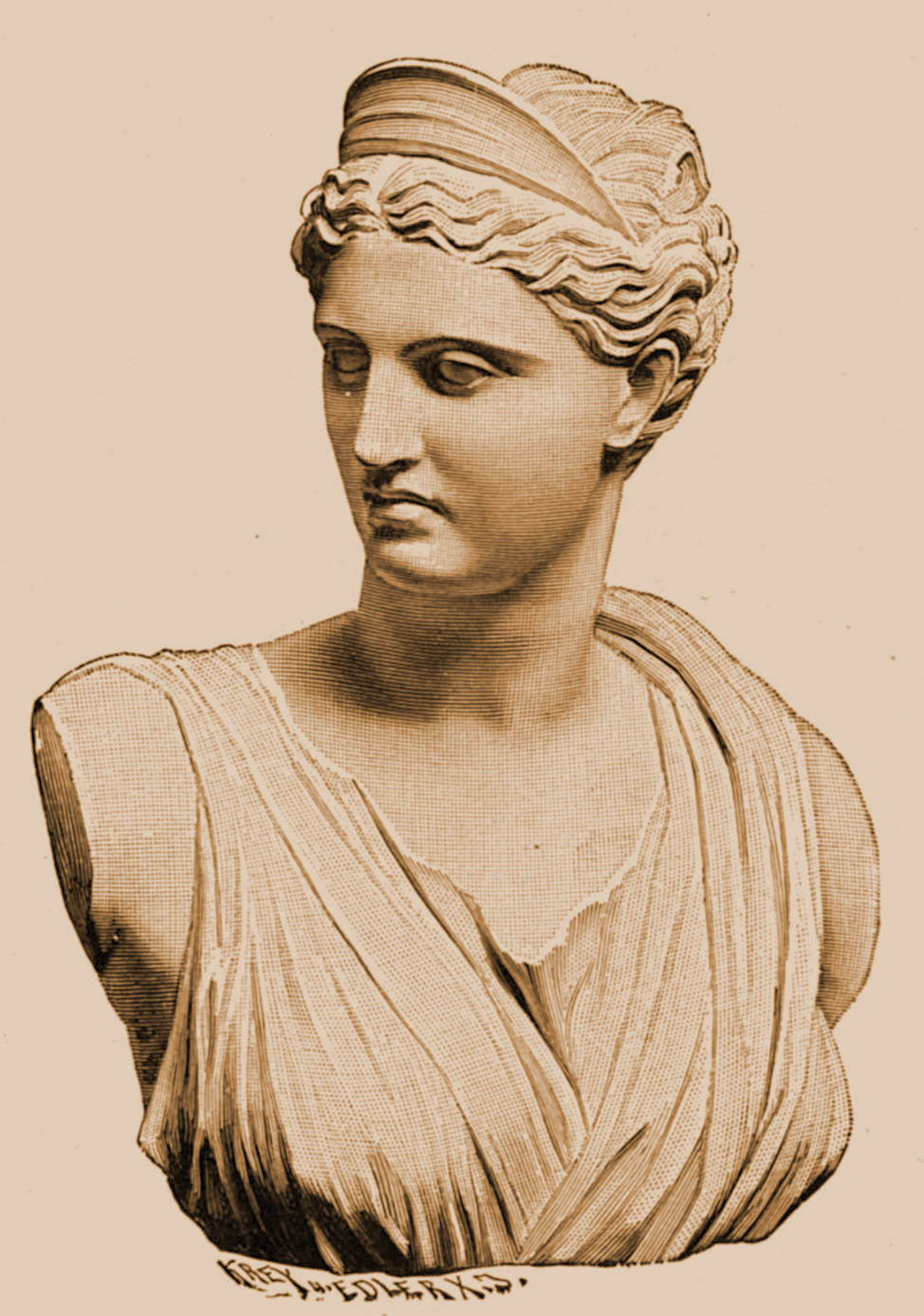
The peoples had their Gods and the Gods had their villages. Sparta worshiped typical Hellenic deities, although two among them acquired singularly relevant and important roles and became the most worshiped deities, even by the time of the Dorian invasion: Apollo and Artemis. They were twin brothers, reconfirming the cult of ‘sacred twins’…

He was conceived as a young, blond and blue-eyed man, holding a lyre, harp or bow, and possessor of a manly, clean, youthful and pure beauty—‘Apollonian’ beauty. The mythology explained that in his childhood he killed the serpent Python (in other versions a dragon) setting in its place, with the help of the Hyperboreans, the sanctuary of Delphi. Heracles also killed a snake when he was a newborn. Such legends represent the struggle that initially led the Indo-European invaders against the telluric Gods of the pre-Indo-European peoples…

In Greek mythology Artemis was a mentor to the young Atalanta, who became the best runner of Hellas, and no one, not even a God, was closer to conquer her than the mortal hero Orion. Apollo and Artemis were, finally, the sacred twin couple; day and night, sun and moon, gold and silver. They were the juvenile archetypes of Spartan masculinity and femininity, respectively.

(Passages from one of Evropa Soberana’s essays in The Fair Race’s Darkest Hour.)

Categories
Adolf Hitler Aryan beauty Eugenics Hans F. K. Günther Third Reich

Great personalities defend eugenics, 8

by Evropa Soberana

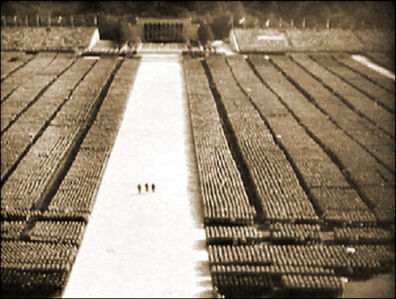
Nuremberg Congress of 1934

The world was dying of Judaism and that disease of Judaism that is faith in Jesus; We teach it the violence and faith of the sword. —Jorge Luis Borges, Deutsches Requiem.

 
The Third Reich

Hitler’s Germany was the culmination of all the processes we have seen, and it was at the 1936 Berlin Olympics where the Germans tried to present themselves as health advocates, announcing their commitment to body culture.

World War II marked a before and after. Before the Third Reich, these issues were talked about without fear. During the Third Reich, they were applied. After the Third Reich, the Pharisees of finance and the media made everything that is eugenic and genetic surrounded by a politically incorrect fog.

In addition to the men cited here, we can mention other prominent scientists who had a prominent role in the elaboration of the Nazi eugenic ideology (known as Rassenhygiene or ‘racial hygiene’), such as Fritz A. Lenz, Erwin Baur, Alfred Plötz, Ernst Rüdin and Ernst Häckel.
 

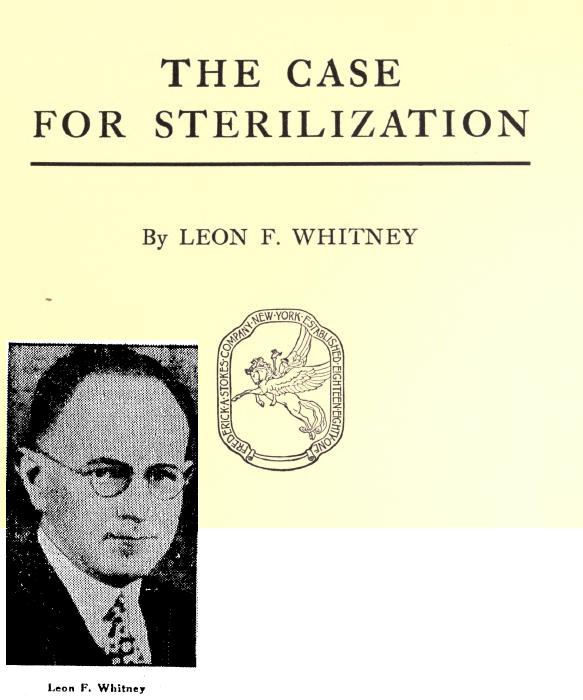
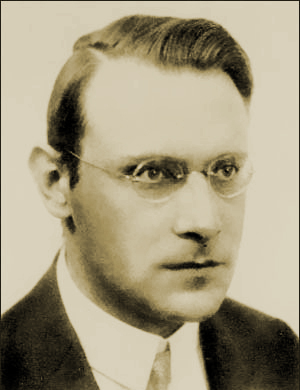
Leon F. Whitney (1894-1973), American veterinarian, dog trainer, canine psychologist and secretary of the American Eugenics Society, as well as the author of The Basis of Breeding, a book on eugenics for the layman.

The following quotation expresses the opinion of many eugenicists of his time: that the Third Reich was the first State to take from theory to practice all the postulates of almost a century of eugenic debate. This quote, from 1934, was delivered the same year that Whitney proposed the sterilisation of ten million ‘defective Americans’ at a time when the United States had 126 million inhabitants:

Many far-sighted men and women in both England and America have long been working earnestly toward something very like what Hitler has now made compulsory (The Case for Sterilization, page 36, ‘Nazi Connection’).


Hans F. K. Günther (1891-1968), anthropologist and professor at the universities of Jena, Berlin and Freiburg, with enormous knowledge of history and classical culture and extensive humanistic training. A Nordicist pioneer who, although he failed in small details, Günther broadly succeeded and left an open path regarding eugenics, Nordic blood in Greece and Rome, and pagan-Germanic romanticism.

Laying the foundations of Nazi racial thinking, and joining the NSDAP in 1932, Günther had an important influence on the racist doctrine of the Third Reich. He was also respected outside German borders, in academic settings of the United Kingdom and the United States. In 1935 Günther was declared ‘Pride of the NSDAP’ and in 1940 Hitler awarded him the Goethe Medal of art and science. After World War II he spent three years in an Allied concentration camp.

Günther never retracted his teachings. He published in 1951 a book that provides some guidelines for the election of a spouse and in 1959 another warning: that in Europe the stupidest people reproduced faster than the intelligent ones, and that that process had to be stopped by ‘family planning’. Günther contributed to the organisation of the Northern League (a Nordicist organization) and denied the Jewish holocaust until his death.

The conviction of the strength of the inheritance may have been weakened by the penetration of Christian ideas, with their accentuation of the separation of body and soul, spirit and flesh… (‘People and State, Inheritance and Selection’).

We must not be afraid to express an unpleasant fact for many educated people of our day: that the same vital laws are valid for the human being as for the animal. It is a side-effect of the medieval-ecclesiastical separation of body and soul, of flesh and spirit, that today more than one cultured person, before the hereditary health doctrine, speaks disparagingly of ‘animal husbandry’ or ‘dog breeding’. It has never seemed plausible to me that the animal is something so low that a comparison with Man cannot be authorised (Ibid.).

The large sums of money that today serve to lower the cultural level will be free, for example, for child allowances in economically weak families with good hereditary predispositions; that is, families that despite their good hereditary predispositions are in a state of need (Ibid.).

Especially for the hereditary capable female youth it is necessary to tell her, in the face of the current educational hoax, that for the German people it is vital that a hereditary high-value young woman, after the corresponding election of the spouse, see her hereditary qualities reborn in a group of their own children, and not through… the academic path of lack of children (Ibid.).

 
Adolf Hitler (1889-1945). Much has been spoken, written and speculated about Hitler and his eugenics. Nothing new is going to be written about him here. We will simply ask a question before letting him speak: How many of those who criticise him have really bothered to know his opinions firsthand? Why are there countries where his writings or speeches are censored? If Hitler was so wrong, why are we afraid to read what he left written (let alone his speeches)? Precisely with the idea of clearing the unknowns about his doctrine, Hitler prepared, in prison, his Mein Kampf (My Fight). Anyone who pretends to refute or hate Hitler should read this book first.

______ 卐 ______

Editor’s note: The PDF My Fight is
available through this site (here).

______ 卐 ______


[The Jewish quarter] does not want to see a healthy and robust generation. It wants only a contaminated flock apt to be subdued. (My Fight, Volume I, chapter 11).

A racialist State will have, in the first place, the duty to remove marriage from the plane of perpetual racial degradation and consecrate it as the institution destined to create beings in the image of the Lord and not monsters, half man, half monkey…

It is the duty of the Racial State to repair the damages caused in this system. It must begin by making the question of Race the central point of general life. The State has to ensure the preservation of its purity and to consecrate the child as the most precious asset of the people…

Supported by the State, racial ideology will eventually achieve the advent of a better time, in which men will be less concerned with the selection of dogs, horses and cats than raising the racial level of Man himself. (My Fight, Volume II, chapter 2.)

When I tasted the soup of the people of Schleswig-Holstein, it occurred to me that the gruel of the Spartans cannot have been very different. In the time of the great migrations, the tribes were the product of ceaseless mixtures. The men who arrived in the South were not the same as those who went away. One can imagine two hundred young Friesians setting out for the South, like a tank setting out across the country, and carrying with them men belonging to other tribes. The Croats are certainly more Germanic than Slav. The Esthonians, too, have a lot of Germanic blood (Table Talk).

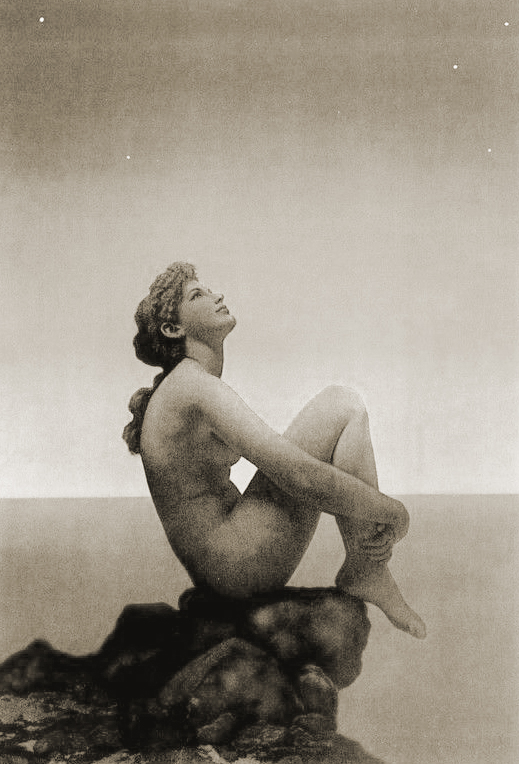
More importantly, we must educate young people about the beauty of the movement, the beauty of the body and the beauty of the spirit. Athletics, personal development, physical training, public competitions, and the resurgence of artistic representations based on Greek models, will help girls know how the man who deserves them should be, and also that the boys know what is the ideal woman. They will voluntarily turn their backs to the flirtatious dolls with dyed hair, painted faces, thick lips and red nails…

And a high selective ‘yes’ will become more important as we look like the people as a single entity. From an early age, day-care, elementary school, Hitler Youth and the German Girls League, all classes must join… (Quoted by Otto Wagener in Hitler: Memories of a Confidant.)

I have studied with great interest the laws of several American States dedicated to preventing the reproduction of persons whose progeny would not be of any value or would be harmful to racial lineage. I am sure that, occasionally, errors occur as a result. But the possibility of excess and error is still not a demonstration of the incorrectness of these laws (Ibid.).