 Click: here
Categories
WDH – pdf 327
Click: here
Click: here
‘We are not the Alt Right—AR was a racialist, atheist, post-American, revolutionary, and transnational movement. America First is a traditionalist, Christian, conservative, reformist, American Nationalist movement’.
What I translated in the other post today about the extreme puritanical behaviour among the ancient Vandals reaffirms what was said in my previous entries of the ignorance in the secular Alt-Right about some elemental history of the Aryan race.
Sexual debauchery in Greece and Rome only happened when those great civilisations were interbreeding with their racial inferiors. Before miscegenation, both Greco-Romans and ancient Germanic tribes, such as the Vandals and those mentioned by Tacitus, were extremely puritanical (sex with inferior races also doomed Ancient Egypt; see below). This is why I feel far more at home with Christians like Nick Fuentes than with those secular racialists whose sexual mores strike me as degenerate. Yesterday, for example, self-styled nihilist Jean-François Gariépy counter-signalled Fuentes about open homosexuality. JFG, of course, is tragically wrong. Aryan civilisation can only be built upon the solid rock of norms that regulate Eros, as the Nazis also understood.
But I am not a Christian. Below I quote a recent Robert Morgan comment on Unz Review about how Christianity could end; the last paragraphs of Evropa Soberana’s article on Egypt, and I offer my opinion about a Stormfront post about Wikipedia and Nick Fuentes’ Christianity. Morgan wrote:
______ 卐 ______
My view is similar to yours, that the empty pews are a sign that the West is turning away from Christianity. Unfortunately for the white race though, while belief in Christ and miracles is fading, the Christian moral vision of universal racial equality is stronger than ever. It has sunk into the culture, and is believed without questioning even by atheists.
In order to save the white race, that belief too would have to be completely extirpated, torn out by the roots. [But] Christianity and the culture it spawned is so useful to the success of empire that it’s hard to envision conditions under which that could happen.
It would be such a radical change in worldview that it would probably take (or even cause?) the collapse of civilization itself, similar to the way it happened when Rome fell. The Christian takeover resulted in the loss of about 99% percent of Latin literature, and 90% of Greek. Temples to pagan gods, some architectural wonders of the ancient world, were looted and pulled down. Priceless statuary and art was vandalized or smashed. Philosophers were tortured and executed, their writings banned and consigned to the flames.
Now imagine something similar happening to all the Christian churches; the Pope dragged out of his lair, tortured and executed; the Vatican a heap of smouldering ruins, its wealth confiscated, any art it contained smashed to pieces; banning and burning all copies of the Bible, and any Christian writings based on or referring to it; killing all the priests.
That’s what it would take to really get rid of Christianity. Then, and only then, could we say that Jesus is as dead as Zeus. Yet so long as the myth of racial equality was useful, I suspect empire would merely adopt another belief system to justify it.
[Editor’s note: ‘The myth of racial equality was useful’. So true. I also have wondered what was the primary cause of white malaise: Jewish subversion in the form of the gospel message or simply Constantine using the most effective weapon of the empire, Judeo-Christianity, to control whites? Remember how he moved the capital from white Rome to an increasing mud place, Byzantium—just what our elites are trying to do today!]
______ 卐 ______
The image below belongs to an unknown man of the V Dynasty. This racial type, neither Semitic nor Negroid, with dark hair and European features and identical to that found in Etruscan or Iberian art, was probably the predominant in the middle classes of ancient Egyptian society.
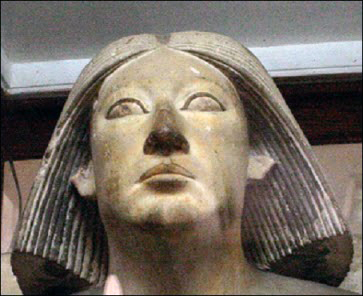 What happened to Egypt? Why did it fall after millennia of splendour? As with all the decline and falls of civilisations the answer lies in biology in general and genetics in particular.
In 1296 BCE the Egyptians conquered Nubia (Southern Negro inhabitants), building a series of forts to protect borders and control insurrections. At one point it was forbidden for any Nubian to cross the border and enter Egypt. Over time, as it is obvious in Egyptian art, black slaves were imported. As always, a low birth rate among the Egyptian nobility, a high birth rate among black slaves and Semites, and the miscegenation produced by the relaxation of the warrior, aristocratic and dominant mentality, cursed Egypt. Finally, in 200 years Egypt went from being a great civilisation to disappearing from the map of civilised nations, at the mercy of stronger foreign powers.
Until 1050 BCE, all the pharaohs had been predominantly white. With the advent of the XXV Dynasty and the ‘black pharaohs’, who had a brief and decadent reign of 75 years, during which they built stunted 20 meter high pyramids (the great pyramid of Cheops, coming from the good times of the true pharaohs, measured 146 meters), the original genetic and biological substrate that had created the civilisation was drowned forever in the dense thicket of dark blood.
In 343 BCE the last native king was deposed by the Persians. From then on, the confused and uprooted ‘Egyptian’ mass passed at the hands of Persians, then to the Greco-Macedonians (here they experienced a new boom, expressed in the emergence of Hellenic blood, the city of Alexandria and the time of Cleopatra, a Macedonian), then Roman, Arab, Turkish, English and, finally, American guardianship under Mubarak, until he was deposed by the rebellions of January 2011. Under the Islamist shadow the future of the country is more uncertain than ever.
______ 卐 ______
I capitalised the words originally written in lowercase on Stormfront:
Wikipedia is owned by a Jewish atheist called Jimmy Wales. He also owns a porn website and that is how he earned his millions yet he downplays this and the majority of public doesn’t know about it. He is a con man.
The whole of Wikipedia is liberal and owned by a liberal crew of elite editors who deny race exists. Just look at any race article to see that. Wiki bans any white nationalist, etc., and they consider any racial view as “fringe” and they heavily edit and suppress any info like that coming into Wikipedia. If you want to see an example of this, then see the white nationalism, race realism article or something like the multiregional hypothesis article where they troll any new edits and are not neutral on the subject.
This explains a lot, but not everything.
As before discovering white nationalism I edited Wikipedia a few years, I eventually realised that the real trick lies in its policy of what they call ‘reliable sources’. In plain English, ‘reliable sources’ are nothing other than what throughout Christendom was called Imprimatur and Nihil obstat: it was only possible to publish with the approval of the Catholic Church.
Exactly the same happens on Wikipedia today, with the difference that now Christianity no longer holds the monopoly of the media but Judaism. For example, you can only reference wiki-articles with publications that come from official journals and publishing houses of the System.
But what’s exactly the problem with that? See my rephrasing of Tom Sunic in my Wikipedia user page: ‘Regarding this encyclopaedia’s policy of “reliable sources”, it has become a customary procedure for the System to relegate free thinkers and would-be heretics and their literary or scientific achievements to marginal outlets, such as self-publishing, that are very similar to those used by dissidents in the ex-Soviet Union’.
Since the controlled media is at the hands of Jewry, the ‘reliable sources’ policy means that every wiki-article dealing with social issues must be, de facto, Kosher approved. That’s why no unbiased article that touches white identity can be fixed on Wikipedia.
Against Fuentes’ religion
Let’s go back to Nick Fuentes. The chasm that separates me from American racialists is so great that the only way to get past it would be, for at least one of them, to read the autobiographical books that I will soon begin to translate.
In short, it is a ‘psychogenic’ chasm. If we compare the life of a racialist like Fuentes with a typical Hollywood comedy, my film would be as heavily existential as what we can see in a Russian film, Andrei Rublev, located when Russia was still in the Middle Ages. If a time machine were possible so that Rublev, who existed in real life, could talk to an American today, it would be seen that my analogy of the two films is spot-on: a psychogenic chasm separates the two minds in an impassable way.
Compared to ‘Rublev’, Fuentes, who has reproduced rap music in his shows, is frivolous as he likes the movies that Hollywood has produced in recent times. He not only ignores European and Russian cinema, but even the old American cinema that I saw as a child. What’s worse, Fuentes has said that the United States ‘is a Christian nation’. In a recent interview with a black Youtuber, another Christian, who asked him if he hated Jews, Fuentes replied that he hated no one but loved everyone, including the Jews.
Like every Christian and neochristian, Fuentes ignores that love is murdering the white race. Moreover, like almost every American racialist Fuentes is ignorant about the history of Christianity: a history of genocidal hatred. Next week I will publish a translation about the complete extermination of two Aryan peoples, the Vandals and the Ostrogoths, perpetrated by a non-Aryan emperor, Justinian, in the 6th century. To my knowledge, neither Fuentes nor any racially conscious Christian knows that black page of the history of their Church. Almost nobody in the movement seems to be concerned with the historical facts, how the Aryan man betrayed their white Gods to worship the god of those who wanted to exterminate them.
Even those who ignore the history of their religion could see that there is a sort of schizophrenia on being Jew-wise and obeying, at the same time, the god of the Jews. Alas, no Christian in the movement wants to heal from such doublethink. In the livestream of the Groypers in Florida, for example, he who surreptitiously recorded that recent event rebelled against the term ‘Judeo-Christian’ expressed by Charlie Kirk. Something as absolutely obvious as that all holy New Testament characters are Jewish doesn’t seem to cause any internal conflict among them.
I don’t think people like Fuentes and company are going to heal themselves from their divided Judeo-Christian minds. Even the author of Siege, so acclaimed by would-be revolutionaries, suffers an acute stage of the disease. This Wednesday, in an interview with Invictus, James Mason’s last words were: ‘…and wait until the return of the Lord. It is very, very near’.
It doesn’t matter that Mason, who has become a Christian identist (see his latest book When We Were All Jews), was brilliant in other parts of the interview. It has to happen what Revilo Oliver said: only a catastrophe that causes suffering for many decades could move the surviving whites to really question their ethno-suicidal paradigm.
For example, despite having defended Richard Spencer last week, even he, a secular racialist, goes on to say that when whites have their empire again, the coloured should be helped outside the ethnostate! I heard that in another interview with Invictus. The interview was recorded after the Spencer scandal I mentioned last Friday. Spencer’s comments on this out-group altruism, which I label neochristian insofar as pre-Christian whites didn’t suffer it, can be listened almost at the end of the interview. Incidentally, ‘Feast’, part IV of Andrei Rublev, depicts beautifully a large group of pre-Christians conducting a lit-torch ritual for midsummer in a magical night: visual art that the likes of Fuentes will never appreciate.

Rublev comforts Boriska, breaking his vow of silence.
Let there be no doubt: American racialists need decades of continuous suffering à la Rublev to give up their little paradigm, as Robert Morgan imagined above. If out-group love is murdering the white race let us transvalue Christian values. Only out-group hatred will save us: paradoxically, the core of ‘the 4 words’ in my final books.
Hopefully, the crash of the dollar and energy devolution will do the Oliver trick…
Editors’ note: Footnotes have been omitted. To contextualise this section of Vol. II of Karlheinz Deschner’s encyclopaedic history of the Church in 10 volumes, Kriminalgeschichte des Christentums, see the abridged translation of Volume I (PDF: here, hard copy: here), which reproduces a syntactically corrected edition of instalments 1-100 on this site. Instalments 101-122 can also be read on this site.
The Vandal state
 Gaiseric created the first independent Germanic state on Roman soil. This Germanic state had its richest and most fertile provinces: Mauretania Tingitana, Africa Zeugitana, Byzacena and Numidia Proconsularis. Gaiseric also became the owner of Corsica and Sardinia, whose forests were cut down by workers under forced labour to build his ships. By 455 he added the Balearic Islands, which he had already sacked in 425. He dominated the seas from Gibraltar to Constantinople and did not even give nominal recognition to the Byzantine emperor, although in pledge of peace he had to send his son Huneric to Italy. […]
The rich churches and monasteries were sacked, as they were ‘bastions of Roman domination’ (Diesner). It is understood that, in general, the Catholic civilian population offered no resistance anywhere, remaining indifferent or sympathising with the invaders. Some of them even converted to Arianism despite Gaiseric’s attacks which were particularly brutal against clerics, monks, and nuns who were often raped. […] Occasionally, as happened after the occupation of Carthage, the king appropriated all the property, furniture and real estate of the adversary clergy. He also ordered that all churches be closed, handed over to the Arian clergy and used as barracks. […]
As comprehensible as the outrage of the Catholic chroniclers against Gaiseric is, one of them at least concedes something. The Father of the Salvian Church of Marseille praises Gaiseric’s fight against ‘impurity’. Well, this blood-stained Christian was tremendously puritan: a very frequent combination, as we know. He not only fought against pederasty but also against brothels, even forcing all prostitutes to marry.
The king of the Vandals, who, if necessary, was not intimidated by any bloody action, experiences such disgust at the plague of public sexual lewdness—a plague characteristic of the big cities—, and considers it such an abomination for his compatriots, that he proposed to eradicate it from end to end. And everything indicates that he achieved it while he lived.
The history of the Vandal State has only been bequeathed to us, almost exclusively, by Catholic clerics. Even the few historical testimonies of a profane nature are strongly influenced by them. Therefore, it is more than likely to have been distorted by their biases […]. Despite all the exaggerations, even falsifications, of the history by the Catholic tradition, there can be no doubt that the proceeding of Gaiseric towards the Catholic clergy was very tough and sometimes bloodthirsty. That clergy was, of course, not only a bitter adversary of Arianism. Arianism increasingly became an enemy of the State. […]
Gaiseric died very old at the beginning of the year 477. His son and successor was Huneric (477-484), whose wife, daughter of Valentinian III to which Gaiseric abducted from Rome in 455, fled in 472 to Jerusalem: presumably by aversion to her husband’s Arian faith […]. Huneric succumbed early, in December of the year 484, victim of a disease. The Catholics welcomed the news joyfully as every time one of their adversaries dies.
Groypers, Spencer and Allied rapists
About the arrest and deportation of Greg Johnson from Norway for pre-crime of a possible thought-crime, isn’t it ironic that Johnson is the one who has written the most against the lone wolves? Will he learn the lesson? It is not enough to comply with the laws of a country: the anti-white System will still get you.
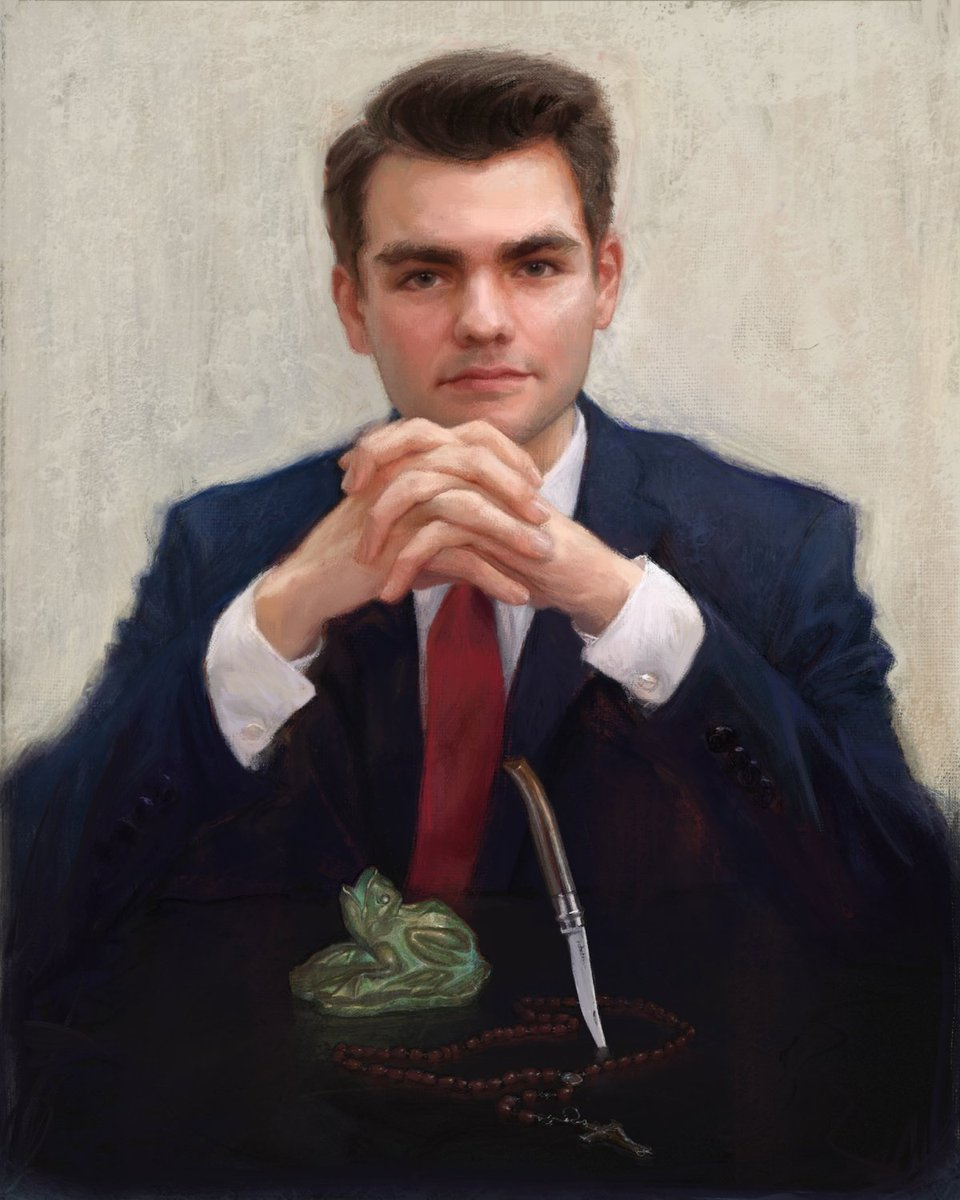 As axiologically I consider Johnson a pseudoapostate of Christianity (see my previous entry to understand the concept of pseudoapostasy), I prefer an openly Christian activist like Nick Fuentes (sample videos here, here and here).
Fuentes is the leader of the Groyper War that is currently exposing the American cuckservatives. Though I would much prefer something closer to what Hitler did in the 1920s, after Charlottesville the System made it clear that it will not tolerate such events, even if no laws were actually broken. So what we have in regards to tolerated activism is a movement led by Fuentes and three other Catholics: Vincent James, E. Michael Jones and Patrick Casey.
In The Fair Race I said: ‘I’m looking forward to Richard Spencer and James Edwards running for president and vice president in 2024 to let white nationalists know that, legally, they’re not going anywhere (cf. Charlottesville). The time has come to speak about a revolution within the limits allowed by the law of the United States’. But now that Spencer has gotten into trouble we should consider the Groyper movement which has deeper roots in America’s superficial culture than Spencer’s more profound Kultur. As a Counter-Currents columnist recently said, ‘The groyper movement is far more than a Nick Fuentes fan club. It is the primal scream of Deep America, of an American nation which intends to make itself known and rise on the world stage. Fuentes is riding this wave—how far, I cannot tell’.
Before the Spencer scandal (more on it below), the McSpencer Group recently assembled ‘to discuss the recent storming of Charlie Kirk’s “Culture War” tour by members of Groyper Nation. Speaking of the Culture War, the group also takes a deep dive into the history of the “paleoconservatives” and the politics of nostalgia—their triumphs, their limitations, and whether their movement and moniker make any sense in the 21st century’, according to the video’s abstract in YouTube. A commenter replied: ‘Got to give Nick credit. This is the type of IRL [in real life] activity we should be doing rather than street battles with Antifa’. But the Groyper movement has its problems for secularists who comment in Greg Johnson’s webzine, as Hector Quinn said a couple of days ago:
The only problem with this groyper uprising is its attachment to extreme right-wing Christianity. Not only does this alienate it from most people, but it’s also not particularly revolutionary. Their questions about gays and “Christian morality” are really just a throwback to the George W era. It’s not interesting and already has a place within mainstream conservatism. The pressing and truly vanguard issues that they should be focused on are those of race and Israel.
I disagree. It doesn’t matter that Groypers are stagnated in levels 3 and 4 in Mauricio’s metric. Compared to those racialists who use the Newspeak term ‘gay’ I am on their side, as can be deduced from what I said about sex in my article on pseudoapostates. Groypers are absolutely right that what the white man needs is a return to morals. Secular nationalists, on the other hand, seem to ignore the information from The Fair Race and other sources: the Spartans, the men in Republican Rome and even German invaders during Christian takeover of Imperial Rome were Puritans: the rock upon which a culture can be built.
Let’s go berserk!
Richard Spencer for one is a non-Christian. Regarding the audio about Spencer’s visceral reaction, immediately after the Charlottesville event, I remember seeing and hearing, if not that same audio (with an accompanying video), a very similar one in which Spencer, inside a moving car in the streets of Charlottesville, ranted against the vile ambush by the System.
When I saw that video in August 2017, I felt vindicated: finally someone speaks as violently I speak! But two years later, when the audio became public, Alt-Lighters see things exactly the other way. They talk about a ‘temper tantrum’ or a ‘meltdown’ of Spencer as if his super-healthy, super-cathartic explosion was something negative. How is it possible for normies to see things in photographic negative: white is seen as black and black is white; dark gray is seen as light gray and vice versa? If something ought to be considered positive it is precisely Spencer’s slurs about Jews and blacks in expletive-laden rants, even though for normies’ ears it sounds like the most poisonous kind of white supremacism! Only in a world where Aryan values have been 180° inverted, courtesy of Xtian ethics, could Spencer’s fury be considered mad.
One thing is clear: due to my apparently ugly self (‘ugly’ only for neochristian eyes) I find talking to myself on this site, where I now only post once a week. If this site were popular, many racially aware whites would already know the history of the Berserkers, included in one of the PDF chapters of the sticky post that appears above this article. The Berserkers story is fundamental: it shows that the blond beast must suffer, occasionally, outbursts of holy rage as the Vikings did during their war cries.
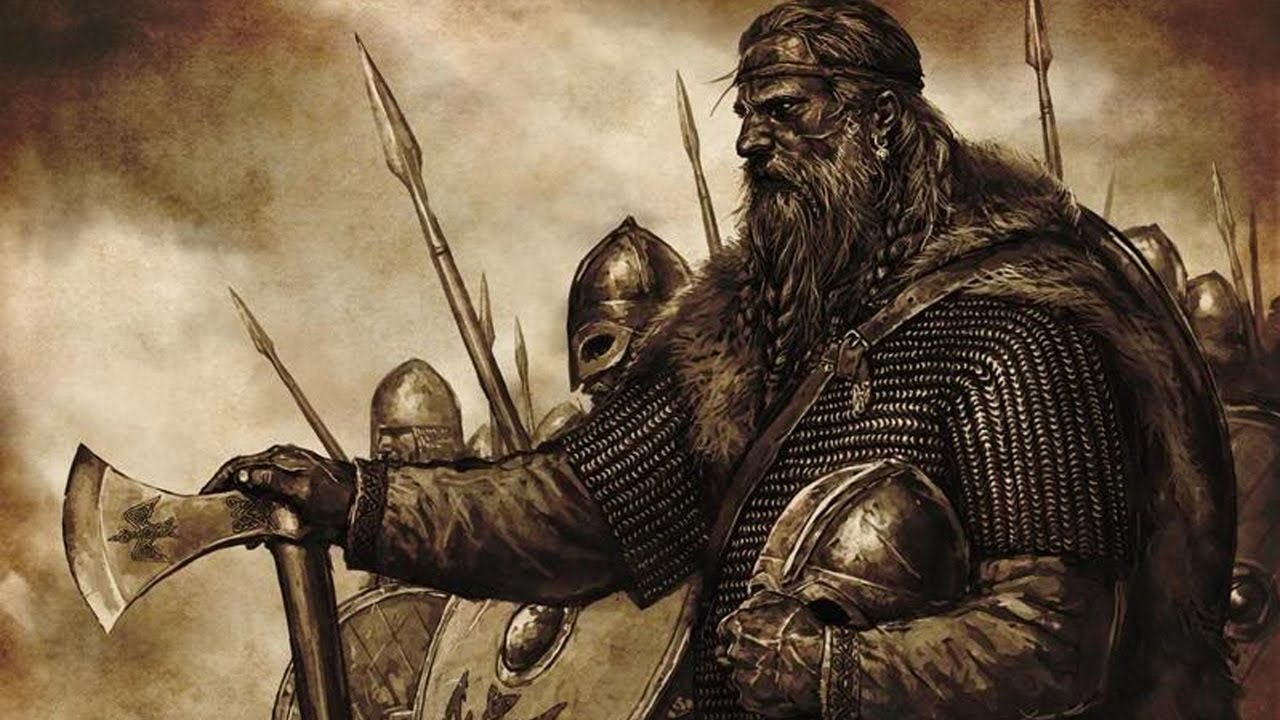 But for the castrated white after WW2, and this includes every notable figure in racialism except exterminationists like Linder, that is considered insane. When we talk about transvaluing Christian values to pre-Christian times we mean precisely to recover our warrior manhood, including the ultra-violent cries of war, as part of the psychogenic price we must pay to re-conquer the West. Alas, the average Alt-Lighter is closer to the ultra-pacifist Johnson than to the Viking of yesteryear…
Christian apologetics
A piece of older news is that Weev of The Daily Stormer was finally discredited in the movement. Good news, as a Jew would never have been accepted as a contributor in the Nazi tabloid Der Stürmer, times when whites had not castrated themselves.
Originally some people thought that The Daily Stormer would be the webzine for adolescent Berserkers but they could not be more wrong. If that were the case, once the legal age was reached, DS readers would graduate from websites like The West’s Darkest Hour or from those that guard William Pierce’s old essays and speeches. But they stay at the Anglin playground. As far as Andrew Anglin is concerned, more serious than the fact that he had collaborated with a Jew is the POV from which he starts: ‘We cannot let anyone influence our agenda, which must remain what it always was: Pro-White, Pro-Christian… Pro-American’.
Not let anyone influence you? This is also the problem among Groypers and American conservatives in general. What about the historical facts about the origins of Christianity, for the first time systematically exposed on a racist site (this one)? Pro American? Apparently, it doesn’t occur to American conservatives that their Philo-Semitic, Mammon-worshiper country is a major factor in white decline. The only way to fix the problem is to understand the fact that your race is your nation, which means accepting all Aryan history as the story of your true nation (once more, cf. Pierce’s historical essay in The Fair Race).
Recently, like Anglin and the Groypers, Hunter Wallace has been writing apologetics (‘It is a mistake to conflate our particular lifetimes with Christianity. Before the Second World War and the television era, there was no such thing as a social stigma on racism’). Wallace and the southern nationalists of his webzine do not seem to have listened recently to Alex Linder, or the argument which compares Christianity to cancer. Cancer, too, doesn’t necessarily kill immediately. You can have cancer for years until it suddenly metastasises and kills you (cf. Part II of The Fair Race).
These days, for example, I have been watching some of my favourite scenes from the 1959 Ben-Hur movie, based on a novel that was a tremendous bestseller at a time when there was still no television. I am surprised how, even in those times, the Yankees (the novel was written by a Yankee) idealised the Jewish quarter at the expense of Aryan Rome. When the movie was released I was one year old. With a few more decades, the comparatively small cancer that represented the values of that novel and film—the values of the American culture!—would metastasise at runaway philo-Semitic levels, and the anti-Roman values so to speak, of today (cf. the essay of Judea against Rome, also referred to in the sticky post).
Objections aside, I am glad that some American nationalists seem to be awakening on a substantial scale. But something infinitely more challenging that Groypers could be asking to cuckservatives are questions about the lies about the Second World War (‘You call me a holocaust denier but the real Holocaust deniers are you: Why hasn’t the Republican Party said a peep about the genocide of millions of Germans from 1945 to 1947?’).
In stark contrast to the above American news, I would like to change the mood to my usual gravitas and cite some pages of Tom Goodrich’s book on the Americans’ rape of European women:
______ 卐 ______
September 2024 Note:
I removed the following quote because I will be incorporating it into the Summer 1945 series.
I will be posting only one entry a week, preferably on Friday mornings. Meanwhile, Rabbi Yosef Tzvi ben Porat has a message for you.
audios of Linder on Christianity
 Listen to what Alex Linder says about Xtianity: here, here, here, here, here and here. In one the last minutes Linder said:
I really really have thought a lot about Christianity, and studied it a hell of a lot and when I eventually write something it is going to be part about it. Because I think that is the biggest unexplored territory in relation to racialism and the whole movement—the political aspect of it. That part has not been worked out. I honestly believe that even the significant people in racialism underestimated the problems that come from that direction and [are] basically tolerating it openly as some kind of good a neutral thing. But I literally could go on and on for seven more hours, he he! Anyway…
“Because I think that is the biggest unexplored territory in relation to racialism”. And this is precisely why The West’s Darkest Hour focuses on this subject.
Or:
It all starts at Level 6
Hitler said that National Socialism could not be exported. If technically we cannot call ourselves ‘National Socialists’, this explains that a few years ago I started using another expression, ‘priests of the fourteen words’.
The priest of the 14 words does not even have to be pure Aryan as were the members of the SS. By the expression I mean a man devoted to fulfilling the words of Hitler and Lane, which on the internet are represented with the numbers 14/88 (eighty-eight being some 88 words of the Führer in Mein Kampf). About the time when I coined the expression ‘priest of the 14 words’ I began to talk of a first guideline for such priest: ‘Speak only with Aryan males’. You can avoid ninety-seven percent of pointless discussions if you follow this simple guideline. Furthermore, only Aryan men are potentially capable of initiating an armed revolution in pursuit of the sacred words.
But a guideline is not compulsory and sometimes I still try, unsuccessfully, to communicate with non-whites. On the other hand, on page 563 of The Fair Race, writing about the new tablets of stone, I do speak of imperatives: ‘First commandment: “You will keep your blood pure”. Second commandment: “Never use non-whites in any type of work”’ (listen to the interview of Arthur Kemp by Lana Lokteff to learn why using non-white labour is ultimately ethnosuicidal).
Since together with modern civilisation Christian ethics are the mortal enemy of the sacred words, I would like to expand our understanding of the priesthood of the 14 words with four signs of genuine apostasy from Judeo-Christianity. Despite the last line of this article, the priests of the fourteen words (1) do not believe that the god of the Jews exists and therefore (2) do not believe that a Jew was resurrected from the dead in the first century of the Common Era. Nor do they believe in (3) the Christian vision of the human soul or the existence of disembodied entities in the hereafter. Finally, (4) they have transvalued Christian values to Aryan normality (this is central to what I’ll say in this article about the so-called day of the rope).
One might think that with this criterion the people of the ‘Alt-Right’, exemplified in the secular case of he who coined the term, Richard Spencer, could be candidates for this new ecclesia. Actually, Spencer is not a candidate to the extent that he fails at the fourth sign, and it is not entirely clear what his pals think about the third one (see my recent entries on the hereafter). I would like to exemplify why they cannot be priests with the most recent talk of Spencer and his friends who, using the metric of Mauricio, I’d say they are psychogenically trapped between levels four and five while our priesthood starts at Level 6.
While we want to transvalue some American values to NS values; other values to the England of Jane Austen (the laws of the Victorian world virtually forced women to get properly married), and others to Greco-Roman values, the Alt-Right continues to promote Murkan values (even though Spencer said that ‘there is something profoundly wicked in the origins’ of his nation). For example, in their recent YouTube talk, ‘The Self-Defeating Drive for De-Radicalization’, Spencer okayed getting laid during his criticism of the more puritanical incels. When I heard Spencer and his friends I wondered what happened to the sacred institution of marriage in their minds, which even precedes Christianity? Are they so dense that cannot understand that some men simply don’t want to get laid occasionally but marry a decent woman and form a family? Have they not heard what Anglin or Linder say about MGTOW (see for example my own text on the subject: here)?
I also wondered if Spencer & Co. had considered the more conservative texts by Roger Devlin, and now I think the answer is negative. The liberal position of the Alt-Right on sexual maters reminds me of the last novel by the late Harold Covington, which is also his longest novel about the creation of an only-whites republic. Covington’s novel describes an ethnostate in which the most spoiled women, even feminist warriors, coexist with ladies who behave like Austen’s lovely girls—as if that were possible under the laws and mores of a healthy nation!
But it was not Spencer who surprised me the most, but the guy whose face does not appear in the NPI/Radix videos, only his voice (the moment of his speech begins: here). Spencer’s colleague strongly criticised a fan of William Pierce’s The Turner’s Diaries and the day of the rope. The dude did not explain why it was so primitive to like the most popular novel authored by an American racist, even more popular than Covington’s revolutionary novels. He even used strong words: ‘That’s an immature fucking movement. Those idiots…’ Spencer intervened and, commenting about ‘punching right’, he used the word ‘toxic’ without explaining why the day of the rope should be considered toxic for alt-righters.
This is my proposal to the genuine priests of the 14 words: Not only the friend of Spencer who does not show his face, but on every racially conscious white who is frightened by Pierce the label ‘PSEUDOAPOSTATE’ must be stamped.
As we have seen countless times on this site, there is a chasm between apostasy and pseudo-apostasy of Christianity, between Level 5 and Level 6 in the Mauricio metric. Complete apostasy implies the rejection of those Christian standards of morality that prevent Alt-Right folk from thinking in revolutionary terms. And exactly the same happens in White Nationalism, exemplified in how ‘secular’ Greg Johnson experiences hair raising with both Pierce’s fiction and his non-fiction alike. I could be told that what I say is nonsense in the sense that Christians have been slaughtering for centuries without remorse. But remember what we have been saying on this site: it was not until 1945 when, confused by racial warfare, the white man’s moral compass changed orientation toward gospel-inspired values, even among secularists.
In their video, Spencer and his pals talked about the stage they classify as ‘1.0’ of the movement. In reality, compared to National Socialism their movement is a grotesque regression to the most progressive mentality of the 19th century (remember H.G. Wells’ famous essay on ‘free love’, that is, promiscuous sex). It will give me great pleasure when the economic crash that lies ahead hits the bourgeois lifestyle of these four Radix characters…
After the crash of the dollar Americans will psychogenically transit from ‘happy mode’ to ‘angry mode’. If things get worse over the months, and you must watch John Mark’s videos, whites could even go on a defensive state against invaders at home that I’ve been calling ‘combat mode’. And if the government sides the coloured ‘zombie’ invaders looking for food a revolutionary ‘killing mode’, which includes the day of the rope for traitors, could arise.
History might begin to vindicate us priests of the 14 words while lukewarm voices like Spencer’s and his group will barely be taken seriously. To those who are still sceptical that a collapse is coming I would like to change the subject and say the following:

J. M. W. Turner: The Fall of an Avalanche.
I’ve been watching some of the latest videos by economist Jim Rickards, author of Aftermath: Seven Secrets of Wealth Preservation in the Coming Chaos (2019). In one of his last interviews, they told Rickards that for years he had been predicting a financial collapse and that it still doesn’t happen.
Rickards replied with the perfect metaphor: the exact hour of an avalanche cannot be predicted. Although the accumulated snow layers are a sign that sooner or later it will collapse, it is impossible to know when the temperature will rise among factors such as wind, the additional weight of other layers, snowstorms and rainstorms. But the sure thing is that the avalanche will occur sooner or later. This is from a recent article where Rickards says that the world is unprepared for the currency crash:
Previous crises. According to Mr Rickards, the 1997-1998 Asian financial crisis could’ve brought the world to its knees if Wall Street banks hadn’t pulled together to bail out US hedge fund Long-Term Capital, which was about to collapse. The crisis spread throughout the world and hit the US causing Dow Jones industrial average to record its biggest point fall in history by October 1997—triggering a trading suspension. However, disaster was averted after Long-Term Capital received a US$3.75 billion bail-out. Had it not been bailed-out, a cascade of secondary bank bankruptcies would’ve ensued with numerous majors around the world including Deutsche Bank, UBS, and HSBC reporting they had either contributed to the bail-out or written off hundreds of millions in losses.
The following 2007-2008 global financial crisis was triggered by the US subprime mortgage market and excessive risk taking by banks with their lending practices. Falling prey to the crisis was Lehman Brothers which went bankrupt and caused the Dow Jones to topple to its lowest in seven years. In this bail-out, it was left to central banks to prevent financial Armageddon, with the US Federal Reserve taking its balance sheet from US$800 billion to over US$4.2 trillion. The US Government took over flailing banks Fannie Mae and Freddie Mac, while others including Merrill Lynch, Wells Fargo, and Bank of America received hundreds of billions in US Government bail-outs.
Who’s going to bail out the central banks? With another financial crisis imminent, Mr Rickards posed the question: who is going to bail out the central banks? […] “They’ll close exchanges, close banks, close ATMs, freeze accounts.” When people say that will “never happen”, Mr Rickards explained it has happened many times before including Cypress, Greece and Argentina. He added it also happened in the US in 1933, when US President Franklin D Roosevelt ordered every bank to close. The bank shutdown lasted eight days, but Mr Rickards said no-one knew how long the closure would be and it could easily have been a month-to-two months. He pointed out another financial shutdown occurred in the US in 1914 when World War One broke out. “The New York Stock Exchange was closed for five months—from July 1914 to December 1914.”
What does the future look like in the next crisis? Mr Rickards was quick to point out he doesn’t foresee a dystopian future or an end of the world scenario. However, he said he did expect the crisis will begin with “enormous social unrest”. Elaborating on this statement, Mr Rickards noted the veneer of civilisation is “paper thin”.
“We saw this in August 2005 with Hurricane Katrina in the US where the city of New Orleans was cut off and order broke down within days. By the second day, people were becoming desperate for food and water. By the third day, violence had broken out. You have vigilantes, looters, and the national guard moving in. Civilised behaviour only lasts about three days in the absence of reliable water, food, electricity and all the things we take for granted.”
In a situation where banks are closed and people can’t access their money, Mr Rickards said social disorder will break out “quite quickly”. This will be followed by a breakdown of internal systems. “This is how complex civilisations collapse. It isn’t a barbarian invasion, but an internal collapse, because of too much bureaucracy, too much taxation, and complexity.”
He said the social disorder will be most acute in major metropolitan areas. To survive this new system, Mr Rickards anticipates communities will shift to a semi-barter system where skills are traded and silver, or gold if you have it, can be used to buy food and other essentials. As the crisis unfolds, the US dollar is expected to become worthless—with gold the primary valuable commodity.
Using the metaphor, in 1998 and in 2008 the economic avalanche had started but was stopped twice with a man-made wall. But sheer size matters. Since the cure was altogether artificial, from 2008 until now many more snowpacks have been accumulated, which means that in the next crisis the central banks won’t be able to stop the increasingly accumulated energy of the fall of the avalanche. That the central banks won’t be able to stop the avalanche is recognised also by other economists who don’t buy the economic nonsense promoted by the System (watch for example the crash courses by Martenson and Maloney so many times cited on this site).
Rickards usually has wealthy people as an audience whom he recommends investing their savings in real estate and tangible commodities (including art) and 10 percent of their capital in gold. But those who visit The West’s Darkest Hour are not so rich, some are even relatively poor. To you I would recommend using 90 percent of your capital to obtain ounces of silver. If you don’t even have capital in the bank, I would suggest working to be able to obtain such coins. Living in the third world this is complicated for me but in the first world it is possible.
Among the sceptics some ask us to give them the exact date of the financial collapse, as if that was possible (cf. how the exact timing of the physical, non-metaphorical avalanche is impossible). They behave like children with such irrational demand while they continue skiing in high-risk places. But of that day and hour knoweth no man, not the angels of heaven, but the Father only.
Imagine that you have to argue with people that some kike didn’t actually come back from the dead.
—Alex Linder
After rereading Mauricio’s List, this morning I got the eureka! moment regarding the reason for the reduction of visitors and donations of which I spoke on Wednesday.
It’s as simple as that, thanks to William Pierce, I’m already at Level 10 of the List while the majority of racialist folk are at Level 4 (‘White Nationalism is good. Jews are evil. Christianity is a White religion’). A few are permanently stuck at Level 5 (‘National Socialism is good. America is evil. Christianity has been corrupted by Jews’).
Once one abandons Christian ethics (‘The leap from 5 to 6 is astronomical’ in the words of Mauricio) the next steps to finish crossing the psychological Rubicon can be taken, such as the exterminationist position of Charles Darwin (see what I said about Darwin yesterday).
Mauricio’s full sentence in that entry last year is: ‘Personally I’m a Level 9, verging on Level 10. I’ve met some Level 4, and only a few Level 5. The leap from 5 to 6 is astronomical due to the Xtian malware rejection. Feels lonely sometimes…’
Bingo. And sometimes I wonder if I should reduce my entries on this site to a minimum, in the sense of saying only the essential. What is the point of speaking from Level 10 when most visitors are stuck at Levels 4 and 5?
In my previous posts I said that I have been counter-signalling white nationalists because they maintain Judeo-Christian tails, and at the same time I have been citing Richard Carrier’s work on the nonexistence of Jesus. But Carrier is a typical liberal, as can be seen from the debate I heard yesterday between him and Richard Weikart on YouTube:
Hitler is often claimed to have been an atheist or a Christian by believers and skeptics eager to put the dictator in the other’s camp. Christian historian Richard Weikart argues he was neither in his new book Hitler’s Religion: The twisted beliefs that drove the Third Reich. Richard Carrier is an atheist historian who has researched Hitler’s purported anti-Christian statements often quoted by apologists in his book Hitler, Homer, Bible, Christ. He says that Hitler was anti-Catholic but thought of himself as a “positivist” Christian. In contrast Weikart argues Hitler was a pantheist who personally despised Christianity and only used it in public to aid his rise to power.
Everything sharp and forceful that Carrier had in debating (and refuting) the historicists of Jesus collapses when he speaks of Hitler. He is suddenly transmuted into a completely dishonest fellow. In that 2017 debate, you can tell that Carrier overstates his case when he wants to force his view that a Christianity similar to Christian Identity (‘Positive Xtianity’) was always behind Hitler. What would Carolyn Yeager say about such claim?
Weikart repeatedly replied that Hitler used the word ‘Christianity’ in his criticisms, that Hitler was not only referring to Catholicism or the Church. But Carrier, with that alchemy that he refutes in the fundamentalists, transmutes everything that Hitler said about Christianity as if he supposedly referred only to Catholicism. A case of self-delusion, and big time!

The nadir of the debate occurred in the final segment, where Carrier became as dense as those NPCs that Black Pigeon Speaks was making fun of a month ago. I mean: Carrier criticised Trump claiming that what Trump was doing was ‘demonizing Muslims and Hispanics’. Really? Why did Carrier see nothing about Muslim terrorism, and that Trump only wanted to restrict the migration of the seven countries that produce the most terrorists?
This demonstrates once again that intelligence can be accompanied by very serious character flaws that remind me of my favourite Hamlet quote (cited below). Intelligence is of no use if people voluntarily surrender themselves to self-deception. And Carrier does it. For example, in his discussion with Weikart he sugars the pill about Charles Darwin, claiming that his Darwinism was human and sensitive to other races! Does Carrier ignore that according to Darwin niggers were to be exterminated?
Both Carrier and Weikart regurgitate the widespread myth that Hitler wanted to exterminate the Jews ‘because they were an inferior race’. At this point, Weikart surprises me more than Carrier, as the latter is not a Hitler scholar, only a Jesus scholar. Is it possible that none have read Esau’s Tears, a 1997 book with an academic imprimatur and good reviews among normies, authored by a Jew who showed the depredations of the Jewish quarter in the 19th century (which caused the German reaction in the 20th century)?
White nationalism has a point. What could we possibly do with these two Richards, a typical Christian and a typical liberal, without the incredibly detailed analysis of the JQ in WN?
You must understand the POV of this site: if I criticise white nationalists, it is because they maintain a tail of Judaism in the sense of Judeo-Christian axiology, so toxic to the Aryan cause. But I don’t criticise white nationalism for its general vision of the JQ. And if there is something in which the two Richards are absolute ignorant it is the JQ. I wonder if any of them know the work of Kevin MacDonald, if they have even looked at The Occidental Observer?
The debate linked above only corroborates something that my female friend told me: that men—including myself—tend to worship the intellect at the expense of character, in the sense that there may be very intelligent people whose moral flaws eclipse their virtues, the Hamlet quote:
So oft it chances in particular men
That for some vicious mole of nature in them,
By the o’ergrowth of some complexion,
Oft breaking down the pales and forts of reason,
Or by some habit grown too much; that these men–
Carrying, I say, the stamp of one defect,
Their virtues else — be they as pure as grace,
Shall in the general censure take corruption
From that particular fault.
‘Only Orga [humans] believe what cannot be seen or measured…’
—Gigolo Robot to David in the film A.I.
Years ago, when I blogged here without counter-signalling what white nationalists said in other forums, I sometimes had as many as two thousand daily visitors. Together with the donations, these statistics collapsed when I started criticising them. I am not going to blog as I did before as, after crossing the psychological Rubicon, there is no going back.
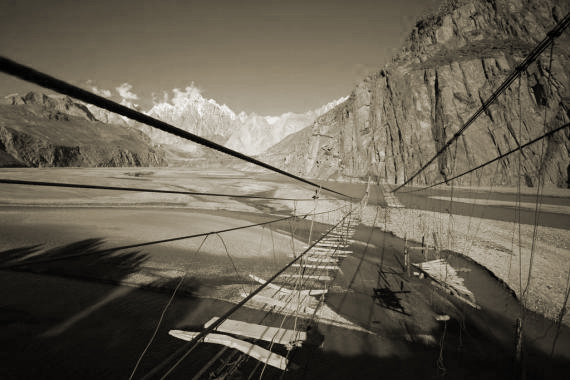 In ‘How Awake Are You?’ Mauricio is right that the leap from a naïve white nationalism to a mature one is as dizzying as crossing a suspension bridge. The transit is, in fact, much more spatially extensive than what it may seem at first glance with mere blog texts.
For example, secular pro-whites maintain atavisms of the previous paradigm, as the belief in the hereafter.
If one revises the texts in The Fair Race about the healthiest moments of the Aryan—Sparta (as unlike the Athenians the Spartans did not have sex with the native Mediterraneans), the Early Rome, the Germans who conquered the decadent Rome, the Vikings and the men of the Third Reich—we won’t see an obsession with the hereafter. Decadent whites became obsessed with death only in the mongrelized Imperial Rome, the dark Middle Ages and more recently with the flowering of the New Age. Even in the most lucid moments of Christendom, let’s say Elizabethan England that flourished thanks to the expulsion of the Jews, we don’t see this obsession with the hereafter. Shakespeare for example seems far more akin to secular Montaigne than the ‘spiritual’ madness of the New Age. (By the way, there isn’t anything genuinely ‘spiritual’ in the New Agers’ beliefs and I hate that they still use that term referring to crazy metaphysical systems.)
The white nationalists who argue that, since prehistory, man believed in life after death are ignorant in one respect. Those same men practiced, at the same time, horrific infanticide rituals—by billions!
I confess that most of my life I believed in life after life. These beliefs began to diminish more or less at the stage when I realised that my belief in psychokinesis was unfounded. But the spiritual odyssey of one does not say anything to the other, unless they intend to cross the psychological Rubicon.
Perhaps the best way to overcome this afterlife obsession is to study the Jews, starting with Kevin MacDonald’s first book: my favourite of his trilogy. In that book it is striking that, unlike Christians, Jews base their Judaism not on the hereafter but on the here and now and in a tribal way: not in an individualistic manner like the Christian (‘Save your soul!’, ‘Get to heaven!’). If we take into account that the healthiest moments of Greece and Rome were also focused on the here and now, it is obvious what we have to do.
But I don’t get my hopes up. I know that very few white nationalists will cross the suspension bridge, ‘the leap from 5 to 6’ in Mauricio’s list. They are much closer to Normieland than to the other side: the land of the winning Aryan. That shows not only in that secular nationalists share Christian ethics but other Christian cultural waste, such as the unhealthy obsession with an imaginary life after death.
Unobsessed with the afterlife, the Jew will continue to beat the Aryan unless the latter repudiates the last vestige of the Christian infection (see the video I embedded in my first comment in the comments section).

