web analytics
Categories
Day of Wrath (book) Stefan Zweig

Day of Wrath, 17

A critique of Lloyd deMause

Henry Ebel said that in psychohistory Lloyd deMause stands out among his epigones as a locomotive single-handedly tugging those who publish in his journal: all of them moving only thanks to a motor that is not theirs. Ebel had left the congresses of psychohistory even before I knew of their existence. However, no sooner I initiated my study of deMause’s texts I realized that both Ebel and deMause were human. All too human…
 

A string of nonsensical claims

One of the most cockeyed theories of deMause is that the warfare fantasies of political leaders and the media in times of war reflect childbirth traumas. Even Alice Miller has criticized this specific theory.

Glenn Davis was one of the first disciples of deMause: a young man that committed suicide. When Davis was doing his oral examination for his doctoral thesis, Stanley Renshon, a member of the committee, fired a question at Davis about something he had written following deMause’s theories: “It says in your book, ‘Groups go to war in order to overcome the helplessness and terror of being trapped in a birth canal’.” People laughed all around the table. What I find it fascinating is that, decades after Davis’ suicide, deMause still does not perceive the bad reputation that this sort of theories that he originated cause in his most serious readers.

In the issue of Spring of 2007 the Journal of Psychohistory published “The Conquistador and the Virgin Mary” by Madeleine Gómez. The article is an authentic string of nonsensical claims. According to this psychohistorian, in the Spanish conquest of the empires Mexica and Inca “the birth trauma was reenacted with few variations,” and on the next page she adds that the endeavor to conquer the seas in each exploration voyage is but “attempts to surmount the birth trauma.” After putting Cortés and the rest of the Spaniards as the villains of the story, Madeleine informs us that in the war for Tenochtitlan “the drumbeats in the air” can “easily be associated to the fetal heartbeat.” And writing on the denunciation by Francisco de Aguilar about the Indian sacrifices, she interprets that “it was easier to project upon the other…” That is, if the chronicler is shocked of the sacrifices, that only conceals the projections of his own European wickedness. Summarizing her interpretation of the Conquest, Madeleine writes: “There was arduous time spent in a womb-like mothership, with subsequent rebirth upon reaching shore.” These analytic interpretations remind me the worst nonsense of Freud recounted in my second book. The psychohistorian concludes that the Spaniards were “abusive, devaluing of women and children” without mentioning in the slightest the sacrifices of women and children in Mesoamerica.

Something similar can be said of deMause’s own views about the human placenta, a theory that he calls “The fetal origins of history.” Such importance he gives to this theory that he devoted the cover illustration of his book Foundations of Psychohistory to it. In an email I asked deMause what did he mean with the eight-headed dragon that appears on the cover. DeMause informed me that there were seven heads (the drawing is ambiguous), “a placental beast” that he relates with terrifying unconscious motivations.
 

Satanic Ritual Abuse

The confusion of my feelings about deMause—lucubration such as those are psychobabble but deMause’s discoveries potentially could be a great lighthouse for the humanities—moved me to annotate each cognitive error I encountered in his legacy.

In 1994 deMause devoted more than a whole issue of his journal to one of the scandals originated in his country that destroyed the reputation of many innocent adults: claims of multiple victims, multiple perpetrators during occult rites in daycare centers for children, known as “Satanic Ritual Abuse” or SRA. I was so intrigued by the subject that, when I read deMause’s article “Why Cults Terrorize and Kill Children” I devoted a few months of my life to research the subject by reading, printing and discussing in the internet (texts that would fill up the thickest ring-binder that I possess). I also purchased a copy of a book on SRA published by Princeton University. My objective was to ascertain whether the man whom I had been taking as a sort of mentor had gone astray. My suspicions turned out to be justified, and even worse: by inviting the foremost believers of SRA to publish in his journal, deMause directly contributed to the creation of an urban myth.

The collective hysteria known as SRA originated with the publication of a 1980 sensationalist book, Michelle Remembers. Michelle claimed that Satan himself appeared to her and wounded her body, but that an archangel healed it. In the mentioned article deMause wrote credulous passages about other fantastic claims by Michelle, and added that the people who ran certain daycare centers in the 1980s put the children in boxes and cages “as symbolic wombs.” DeMause then speculated that “they hang them upside down, the position of fetuses” and that “they drink victim’s blood as fetuses ‘drink’ placental blood,” in addition to force children to “drink urine” and “eat feces as some do during birth.” DeMause also referred to secret tunnels that, he wrote, existed beneath the daycare centers: “They often hold their rituals in actual tunnels.” In fact, those tunnels never existed. In Evil Incarnate: Rumors of Demonic Conspiracy and Ritual Abuse in History, published in 2006, professor David Frankfurter wrote about deMause’s article: “In this way a contemporary writer can assemble a theory of ritual power to explain rituals that have no forensic evidence.”

This is the sort of thing that, in Wikipedia’s talk page about psychohistory, culminates with rants like the one that I rescued before another editor deleted it: “Don’t ever listen to this lunatic!” (deMause). It is true that Colin Ross is another gullible believer of SRA, as seen in a book that includes an afterword where Elizabeth Loftus disagrees with him. But since the mid-1990s the SRA phenomenon was discredited to such degree that sociologists, criminologists and police officials recognized what it was: a witch-hunt that led to prison and ruined the lives of many innocent adults. The movie Indictment: The McMartin Trial, sponsored by Oliver Stone and based on the most notorious of these hunts, sums up what I mean. Using invasive techniques for adults in the interrogation of little kids, the therapists of the McMartin case and other kindergartens obtained confessions full of fantasies: that the children had been abducted and taken through a network of tunnels to a hidden cave under the school; that they flew in the air and saw giraffes, lions and the killing of a rabbit to be returned to their unsuspecting parents in the daycare center. Kyle Zirpolo was one of the McMartin children. At twenty-nine in 2005, several years after the trial, Zirpolo confessed to reporters that as a child he had been pressured to lie:

Anytime I would give them an answer that they didn’t like, they would ask again and encourage me to give them the answer they were looking for. It was really obvious what they wanted… I felt uncomfortable and a little ashamed that I was being dishonest. But at the same time, being the type of person I was, whatever my parents wanted me to do, I would do.

In its heyday in the 1980s and early 90s, and in some ways similar to the Salem witch trials of 1692, SRA allegations reached grotesque levels. Proponents argued that an intergenerational group of families raised and kidnapped babies and children in an international conspiracy that had infiltrated the police and the professions of lawyers and doctors. Conspiracy theorists claimed that the FBI and the CIA were involved to discredit the veracity of the phenomenon. The allegations ranged from brainwashing and necrophilia, kidnapping, sexual abuse and child pornography, to black masses and ritual killings of animals and thousands of people every year. In the McMartin case they talked about children washed away when the perpetrator pulled the toilet chain taking them to hidden rooms where they would be molested; orgies in carwash business, and even flying witches. Needless to say, no forensic evidence was found to support such claims.

After the legal catastrophe that McMartin and several other cases represented, small children have not been questioned with the aggressive techniques that led them to fantasize so wildly. Nowadays there is no witch-hunting going on in the US, Britain or Australia caused by coercive techniques of fanatics that induce either false memories or outright lies (like Zirpolo’s) to please therapist and parent. However, despite the consensus in sociology and criminology of the new century—that the SRA was a case of moral panic from which there is no forensic evidence—deMause did not change his mind. The work that describes his thinking more broadly, The Emotional Life of Nations, published in 2002 and translated to German, contains a brief passage where he still regards SRA as something real.
 

Revisiting Zweig

I do not regret having compared deMause with Newton in a previous chapter. In the days when deMause disappointed me I watched the film The New World starring Colin Farrell and Christopher Plummer. It bothered me greatly the myth of the noble savage when Farrell’s voice in off says the following about an idyllic village of American Indians:

They are gentle, loving, faithful, lacking in all guile and trickery. The words denoting lying, deceit, greed, envy, slander, and forgiveness have never been heard. They have no jealousy, no sense of possession. Real, what I thought a dream.

At that moment Farrell plays with a few naked, happy Indian children outdoors. Of course, the historic reality was not so bucolic. Remember the photo of the little Indian boy swaddled by their parents in this book? This was a very common practice among those tribes. I felt Hollywood’s falsifying of reality so insulting that I left the theatre. Psychohistory also made me reconcile with Spain after almost a lifetime of hating her because of the conservative culture of my family which had hurt me so much as a boy. I owe much to deMause for having awakened me to the fact that the earlier Amerindian culture was incomparably more brutal, both for children and for adults.

Isaac Newton is the paradigm par excellence of scientific genius. He invented calculus, discovered the law of gravity, enumerated the laws of motion and showed that light is a mixture of colors. His findings not only revolutionized physics but also finally cracked down the pedestal on which Europe had Aristotle. Europe discovered her genius in Newton: a psychoclass comparable to that of the best Greek minds began to evolve in the 17th century.

The self-esteem that the European scientific mind recovered after Newton is difficult to overestimate. But very few know that after his third year of life Isaac’s mother abandoned him to the house of the grandmother: something that borders on what deMause calls the “abandoning mode” of childrearing. Newton’s biographers know that the child suffered this betrayal greatly. In order to burn his agony, in his early twenties he turned his mind into science. At twenty-six Newton had already discovered all of the mentioned above and even more. However, since at that time there were no survivor forums to vent the anger he felt for his mother and stepfather, Newton suffered a severe depression.

When he recovered he lost his mind: he dedicated the rest of his life to alchemy and fundamentalist theology. His manuscripts on these topics sum millions of words: incomparably more than the Principia Mathematica that Newton had written in his youth. He collected a hundred and fifty books on alchemy and tried to turn metal into gold. Newton “always believed in a personal God—nothing like the God of Spinoza—; in the literal narrative of Adam and Eve, the existence of the devil and in hell.” From this fundamentalist point of view Newton estimated the age of the world in some 3,500 years before his age and invested a huge amount of time to interpret the books of Daniel and the Revelation of John. He thought he had cracked the cipher of both books just as he had deciphered the laws of planetary motion. “It is sad,” writes Martin Gardner, “to envision the discoveries in mathematics and physics Newton might have made if his great intellect had not been diverted by such bizarre speculations.” When Newton died, it was found in his body large amounts of mercury: a poisoning resulting from his alchemical experiments.

However, the difference between Newton and deMause is considerable. Unlike Newton, deMause blended his brilliant Principia to his lunatic Alchimia under the same covers. DeMause’s major works where he did not collaborate with other authors, Foundations of Psychohistory, The Emotional Life of Nations and The Origins of War in Child Abuse are a mixture of historical science with pseudoscience; unprecedented discoveries about the history of the human soul with gross lunacies. Like Newton, deMause was terribly abused as a child. On page 136 of his journal, in the Fall 2007 issue he confesses that when his father beat him with a razor strap, as a way to escape he hallucinated that he floated to the ceiling. And on the first page of Foundations deMause writes: “I, like Hitler, have been a beaten, frightened child and a resentful youth. I recognize him in myself, and with some courage can feel in my own guts the terrors he felt…” The key phrase in this passage is “some courage,” not the full courage that I now discharge across my books. After that line of Foundations deMause’s soul disappears and his theories à la Newton appear: his brilliant insights eye to eye with his string of nonsensical claims.

From the point of view of the psychogenesis that he himself discovered, deMause’s main error is the error of psychoanalysts. Losing his mind was due to the fact that he failed to delve deeper into the wounds of his inner self. DeMause’s work, inspired by political sociology and analytical treatises, worships the intellect at the expense of autobiographical insight. One objective of this work [Hojas Susurrantes] is to break away from this intellectual limitation and unconfessional, academic literature.

Half a century before the publication of Julian Jayne’s book, Stefan Zweig wrote in Adepts in Self-Portraiture that when Western literature began with Hesiod and Heraclitus it was still poetry, and of the inevitability of a decline in the mythopoetic talent of Greece when a more Aristotelian thought evolved. As compensation for this loss, says Zweig, modern man obtained with the novel an approach to a science of the mind. But the novel genre does not represent the ultimate degree of self-knowledge:

Autobiography is the hardest of all forms of literary art. Why, then, do new aspirants, generation after generation, try to solve this almost insoluble problem?

[For a] honest autobiography […] he must have a combination of qualities which will hardly be found once in a million instances. To expect perfect sincerity in self-portraiture would be as absurd as to expect absolute justice, freedom, and perfection here on earth. No doubt the pseudo-confession, as Goethe called it, confession under the rose, in the diaphanous veil of novel or poem, is much easier, and is often far more convincing from the artistic point of view, than an account with no assumption of reserve. Autobiography, precisely because it requires, not truth alone, but naked truth, demands from the artist an act of peculiar heroism; for the autobiographer must play the traitor to himself.

Only a ripe artist, one thoroughly acquainted with the workings of the mind, can be successful here. This is why psychological self-portraiture has appeared so late among the arts, belonging exclusively to our own days and those yet to come. Man had to discover continents, to fathom his seas, to learn his language, before he could turn his gaze inward to explore the universe of his soul. Classical antiquity had as yet no inkling of these mysterious paths. Caesar and Plutarch, the ancients who describe themselves, are content to deal with facts, with circumstantial happenings, and never dream of showing more than the surface of their hearts.[…]

Many centuries were to pass before Rousseau (that remarkable man who was a pioneer in so many fields) was to draw a self-portrait for its own sake, and was to be amazed and startled at the novelty of his enterprise. Stendhal, Hebbel, Kierkegaard, Tolstoy, Amiel, the intrepid Hans Jaeger, have disclosed unsuspected realms of self-knowledge by self-portraiture. Their successors, provided with more delicate implements of research, will be able to penetrate stratum by stratum, room by room, farther and yet farther into our new universe, into the depths of the human mind.

This long quote explains why I decided to devise a hybrid genre between the self-portraiture that betrays the author and penetrates beyond the strata pondered by Romantic autobiographers, while, at the same time, presents a unified field for the findings of Alice Miller and Lloyd deMause.
 

Playing the fool

So far I have focused my criticism on the crank aspects of Lloyd’s legacy. In the remainder of the chapter I will discuss, in addition to the psychohistorians’ crackpot ideas, their moral faults.

It is not apparent that Lloyd has read Tom Szasz or other very well known critics of Sigmund Freud. This is fundamental for a true psychohistory. As we saw in the discussion of Ark, there are two camps in depth psychology: the deniers of the after-effects of psychological trauma who can be traced back to Freud, and those who recognize it, led by Alice Miller.

Unlike Ark, deMause never broke completely away from his psychoanalytic roots. The logo of his website has the symbol of a globe on an analyst’s couch, and the written presentation of the International Psychohistorical Association mentions the pioneering work of Freud, Reich and Fromm, informing us that psychohistorians come from many fields, including psychoanalysis and psychiatry. It is true that deMause is anything but an orthodox psychoanalyst, but it is extremely annoying that he mentions Freud while ignoring the amount of criticism that has been written about him. As we have seen [I refer to a chapter in Hojas Susurrantes], Freud took sides with the parents against their children, while deMause presents himself to his readers as a defender of children.

The lack of the most basic knowledge about the critics of Freudism makes deMause write about claims that have been abandoned. For example, Freud’s vision of Leonardo da Vinci has been refuted decades ago. On page 173 of Foundations of Psychohistory deMause candidly mentions the Freudian study of da Vinci as if the ongoing refutations had never been published. It is important to mention that when deMause was going to graduate, in his youthful infatuation with psychoanalysis he wanted to insert Freudian ideas in his doctorate of political science. It is understandable that his tutors at Columbia University prevented it. DeMause never obtained his doctorate. Many years later, in the article “The Universality of Incest” deMause even sided Freud against Alice Miller and the most articulate critic of Freud, Jeffrey Masson. Since after 1897 Freud dismissed his original discovery, that some parents sexually abused their daughters, deMause’s position is contradictory.

DeMause’s moral errors are even more worrying when we see his stance on contemporary child psychiatry. How appropriate to quote the key passages of my correspondence with him. In one of my e-mails of March 2006, I wrote:

In your country the psychiatrists hired by the parents are abusing millions of children and teenagers. Even before the advent of drugs in the 20th-century psychiatry had routinely tortured children on behalf of their parents. My quest for your back issues [of the Journal of Psychohistory] has to do with something that very much puzzles me. Have you or the journal contributors exposed this kind of traumatogenic mode of childrearing [i.e., child psychiatry]?

DeMause, who over the years has answered almost all of my e-mails, did not answer this one. Three days later I wrote him again:

I don’t want to press you on a point that you seem reluctant to discuss. I just want to thank you for your work, which I believe will prove to be the most significant in the study of history.

Playing the fool, deMause replied:

I just don’t know anything about what psychiatrists do to patients. I’m not a psychiatrist. Sorry.

“Patients” is Newspeak for sane children in conflict with their parents. I gathered from deMause’s response that no article about the crimes committed by psychiatry with children and adolescents had been published in his journal [the sort of crimes reported in my second book of Hojas Susurrantes].

The funny thing is that we could easily use deMause’s statements against him. He wrote: “Every childrearing practice in traditional societies around the globe betrays a profound lack of empathy toward one’s children,” and a couple of pages later he gives an example: “The use of opium on infants goes back to ancient Egypt, where the Ebers papyrus tells parents: ‘It acts at once’.” But this is precisely what psychotropic drugs like Ritalin do to children not in the distant and exotic Egypt, but in the city where deMause lives!

When I realized that deMause was not going to read the literature on the psychiatric abuse of children that I recommended in another of my e-mails, I knew that sooner or later I would have to publish a critique. And incidentally: the page 166 of The Emotional Life deMause swallows the pseudoscientific propaganda that depression is due to a lack of serotonin. Similarly, the psychohistorian Robert Godwin wrote in one of his articles that some people need to ingest psychoactive drugs; and Henry Ebel commended Melanie Klein, the notorious analyst who blamed infants for projections from their parents, as Jeffrey Masson and Alice Miller have so cogently argued.
 

At the left of Chomsky

In Foundations of Psychohistory deMause wrote:

Our conclusion is that Jimmy Carter—for reasons rooted both in his own personality and in the powerful emotional demands of American fantasy—is very likely to lead us into a new war by 1979.

This is a pretty crazy statement. Foundations was published in 1982. Having had the opportunity to mature the lesson given to him by history, deMause did not retract when his prophecy about Carter, who left the White House in 1981 behaving like a dove before the Iranian crisis, was not fulfilled. What is this: publishing in all seriousness a prophecy refuted by history? It exposes a man completely trapped in his own theory. Also, in The Emotional Life of Nations deMause blinded himself before the threat that Cuba and the Soviet Union represented during the missile crisis. Without taking seriously the threat of nuclear annihilation that these missiles posed to his own country, deMause psychoanalyzed Kennedy’s actions as a case that he unraveled: a psychological reductionism as kooky as what his disciple Madeleine wrote about Cortés.

DeMause went back to his old ways in his latest book, The Origins of War in Child Abuse, first published in his journal, where he psychoanalyzes the 1835-1836 war that his country waged against Mexico to annex the territory of Texas. He also interprets with his bizarre theories the US intervention in the two world wars and continues to speculate on those lines about the wars in Korea and Vietnam. But his followers surpass him. But his followers surpass him. The Fall 2007 issue of the Journal of Psychohistory published an article by Robert McFarland in which the author endorses the most lunatic theories that the US government orchestrated the attacks of September 11, and in the Spring 2008 issue Matt Everett uses quite a few pages of the journal to continue to promote the conspiratorial paranoia. This continued in the Journal of Psychohistory of Spring 2009 and in a book review of the Fall issue of that year. His journal is located at the left of Noam Chomsky, who at least has had enough sanity to dismiss conspiracy theories such as 9/11. In short, deMause reduces all international politics to fantastic speculations. No wonder that after the initial success of the one of his books free of nonsense—The History of Childhood, published in 1974, that sold thousands of copies in several languages—, the wrong turn deMause and his followers took has disappointed the vast majority of his readers, so much so that in a 2010 audio interview deMause acknowledges: “I dropped from 6,000 to 800 subscribers of my journal.” But of deMause’s colleagues among whom, I suppose, many are Jews, there is something much more sinister than all that.
 

The psychohistorians and the hatred of the West

It is striking that, except the articles by deMause himself, many articles in the Journal of Psychohistory have little if anything to do with the original psychohistory. As I said, the original psychohistory tells us that non-Western cultures are more barbarous than ours. Conversely, the Journal of Psychohistory of Winter of 2009 contains an article by Arno Gruen praising the Pawnee Indians without mentioning how they treat children (Gruen even talks of “the white invasion”). The Summer 2009 issue of the journal published a much worse article, “The European-American psychosis” by Frederick Hickling: a diatribe against the West and the white people. From the perspective called transcultural psychiatry, Hickling calls the war of Cortés in Mexico as “delusion of genocidal eradication” ignoring that extermination was never the intention of the Spanish, proof that pure whites are now a tiny minority in Mexico. (Hickling misspells the name of the conqueror, a very common error in those ignorant of the topic, as “Cortez.”) But he does quote Bartolomé de Las Casas accepting the blackest interpretation of the Black Legend: that the Spanish murdered millions of Indians on purpose. Hickling thus minimizes the real cause of the diminution of the native population in the 16th century: the epidemics upon which the natives had no antibodies. The Europe of that century was called “the racist European formation,” and using inflammatory rhetoric Hickling writes of “the European ruthless viciousness to indigenous people in the Americas and in Polynesia,” and calls the European wars in the New World in the 17th century “the delusion of White Supremacy.” And he says something similar about the wars of the 18th and 19th centuries, with expressions like “colossal theft of Africa by Europe.” Writing about contemporary Islamic terrorists, Hickling puts quotation marks to the word “terrorists,” and he quotes Marxist revolutionary Frantz Fanon as he writes of “freedom fighters.” Hickling, a professor of psychiatry in Jamaica, goes so far as to suggest that it is possible to apply the concept of delusion “to a race or civilization” as a whole, referring to the white race and Western civilization.

Hickling is not alone. The same 2009 issue of Journal of Psychohistory contains the article “Some Thoughts on Psychoclasses and Zeitgeist.” Christian Lackner, one of the two authors of the article, translated into German deMause’s The Emotional Life of Nations. Following the most progressive political trends the article by Lackner and Juha Siltala welcome the European Union and praise the profile of the new European psychoclass of males as “androgynes” (sic) for whom war is old history. The gem of the article is that it ends by conceding that “the demographic picture” with such androgynous males must result in that “the population of Europe will eventually die out” without having it for something bad, or a demographic suicide against which we must fight.

DeMause and his little journal have reached their nadir with this issue: pure evil. These pair of articles are not the only of their kind. Other issues of the Journal of Psychohistory idealize the black Obama, and what is worse, the journal does not say a word about the dangers that the growing Islamization of Europe represent for what they themselves, the psychohistorians, call the “helping mode of childrearing.” Alarmed, when I was living in Europe, I sent deMause an e-mail asking what he thought of the Islamization of Scandinavia. He answered me once more by playing the imbecile, saying that Nordics “are helping their children.”
 

The sin against the holy ghost

The migration of Muslims into Europe in recent decades illustrates what is an encounter of psychoclasses. Instead of the chosen example—the encounter between Europeans and Amerindians—, the ongoing clash of psychoclasses with the millions of immigrants could have been the paradigm of this book.

But the Islamization of Europe in the 21st century is only the most conspicuous tip of the iceberg. The current group fantasy among westerners is genocidal self-hatred. Demography is destiny. But the West has lost its appetite for life, as seen in the ever-shrinking birthrates of whites. At this rate there will be no replacement for the white people in the coming generations. Westerners do not believe anymore in they ethnicity; in heterosexual marriage, or in their civilization as they still believed when my parents were young. An overreaction against the two great wars appears to have metamorphosed them into pods, as in the movie of the 1950s Invasion of the Body Snatchers. Their most unforgivable sin has been their handing over their lands to millions of non-Caucasian immigrants.

Massive Third World migration into the United States, Europe and Australia, promoted by Western governments, is the highest betrayal to one’s own people ever perpetrated in history. While the scenario might remind us the hostile takeover of Rome by a Levantine cult, it is infinitely worse. Constantine may have surrendered the empire to the bishops, dragging it straight into the Middle Ages, but no explicit anti-white exterminationist program was implemented by him and his successors; the program was implicit. In contrast, in the West of today massive numbers of non-whites are being imported at the same time with the demographic decline of the native population: an explicit, anti-white exterminationist program.

This is the most important issue of anything we can imagine: even more important than the child advocacy understood in terms of all races, the theme of this book. If Hyperboreans disappeared, my thirst to fight in the resulting mongrelized culture would die out. It would be a Neanderthalesque regression from my most cherished ideals. Think of the most beautiful female specimens of the Aryan race, for example the painting Lady Violet on the cover of The Fair Race’s Darkest Hour. What whites are doing to themselves is the real sin against the holy spirit of life: placing the very crown of evolution on the path to extinction.

Just as in the past the infanticidal psychoclass sacrificed their children in times of great prosperity, a phenomenon that deMause has called “growth panic,” a mad generation—including deMause’s—, indoctrinated in anti-white racism, sacrifices the future of their children; their grandchildren, and their great-grandchildren… Large numbers of abortions and intercourse with condoms or pills—and mixing their blood with non-whites!—can only mean that an ethnic group is committing suicide. Westerners have decided to erase their history, culture, identity and what is most valuable: their genetic capital.

Such self-destruct ethos reminds me the determined campaign of destruction that, in my family, my mother led when she fell sized with panic before her thriving teenager. Like my parents with me in our beloved home of Palenque [the subject of my other books], reaching the height of its prosperity the West succumbs to unconscious forces turned into a monster which etiology nobody seems to know, not even the readers of Alice Miller, let alone the psychohistorians.
 

___________

The objective of Day of Wrath is to present to the racialist community my philosophy of The Four Words on how to eliminate all unnecessary suffering. If life allows, next month I will reproduce another chapter. Day of Wrath is available: here.

Categories
Civil war Hate James Mason Justice / revenge Miscegenation

Siege, 33

On the way into Poland in 1939


…or more accurately, on the way back into the Polish-occupied German territory at the outset of World War Two, Adolf Hitler told his troops, “Close your hearts to pity”.
A strange thing for a Nazi to be telling other Nazis. After all, that is supposed to be a foregone conclusion if we have been taught right. Didn’t Hitler start the war for the pure fun and brutality of it? We know otherwise but there is still a subtle message in what Hitler told his men in 1939. In spite of Polish occupation of German territories since 1918 and in spite of some of the worst outrages done against the German inhabitants by some over-zealous Poles, Hitler knew he had to spell out plainly to his men what the mission was if it was going to be done right.
It is part of the White Man’s makeup to forget, to know pity… it is found in no other race. And this trait has cost us plenty over the centuries because we have let so many enemies get away.
As we all too painfully know, THAT was the prime reason for the loss of World War Two: Hitler was not the bad guy he is made out to be. Had he been, the British Army at Dunkirk would have been annihilated; every Jew in Europe WOULD have been killed; and idealism would not have been so high as to prevent the immediate use of millions of Russians and Ukrainians in the fight against Marxist-Leninism.
But in a lot of respects, those German soldiers crashing their way back into their lost provinces had it a lot easier than we shall in closing our hearts to pity, for when an enemy is shooting at you, the instinct is to shoot back. And in the case of a war between European States, once the issue was settled on the field of honor, life could go on as before… not so at all for the United States in the civil war that is coming up.
One well-known Right Wing leader has already said that we must not neglect to assemble our own “lists” of enemy operatives and sympathizers in our own locales for quick reference later on. His argument—and he is correct—is that you know damned good and well that they certainly have us on their lists, in triplicate! On the surface this isn’t a bad idea but I know how lazy the Movement is.
It is by no means wishful thinking for me to draw you this picture: not many months ago I had regular occasion to screen people in their homes in the line of work. Conversation invariably drifted to the topic of the neighborhood. More than once I found myself standing in windows or yards being given a visual guided tour of where the race-mixers lived. At those times I could visualize myself in the same circumstances only this time in official capacity as a “Revolutionary Clean-Up Man”. And THAT is part of how the civil war is going to shape up.
The real White Americans who are left (and there are many) HATE the very sight of race-mixing even though they scarcely understand the larger, genetic meaning of it. They HATE those of their own race who are involved in it. Don’t you think they’d LOVE to come to us later on, after this existing race-mixing System has been smashed down by revolution, and “finger” every single race-mixer known to them, knowing fast action on our part will follow instantaneously? This sort of renders the need for “lists” unnecessary. As far as the System’s kingpins are concerned, everybody knows who they are. As far as the System Sucks are concerned, we here know ours by heart very well and you can and should be the same in your area.
The truth is that assembling and keeping these so-called “hit lists” for us at this time is a DANGER. Looks bad as hell in case of a raid and it is UNNECESSARY. Actual System bureaucrats will get it during the full-phase course of the revolution as we go about the real business of smashing the power of the System.
The larger “clean-up” phase during and after the civil war, which even then will be raging, is a different matter. As most of you have long ago noticed, a lot of the most rabid, sneering miscegenators are blond, blue-eyed doll babies. If you can’t close your heart to pity, if you couldn’t blast the head off of one or a thousand of these types, then you had better bow out right now.
War is war and it is something highly impersonal. But White renegades, be they government officials or plain bleeding hearts, are another matter. We must swear an oath to ourselves now—while we’re down, while things are tough, while the Enemy is in full power, while the vile race-mixers daily promenade openly in public protected by this evil System, now while it is easy to HATE—that for the United States there will be no need for concentration camps of any kind, for not a single transgressor will survive long enough to make it to that kind of haven.

Vol. IX, #6 – October, 1980

Categories
James Mason

Siege, 32

Later on we’ll conspire


A comrade sent me a pamphlet issued by a bunch of idiots who happen to be the proud owners of some professional printing equipment and who thereby imagine themselves qualified to speak on the subject of revolution. In this pamphlet they darkly talk in grave tones about “conspiratorial activity”. At that point my suspicions of them which I’d had since the mid-70’s were confirmed: they are children playing with matches!
The term conspiracy is not now, and never has been, part of my vocabulary. It is DANGEROUS! I should say UNNECESSARILY DANGEROUS! For conspiracy means TALK and talk is counter-revolutionary. Talk is what the System and its pimps LOVE most of all. In case you didn’t know it already, you can do big. Federal time for merely “conspiring” to do something. You need not take any action, only TALK about it to a circle of three or more (including yourself), and THAT constitutes conspiracy! (And one of the favorites of the System is to charge people with “conspiring to violate civil rights” which sometimes doesn’t even require the discussion of any action.)
But of course you figure that you are too careful for that, eh? You think you know and can trust the people you deal with, right? Let me quickly relate the story of how two brothers were framed by the Feds and who are now serving a six-year term for conspiracy. A hired pimp was sent into their group in Columbus, Ohio, in 1977 to first gather information and, later, to act as agent provocateur. He spent two years building his credibility before he began to get a little bold with his suggestions. It doesn’t matter how “tight” your imagined security is if it includes one professional pimp. This agent kept bucking for some kind of “action”, something “solid” as a strike against forced bussing in Columbus. Finally he got around to the idea of bombing a school. Then came the brothers’ big mistake: they did not at that moment say to the pimp, “Get thee behind me!” They listened, they discussed the pros and cons. And later, in the Federal courtroom after their arrests by an army of FBI agents, they saw and heard themselves on wide-screen motion picture “conspiring” with police agents to bomb a school building! The all-White jury didn’t take even thirty minutes to return a verdict of “Guilty”!
Rockwell in 1965 conjured up that exact scene of one day having to sit in a court of law and watch yourself on film. Well, gang, “1984” arrived a long time ago. This Big Brother System is held in power largely through pimps—both professional and amateur. Actually it is a pimp system, a whole society of loose-lipped blabbermouths! Law enforcement would nearly shut down without its pimps, who are in most cases not even “agents” in the true sense—just babbling idiots.
The professional, hired pimps are one thing. Loose talk and stupidity are another. But they both lead to the same, disastrous result. And they both are defeated the same way: don’t conspire; don’t talk! In effect it’s only illegal to get caught, only illegal to trip up. You don’t NEED to ever enter into a conspiracy! You don’t NEED to ever deal with persons who might later let loose with fatal talk! We must have acts of revolution, the sooner the better, the more the merrier. But these are all of a nature that they can and MUST be carried out by INDIVIDUALS and that removes all requirement for talk, the possibility of “conspiracy”, and the danger of a leak! The lone wolf cannot be detected, cannot be prevented, and seldom can be traced.
For his choice of targets he needs little more than the daily newspaper for suggestions and tips galore. But it is necessary that NSLF begin again its program of systematic infiltration of the Reds, the unions, local Democrat and Republican cells, etc. (even the local NAACP… you need not be colored to join). We do have need of privileged information and will have greater need in the future. For his training the lone wolf needs only the U.S. military or any one of a hundred good manuals readily available through radical booksellers. Equipment is still easily available (and I caution against possessing illegal weapons as they aren’t necessary) and even though the System may be expected to enact more anti-gun laws, this will only serve to stimulate and ever-growing black market for armaments (thus producing an ever greater pool of human resources for us to recruit from). His greatest concern must be to pick his target well so that his act may speak so clearly for itself that no member of White America can mistake its message.
If you can’t do it, leave it alone. Forget it! Don’t try and talk someone else into doing it and ESPECIALLY don’t hear of anyone else trying to talk YOU into anything. Don’t talk, period! However it can’t hurt to begin now to learn, to train, and to have materials ready.

Vol. IX, #5 – September, 1980

Categories
Hate Poetry

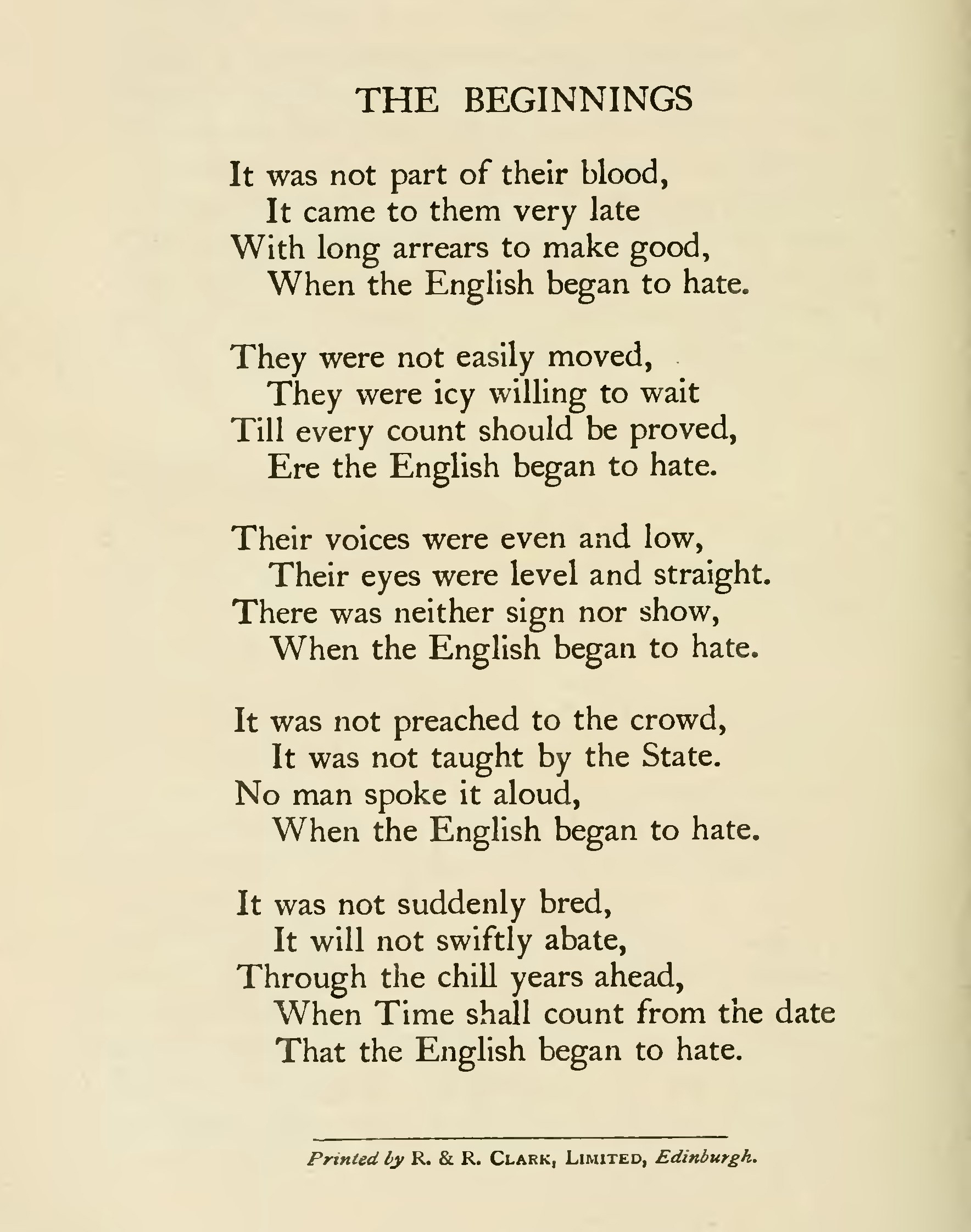
The beginnings

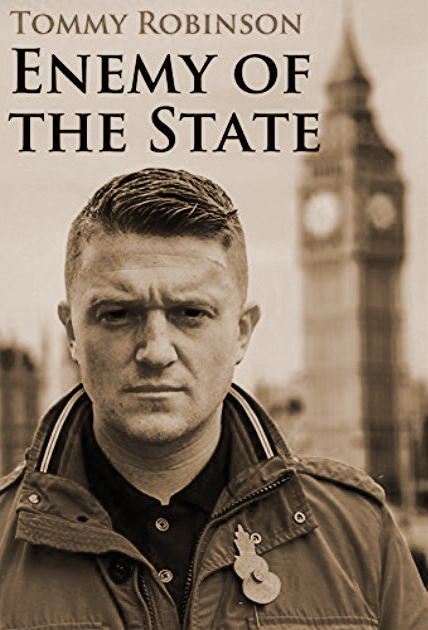
What distinguishes me most from the forums of white nationalists is my ability to hate. It reminds me a little what I said to Jez Turner in one of the podcasts, referring to the nationalists in general, ‘Where’s your fucking hate?’ Turner did not seem to tune in to my emotions and commented that one should not ‘do something silly’, presumably referring to something illegal. But now the decent and law-abiding gentleman is keeping Tommy Robinson company in jail…
I currently barely visit the sites of white nationalists. I would do it again if they were able to feel, at least, some of the hatred I feel. This, for example, is Rudyard Kipling’s poem about the wrath of the awakened Saxon:

Categories
James Mason

Siege, 31

Longest sought after

A winning, successful course of action not dependent upon a central organization or a major leader figure. Between alpha and omega, not existing at extreme ends of the spectrum, will be found the answer. What does amount to suicide is going straight from doing nothing to taking on the entire System in direct, violent confrontation. There does not exist, and we cannot stand around and hope for, either the organization or the leader to “tell us what to do”.
That outfit or that man would be pounced upon and destroyed in an instant by the System. We have to think for ourselves first, and then we can go on to direct our own actions. The first step has got to be giving up all stupid and false notions. Those who are basic cowards or who are otherwise hopelessly inadequate to the task cannot and will not part with these notions, ever.
False ideas are any which stray from the ground zero reality that all evil springs from the System; the System will never correct itself; it will never permit anyone or anything to correct it; it will never tolerate or allow the development of any true, alternate system to compete legally against it; nothing of a positive or partial nature can be accomplished while the System stands; those who embark upon a course which runs contrary to that which the System has determined must understand that they embark on a life and death struggle. It is the one duty and one goal of the revolutionary to struggle for the death of the System.
So much is bound up in just realizing the totality of the situation that little else can be added to that except to say that once it has been comprehended, the person then at once begins to see everything, every situation, in a different light. Things are clearer. The course of action becomes obvious.
In the old revolutionary axiom, “Educate, Agitate, and Organize”, the term “education” is basic. Not the type of education as thought of by reactionaries, but the kind of information which provides years of revolutionary experience in a week or a month, without the necessity of having to live it over painful, dangerous, useless decades such as we have had to endure. To impart knowledge and expertise to our next wave, our next generation, in precisely the same manner and for precisely the same reasons as our former “institutes of higher learning” used to teach their students: to build upon a solid foundation, to increase the chances of and to hasten ever-greater achievements. It is a science, not a diversion or a money-making racket.
The Movement has GOT TO STOP PEDDLING GARBAGE and START INSTRUCTING IN REVOLUTION!
Next, to agitate. The problem becomes more complex as it leads out of the confines of home or hideaway and from the safety of the typewriter and the postal service. You are not out to sell a product, a gimmick, or a certain approach. You are not out to re-fight the Civil or the Second World War. You are not out to blow minds. Neither are you out to idly grumble or complain.
You are out to CLARIFY, to POLARIZE, and to INTENSIFY that which faces all of us, everyday. And it is to be directed, in every case, against the System itself, the ultimate culprit, never toward simply Blacks or Jews or liberals or anything else which skirts or evades the issue and which sounds like (and IS) reactionary and for which not even a fool nowadays will respond favorably or positively. A revolutionary comrade is one who leads. You lead by taking people over barriers of time and understanding toward ultimate confrontation with reality. And that reality is the best, most irritative source of agitation possible. Such is the rightness of our cause.
You do not “agitate” by placing yourself in the center of brawls. Lesser still by aiding the System in making people despise you. You do it anonymously, by making people know and hate the System.
Finally, to organize. That in which the Movement has consistently failed the worst. An organization does not exist for its own sake. Nothing ever starts out that way. The System, as have all such systems in the past, is ending up that way. To promote the “club”, the “leader”, the “name”, the “symbol” or the “approach” soon becomes everything.
In-fighting takes over. Petty competitions take care of the rest. Nothing is served. So it has always gone. To truly organize effectively means having someplace to hide on the other side of the country, anytime, for any reason. It means secrets being kept. It means material help when it is needed. It means a unified line and a unified response in the face of crises. It means respect and cooperation. It means loyalty. It means to multiply ourselves in a coordinated way to give the effect of a giant, a unit.
Organization—as opposed to “organizations”—does not give the effect of a lot of “duplicates” ignoring each other and getting into each other’s way. It means to effect hands and feet, arms and legs, eyes and ears everywhere, simultaneously. Acting in one common cause and one common interest, in iron discipline, ultimately to lead to one organism with a common intelligence, instinct, voice, and, above all, a common WILL!
How little does any of the above description resemble what has passed heretofore as these very things: Education, Agitation, and Organization.

Vol. XIV, #11 – November, 1985

Categories
Racial right

Why I disagree

w/ Greg Johnson on Tommy Robinson

Listen, after about the first seven minutes that this
Southerner quoted from Greggy’s recent article.

Audio on The Right Stuff: here.

Categories
James Mason

Siege, 30

The hell of it is


…that we ourselves aren’t at all immune from the horrific things that are in store for the future. If we were somehow isolated or insulated from it then none of what is today bringing it on would bother or concern us. If that was the case, I doubt whether we’d be in the struggle at all. But this is not a laboratory experiment that we can shelve, lockup, and walk away from. This is a fight for survival and we are not immune from the hell that we must strive to see gets broken loose. Any halfway “normal” person might be expected to come up with a rejoinder like this: “Why do we do it?”
We do it because one thing is clear: the current deadlock must be broken at all cost. It is frighteningly obvious that nothing positive can be expected to happen with the way things are now. Therefore a different atmosphere must be created in which some kind of positive change can be effected. Again, the “normal” person might say that there is already enough disorder, enough hell and chaos going on right now without adding more. What they don’t see is that we have in this country is an “ordered disorder” which was made-to-order by, and for Big Brother. Don’t you believe they could stop crime, subversion, and anarchy if they really wanted to?
All the hell and disorder of the past, and the general crime wave today is the greatest help to Big Brother, his System and his Establishment. The Black riots gave the insurance companies carte blanche to remove the gloves and start extorting small businessmen and all the rest of us. The “limited anarchy” and the “limited insurrection” of the Blacks and the Reds just gives Big Brother more alibi to tighten the lid of the Electronic Surveillance Society, to stampede legislation to disarm the populace. All the runaway non-White crime merely gives cover and justification for the erection of a police state, the reins of power firmly in the hands of the Jews. They don’t want it stamped out; they need it for the completion of their plans.
What they fear most is total disorder which they can’t control. That which they can’t monitor or control doesn’t serve their interests. It’s been said that we don’t want to rock the boat, we want to sink it. When we succeed in blowing the bottom right out, we’re going to have to hurry topside, over the rail, and swim for life, leaving the rats to drown with the ship.

Vol. X, #4 – April, 1981

Categories
Pseudoscience Turin Shroud

On the Turin Shroud, 5


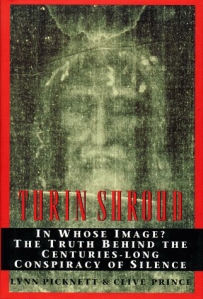
Imagine my surprise when, leafing through a book (pic above) on the Shroud of Turin in a Houston bookshop, I came across some pages in which they spoke of a writing of mine whose paranormal theories I no longer believed:

Some see the origin of the image on the Shroud as paranormal, rather than miraculous. They suggest that supernatural, rather than Divine, forces may be at work. Mexican parapsychologist [C.T.] has raised the possibility that the image is a ‘thoughtograph’. There is evidence—controversial, but not easily dismissed—that some psychics can create recognizable images on film by the power of thought alone. The most famous case is that of Ted Serios, an alcoholic Chicago bellhop, whose abilities were studied intensively in the mid-1960s by the eminent researcher Jule Eisenbud. If it exists, the ability of the mind to affect the highly sensitive chemicals of photographic film would seem to be a natural variant of psychokinesis (PK)—the alteration of the state of a physical object by mental influence alone—as exhibited most famously by Uri Geller.
[C.T.] [1] points to a similar phenomenon, that of images appearing spontaneously on the walls and floors of buildings. He cites a well­documented case from the 1920s, when the image of the late Dean John Liddell appeared on a wall of Oxford Cathedral. Such pictures are usually of people of special sanctity, but not always…

The rest of the quotation appears here: a blog of mine for Turin Shroud matters (I won’t post again, at The West’s Darkest Hour, shroud-related articles).

Categories
Christendom Civil war Inquisition Kriminalgeschichte des Christentums (books) Theology

Kriminalgeschichte, 67

Below, an abridged translation from the first volume of Karlheinz Deschner’s Kriminalgeschichte des Christentums (Criminal History of Christianity). For a comprehensive text that explains the absolute need to destroy Judeo-Christianity, see here. In a nutshell, any white person who worships the god of the Jews is, ultimately, ethnosuicidal.

 
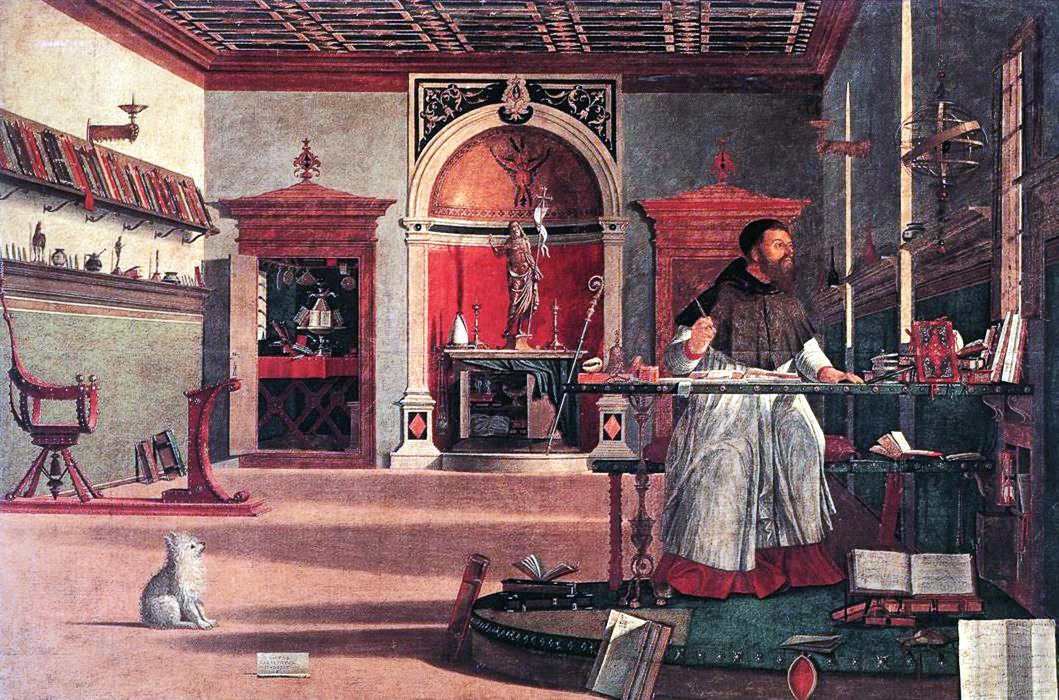
Augustine’s campaign against the Donatists
To the Donatists, whom the African had never mentioned before, he finally paid attention when he was already a priest. Since then he fought them year after year, with greater fury than other ‘heretics’; he threw his contempt to their faces and expelled them from Hippo, their episcopal city. Because the Donatists had committed ‘the crime of schism’ they were nothing but ‘weeds’, animals: ‘these frogs sit in their pond and croak: “we are the only Christians!” but they are heading to hell without knowing it’.
What was a Donatist for Augustine? An alternative that was not presented to him, because, when he was elected bishop, the schism was already 85 years old. It was a local African issue, relatively small, though not divided into ‘countless crumbs’ as he claimed. Catholicism, on the other hand, absorbed the peoples; it had the emperor on his side, the masses, as Augustine blurts out, ‘the unity of the whole world’. Frequently and without hesitation Augustine insists on such demonstration of the majority, incapable of making the reflection that Schiller will later formulate: ‘What is the majority? Most is nonsense; intelligence has always been only in the minority’.
The Donatist was convinced of being a member of a brotherhood. Throughout their tragic history, they collaborated with a religious-revolutionary peasant movement, which inflicted vexations on the landowners: the Circumcellions or Agonistici—temporary workers of the countryside and at the same time the left wing of this Church, who first enjoyed the support of Donatus of Bagai and later that of Gildo.
According to his adversary, Augustine, who characterized them with the psalm of ‘rapids are their feet to shed blood’, they robbed, looted, set fire to the basilicas, threw lime and vinegar in the eyes of Catholics, claimed promissory notes and started with threats his emancipation. Often led by clerics, including bishops, ‘captains of the saints’, these Agonistici or milites Christi (followers of martyrs, hobby pilgrims, terrorists) beat the landowners and Catholic clerics with decks called ‘israels’ under the war cry of ‘Praise be to God’ (laus deo), the ‘trumpets of the massacre’ (Augustine). The Catholics ‘depended to a great extent on the support of the Roman Empire and the landlords, who guaranteed them economic privileges and material protection’ (Reallexikon für Antike und Christentum). It was also not uncommon for the exploited to kill themselves in order to reach paradise. As the Donatists said, because of the persecution they jumped from rocks, as for example the cliffs of Ain Mlila, or to mighty rivers, which for Augustine was not more than ‘a part of their habitual behaviour’.
The centre of their offices was the cult to the martyrs. Excavations carried out in the centre of Algeria, which was the bulwark of the Donatists, have brought to light innumerable chapels dedicated to the adoration of the martyrs and which undoubtedly belonged to the schismatics. Many carried biblical quotes or their currency, Deo laudes.
A Donatist bishop boasted that he had reduced four churches to ashes with his own hand. They, as so often emphasized, even by Augustine, could not be martyrs ‘because they did not live the life of Christ’. The true background of the Donatist problem, which not only led to the religious wars of the years 340, 347 and 361-363 but caused the great uprisings of 372 and 397-398, Augustine failed to understand or did not want to understand. He thought he could explain through a theological discussion what was less a confessional than a social problem: the deep social contrasts within North African Christianity, the abyss between a rich upper class and those who owned nothing; that they were not in any way just the ‘bands of Circumcellions’, but also the slaves and the free masses who hated the dominant ones.
Augustine did not know or did not want to see this. He defended with all tenacity the interests of the possessing and dominant class. For him the Donatists were never right: they simply defamed and lied. He maintained that they were looking for a lie, that their lie ‘fills all Africa’. Initially, Augustine was not in favour of violence. He questioned any attempt to use it. ‘I have no intention of forcing anyone against their will to the religious community with anyone’. Of course, when he learned about the wickedness of the ‘heretics’ and saw that they could be improved with some force, which the Government already commissioned in an increasing way from the year 405, he changed his mind.
The faith of the Donatists, no matter how similar it was—even, essentially, identical—was nothing but error and violence. Catholics, on the other hand, only acted out of pure compassion, out of love. ‘Understand what happens to you! God does not want you to sink into a sacrilegious disunity, separated from your mother, the Catholic Church’.
As the Handbuch der Kirchengeschichte says, or more precisely, the Catholic Baus, ‘here speaks the voice of a man who was so driven and encouraged by the religious responsibility to bring back to an ecclesia the lost brothers in the error, that all the other considerations remained for him in the background’. How typical! He must exonerate Augustine, make his thoughts and actions understandable. Thus, over the course of two millennia, the great crimes of history have been constantly apologised and exalted; they have been glorified. Only in the name of God can they always allow and commit certain crimes, the most atrocious, as will be demonstrated more clearly each time throughout this criminal history.
With an extensive series of astute sentences, without missing those corresponding to the Old and New Testaments, the great lover now demands coercive measures against all those who ‘must be saved’ (corrigendi atque sanandi). The coercion, Augustine teaches now, is sometimes inevitable, because although the best ones can be handled with love, to the majority, unfortunately, it is necessary to force them with fear.
‘He who spares the rod hates his son’ he says, quoting the Bible. ‘A spoiled man is not corrected with words’. And did not Sara chase Hagar? And what did Elijah do with the priests of Baal? For many years Augustine had justified the brutalities of the Old Testament against the Manichaeans, from whom came that book of princes of darkness.
The New Testament could also be used. Did not Paul also give some people to Satan? ‘You know?’, Augustine says to bishop Vixens, explaining the Gospel—:

no one can be forced to justice when you read how the head of the family spoke to his servants: ‘Whoever finds them compels them to enter!’

—which Augustine translates most effectively as ‘force them’ (cogitere intrare). Resistance only demonstrates irrationality. Do not the feverish patients, in their delirium, also revolt against their doctors? Augustine calls tolerance (toleratio) ‘fruitless and vain’ (infructuosa et vana) and is excited by the conversion of many ‘through healthy coercion’ (terrore perculsi). It was nothing else than the program of Firmicus Maternus, ‘the program of a general declaration of war’ (Hoheisel), whether Augustine had read it or not.
‘Under extreme coercion’, the ‘professional speaker’ preaches, rich in tricks, ‘the inner will is realised’, referring to the Acts of the Apostles, 9,4, to John, 6,44, and finally, starting from the year 416-417, to Luke, 14, 23—the Gospel of love! In proceeding against his enemies, he gave the impression that he was also ‘sometimes a little nervous’ (Thomas), although what seemed to be persecution, in reality, was only love, ‘always only love and exclusively love’ (Marrou).
‘The Church presses them against their hearts and surrounds them with motherly tenderness to save them’—through forced labour, fustigations, confiscation of property, elimination of the right of inheritance. However, the only thing that Augustine wants again is to ‘impose’ on the Donatists ‘the advantages of peace, unity and love’:

That is why I have been presented to you as your enemy. You say you want to kill me, although I only tell you the truth and, as far as I’m concerned, I will not let you get lost. God would avenge from you and kill, in you, the error.

God would take revenge on you! The bishop does not consider himself by any means an inciter. But, yes, when it seemed appropriate, he demanded to apply the full weight of the law to the recalcitrant, not granting them ‘grace or forgiveness’. Better said, he authorized torture!
The most famous saint of the ancient Church, perhaps of the whole Church, a ‘so affable person’ (Hendrikx), the father of ‘infinite kindness’ (Grabmann) ‘and generosity ‘(Kotting), who against the Donatists ‘he constantly practiced the sweet behaviour’ (Espenberger), which against them does not formulate ‘any hurtful word’ (Baus), which tries to ‘preserve from the harsh penalties of Roman law’ even ‘the guilty’ (Hümmeler)—in short, the man who becomes spokesman of the mansuetudo catholica, of Catholic benevolence, allows torture…
The thing was not so bad after all! ‘Remember all the possible martyrdoms’, Augustine consoles us:

Compare them with hell and you can imagine everything easily. The torturer and the tortured are here ephemeral, eternal there… We have to fear those pains as we fear God. What the human being suffers here supposes a cure (emendatio) if it is corrected.

Catholics could thus abuse as much as they liked, it was unimportant compared to hell, with that horror that God would impose upon them for all eternity. The earthly torture was ‘light’, ‘transient’, just a ‘cure’!
A theologian is never disconcerted! That’s why he does not know shame either.
In the Christian Empire of those times there prevailed everything except liberality and personal freedom. What prevailed was slavery, children were chained instead of the parents, everywhere there was secret police, ‘and every day could be heard the cries of those whom the court tortured and could be seen the gates with the whimsically executed’ (Chadwick). The emperor’s assassins automatically liquidated the Donatists who had mutilated Catholic priests or who had destroyed churches. Augustine endorsed in practice the death penalty. ‘The greater the hardness with which the State acts, the more Augustine applauds’ (Aland).
Here we see the celebrated father of the Church in all its magnitude: as a desk author and hypocrite; as a bishop who not only exerted a terrible influence during his life, but who was the initiator of political Augustinism: the archetype of all the bloody inquisitors of so many centuries, of their cruelty, perfidy, prudishness, and a precursor of horror: of the medieval relations between Church and State. Augustine’s example allowed the ‘secular arm’ to throw millions of human beings, including children and the elderly, dying and disabled, to the cells of torture, to the night of the dungeons, to the flames of the fire—and then hypocritically ask the State to respect their lives! All the henchmen and ruffians, princes and monks, bishops and popes who from now on would hunt martyrs and burn ‘heretics’, could lean on Augustine, and in fact they did it; and also the reformers.
When in 420 the state minions persecuted the bishop of Ta-mugadi, Gaudentius, he fled to his beautiful basilica; fortified himself there and threatened to burn himself along with his community. The chief of the officials, a pious Christian, who nevertheless persecuted people of his own faith, did not know what party to take and consulted Augustine. The saint, inventor of the sui generis doctrine of predestination, replied:

But since God, according to secret but just will, has predestined some of them to eternal punishment, without a doubt it is better that, although some are lost in their own fire, the vastly greater majority is gathered and recovered from that pernicious division and dispersion, instead of all together be burned in the eternal fire deserved by the sacrilegious division.

Once again Augustine was himself, ‘of course the first theoretician of the Inquisition’, who wrote ‘the only complete justification in the history of the ancient Church’ about ‘the right of the State to repress non-Catholics’ (Brown). In the application of violence, the saint only saw a ‘process of debilitation’, a ‘conversion by oppression’ (per molestias eruditio), a ‘controlled catastrophe’ and compared it to a father ‘who punishes the son who loves’ and that every Saturday night, ‘as a precaution’ beats his family.
The ‘edict of the unit’ of 405 followed other state decrees in the years 407, 408, 409, 412 and 414. The obligatory withdrawal of the Donatists was ordered, their Church was relegated more or less to the underground and they started pogroms that would last several years. The Donatist Church was forbidden; its followers forced to convert to Catholicism. ‘The Lord has shattered the teeth of the lion’ (Augustine). Entire cities, hitherto convinced Donatists, became Catholic out of fear of sorrow and violence, such as the episcopal city of Augustine, where once the ovens could not bake bread for Catholics. Finally, he himself expelled the Donatists. However, when the State tolerated them temporarily during the invasion of Alaric and they returned, for the great saint they seemed ‘wolves to whom it would be necessary to kill with blows’. Only by chance did he escape from an ambush that the Circumcellions had laid out for him.
The masses of slaves and settlers, of whom only their labour force was of any use, were to be maintained within the Catholic Church, through forced labour and the lash of their lords, for the maintenance of ‘Catholic peace’. In the year 414 the Donatists were deprived of all their civil rights and the death penalty was threatened to those who celebrated their religious services. ‘Where there is love, there is peace’ (Augustine). Or as our bishop later declared triumphantly: Quodvult deus de Cartago: the viper has been crushed, or better still: it has been devoured.
After the year 418, the theme of the Donatists disappears for decades from the debates held in the synods of the North African bishops. In 420 it appears the last anti-Donatist writing of Augustine: Contra Gaudentium. In 429, with the invasion of the Vandals, the anti-Donatist imperial edicts also ended, which continued to call for annihilation. However, the schism lasted until the 6th century, although very weakened.
The sad remains that managed to escape the constant persecutions were destroyed a century later, along with Catholics, by Islam. African Christianity was undermined, bankrupt; finally, completely separated from Europe in the religious aspect, and escaped from its area of influence to fall into that of the Near East.
The most important ancient of the Christian churches, the only one in the Mediterranean, disappeared without a trace. There was nothing left of her. ‘But it was not due to Islam but to the persecutions against the Donatists, which made North Africa hate the Catholic Church so much that the Donatists received Islam as a liberation and converted to it’ (Kawerau).

______ 卐 ______

Liked it? Take a second to support The West’s Darkest Hour.

Categories
William Pierce

Pierce’s stance on Christianity


Editor’s note: Will Williams responds to an article published on Counter-Currents:
 
1st comment:
Greg Johnson says: I was unaware the religion was one of the issues of contention in the fracturing of the National Alliance after Pierce’s death.
Will Williams replies: Greg, reading what Dr. Pierce, Founder of Cosmotheism, wrote to his members in 1982, shows that he had no intention of compromising with Xians. He wanted to disentangle our race from the clutches of this Abrahamic slave creed and strike out on a higher path.
Most Alliance members realized there was a spiritual aspect to the National Alliance, and that we took a decidedly dim view of Xianity. There were never any prayers at our meetings, or any other Xian trappings like that. To some of us the Alliance was our Church, grounded in reality and Nature, and race-centered.
Imagine how many Pierce loyalists who had dedicated their lives and fortunes to Alliance-building must have felt when Gliebe and Walker & Co. removed the entire following section from the second printing of the National Alliance Membership Handbook.
All else aside, that one ill-advised blunder could arguably be what did the Alliance in once and for all. Gliebe had gone big tent—for expediency and short term gains—and drove the Alliance into the ground from then on.

2.d. OPPOSED IDEOLOGIES (written in 1992)
2d.vii. Christianity
The National Alliance is not a religious organization, in the ordinary sense of the term. It does, however, have to concern itself with religious matters, because religions influence the behavior of people, society, and governments. The doctrines of various religious groups—Christians, Muslims, Jews, Buddhists, et al.—deal with the temporal as well as spiritual matters and therefore often conflict with National Alliance doctrine.
Christian doctrines are of much greater concern to the National Alliance than the doctrines of other large religious groups, because Christianity is the most influential religion in the United States, Europe, and the rest of the White world. Most members of the National Alliance come from families which are, or a generation ago were, at least nominally Christian, and very few come from families which practice or practiced, Islam, Buddhism, or other religions. Furthermore, the history of our race for the last thousand years has been inextricably bound up with Christianity. The National Alliance really cannot avoid taking positions regarding Christian beliefs and practices, despite the complications this causes our work.
The immediate and inevitable fact which forces us to come to grips with Christianity is that the mainstream Christian churches are all, without exception, preaching a doctrine of White racial extinction. They preach racial egalitarianism and racial mixing. They preach non-resistance to the takeover of our society by non-Whites. It was the Christian churches, more than any other institution, which paralyzed the will of White South Africans to survive. It is the Christian establishment in the United States which is preeminent in sapping the will of White Americans to resist being submerged in the non-White tide sweeping across the land. Most Christian authorities collaborate openly with the Jews, despite the contempt and abuse they receive in return, and the rest at least follow Jewish policies on the all-important matter of race. The occasional anomaly—a Catholic bishop in Poland speaking out angrily against Jewish arrogance, a few Protestant groups in the United States expressing sympathy for oppressed Palestinians—does not invalidate the rule.
We are obliged, therefore, to oppose the Christians churches and to speak out against their doctrines. But we do not, as some groups have done, accuse the Christian leaders of being false Christians. We do not say, “We are the real Christians, because we stand for the values which the mainstream churches stood for a century ago, before they were subverted.” We do not reach for our Bibles and point to verses which seem to be in accord with the policies of the National Alliance and contrary to the present policies of the Christian churches. A diligent Bible scholar can find in the Judeo-Christian scriptures support for—or ammunition against—virtually any policy whatsoever.
Beyond the immediate conflict between us and the Christian churches on racial matters there is a long-standing and quite fundamental ideological problem with Christianity. It is not an Aryan religion; like Judaism and Islam it is Semitic in origin, and all its centuries of partial adaptation to Aryan ways have not changed its basic flavor. It was carried by a Jew, Saul of Tarsus (later known as Paul), from the Levant to the Greco-Roman world. Its doctrines that the meek shall inherit the earth and that the last shall be the first found fertile soil among the populous slave class in Rome. Centuries later, as Rome was succumbing to an internal rot in which Christianity played no small part, legions of Roman conscripts imposed the imported religion on the Celtic and Germanic tribes to the north.
Eventually Christianity became a unifying factor for Europe, and in the name of Jesus Europeans resisted the onslaught of Islamic Moors and Turks and expelled the “Christ-killing” Jews from one country after another. But the religion retained its alien mind-set, no matter how much some aspects of it were Europeanized. Its otherworldliness is fundamentally out of tune with the Aryan quest for knowledge and for progress; its universalism conflicts directly with Aryan striving for beauty and strength; its delineation of the roles of man and god offends the Aryan sense of honor and self-sufficiency.
Finally Christianity, like the other Semitic religions, is irredeemably primitive. Its deity is thoroughly anthropomorphic, and its “miracles”—raising the dead, walking on water, curing the lame and the blind with a word and a touch—are the crassest superstition.
We may have fond memories of the time before the Second World War when pretty, little girls in white dresses attended all-White Sunday schools, and Christianity seemed a bulwark of family values and a foe to degeneracy and indiscipline. We may cherish the tales of medieval valor, when Christian knights fought for god and king—if we can overlook the Christian church’s bloodthirsty intolerance, which stifled science and philosophy for centuries and sent tens of thousands of Europeans to the stake for heresy.
We may even find Christian ethics congenial, if we follow the standard Christian practice of interpreting many of its precepts—such as the one about turning the other cheek—in such a way that they do not interfere with our task. But we should remember that nothing essential in Christian ethics is specifically Christian. Any successful society must have rules of social conduct. Lying and stealing were shunned in every Aryan society long before Christianity appeared. Our pagan ancestors did not need Christian missionaries to tell them how to behave or to explain honor and decency to them—quite the contrary!
Historians may argue the pros and cons of Christianity’s role in our race’s past: whether or not the unity it provided during a period of European consolidation outweighed the loss of good genes it caused in the Crusades and the bloody religious wars of the Middle Ages (and through the Church’s policy of priestly celibacy); whether the splendid Gothic cathedrals which rose in Europe during the four centuries and the magnificent religious music of the 18th century were essentially Christian or essentially Aryan in inspiration; whether Christianity’s stand against the evils of self-indulgence—against gluttony and drunkenness and greed—was worth its shackling of the human mind in superstition or not. One thing already is clear, however: Christianity is not a religion that we can wish on future generations of our race.
We need ethics; we need values and standards; we need a world view. And if one wants to call all of these things together a religion, then we need a religion. One might choose instead, however, to call them a philosophy of life. Whatever we call it, it must come from our own race soul; it must be an expression of the innate Aryan nature. And it must be conducive to our mission of racial progress. Christianity, as the word is commonly understood, meets neither of these criteria.
The fact is that, completely aside from the racial question, no person who wholeheartedly believes Christian doctrine can share our values and goals, because Christian doctrine holds that this world is of little importance, being only a proving ground for the spiritual world which one enters after death. Christian doctrine also holds that the condition of this world is not man’s responsibility, because an omnipotent and omniscient deity alone has that responsibility.
Although some Christians do believe Christian doctrine wholeheartedly, however, most do not. Most instinctively feel what we explicitly believe, even if they have repressed those feelings in an effort to be “good” Christians. Because of this many nominal Christians, even those affiliated with mainstream churches, can, under the right circumstances, be persuaded to work for the interests of their race. Other nominal Christians—especially those who stand apart from any of the mainstream churches—have interpreted Christian doctrine in such an idiosyncratic way that the contradictions between their beliefs and ours have been minimized.
For these reasons we want to avoid conflict with Christians to the extent that we can. We don’t want to give unnecessary offense, even when we speak out against the doctrines of these churches. We don’t want to ridicule their beliefs, which in some cases are sincerely held. Some of these people later will reject Christianity’s racial doctrines. Some will reject Christianity altogether. We want to help them in their quest for truth when we can, and we want to keep the door open to them.
Members who want to study the subject of Christianity and its relationship to our task in depth should read Which Way Western Man? by our late member William Simpson. The book’s initial chapters describe the spiritual odyssey of a man of exceptional spiritual sensitivity, who was far more intensely a Christian than nearly any Christian living today and who eventually understood the racially destructive nature of Christianity and rejected it.
A more concise study of the difference between the Christian world view and ours is given in Wulf Sörensen’s The Voice of Our Ancestors, which was reprinted in National Vanguard No.107.

 
2nd comment:
Back in the late 1980s, before we had the Internet, I was editor of the Racial Loyalty tabloid, the monthly newspaper for Ben Klassen’s Church or the Creator (COTC). I recently found RL #52, July ’89, and saw in it a letter to the editor I published from a National Alliance member which included the following quote from Dr. Pierce from his February ’89 National Alliance Members Bulletin:

The greatest obstacle to the survival of our race is Christianity. Even with all their malice and cunning, the Jews would pose no real threat to the race were it not for their Christian collaborators. In the U.S. just as in South Africa, the Jews may be pulling a lot of strings behind the scenes, but the troops in the war against the White Race are mainly White Christians filled with religious guilt and obsessed with the need to expiate that guilt by sacrificing their own race on the altar of ‘equality’…
Let us never forget… that Christianity itself is an alien, hostile, racially destructive creed of Jewish origin, and in the future most of those who have fallen under its spell will continue to be our enemies and the enemies of our race.

A couple of years after Dr. Pierce wrote those words to his Alliance members in the internal NA Members Bulletin, and I republished them for Creators in Racial Loyalty, he invited me to come work with him in WV as the Alliance’s first Membership Coordinator.
The COTC self-destructed around 1992 and many Creators, knowing Dr. Pierce’s world view, naturally gravitated to the National Alliance (especially after he purchased the COTC headquarters property from Mr. Klassen), so it doesn’t take a great leap of imagination for some of the more activist-minded former Alliance members to want to help rebuild a viable Creativity Alliance. Erich Gliebe’s “new & improved” National Alliance is unrecognizable to them compared to the Alliance they had been a part of under Dr. Pierce.
 
3rd comment:
That essay by Dr. Pierce was his editorial for the monthly internal National Alliance Members Bulletin 28 years ago. Dr. Pierce’s intellectual honesty should have been apparent to anyone reading this statement:

Any Alliance member who is also a member of a church or other Christian organization which supports racial mixing or Zionism should decide now where he stands, and he should then resign either from his church or from the Alliance.

I sure remember how that sentence grabbed me on first reading. I must have distributed hundreds of copies of that editorial to others who I thought those words by Dr. Pierce’s would resonate.
It was an effective Alliance recruiting tool, until, that is, The Alliance went “big tent” after Dr. Pierce’s death, and the policy procribing Xianity as an opposed ideology to that of the Alliance was reversed. It was all downhill for the NA from then on. What had set it apart from the other big tent organizations was jettisoned.