web analytics
Categories
Julian (novel) Literature

Julian, 39

Julian presiding at a conference of Sectarians
(Edward Armitage, 1875)

 
On 1 January 355 a warrant was issued for my arrest. But by then I had joined a religious order at Nicomedia. I am sure that at first none of the monks knew who I was, for I had come to them with head shaved and I looked like any other novice, Oribasius also protected me. When the imperial messenger arrived at Pergamon to arrest me, Oribasius said that I had gone to Constantinople.

I was a monk for six weeks. I found the life surprisingly pleasant. I enjoyed the austerity and the mild physical labour. The monks themselves were not very inspiring. I suppose some must have had the religious sense but the majority were simply vagrants who had tired of the road and its discomforts. They treated the monastery as though it were some sort of hostel rather than a place to serve the One God. Yet they were easy to get along with, and had it not been for the Galilean rituals I could have been quite happy.

I don’t suppose I shall ever know how I was discovered. Perhaps one of the monks recognized me or perhaps the secret agents in checking the rolls of the various monasteries for new arrivals had grown suspicious. No matter how it was done, it was done swiftly and efficiently. I was in the kitchen of the monastery, helping the baker to fire his oven, when a detachment of household troops came clattering in. Their commander saluted me. “The most noble Julian is to accompany us to Milan, by order of the Augustus.”

I made no protest. The monks stared in silence as I was taken from them and marched through the cold streets of Nicomedia to the imperial palace. Here I was received by the city prefect. He was nervous. Under similar circumstances five years earlier, Gallus had been ordered to Milan and he had been made Caesar of the East. The same fate might befall me. It was hard for an official to know how to behave.

“Naturally, we regret these security precautions.” The prefect indicated the guards. “But you will understand that the Grand Chamberlain’s office was, as always, most specific. No details were omitted.”

I was polite and non-committal. I was also somewhat cheered to learn that my military escort was to be commanded by Victor, the same officer I had met at Macellum.

Victor was apologetic. “I don’t enjoy this duty. I hope you realize that.”

“Neither do I.”

Victor frowned. “I particularly dislike taking a priest from a monastery.”

“I am not exactly a priest.”

“Even so, you were prepared to take orders. No one has the right to keep a man from God, not even the Emperor.” Victor is a devout Galilean; at that time he was convinced that I was also one. I said nothing to disabuse him.

The next day we set out for Constantinople. Though I was treated like a prince, not a prisoner, I took it as a bad omen that we were to follow the same overland route to Italy that Gallus had taken a few months before.

As we were leaving Nicomedia, I noticed a head on a pike. I hardly glanced at it, since there is almost always the head of some felon or other on display at the main gate of every town.

“I am sorry,” said Victor suddenly. “But we were ordered to use this gate.”

“Sorry for what?”

“To lead you past your brother’s head.”

“Gallus?” I turned clear round in my saddle and looked again at the head. The face had been so mutilated that the features were unrecognizable, but there was no mistaking the blond hair, matted though it was with dirt and blood.

“The Emperor has had it displayed in every city in the East.” I shut my eyes, on the verge of nausea.

“Your brother had many good qualities,” said Victor. “It was a pity.” Ever since, I have respected Victor. In those days when secret agents were everywhere and no man was safe, it took courage to say something good of a man executed for treason. Victor was equally outspoken in my defence. It was his view that the two charges made against me by the Grand Chamberlain’s office were not serious (that I had left Macellum without permission; that I had met Gallus in Constantinople when he was already accused of treason). Of the first charge I was innocent. The Grand Chamberlain himself had written Bishop George, giving me permission to go wherever I chose in the East. I had wisely kept a copy of this letter. As for the second charge, I had been summoned to Constantinople by the then reigning Caesar of the East. How could I refuse my lawful lord? “You have nothing to fear,” said Victor. But I was not optimistic.

Since I was travelling as a prince, I was greeted at each city by the local dignitaries. Concerned as I was about my own fate, I was still able to take some pleasure in seeing new things. I was particularly pleased when Victor allowed me to visit Ilios, a modern city near the ruins of ancient Troy.

At Ilios I was taken round by the local bishop. At first my heart sank: a Galilean bishop was the last sort of person who would be interested in showing me the temples of the true gods. But to my surprise, Bishop Pegasius was an ardent Hellenist. In fact, he was the one who was surprised when I asked him if we might visit the temples of Hector and Achilles.

“But of course. Nothing would give me greater pleasure. But I am surprised that you are interested in old monuments.”

“I am a child of Homer.”

“So is every educated man. But we are also Christians. Your piety is well known to us even here.” I could not be sure if he was being ironic or not. My friendship with Maximus was general knowledge and a good many Galileans were suspicious of me. On the other hand, my arrest in a monastery had given rise to a whole new legend: the priest-prince. In this role, I explained to the bishop that it was merely as a student of Homer that I wanted to see the famous temples our ancestors had built to those gods (false gods!) and heroes who had fought in this haunted place.

Pegasius took me first to the small temple which contains the famous bronze statue of Hector, said to be done from life. In the unroofed courtyard which surrounds the temple there also stands a colossal statue of Achilles, facing Hector in effigy as in life. To my astonishment, the altars in the courtyard were smouldering with sacrifice, while the statue of Hector shone from a recent anointing.

I turned to the Bishop. “What do these fires mean? Do the people still worship Hector?”

Pegasius was bland. “Of course they do. After all, it would be unnatural not to worship our brave men in the same way that we worship the martyrs who also lived here.”

“I’m not sure it is the same thing,” I said primly.

“Well, at least we have managed to preserve many beautiful works of art.” Then Pegasius proceeded to show me the temples of Athena and Achilles, both in perfect repair. I noted too, that whenever he passed the image of an old god, he did not hiss and make the sign of the cross the way most Galileans do, fearing contamination.

Pegasius proved to be a marvellous guide to Troy. I was particularly moved when he showed me the sarcophagus of Achilles. “There he lies, the fierce Achilles.” He tapped the ancient marble. “A hero and a giant—actually, a giant. Some years ago we opened the tomb and found the bones of a man seven feet tall, and where his heel had been there was the head of an arrow.”

It was awesome to be so close to the legendary past. Pegasius could see that I was impressed. Despite all efforts to the contrary, I am transparent as water. “Those were great days,” he said softly.

“They will come again,” I blurted out.

“I pray that you are right,” said the bishop of Ilios. Today this same Pegasius is my high priest of Cappadocia. He was never a Galilean though he pretended to be one, thinking that by rising to a position of importance among that depraved sect he would be able to preserve the temples of our ancestors. Now he revels in his freedom.

Priscus: And now he revels in life at the Persian court, where, according to gossip, he is a convert to Persian sun worship. Julian took up with the oddest people.

Categories
Free speech / association Holocaust

Ye shall know the truth…

and the truth will set you free, white man. But when it comes down to it, Kevin MacDonald is afraid to discuss the holocaust in his webzine and Greg Johnson says we should forget it—as if the genocidal system was not importing masses of non-whites under the pretext that we must atone for the Nazi sins!

I have surfed the sites of white nationalism for nine years and only today I learned that there is Castle Hill Publishers (CHP): a publishing house that specialises in revising the holocaust theme. Either I had not surfed well or the white nationalists did not mention this publishing house with due emphasis.

I think that all those who want to be free should start studying these books, especially since Amazon Books eliminated the 69 books from the CHP collection last year! Now you have to use other channels to request them. However, even if we do not have time to read them, or the money to purchase them, we are obliged to keep, in our hard-drives, the PDFs that CHP offers us on their site. As Jim Rizoli says about CHP, the time will come when not even these PDFs will be available on the web, so we should store them in our homes as soon as possible.

Nor did I know anything about the Committee for Open Debate on the Holocaust (CODOH), which I discovered today, founded by Bradley Smith (1930-2016), which seems to be merging with CHP according to the Metapedia article. I recommend a very short video that presents, in a few words, the books published by CHP (here).

Today I will begin to save everything I can from this publishing house—a house as generous as David Irving’s books, which can also be obtained for free on his site.

Categories
Autobiography Catholic Church Kriminalgeschichte des Christentums (books) Michelangelo New Testament St Paul

Christianity’s Criminal History, 90

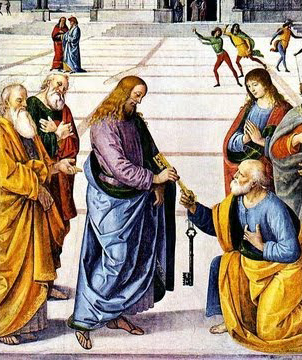
Editor’s Note: The following section comes from the second volume of Deschner’s work (pic left). In the previous instances I had been using the third one but the order I have chosen for this site tries to follow, more or less, the order of what I hope will be the first volume in English of this abridged version of Kriminalgeschichte des Christentums.

The envy that I feel for most Westerners is absolute. I was born in the Middle Ages in the sense that, unlike the vast majority of Christians, I got religion inculcated through the hardest psychic blows. A Christian today does not have the remotest idea of what Catholic education was like in other times. Living in Spain, for example, a woman told me that she knew ‘older people’ who feared the idea of eternal damnation: something that younger generations of Christians have been completely spared.

The number of times I heard my Catholic father quote a specific verse from the gospels, ‘Peter: you are a rock, and on this rock I will build my Church!’ (emphasis in my father’s voice) was such, and it made such a dent in my young mentality, that I cannot help feeling great liberation when a non-Christian scholar, like Deschner, debunks those apocryphal verses.

Christianity not only irreparably damaged my life. It is likely that it has irreparably damaged the white race, on which this religion was imposed. Only the outcome of history will show if the white man will get rid of his ethnosuicidal tendencies: a psychic malware programmed, in large part, by the religion that destroyed my life.

Also raised as a Catholic, Deschner wrote:


______ 卐 ______


Neither Jesus instituted the papacy nor Peter was bishop of Rome

The Catholic Church bases the foundation of the papacy, and of itself, in the Matthew passage: ‘You are Peter, and on this rock [petrus] I will build my Church’ (Mt 16:18).

In huge golden mosaic letters these words appear, the most discussed of the Bible, in the dome of St. Peter built by Michelangelo. But they are missing in three of the four Gospels, especially in Mark, the oldest of the evangelists. In fact, Jesus never uttered them. This is today ‘the certain outcome of biblical exegesis’ (Brox).

In spite of this, the Catholic Church continues to maintain its ‘divine foundation’. It has no choice: the Church has affirmed it for two thousand years. However, not a few of its theologians capitulate now. Many of them, following with delay the steps of quite conservative Protestants, have developed a language that ‘scientifically’ makes them preserve half the face and allows them not to lose everything before their superiors. They paraphrase the lack of authenticity of the ‘foundational words of the Church’ in the following way: Matthew does not refer to it historically but he composes it theologically. Or they claim the ‘rock’ is a commandment uttered after the ‘resurrection’. The Catholics with fewer detours explain the ‘promise of Peter’ as a later interpolation, simply as an invention of the evangelists.

However, perhaps Peter had a kind of primacy, a certain leading role. But perhaps only temporarily and in certain areas, not, of course, after the ‘council of the apostles’. Paul, who opposes Peter ‘in his face’ in Antioch, insults him by calling him a hypocrite and, in an open manner, questions his demands. Elsewhere in the ‘Holy Scriptures’ there are also ‘anti-Petrine’ tendencies. And that Peter retained his primacy, if he had one, even if it was only an invention of the ‘Petrist party’, does not appear anywhere in the New Testament. Nothing is said.

However, even in the case—which must be excluded for many reasons—that the ‘primacy words’ came from Jesus, the Church could not explain how they were transmitted from Peter to the ‘popes’, since they not only apply to the apostle but also to his ‘successors in office’. Neither the Bible nor any other historical source indicates that Peter appointed his successor.

More than one Catholic ‘sees himself in trouble when trying to explain from a historical and critical point of view the strength of the biblical foundations for the papacy’ (Stockmeier). The most courageous theologians admit that ‘there is nothing’ of a succession of Peter (De Vries), which ‘in the New Testament cannot be seen anywhere’ (Schnackenburg). In effect, the theologian Josef Blank asks himself how primitive Christianity understood this sentence. Did it mean Rome or the primacy of the Roman bishop as successor to the Apostle Peter? ‘The answer is, plain and simple: No!’

Apologetics is based on indications from Jesus to Peter: that he should catch men, that he takes the keys to the kingdom of heaven; that all that he unites or desires on earth will be united or disunited in heaven and finally: ‘Strengthen your brothers’, ‘Feed my flock’. However, many other Gospel or New Testament parallels show that the five dispositions of Jesus were not linked in principle to Peter. And above all, of a successor, even of a superior of the Roman community as director of a global Church, it is not spoken at all in any early Christian text.

______ 卐 ______

Liked it? Take a second to support this site.

Categories
Psychiatry

View from the tower

History is the mighty Tower of Experience… It is no easy task to reach the top of this ancient structure and get the benefit of the full view. There is no elevator, but young feet are strong and it can be done. —Hendrik Willem van Loon.

Psychiatry is a pseudoscience and an Inquisition. The chapter ‘From the Great Confinement of Louis XIV of France to a Chemical Gulag’ can now be read, in due order, on my Ex Libris page (here).

As I have said, while white nationalists know that in the universities some fields are pseudoscientific (for example, gender studies or so-called historical grievances), in the same universities there are other pseudoscientific areas that go completely unnoticed.

Psychiatry is one of them and, since I researched it a few years ago, having translated one of the chapters from my online book, why no translate a few others for this site?

But first I must finish the translation of a book I did not write: Deschner’s lifetime research on Christianity, from which I still have to add nine posts before the first volume is available, I hope, as a printed book through Lulu Inc.

The history of Christianity and the history of psychiatry have something in common. The System has hidden from us the facts of what happened. Reaching the mighty tower that Van Loon talks about is one of the objectives of this site.

Categories
Child abuse Pseudoscience Psychiatry

From the Great Confinement of Louis XIV of France to a Chemical Gulag (part 5)

Faced with a multi-billion dollar business that has subtly bought the doctors, universities and the media, it is virtually impossible for the civil society to see what is happening. Just as in Heinroth’s time political actions were covered up in medical garb when the ideals of the Revolution were in the air, after the rebellion of the 1960s psychiatry reacted by covering itself more and more with the clothes of hard science, the paradigm of our days. In 1999 Professor Leonard Duhl of the University of California defined mental illness and poverty in the most perfect sense of the ideologists of the Great Confinement of the 17th century: ‘the inability to command events that affect one’s life’.[31]

The consolidation and enlargement of the psychiatric power continues in the 21st century. The tenfold increase in the use of neuroleptics in minors since the mid-1990s to the first five years of the new century, which is done with the publicity stunt that they are ‘at risk’, shows the cynicism of this marketing design.

Heinroth was a great visionary. He foresaw that drugs could be the prisons of the future. Although the neuroleptics had not been invented, Heinroth already spoke of ‘pharmaceutical means of restriction’ and ‘restrictive surgical means’, anticipating the lobotomy that Moniz would develop a century later.

Since the regulations that would define the policies of the psychiatrists were enacted in the 19th century, the expansion of the chemical Gulag meant that long-term involuntary hospitalization changed to long-term voluntary (or involuntary) drug addiction. Psychiatrists, of course, would say things differently. They say that in the treatment of mental illnesses the most outstanding event of the 20th century was the capability to synthesise these substances in laboratories. But this is one of the allegations of scientific progress that, analysed closely, is discovered fallacious.

In psychopharmacology there are no biographies of John, Peter or Mary when they are prescribed neuroleptics, neither when they are prescribed antidepressants, when stimulants are prescribed, or when tranquilizers are prescribed. There are no people in biological psychiatry, or biologicistic psychiatry as I prefer to call it, only biochemical radicals that have to be normalized by other chemical substances. In an age that seeks easy solutions to the problems of the world, it is not necessary to delve into the past. Just calculate the dose of ‘happy pills’, be it Prozac or any other.

This also happens with the abuse of illegal drugs and the only difference is that the psychotropic drugs are legal. Approximately thirty million people have taken Prozac (fluoxetine), a drug that Newsweek has advertised with cover articles. The situation points more and more to the scenes of Brave New World of Aldous Huxley where, at the request of the State, every citizen consumed the drug called soma.

(First edition in the United Kingdom of Huxley’s famous novel.) In the medical profession the environmental factors that prick our souls have disappeared from the map. If the philosophy of the biologicistic psychiatrists is right, all our passions, traumas and conflicts, loves and fears, are not the result of our desires in conflict with the external world, but of the swings of small polypeptides in our bodies that are transformed into despair.

In the preface to some editions of the DSM it is said that the future will completely erase the ‘unfortunate’ distinction between the popular concept of mental disorder and physical illness. On January 1, 1990, California became the first American state to accept the main dogma in psychiatry: that mental disorders are, in reality, diseases originating in brain dysfunctions. For example, it is claimed that a high dopamine causes madness, and a low serotonin, depression. (This reminds me that for Benjamin Rush, the father of American psychiatry, insanity was caused by low blood circulation in the head.) But in real neurological science the dopamine and serotonin claims have been debunked.[32]

Bioreductionist psychiatry is anything that sees supposed biological abnormalities in the body rather traumatic events in the family or the environment. It is like studying trauma not as a reaction to an outrageous act, say, the incestuous rape of Dora [mentioned in the online book], but rather studying the temporal lobe of the raped girl, where the treatment is headed. The drugs, or the hammer of the electroshock, are the result of the medical axiom: ‘He who only knows how to use the hammer treats all things as if they were nails’.

I am not caricaturising the profession. In November 2002 I had a long discussion with Dr. Miguel Pérez de la Mora, an experimental cell physiology physician of the Department of Biophysics of the National Autonomous University of Mexico (UNAM) and director of the Mexican Academy of Sciences. In the discussion with Pérez de la Mora I was struck by the fact that, when I mentioned the mental state of the inmates in the concentration camps, my contender immediately jumped to the subject of the amygdala and the anxiety that he studied in his laboratory: an anxiety understood in a strictly biological way.

In our surreal discussion, I took a long time to make the obvious point to the doctor: that the cause of the mental stress of the inmates were the brutalities in the camps. But even granted this point Pérez de la Mora added—without laboratory tests—that only those inmates in the fields who presumably had a genetic predisposition could have been the ones who became upset. For this neurologist and his colleagues, the concentration camps were a mere ‘trigger mechanism’ for the disorder of a prisoner whose biology, presumably, was already defective!

I must clarify the concept of ‘trigger mechanism’ of a supposed latent mental disorder.

This is one of the main mantras of the psychiatrist, and exemplifies what I have called bioreductionism. For the bioreductionist, the human rights and psychological trauma are located in the background, and the only thing that matters is the genome project and the search for the ‘gene’ responsible for the disorder (or another strictly biological line).

The specialty of Pérez de la Mora is studying anxiety disorders in the laboratories of the UNAM, and during our discussion he confessed that the firm that manufactures the psychiatric drug Valium had financed his research. I pointed to Pérez de la Mora that a research financed by the same drug companies produces results with a clear biological bias. The eminent scientist told me that researchers rarely sell themselves to companies.

The reality is that the way that the pharmaceutical multinationals buy the scientists is infinitely subtler than direct bribery. Roche, which manufactures Valium, simply finances professionals who postulate biological hypotheses, and no other. Never Roche or the competition would give us a penny to those who investigate psychological trauma. Our line of research is a proposal that requires social engineering and changes in the nuclear family to avoid mistreatment of the children. But in our world nobody wants to finance the researcher who puts the parents in the dock.

For example, no institution funded the research to write this online book. On the other hand, the medical model promotes the drugging of the abused child without changing the parental mistreatment that caused the mental distress in the first place. Only in this way does the field enjoy the approval of society. If the anxiety that Perez de la Mora studies, or panic, depression, addictions, phobias, mania, obsessions and compulsions are the result of an abnormal biology, the human and existential content that has caused these experiences becomes irrelevant.

The thinking of our time is being confined to a one-dimensional world as far as mental health is concerned. Bioreductionism, the ideology of the medical doctors with blinders that do not want to see the social sides, is a doctrine whose conceptual frame is quite simple: determinism and reductionism (‘Your biology is your destiny’). But as psychiatrists present this doctrine to us with all its scientific sophistication, the matter apparently is complicated. The following Szaszian analogy illustrates how simple, at the bottom, biopsychiatry is.

The primitive witch-doctor, who tried to understand Nature in human terms, treated objects as agents: a position known as animism. The modern witch-doctor, who tries to understand the subjectivity of man in terms of Nature, treats agents as objects: a position known as bioreductionism. Primitive man has been demystified in our scientific era. Who will demystify psychiatry doctors?

There is a small group of thinkers who can do it: those who know how to distinguish between good and bogus science.

____________

[31] Leonard Duhl, quoted in Szasz: Pharmacracy, p. 95.

[32] See Valenstein, Blaming the Brain.

______ 卐 ______

Liked it? Take a second to support this site.

Categories
Child abuse Evil Psychiatry

From the Great Confinement of Louis XIV of France to a Chemical Gulag (part 4)

From pesticides to antipsychotics

May 1954 is a memorable date for psychiatrists. For the first time, a neuroleptic (popularly known as ‘antipsychotic’) was marketed, chlorpromazine, commercially named Thorazine in the United States and Largactil in some European countries, which revolutionised treatment in the profession.

The first generation of phenothiazines from which chlorpromazine emerged had been used for pesticide purposes in agriculture. In addition, experiments were known to induce catalepsy in animals.

The neuroleptic was a chemical intentionally designed as a neurotoxin, but millions of Thorazine prescriptions were prescribed in the United States. Under the effects of chlorpromazine, patients now could be ‘moved about like puppets’, and the first psychiatrist who experimented in the United States with this neuroleptic said that it ‘may prove to be a pharmacological substitute for lobotomy’.[23] The campaign to sell Thorazine to the American society was so fierce that the same professionals called ‘Thorazine assault troops’ the propagandists of the company that manufactured them.[24]

This was the first massive incursion in the world of public relations carried out by a pharmaceutical company in a market that previously was very small: institutional psychiatry. In its first year of marketing, Smith, Klein & French obtained 75 million dollars with that drug. The rest, as they say, is history.[25]

In 1955, Time magazine called the professionals who opposed chlorpromazine ‘ivory tower critics’. Gregory Zilboorg, the same psychiatrist who held the authors of the medieval Malleus Maleficarum in high esteem, said that the public was being deceived and that the drug only served to control the inpatient. Another doctor raised his voice and said that chlorpromazine was more dangerous than heroin and cocaine. But the publicity muffled all internal dissidence.

By the mid-1960s more than ten thousand medical articles had been written about chlorpromazine. There were television campaigns that omitted any mention of the Parkinsonian-like effects of the drug, and the magazines were paid substantial sums if they advertised in their main articles the miraculous chemical. Time, Fortune and the New York Times were some of these prostitutes of the pharmaceutical corporations.

The use of neuroleptics soon was considered cutting-edge among psychiatric treatments, triumphing over the induced commas with insulin, electroshock and lobotomy. In the 1960s the revolution of this miraculous alchemy, from pesticides to antipsychotics, was consummated and the mindset of the public had been implanted with the message that they were ‘anti-psychotic’ medicines: an idea that persists today.

By 1970, nineteen million prescriptions for neuroleptics had been prescribed, and not just for people who were disturbed. Some juvenile delinquents and rebellious teenagers who were given the neuroleptic called it ‘zombie juice’, but the professionals counterattacked by introducing the euphemism ‘major tranquilizers’.

At the end of March 2001 in France, Germany, Italy, Spain, the United Kingdom and the United States, the prescription number of so-called ‘anti-psychotics’ was estimated in 43 million. In the case of children and adolescents, one study showed that between 1987 and 1996 the number of children who were given the drug had doubled. Between 1996 and 2000 the figure multiplied to reach the figure of one in fifty, although the most important age group was between 5 and 9 years old.[26]

The propaganda through which multinational drug companies infect civil society about the ‘need’ to take these neurotoxins is performed through campaigns of ‘education’ to medical visitors and counsellors of schools and parents. Joe Sharkey, a financial journalist and author of Bedlam: Greed, Profiteering and Fraud in a Mental Health System Gone Crazy, has reported that by the end of the 1980s, 25 percent of the earnings paid by health insurance went to the pockets of those who work in the area of mental health, largely due to the psychiatric treatment of these rebellious adolescents.[27]

Furthermore, since the 1970s these professionals entered into a frank association with the drug companies. The consortium between psychiatrists and Big Pharma (pharmaceutical multinationals) is so brazen that all psychiatric conferences are financed by these corporations, and in some medical centres all laboratory research is also financed by multinationals. These companies also fund psychiatric journals. In addition, a study of eight hundred articles by some of the most prestigious scientific journals that do not specialise in psychiatry (Science, Nature, Lancet, The New England Journal of Medicine and the Proceedings of the National Academy of Medicine) found that 34 percent of the authors had financial interests with the Big Pharma.

The pharmaceutical industry is the largest sponsor of psychiatric research in the United States, including research in universities and medical schools. It is estimated that in 1994 alone it spent one and a half billion dollars in academic research.[28] Some people have used the expression ‘Is academic medicine for sale?’ to describe this situation.

This is fundamental to understand why I say that psychiatrists, despite their impeccable medical credentials, enact a biased science. It is clear that the sponsorship that these companies provide results in biologicistic and pro-drug bias in research. The editors of specialised journals are very cautious when publishing articles by professionals who criticise biological psychiatry, especially if they question the effectiveness of psychotropic drugs or if they mention the terrible effects of drugs, such as tardive dyskinesia and dystonia produced by the so-called ‘antipsychotic’, symptoms which doctors euphemistically call ‘extrapyramidal symptoms’.

Drug companies spend huge sums on advertisements that appear in specialised journals, and the publishers are not willing to offend their sponsors with articles that denounce the epidemics of drug-induced tardive dyskinesia, on the threat that the companies will withdraw the advertising. The economic dependence of the journals with these companies leads not only to discretion, but many authors resort to self-censorship. As some mental health professionals say, the pharmaceutical industry owns the data obtained in the clinical tests it subsidizes and decides which studies should be published; chooses the authors, writes the articles and even the reviews to interpret the data.[29]

On the other hand, it is natural for new professionals in medical research to choose the area of the most promising future, that which is generously financed by the drug companies. That is where the funds for their careers are found. There is a whole book on the subject, How the Pharmaceutical Industry Bankrolled the Unholy Marriage Between Science and Business of Linda Marsa, and this trend is much more evident in psychiatry. In a psychiatric journal there is less guarantee of scientific accuracy than in other specialised journals. In the profession it is no longer heard, as it used to be in the 1950s and 1960s, that abusive parents drive their children mad. The economic interests to hide this reality are enormous.

For example, in the mid-1990s a pharmaceutical market analyst claimed that the US $1 billion market for neuroleptics could grow to 4.5 billion a year. In May 2001, a report by the Wall Street Journal evaluated the neuroleptic market at 5 billion dollars a year, five hundred percent growth in five years.

The total sales of neuroleptics in the United States in 2000 was 2.5 billion dollars, and international sales reached 6 billion dollars that same year. Only the neuroleptic Zyprexa gave Eli Lilly $ 1 billion in profits in 1998 (the incorrectly referred to as ‘antipsychotics’ are even used in veterinary!). In 1999/2000, the United States led the Western consumption of neuroleptics with 65 percent, followed by Europe with 22 percent and Latin America with 2.5 percent. (I am not counting Russia, Asia or Africa). Given that there are many people who want to control others in prisons, asylums, insane hospitals, correctional facilities for minors and even at home, the growth of market demand for these terrible drugs is comprehensible.[30]

These figures are key to understanding the psychiatry of our days: a chemical Gulag.
_______________

[23] Heinz Lehmann, quoted in ibid., p. 144.

[24] These words from the pharmaceutical company Smith, Kline & French appear in Loren Mosher: ‘Soteria and other alternatives to acute psychiatric hospitalization’ in The Journal of Nervous and Mental Disease (1999, 187), that I read on the internet.

[25] Loren Mosher, Richard Gosden & Sharon Beder, ‘Las empresas farmacéuticas y la esquizofrenia’ en Modelos de locura, pp. 141s.

[26] These figures appear in Modelos de locura, pages 124s.

[27] Sharkey: Bedlam, p. 4. Sharkey’s book takes as a central theme the unjustified hospitalisations set up by psychiatrists, especially children and adolescents, to get as much money as possible from the insurance companies of their parents.

[28] This information appears in Valenstein: Blaming the Brain, pp. 199 & 187.

[29] Modelos de locura, p. 144.

[30] See Whitaker: Mad in America, and Valenstein: Blaming the Brain, chapter 6. See also Richard Gosden and Sharon Beder: ‘Pharmaceutical industry agenda setting in mental health policies’ in Ethical Human Science and Services (Autumn/Winter 2000). I wrote this piece fifteen years ago and have not checked the latest stats in scholarly journals. However, I keep watching Robert Whitaker’s updated videos in YouTube. Nothing in recent years has moved me to change my mind.

______ 卐 ______

Liked it? Take a second to support this site.

Categories
Bible Final solution

Tough question

Let us put it simply this way:
If the entire destruction of the Jew involves the destruction of the Bible—will you people be able to do it? From all I can see, all Bible believers are unable to do so. They don’t even care about the Jew behind it. They love the Bible more than they hate the Jew who made it.
And that is our greatest weakness.

Axe of Perun

Categories
Evil Mainstream media Psychiatry

From the Great Confinement of Louis XIV of France to a Chemical Gulag (part 3)

The great revolution in modern psychiatry occurred in the 1930s. Previously, with his instruments Heinroth and his colleagues had assaulted the body of citizens to control. But in the 1930s the assault on the body was abandoned by a more effective method: assaulting the brain directly. Metrazol shock, insulin shock and electroshock were introduced knowing that it killed brain cells.
Pentylenetetrazol (commercially known as Metrazol in North America and Cardiazol in Europe) causes a huge reaction in the victims. They suffered seizures so violent that they frequently broke their teeth, bones and spine. Metrazol shock was so devastating to the brain that, once its effect passed, some suffered regressive states and acted like babies; they played with their faeces, masturbated and wanted the nurses to mollycoddle them. When they recovered they prayed ‘in the name of humanity’ that they would not be injected with Metrazol again: a drug that subjugated even the hardest of the military. But by 1939 it was common to use Metrazol in most hospitals of the United States, which meant that in those times some inmates used to receive several injections.
The New York Times, Harper’s, Time and even Reader’s Digest joined the chorus of praises about a similar psychiatric treatment: insulin shock, which also produced frightening seizures. A Time writer wrote that while the patient descends in the coma ‘he shouts and bellows, gives free vent to his hidden fears and obsessions, opens his mind wide to listening psychiatrists’. The psychoanalysts interpreted the complaints of the victims in favour of their colleagues. In a meeting of the American Psychiatric Association Roy Grinker interpreted that the patient ‘experiences the treatment as a sadistic punishment attack which satisfies his unconscious sense of guilt’.[16] Robert Whitaker, the author of a study on American psychiatry, calls this epoch, the first fifty years of the 20th century, ‘the darkest time’ in the history of psychiatry.
1935 marked the birth of lobotomy. Egas Moniz, a Portuguese psychiatrist, had started his experiments using alcohol to destroy the brain tissue of the frontal lobes, but changed the method by cutting them directly with a scalpel. His first guinea pig was a prostitute, and three months later he had lobotomised twenty people, each time daring to cut off more brain tissue from his victims. According to Moniz ‘to cure these patients we must destroy the more or less fixed arrangements of the cellular connections that exist in the brain’.[17] Moniz’s work led to an explosion of lobotomies in the West, especially in the United States, but also in the United Kingdom, Italy, Romania, Brazil, Cuba and eventually in Mexico.
In 1941 the neurosurgeon Walter Freeman called this practice ‘brain-damaging therapeutics’.[18] At least we must give Freeman credit that he did not express himself in Newspeak, but in the lingua franca of Heinroth: he recognised that lobotomy damages the brain. But in that decade the Swedish Academy awarded Moniz the Nobel Prize in medicine and the media was enthusiastic about the novel therapy, including the New York Times, Time and Newsweek. A New York Times editorial celebrated with these words the success on lobotomised people: ‘would-be suicides found life acceptable’.[19] With such social support tens of thousands of lobotomies were practiced in the 1940s and 50s. It was believed that college students who had emotional problems, and even spoiled children, were ideal candidates for Freeman’s lobotomy.
Whitaker mentions the effects of this radical operation. A lobotomised woman was described as ‘fat, silly and smiling’. Although she had been of lineage, another woman who underwent the operation defecated in a garbage dump. Lobotomised patients grabbed the food from the neighbour’s plate, or vomited in the soup and kept eating. Some of them did not get out of bed unless a family member ordered them to do so, and it was common for them to urinate there. Others just looked out the window. Those who had had jobs before the operation were unable to make a living by themselves. It was possible to insult them and get a smile in response.
Some referred to lobotomy as ‘a surgically induced childhood’, and you can already imagine the burden it represented for families to support them. But Freeman and his assistant Watts had a more positive view of things. They wrote that the lobotomised patient could be considered ‘a household pet’.[20] The reports of the scientific journals also painted things in a favourable light for the medical profession. The language of science claims to be neutral, apolitical and non-emotional. It does not wield value judgments: the diametrically opposite to what I do in this book. In the professional literature where graphs and figures abound it is easy to write articles where the tragedy left by these semi-vegetable humans was not perceived as a crime.

Walter Freeman at the moment of cutting the healthy
brain of one of his victims. Note how this was done
openly with students learning from the lobotomist.

The ‘brain-damaging therapeutics’ of Moniz and Freeman lost momentum in the 1960s and 70s. It is currently difficult to know how many lobotomies are made in the world each year. According to an article in defence of lobotomy in Psychology Today (March/April 1992), at the beginning of that decade there were at least 200 to 300 ‘psychosurgeries’ openly declared every year. In fact, in the new century a few doctors still promote ‘psychosurgery’ for severe emotional problems and in some states of the United States special councils have been formed to review all proposals for these operations.[21]
Although lobotomy fell into relative disuse, electroshock remains a standard psychiatric practice in the 21st-century profession. The electroshock was developed in 1938, inspired by a slaughterhouse in Rome where the pigs were electro-shocked to make it easier to slice their necks. A psychiatrist, Ugo Cerletti, had been experimenting with electric shocks on dogs, putting electrodes on the snout and anus of the dog. Half of the animals died of cardiac arrest. After seeing the electro-shocked pigs Cerletti decided to use it on humans.
Cerletti’s first guinea pig was a homeless man who roamed the train station in Rome. Shortly after, in 1940, electroshock therapy was admitted at the other side of the Atlantic. Manfred Sakel, who introduced insulin shock in medical practice, compared his technique to the electroshock and commented on the latter: ‘the stronger the amnesia, the more severe the underlying brain cell damage must be’.[22] This was another form of the ‘brain-damaging therapeutics’ of Moniz and Freeman.
Although the psychiatrists recognised all this in their specialised journals, in their public pronouncements they were more cautious. They painted ‘electroconvulsive therapy’ as a harmless therapy and said that the loss of memories was temporary. The media took the propaganda as honest science, and by 1946 half of the beds in American hospitals were occupied by psychiatric patients, some of whom had suffered the therapy.
Two years later Albert Deutsch published The Shame of the States and an article appeared in Life magazine with impressive photographs about a reality that the American people ignored: what happened in the concentration camps called psychiatric institutions. Although the images contributed to the reform of the public facilities in the United States, the 20th century witnessed two other psychiatric revolutions. One was the consortium between psychiatrists and pharmaceutical multinationals; another, the invention of chemical lobotomies in the 1950s. Surgical lobotomy would fell into relative disuse in favour of the use of neuroleptics: a more subtle form of social control.
______________
[16] The revelations about Metrazol appear in Whitaker’s book.
[17] Egas Moniz, quoted in Mad in America, 113.
[18] Freeman, quoted in ibid, p. 96.
[19] Quoted in ibid, p. 138.
[20] Freeman, quoted in ibid, p. 124.
[21] Lobotomy, Microsoft® Encarta® Encyclopedia 2000. On the resurgence of lobotomy, see Breggin: Toxic Psychiatry, pp. 261ff and an article by Lawrence Stevens that can be read on the internet: ‘The brain-butchery called psychosurgery’.
[22] Manfred Sakel, quoted in Mad in America, p. 98.

______ 卐 ______

Liked it? Take a second to support this site.

Categories
Axiology Der Antichrist (book) Friedrich Nietzsche Theology

The Antichrist § 9

Wherever the influence of theologians is felt, value judgements are turned on their heads and the concepts ‘true’ and ‘false’ are necessarily inverted: whatever hurts life the most is called ‘true’, and whatever improves, increases, affirms, justifies life and makes it triumph is called ‘false’…

Categories
Evil George Orwell Newspeak Psychiatry

From the Great Confinement of Louis XIV of France to a Chemical Gulag (part 2)

At the end of the 18th century, there was no psychiatry as a medical specialty. The word ‘psychiatry’ was coined by Johann Reil in 1808. The new profession took for granted a postulate that had roots in the medicine of ancient Greece. A postulate is a proposition that is admitted without proof. The postulated platform of the new profession assumed the organic origin of psychic disturbances. This postulate elevated to an axiom, and even to dogma, prevented the introduction of subjectivity in the study of mental disturbances.
As we saw with John Modrow [explained in a previous chapter of the online book], the reality is the diametrically opposite. Only by introducing the subjectivity of a soul in pain, and by rejecting the organic hypothesis, is it possible to understand what the hell is going on in the innermost chambers of those who suffer from mental distress and disorders. Objectivity in matters of the internal world of a subject is as impossible as the opposite case: approaching the empirical world in the manner of philosophers like Plato, who, from his idealist Olympus, despised the practical study of nature.
This colossal error cost the Greek culture its moving upward, just as the antipodal error of reducing the humanities to science is misleading our civilisation. It is a categorical mistake trying to understand psychological trauma through neuroscience, as it is a categorical mistake trying to understand the empirical world, say astronomy, through social discourse. Postmodernist philosophers and psychiatrists represent two symmetrical, albeit diametrically opposed, attempts at extreme ideologies. The former want to reduce science to the humanities; the latter, the humanities to science: and none respects the other as a separate and intrinsically legitimate field. In another place I will delve into these two antithetical errors.
The birth of modern psychiatry occurs when the outcast leaves the jurisdiction of the houses of confinement in France and the rest of Europe and is left in charge of the medical institution. In the profession of the 21st century, armed with a battery of genetics, neurology and nosological taxonomy, it is impossible to see what psychiatry is at its root. But in the book by Johann Christian Heinroth, Lehrbuch der Störungen des Seelenlebens (Textbook on the Disturbances of Mental Life), published in 1818, we see the fundamentals of psychiatry without the pseudoscientific smokescreen so common in our days.
Following the tradition of the 17th and 18th centuries, Heinroth used the expression ‘mental illness’ and defined it as ‘selfishness’ or ‘sin’: terms he used interchangeably. Heinroth not only equated the Christian concept of sin with that of mental illness. Although he considered mental illness an ethical defect, Heinroth’s great innovation consists that he treated it with medical procedures.
How did Heinroth take this conceptual leap? Or we may ask, why should MDs reroute the flock of the straying sheep? This turn was not contemplated in the blueprints of the architects of the Great Confinement of the 17th century. Once the Inquisition was officially abolished, Heinroth himself wonders who would be the new social controller: ‘would this be the task of a doctor?, or perhaps of a cleric?, or of a philosopher?, or an educator?’ [7]
The task fell, finally, on the physician. Presumably this was because, as the doctor deals directly with the physicality of human beings, it was easier to cover physical violence in the medical profession than in the other professions. At a time when the ideals of the French Revolution were still in the air, civil society would have suspected a cleric or a philosopher with jurisdiction over other people’s bodies, but not a doctor.
In order for people to accept the new inquisitor, they also had to literalise the central metaphor of the profession. Originally ‘mental illness’ was understood as a mere metaphor of what in previous centuries had been called ‘men of unreason’, which put together the dissidents with the disturbed. When the doctor assumed the responsibility of occupying the role that used to be occupied by the officials of the houses of confinement, Heinroth assumed that the selfishness and sin that he treated were medical entities: something like saying that the ‘viruses’ that infect our hard drives are not metaphor of subversive programs, but microorganisms.
The literalisation of the metaphor ‘mental illness’ into an authentic illness would not have been possible if Heinroth and many other professionals of mental health had not counted with societal approval. The 19th century was the most bourgeois of recent centuries, and the social forces that drove the wealthy to lock up the undesirables were still expanding, even more than in the times when Heinroth himself was born.
The only way to understand Heinroth and his philosophy of the hammer is to let him speak. I have borrowed the following paragraphs from a study of Thomas Szasz. The first quoted sentence is taken from Medicina Psychica Politica (Psycho-Political Medicine): a title that perfectly illustrates how, in its origins, the psychiatrists did not speak in Newspeak but in Oldspeak. Heinroth wrote: ‘It is the duty of the State to care for mentally disturbed persons whenever they are a burden to the community or present a public danger; and the accommodation, cure, and care of such individuals is the duty of the police’. But who are ‘mentally disturbed’? He answers: ‘It is those least deserving of freedom, namely the maniaci [maniacs], who love freedom best; and as long as they are left to themselves and to their perverted activity, even if only in an Autenreith chamber, no recovery is thinkable’.[8] The Autenreith chamber and the mask of the same name were torture apparatuses on which he explains his modus operandi:

Experience has shown that the patient in the sack is in danger of asphyxiation and of falling victim of convulsions… [In the confinement chair] the patient can remain bound in the chair for weeks on end without incurring the slightest bodily harm. [The pear is a] piece of hard wood, with the shape and dimensions of a medium-sized pear, has a cross-bar with straps which can be tied at the back of the neck of the patient. Since the oral cavity of the patient is more or less filled by the instrument, the patient can obviously utter no articulate sounds, but he can still utter stifled screams.[9]

Heinroth articulated some guidelines for the psychiatrist: ‘First, be master of the situation; second, be master of the patient’.[10] Szasz comments that in these phrases psychiatry appears naked as to what it was and continues to be today: subjugation, enslavement and control of one human being by another. He also comments that contemporary psychiatrists, although they do similar things, do not speak frankly as they used to speak in Heinroth’s time.
However, Heinroth understood from the beginning that in his profession he had to disguise the torture chambers for social control as a hospital activity, for which he recommended: ‘all impression of a prison must be avoided’, a situation that persists today. In Spain, for example, contemporary psychiatrists have changed the bars of the windows by external blinds, some cosmetic though rigid metal sheets that serve as prison bars. The façade of psychiatric gardens of our century follows 19th-century regulations. About what happens behind the façade, according to Heinroth:

The edifice should have a special bathing section, with all kinds of baths, showers, douches, and immersion vessels. It must also have a special correction and punishment room with all the necessary equipment, including a Cox swing (or, better, rotating machine), a Reils’s fly-wheel, pulleys, punishment chair, Langermann’s cell, etc. [11]

Here are other words of this doctor who lived a century before Orwell wrote 1984. According to Heinroth, the psychiatrist

appears to the patient as helper and saviour, as a father and benefactor, as a sympathetic friend, as a friendly teacher, but also as a judge who weighs the evidence, passes judgement, and executes the sentence; at the same time seems to be the visible God to the patient… [12]

Heinroth seems a hybrid between the Orwellian O’Brien and a contemporary man of his times: Sade. The fact that some psychiatrists see in Heinroth one of the founders of modern psychiatry and the precursor of Eugen Bleuler, speaks for itself and does not need further comment.
Thanks to Heinroth and other apologists of medical violence, in the mid-19th century the metaphor ‘mental illness’ was recognised as an authentic disease. In England, the parliament granted the medical fraternity the exclusive right to treat the newly discovered disease. The first specialised journals in psychiatry appeared. The American Journal of Psychiatry, which was originally called the American Journal of Insanity and whose first issue appeared in 1844, published data, since its inception, that now are known to be fraudulent.[13] Throughout the 19th century countless of ‘imprudent’ women like Hersilie Rouy and Julie La Roche [cases mentioned at the beginning of the online book] were imprisoned by their parents and husbands; and the psychiatrists resisted attempts to inspect their ‘asylums’, as they were then called, because it interfered with medical autonomy. Many doctors tried to obtain important positions in the asylums.
The psychiatric profession, in its modern version, was born.
In the 20th century, the psychiatric profession consolidated its power and prestige in society. A smoke-screen terminology was developed and, for the man of the street, it became impossible to see psychiatry in its naked simplicity. Some sadists like Heinroth became ‘psychiatrists’, their tortures ‘treatments’, the social outcasts ‘patients’, the asylums ‘hospitals’ and dementia praecox ‘schizophrenia’.
Before the creation of the Newspeak the asylums were properly called Poorhouses. Before drugs were designed to induce tortuous states for the mind, Emil Kraepelin and Bleuler used other methods of subjugation. In 1911 the latter experimented with a particularly disgusting medication that caused bleeding vomit, but at least Bleuler confessed with a frankness something no longer seen in today’s psychiatry: ‘His behaviour improves. From the ethical point of view, I cannot recommend this method’.[14] Similarly, in 1913 Kraepelin used to inject sodium nucleate to cause fever in his patients, who ‘become more docile and obey the doctors’ orders’.[15]
____________
[7] Johann Christian Heinroth, quoted in Thomas Szasz, The Myth of Psychotherapy (NY: Syracuse University Press Edition, 1988), p. 73.
[8] Ibid., pp. 74-75.
[9] Ibid., pp. 76-77.
[10] Ibid., p. 77.
[11] Ibid., p. 79.
[12] Ibid., p. 78.
[13] See, for example, Robert Whitaker: Mad in America: Bad Science, Bad Medicine, and the Enduring Mistreatment of the Mentally Ill (Cambridge, Massachusetts: Perseus, 2001), pp. 75ff.
[14] Bleuler, quoted in John Read, Loren Mosher & Richard Bentall: Modelos de Locura (Herder, 2006), p. 39
[15] Kraepelin, quoted in ibid.

______ 卐 ______

Liked it? Take a second to support this site.