web analytics
Categories
Julian (novel)

Julian, 68

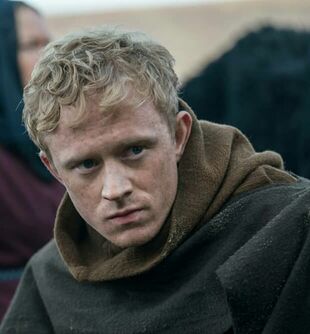
Constantius never meant me to take actual command of the province. I was to be a ceremonial figure, reminding the Gauls by my presence that Constantius had committed, if not a full army, at least his flesh and blood to the task of rallying a frightened people to the defence of the province. Florentius wielded all actual power. He was in direct charge of the army at Vienne and his personal courier service held together the various legions scattered about Gaul. Most of them, incidentally, were trapped in fortresses, for the Germans had laid siege to every sizeable town and military installation from the Rhine to the North Sea.

Only last year, in going through Constantius’s secret archives—a fascinating if at times depressing experience, rather like hearing what people say behind one’s back—I came across his instructions to Florentius. Now that I have read them I am more tolerant of the prefect; he was merely carrying out orders. Constantius wrote—I am paraphrasing, for the documents are all at Constantinople that this “dearly beloved kinsman the Caesar Julian” was to be looked upon as a cadet in the art of war and as a novice in the business of government. Florentius was to be that pupil’s dedicated tutor, to instruct, edify and guard him against evil companions and wrong judgments. In other words, I was to be put to school. Military matters were to be kept from me. I was to be watched for signs of ambitio, as the Romans say, a word no other language has devised, meaning that sort of worldly ambition which is injurious to the balance of the state.

My first year in Gaul did teach me a good deal, not only in the art of war but also in the arts of concealment and patience. I became a second Ulysses, hiding my time. I was not allowed to attend the military council. But from time to time I was briefed on the general military situation. I was not encouraged by what I was told. Though the army of Gaul was considerable, Florentius had no intention of committing it in battle.

We did nothing. Fortunately our enemy Chnodomar did nothing either; his promised offensive never materialized. He declared himself quite pleased to control the Rhine and our largest cities. I was eager to engage him, but I did not command a single soldier, excepting my doughty Italian bodyguard. I was also in need of money. My salary as Caesar was supposed to be paid by the quarter, but the Count of the Sacred Largesse was always late in making payments. I lived entirely on credit my first year in Gaul, and credit was not easily come by when there were daily rumours that I was in disfavour and might be recalled at any moment. I was also irritated to discover that the villa where I lived was not the palace of the Caesar but a sort of guest-house where official visitors were housed. The city palace was on the Rhone; and here Florentius and his considerable court were richly housed. He lived like the Caesar, I lived like a poor relation. But there were compensations. I had Oribasius with me, as well as Priscus, who arrived in March from Athens.

Priscus: I should add a bit to Julian’s account of his relations with Florentius. The praetorian prefect was avaricious but capable. More to the point, he was following the Emperor’s instructions to the letter. I always thought Julian was unduly bitter about him. Of course, on several public occasions the prefect humiliated him. I remember one military review when there was no place for Julian on the dais. So the Caesar was forced to watch “his” troops from the crowd, surrounded by old women selling sausages. That was probably Florentius’s revenge for Julian’s behaviour at their first meeting.

To Constantius’s credit… why is one always trying to find good things to say about the bad? Is it our uneasy knowledge that their version of us would be precisely the same as ours of them, from another viewpoint and a conflicting interest? In any case, Constantius was perfectly correct in not allowing a youth with no military or administrative experience to take over the direction of a difficult war which older and supposedly wiser soldiers had nearly lost. No one could have known then that Julian was a military genius, except possibly himself. I almost find myself believing in that Helios of his when I contemplate his Gallic victories.

But at this time he lived much as a student in the villa next to the city wall. His “court”, as it had to be termed, was no more than a hundred people, counting slaves. We dined meagrely. There was never enough wine. But the conversation was good. Oribasius kept us all amused as well as healthy. He was, even then, compiling remedies from every witch he could find, and trying them out on us. Eutherius was also an amiable companion.

I note with some amusement that though Julian mentions specifically my joining him at Vienne, he says nothing of the far more important person who arrived at the new year: his wife Helena. I was not present when she came to Vienne but I am told that she arrived with a luxurious suite of hairdressers, seamstresses, cooks, eunuchs, and wagon-loads of fine clothes and jewels. I don’t think she ever got over the shock of that cold depressing villa. But Julian was always very kind to her, though somewhat absent-minded. He would start to leave table without her, or openly make plans for a visit to a near by town and then forget to include her in the arrangements. I think she liked him a good deal more than he liked her. Not that he disliked her; rather, he was profoundly indifferent. I doubt if he performed his conjugal duties often. Even so, she was twice pregnant in the four years they were married.

My chief memory of Helena is her valiant attempts not to look bored when Julian was talking excitedly about those things which interested him and mystified her. Fortunately, she had learned the royal art of yawning without opening the mouth; but if one watched her very carefully, whenever there was talk of Plato or lamblichos or you, my dear Libanius (great triad!), one could see her nostrils dilate suspiciously from time to time. I am certain that we literally bored Helena to death.

Libanius: I cannot imagine anyone finding it remarkable that Julian should speak of Plato, Iamblichos and myself as being of a quality. But one can always trust Priscus to be envious. “Great triad!” indeed! Simply because he has failed as a philosopher and a teacher, he would like to bring down all his contemporaries to his own level. Well, he will fail in that, too.

Categories
PDF backup

WDH – pdf 17

Click: here
Categories
PDF backup

WDH – pdf 16

Click: here
Categories
PDF backup

WDH – pdf 15

Click: here
Categories
PDF backup

WDH – pdf 14

Click: here The software converter could not add the image of the video within the article ‘A didactic tea lecture’, which is why I’ve embedded it below: Update of January 31, 2020. Regarding the post “Join me comrades. Join me here in the Northwest homeland, where you belong!” I just received this message:
Hi, C.T. As you may know, our Community Guidelines describe which content we allow – and don’t allow – on YouTube. Your video Join us comrades! was flagged to us for review. Upon review, we’ve determined that it violates our guidelines and we’ve removed it from YouTube.
You can still listen to Uncle Harold here from 1:05:29 to the end, although my YouTube clip stopped when exit music started.
Categories
PDF backup

WDH – pdf 13

Click: here The blank within the post ‘Today’s West is a soft Gulag —Tom Sunic’ means that the YouTube account that filled that blank space has now been cancelled. In the case of the ‘Uncle Harold’ video, it still can be listened here. https://youtu.be/aIlN7J1FZIQ
Categories
Christendom

Stop being insane

Editor’s note: Below, a passage from an article by Kevin Alfred Strom, ‘Stop Being Insane’, published on National Vanguard in 2017. Strom’s entire article hits the nail as to why the Christian problem is larger than the Jewish problem. Not only the traitors are more wicked than Jews (as betraying your own race is morally worse than an external foe who wants to exterminate you), but there are more demented Christians than external foes.

Of Strom’s piece, pay special attention to the sentences: ‘They [American Christians] may not know where their own people were 2,000 years ago, what they lived and died for, what they believed, how their ancestors struggled…’ And also: ‘they [evangelicals] view Jewish history as their own’. On the other hand, ‘They see images of our Germanic or Classical ancestors and there is not the slightest sign of recognition in their dull eyes’.

Do you see now why stories or foundation myths are so important? Do you see why every single white nationalist must read William Pierce’s story about their race?, why Christian-friendly white nationalism is so ridiculously blind?
 

______ 卐 ______


And the “Christian Embassy” behind all these projects is just a small-time operation, a tiny fraction of the overall Christian support for the Jews and their murderous state given by the likes of Pat Robertson, Liberty University, John Hagee, and their ilk!

These deranged White men have been programmed by a 2,000-year-old psyop to work against their own best interests and use their money and energy to help Jews, when there are poor White children in this country who will never reach their potential for lack of money, and honorable White grandmothers who eat out of dumpsters or go hungry.

Why do these fools care so much about Israel? According to the magazine Christianity Today,

Many evangelicals have vivid memories of sitting in Sunday school rooms, staring at maps of Bible Lands and listening to Bible stories week after week. Through such experiences, evangelicals came to view the Bible’s story as their own and the land of the Bible as a kind of home away from home.

They may not know where their own people were 2,000 years ago, what they lived and died for, what they believed, how their ancestors struggled so that they might live and have the blessings of civilization—but they sure know, or think they know, all about the Jews; they view Jewish history as their own and call the Middle East the “Holy Land”; and identify with the Jews as a kind of superior and more godly version of themselves. They see images of our Germanic or Classical ancestors and there is not the slightest sign of recognition in their dull eyes. But show them a picture of a Jew in the desert near a burning bush and they identify with it instantly. How bizarre this is—and how infinitely tragic.

No doubt these “Christian Zionists,” as they sometimes call themselves, sincerely believe the Jewish verse they constantly quote again and again: “To the Jew first!” To the Jew first, indeed!

Can’t you see how insane this is? The Jews support their own institutions, their own state, their own people, as any rational nation would do. But millions of the men and women of our European civilization, White men and women, heirs of the greatest culture the world has ever known, do not support their own people. With the words written by an alien race—“to the Jew first!”—upon their lips, they ignore the basic needs for the survival of their own race, their own nation, and ignore even the cries and suffering of their own poor and destitute, and give their all for the Jews. They justify and support genocide and brutal occupation (if done by Jews), and gladly tax themselves and sacrifice the lives of their children to make it possible. All based on a preposterous hoax that Jews are somehow holy and sacred and intimately connected to God.

What fantastic power to control the minds of their hosts the Jews attained when they hit upon the brilliant idea of taking over monotheism and remaking it in the image of their tribal, ethnocentric god Yahweh.

Not only will this misplaced loyalty and religious perversion be fatal to us and lead to our extinction in the long run if it is allowed to continue, but it is extremely dangerous in the short term as well.

Categories
Alaric Ancient Rome Kriminalgeschichte des Christentums (books)

Christianity’s Criminal History, 118

Editors’ note: To contextualise these excerpts of a 6-page section of Vol. II, ‘The fall of Rome (410) and the pretexts of Augustine’ in Karlheinz Deschner’s encyclopaedic history of the Church in 10-volumes, Kriminalgeschichte des Christentums, read the abridged translation of Volume I.
 

______ 卐 ______


Furious at the Roman Catholic massacre, the Germanic soldiers, apparently some thirty thousand men, went over to Alaric’s side. They fled Italy to the sphere of political influence of the Goth king, who had waited in Epirus in vain for the army of Flavius Stilicho. Nor did the Roman soldiers of the West receive their salaries. Thus, Alaric advanced through Pannonia to Italy. On the way, he demanded to Stilicho, by messengers, 4,000 pounds of gold for his march to Epirus; a very considerable sum that the Senate only approved with great reluctance after an intervention of Stilicho, but that later, in view of the changes produced in the government of the Roman Empire of the West, had not paid.

Alaric, who in the meantime had crossed the unprotected Julian Alps and invaded Italy, crossed the Po by Cremona, ravaging everything in his path, and in 408 he presented himself before Rome, which he subjected to siege; hunger and plague took over the city. When promised a gigantic tribute (apparently 5,000 pounds of gold, to which in part contributed images of molten gods, 30,000 pounds of silver, 4,000 silk suits, 3,000 purple-dyed skins and 3,000 pounds of pepper) he retreated to Tuscia after increasing his army with some forty thousand slaves who had escaped the city.

However, Olympius tried to neutralize Alaric’s demands. For this reason, the magister officiorum lost his position in January 409, and although he recovered it after a successful campaign against the Goths in Pisa, Honorius expelled him again at the beginning of that year, now definitively. He fled to Dalmatia, where around 411-412 the magister militum Constantius had him captured, his ears cut off and he was beaten with stakes to death. After a new failure in the negotiations, Alaric marched for the second time, in the year 409, to Rome. This time he named himself a prince. He imposed on the Romans, as a counter-emperor, the prefect of his city Priscus Attalus.

The new Christian and Emperor (409-410), in order to guarantee the supply of grain for Rome, had to send a small contingent of troops to Africa, and he himself went to Ravenna to force Honorius to abdicate. There, the praefectus praetorius Jovius, who directed the negotiations of the sovereign and was the most important man of the court, went to the side of Attalus and proposed to mutilate Honorius.

However, four thousand soldiers returning from Constantinople saved him. Alaric dethroned Attalus because he refused to let the Goths conquer Africa, whose colonisation he feared. The king tried again, in vain, to reach an understanding with Honorius, after which he advanced to Rome for the third time. And on this occasion, on August 24, 410, with the citizens practicing cannibalism because of hunger, the city fell. Through the Porta Salaria, which is said to have been opened from within, the drunken Visigoths of victory entered, while a stream of fugitives spread through southern Italy to Africa and Palestine.

Rome, still one of the richest cities in the world, was subjected to a rigorous pillage for three days, although it did not suffer great devastation, and its matrons and girls were barely touched. Of the majority, according to Gibbon, the lack of youth, beauty and virtue saved them from being raped. Naturally, there were also acts of cruelty. Thus, apparently ‘devout fighters’ or ‘idolaters’ stormed the convents to ‘forcibly release the nuns from the vow of chastity’ (Gregorovius).

Christian voices even claimed that a part of the city was burned down… In fact, by Alaric’s express order, churches and ecclesiastical property were respected, as happened in the sieges of 408 and 409, with the churches of St Peter and St Paul located outside the walls. In spite of this, until quite advanced the modern era it was believed in Rome, where ignorance was not accidental, that the Goths had destroyed the city and its monuments. The fact is that it was not the ‘barbarians’ who ruined it, but the decline of Christians in the Middle Ages, and even some popes.

In the previous eight hundred years, Rome—the city in which, it was believed, Peter and Paul were resting together with innumerable martyrs—had not been conquered. And it fell in the Christian era! The adepts of Greco-Roman culture considered that the cause had been the outrage against the gods. ‘Look,’ they said, ‘in the Christian era Rome has sunk.’ ‘While we were making sacrifices to our gods, Rome remained, Rome flourished’. To all this it was added that, shortly before the fall of the city, on November 14, 408, the exclusive validity of Christianity had been legally forced. Now the followers of the old faith almost threatened to shout as before, before the arrival of all kinds of misfortunes, ‘christianos ad leones’.

The world was deeply shocked, frightened; especially the Catholic orb. Ambrose, who after Adrianople had perceived the general collapse, was no longer alive. However, his colleague Jerome, far away in Bethlehem, saw before him the fall of Troy and Jerusalem: the world is falling, orbis terrarum ruit.

‘If Rome can fall, what is there safe? Why has heaven allowed this to happen? Why has not Christ protected Rome? Where is God?’ (Ubi est deus tuus?) Agustine aired in the years 410 and 411, in several sermons: a question that moved the world.

Categories
PDF backup

WDH – pdf 12

Click: here
Categories
PDF backup

WDH – pdf 11

Click: here The software converter could not add the image of the video within the article ‘Emma West and my infinite nostalgia for traditional Britain’, which is why I embed it below: