A couple of days ago The Occidental Observer (TOO) published an article that contains this sentence:
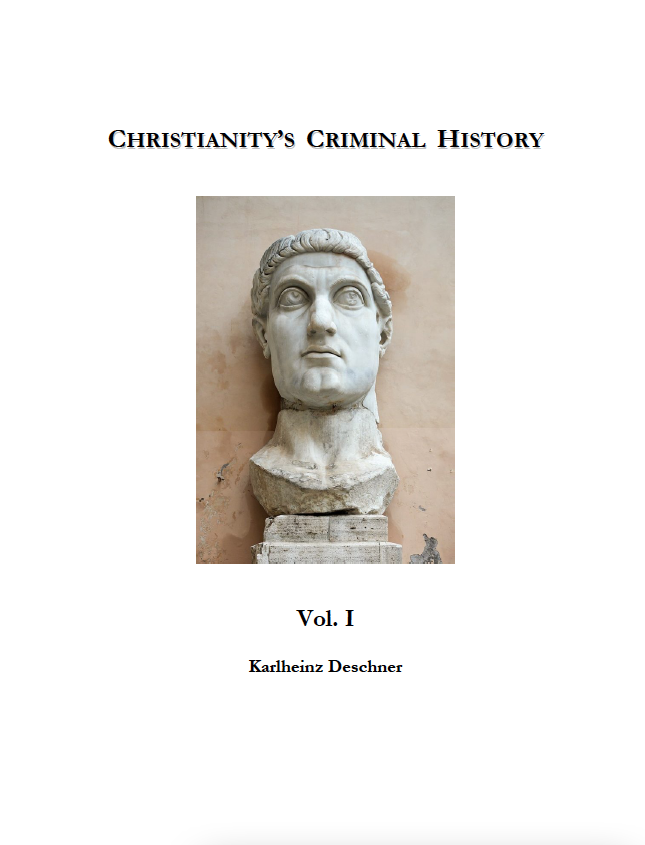
After the destruction of the Second Temple by the Romans in 70 AD, Paul’s psyop was taken to the next level by other Jewish gospel writers… In the year 326, the emperor Constantine converted to Christianity, and that was the end of the Roman body politic but the beginning of the assault on the Great White Race.
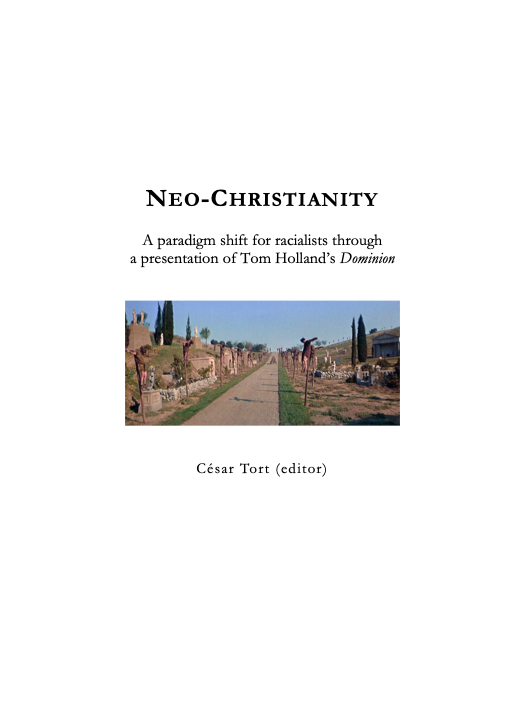
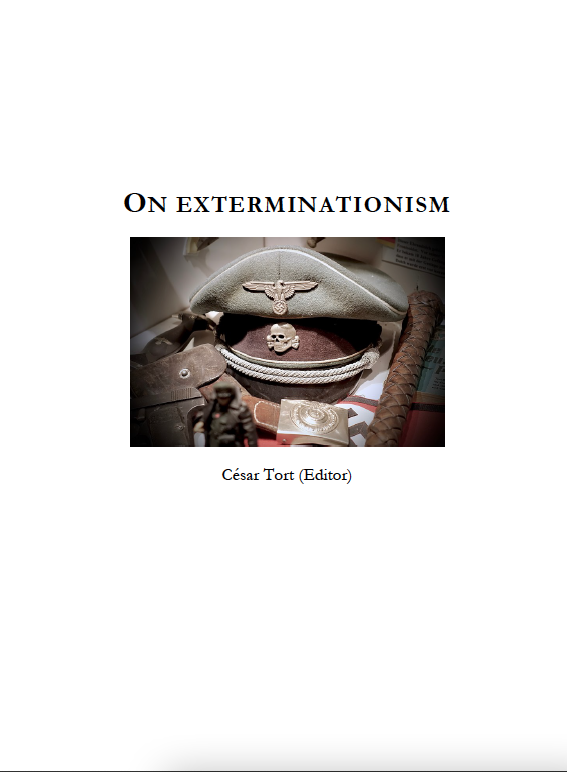
As I have said before, TOO edited by Kevin MacDonald is already waking up to the Christian Question! I just left a comment with a link to our new PDF, Neo-Christianity.
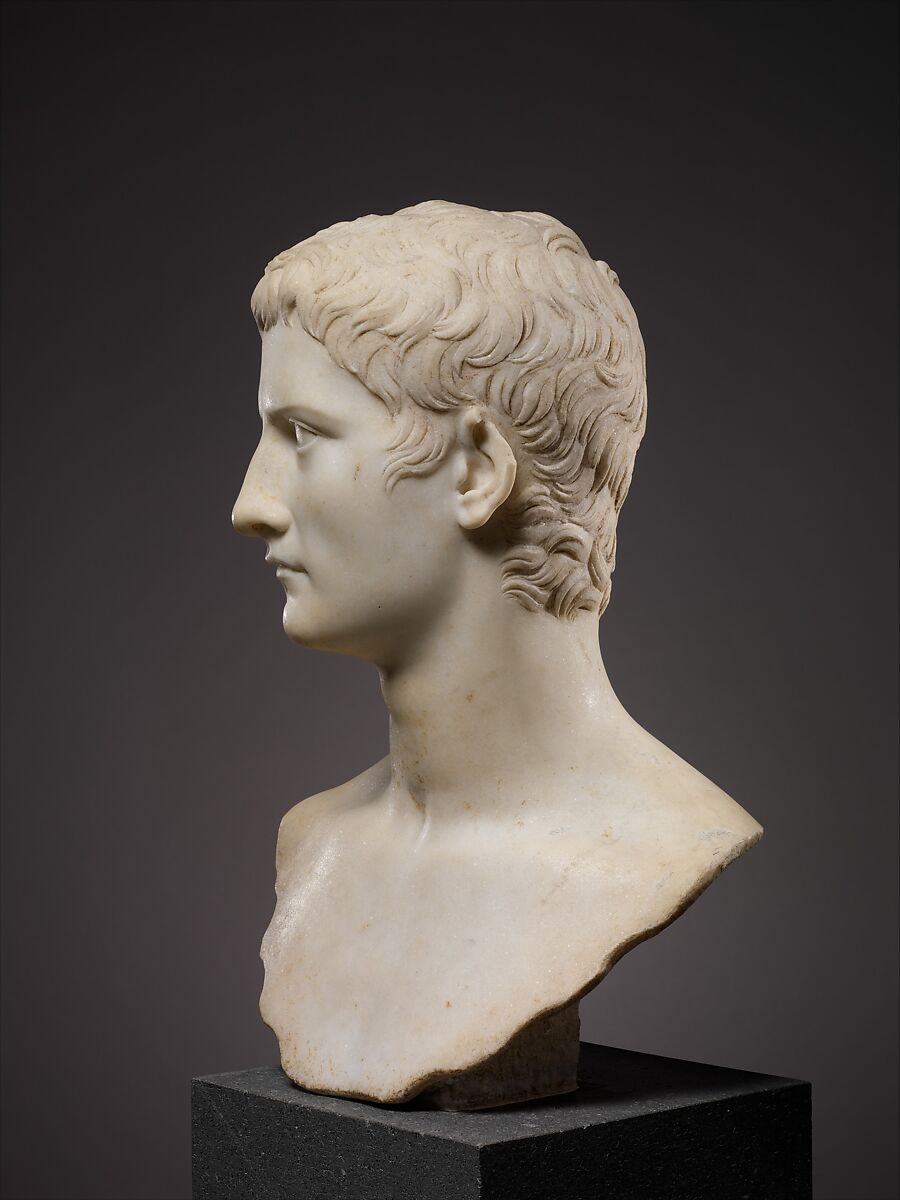
Marble portrait bust of the emperor Gaius, known as Caligula, A.D. 37–41.
Foreword: Caligula, A Historical Enigma
by José Manuel Roldán
Thirty stab wounds ended the life of Gaius Julius Caesar Germanicus on 24 January 41, barely four years after he succeeded Tiberius, Augustus’ heir to the imperial throne. He had not yet reached the age of thirty, which was, however, more than enough time for his memory to be stigmatised forever as a paradigm of cruelty, under the nickname that his father’s soldiers had given him in his childhood: Little boot.
The life and reign of Caligula have been a topic of unresolved debate and controversy since antiquity, although it seems impossible to banish from the popular imagination the gloomy and disturbing image that his name alone arouses. And yet, this image of an inept, bloodthirsty, unpredictable and monstrous tyrant that tradition has handed down to us seems more like a melodramatic and simplifying label, invented not so much to define the character as to avoid a coherent explanation of the apparent contradictions in his behaviour: a simplification that has pontificated with the diagnosis of madness the many nooks and crannies of a complex personality.
This diagnosis has served to ‘explain’ the dozens of anecdotes with which the ancient literary tradition has traced the outline of the emperor, converted into as many examples of erratic and perverse behaviour, as support for a trivial stereotype: the bloodthirsty monster, capable of any outrage, about whom there has been no scruple in inventing even imaginary crimes to give greater consistency and morbidity to the character, already condemned from the beginning to play this role. Examples are the descriptions offered by Robert Graves’s I, Claudius, later plastically recreated in a well-known BBC television series; the image of the emperor in a 1953 film, The Robe; Albert Camus’ drama Caligula; Pepe Cibrián’s Argentine musical Calígula; or the shameful monstrosity of Tinto Brass in a pornographic film produced for Penthouse. Titles and titles of so-called ‘historical’ novels have piled up with Caligula as the protagonist. Thus, Calígula, una novela sobre el perverso emperador romano, by P.J. Franceschini and P. Lundel; Calígula, el dios cruel, by S. Obermeier, or Calígula, by M.G. Silato, to offer only examples published in Spanish.
The label, on the other hand, was quite simple. It was hard enough to follow faithfully the outlines drawn by the Roman literature of the imperial period itself, which was unanimous in its vilification of Gaius. But are these sources reliable? A preliminary step, therefore, in approaching the life of Gaius would be to take this tradition into account and look into it objectively. Only two authors knew Caligula during his lifetime: the writer Seneca and Philo, a Jewish philosopher from Alexandria. The former, an intriguing and quarrelsome courtier, was nearly condemned to death by Gaius; the latter went to Rome as spokesman for a delegation of Alexandrian Jews to the emperor and left his impressions in the pamphlet Embassy to Gaius. The rest wrote their works after Caligula was dead: Flavius Josephus, a Pharisee Jew of the Flavian period, included in his Antiquities of the Jews, published in 93, numerous facts about the reign, though in connection with problems of his people; the Annals of the great historian Cornelius Tacitus, a few years later, can only be used to illustrate the youth of Gaius, because the books on his reign—VII and following—have been lost; the Life of Gaius, by Suetonius, secretary for a time to the emperor Hadrian, is the only complete biography of Caligula, but its tendency to sensationalism forces many of its facts to be called into question; finally, Dion Cassius, the Anatolian writer, between the 2nd and 3rd centuries, in his Roman History, while providing a good deal of information about Caligula’s rule, is too far removed from the events and therefore influenced by the sources he used in his account.
But in the analysis of these sources one decisive point must be borne in mind: by whom they were written and for what audience. Except for the two Jewish writers, Philo and Josephus, whose interlocutors were their fellow countrymen in Alexandria and Jerusalem respectively, the rest wrote mainly for the Roman social elites and, more specifically, for their most influential representatives, the members of the Senate, to which they all belonged, except Suetonius, otherwise closely linked to the circle of a conspicuous senator of the Trajanic period, Pliny the Younger. In the case of a clearly anti-senatorial figure like Caligula, this finding is highly significant. The audiences of these writers would not have entirely accepted a representation of Gaius that portrayed him in a positive light. A sentence from Tacitus’ Annals is illuminating in this respect: ‘The deeds of Tiberius and Gaius, as well as those of Claudius and Nero, were falsified out of fear while they were alive; and written, after their death, with hatred still fresh’.
But at the same time, regardless of the true intentions of their authors, these sources are an invaluable source of evidence for understanding the emperor’s views. Views, as we shall see, marked by the aspiration to move away from the elaborate, but also mistaken, political construction devised by Augustus—an autocracy disguised in republican garb in favour of open monarchical domination. All the emperors who tried to advance in the logical deployment of the powers implicit in the Principate were stigmatised, as opposed to those who prudently maintained the fiction of separation, however illusory, of powers between the prince and the Senate. Thus was born the distinction between ‘good’ and ‘bad’ emperors, which, overcoming the barriers of antiquity, still continues to influence our own judgement.
Caligula undoubtedly occupies a prominent place in the second group, not so much for his governmental action as for his manifest hostility towards the senatorial collective, which took revenge, after his death, by heaping rubbish on his memory and denying him the essential element that distinguishes the human being: reason. Caligula was treated as a madman for persecuting the aristocracy. But his successor, Claudius, who tried to respect the aristocracy, was considered an imbecile.
Nevertheless, and as a predictable reaction, since the beginning of the 20th century historical research, aware of the partiality of the documentary sources, has tried to correct this negative image. A long article by H. Willrich, published in 1903, first drew attention to the positive aspects of Caligula’s work and his motivations, over and above the simplistic label of madness. Subsequent studies have taken up this point of view, with new or more substantiated arguments, to become, on occasions, veritable apologies, as far removed from the historical truth as the very sources they seek to correct. Thus, it is not surprising that there is also no shortage of works which, while accepting Gaius’ madness without further ado attempt to explain it using psychoanalysis or clinical points of view, thereby indirectly recognising the reliability of the ancient sources.
These sources are certainly full of inconsistencies and difficulties in their correct interpretation, but it is also true that it is not possible to do without them as a guiding thread. It is the task of the historian to winnow out the fictional elements they contain, to separate them from the consistent data with which a plausible picture can be reconstructed. Plausible, but not authentic. And that is precisely the greatness and the misery of the historian.
Potsdam
______ 卐 ______
Editor’s note: Emphasis is mine. It perfectly portrays what I meant in the last paragraph of my previous post on Caligula.
Marble portrait bust of the emperor Gaius, known as Caligula, A.D. 37–41.
Because the book Neo-Christianity is finally available (even if only in PDF for the moment), I have changed both the sticky post and the featured post. In both I used the symbol from George R.R. Martin’s fantasy novels about the Weirwood tree (a tree that, if a greenseer touches it, he can paranormally see into the past of Westeros). I would like to exemplify what I meant in the sticky and the featured posts with a new series on the figure of Emperor Caligula. As can be read on pages 16-17 of Neo-Christianity:
The Roman procurator Pontius Pilate, who governed Palestine from 26 to 36 AD, was known for his aggressive treatment of the Jews. But things grew even worse for them after his removal from power and the ascension of Emperor Caligula in Rome. Hayim Ben-Sasson writes, “The reign of Caligula (37-41 AD) witnessed the first open break between the Jews and the Empire… Relations deteriorated seriously during this time.”
Years later, Emperor Claudius issued his third edict, Letter to the Alexandrians, in which he accused those Jews of “fomenting a general plague which infests the whole world.” This is a striking passage; it suggests that Jews all over the Middle East had succeeded in stirring up dangerous agitation toward the empire. It also marks the first occurrence in history of a “biological” epithet used against them. By the year 49, Claudius had to undertake yet another expulsion of Jews from Rome.
All this set the stage for the first major Jewish revolt, in the year 66. Also called the First Jewish-Roman War (there were three), this event was a major turning point in history.
This reminds us of what Eduardo Velasco wrote in the essay on Judea vs. Rome, which we translated for The Fair Race, book #2 on the list of thirteen books in the new featured post:
In 41, Caligula, who already promised to be an anti-Jewish emperor, was assassinated in Rome, which unleashed the violence of his German bodyguards who had not been able to prevent his death and who, because of their peculiar sense of fidelity, tried to avenge him by killing many conspirators, senators and even innocent bystanders who had the misfortune to be in the wrong place at the wrong time. Claudius, the uncle of Caligula, would become the master of the situation and, after being appointed emperor by the Praetorian Guard, ordered the execution of the assassins of his nephew, many of whom were political magistrates who wanted to reinstate the Republic.
This is the probable cause of the unprecedented historical defamation of this emperor: the texts of Roman history would eventually fall into the hands of the Christians, who were mostly of Jewish origin and viscerally detested the emperors. Since, according to Orwell, ‘he who controls the past controls the present’ the Christians adulterated Roman historiography, turning the emperors who had opposed them and their Jewish ancestors into disturbed monsters.
Thus, we do not have a single Roman emperor who has participated in harsh Jewish reprisals who has not been defamed by accusations of homosexuality, cruelty or perversion. The Spanish historian José Manuel Roldán has dismantled many of the false accusations against the historical figure of Caligula.
Well, two months ago I received the book in Spanish by José Manuel Roldán Hervás, PhD in classical philology. Already in the prologue of Calígula, el Autócrata Inmaduro (Madrid: La Esfera de los Libros, 2012), Roldán quotes a sentence from Tacitus’ Annals: ‘The deeds of Tiberius and Gaius [Caligula], as well as those of Claudius and Nero, were falsified, out of fear, while they lived; and written, after their deaths, with hatred still fresh’.
In the next entry I will translate the whole prologue to Roldán’s book. For the moment I would just like, as I said, to illustrate what I alluded to in the sticky and featured posts: that the System demoralises the white man through historical lies.
For example, I recently interrupted the Netflix series on Caligula when I saw that they cast him, even before he was emperor, as the poisoner of Tiberius, the previous Roman emperor. One cannot contrast more that tale ‘with hatred still fresh’ with what we read in Roldán’s biography.
If we recall what Catherine Nixey wrote about the burning of entire libraries of the classical world by Christians, it cannot be more unfortunate that of Tacitus’ Annals, originally sixteen books on the reigns of Tiberius, Caligula, Claudius and Nero, the entire reign of Caligula has been lost. Unlike the writers who wrote with hatred, Tacitus is known to have been more objective.
Now back to our metaphor. Unlike Martin’s fiction about the oldest religion of Westeros, its Weirwood trees and the gifted greenseers who saw the past when they touched them, in the real world we have no such window to know, with absolute precision, what happened in the time of those emperors of the first century c.e. But if I still use the metaphor it’s because books like Roldán’s are the closest we have to a truer history of what might have happened.
Most of the books listed below are available as PDFs.
The System has lied to the white man about his History, especially about what happened during World War II, Christendom and how both lies have been transformed into the Woke monster. To become a greenseer who can see the past as it happened, you have to familiarise yourself with four main books:
If you want to know about my spiritual odyssey, that took me from Jesus to Hitler, there are some autobiographical books available in my mother tongue (and in English a few translations of some chapters):
Kevin MacDonald published an article by Tom Sunic the day before yesterday which contains this paragraph:
But even authors complaining about legal duplicity regarding the narrative of Jewish victimhood are seldom consistent. Many of them believe in good faith in the immaculate conception of Virgin Mary and various surreal miracles performed by Jesus and his early Jewish disciples. They would never consider their faith in Jesus a myth, let alone, a hoax, a fraud, or a conspiracy theory. They reject the claims by anti-Christian authors “that Jesus was a deliberately constructed myth, by a specific group of people with a specific end in mind,” as David Skrbina wrote recently.
I’m glad that at least one of the leading white nationalist forums is passing the microphone to someone who says things similar to what we say here.
My previous post contains a link to the confession when an honest student of the New Testament, Richard Miller, saw the light. I would now like to suggest that honest Christians watch the whole interview.
Of course, it is only an invitation to begin to cross the psychological Rubicon, but a baby step in the right direction is satisfying for the moment (the big jump, from 5 to 6, as we saw in ‘The Mauritian steps’ is to leave Christian morality behind).
For Christians, long before breaking with Christian morality one has to break with Christian dogma, and the honest New Testament studies that have been published recently (Richard Miller’s book is just the latest) give me some hope.