web analytics
Categories
Autobiography Chess

The human side of chess, 4

1 Grushka – Tort

A beautiful game
If I kept this game it is because I showed it to the poet Jaime Sabines in a 1981 letter, a copy of which I still have. I had played several games of chess with Sabines at his house. In times when my parents’ treatment had spoiled my future, I believed that, being the governor’s brother in Chiapas, he would help me find a job.

Carlos Grushka, the opponent in this only game that I kept from my first tournaments had been, the previous year, youth champion of his country and later he would be Argentine runner-up; he represented Argentina in four Olympics, drew with Karpov and beat Larsen.

I have no interest in analysing this game with the computer system, which didn’t exist then. The analyses that I transcribe are those that appear in my letter to Sabines, when I was twenty-three years old. The poet, by the way, didn’t reply to my letter. But some time later I went to see him in Chiapas in search of work: something that constantly fails us players who were marginalised by our families.


CLUB ‘EL ALFIL NEGRO’, FIDE TOURNAMENT 1981

Time control: 2½ hours / 40 movements

CATALAN OPENING

1 Nf3 Nf6

2 g3 d5

3 Bg2 Nbd7

I hadn’t studied this opening, so I improvised according to my own sense.

4 d4 e6

5 O-O Be7

6 c4 O-O

7 Nbd2 c5

8 b3 b6

9 Bb2 Bb7

10 Rc1 Rc8

11 e3 Rc7

12 Qe2 Qa8

13 Ne1 cxd4

14 Bxd4 Bb4

Threatening 15 … Bxd2 and 16 … dxc4, leaving a weak and isolated pawn on an open file.

15 Nef3 dxc4

16 Nxc4 Rfc8

17 Rcd1 b5

18 Nce5 Nxe5

19 Bxe5 Rc2

20 Qxb5 Ng4

21 Ne1

If 21 Qxb4 Bxf3; 22 Bxf3 Qxf3 threatening both 23 Nxf2 and taking the bishop.

21… Bxg2

22 Nxg2

He played that because 22 Nxc2 would lose a piece.

22… Nxf2!!

I have forgotten many moves, games and even opponents that I’ve faced over the board, but will never forget this great knight move. Grushka wasn’t expecting it.

23 Rxf2 Rxf2

24 Nf4

If he took my rook, the check of my other rook would be deadly.

24 … Qf3

25 Qd7

Had he taken my bishop, 25 … Qxd1 would also be fatal.

25 … Rcc2

26 Qd8 + Bf8

27 White resigns

Grushka got upset when I wanted to comment on this game as a postmortem. It’s obvious that his defeat didn’t match the image he had cultivated with his friends from the Club Mercenarios who had brought him to the tournament. After this game, in a raid that some young members of the Mercenarios gave me, Manuel López Michelone, with whom I would also play in that tournament, said something in front of me of bad taste. I was in the back of the car savouring my victory. Manuel, who was in the lead, said to his friends: ‘Who knows why Grushka lost’. It was as if the triumph wasn’t due to how I played, but to something mysterious!

Fortunately, friend Gerardo Brauer congratulated me and made very favourable comments on my plan to have brought the queen to square A8 to double my rooks on the C-file, which gave me a good development in addition to the beauty of an attack on the king from the corner of the board. Not all chess players are able to recognise that the other simply played well. But what stuck me the most that night was what another member of the Mercenarios told me, who was driving the car. He did it with the best of his intentions, but it hurt me. He told me that he had met my mother and that he ‘liked her very well’. I was speechless. I didn’t even smile. It was precisely she who had caused the abuse at home: something that Mario Guevara couldn’t know, and in fact in 1981 I didn’t even live with my mother but with my grandmother. I couldn’t communicate it due to the taboo of never criticising the parents, so I kept quiet among these young chess players and about the rest of the raid I don’t remember anymore.
Categories
Nordicism NS booklets

SS booklet, 5

‘In all provinces of the Reich and in all German countries—as shown by these pictures of Dutchmen, Norwegians, Danes and Swedes—we find a Nordic-based, Germanic-German [germanisch-deutsche] type’.

Categories
Chess Psychoanalysis

The human side of chess, 3

‘Psychology is the most important factor in chess’.

—Alekhine

In pursuit of a metaphorical king

This booklet is not only written for the hobbyist. If you are not a chess player, you can ignore the algebraic notation of the games that appear in this chapter and read exclusively my literary comments. I will be told that very little will be learned by studying my games or those of any other player other than what FIDE classifies as IM, International Master or GM: a Grand Master of the board (above the GMs there is only the world champion). I doubt that is true. Defeats that cause us humiliation are experienced by all: champions, teachers, club players and ordinary fans. And the best therapy for both the professional and the amateur is to meditate, and eventually write, about what has hurt us. While it is impossible for me to write a confessional testimony about the insights of an alien mind, I can talk about my emotions during games. In this chapter I present four games that I played with humans and one that I played with my computer.

The score sheets (1) for the games I played in tournaments in my teens and twenties, which were not FIDE endorsed tournaments, have been lost. At that time I was going through a great family storm and got rid of both my collection of chess books and my equipment to play—a story I have heard from other young people. It was precisely because of the problems at home that, like many others, I had taken refuge in the skirts of Caissa. I didn’t keep my youth games from tournaments, when I really fell in love with the goddess of chess, for the simple reason that my family problems stifled any interest in keeping them. Three of the games collected here, whose score sheets I kept, I played already in my twenties and thirties, when the family storm had passed.

My proposal in this chapter is to invite the player to talk about his emotions through his own games. The fan will be able to play with much more confidence after formally analysing those emotions, so that he knows himself a little better. It is a therapy not only about our defeats and setbacks: we also have to explain why some chess players suffer so much when we extract a victory from the opponent. The causes for which the chess player suffers are complex. It is known that intuitive psychology is not his forte. Lacking insight, even some world champions have ruined their lives as soon as they are crowned with the laurel of victory. What many ordinary professional and amateur chess players evade is the knowledge of how they were treated as children, and take refuge in Caissa as I did as a teenager.

Hardly any attempt has been made to write about the psychology of the chess player from the inner experiences of a player. Of the chess fans I know, no one takes seriously, for example, the study of the psychoanalyst Reuben Fine, The Psychology of the Chess Player. Fine argues that the game’s phallic symbolism is obvious: that the king represents the penis; the checkmate the castration, and other sublime imbecilities. Ernest Jones himself, Freud’s most orthodox acolyte and a great chess fan, speculates foolishly about ‘the mother and the paternal penis’ when addressing the simple fact of the change of the figure of the grand vizier into queen when the game supposedly transformed in its passage from the Arab world to the West. It is with the desire to show the player from the inside, rather than from psychoanalytical theories of no value, that I present my intimate confessions as well as some observations about my opponents.

______________

(1) For a Glossary of chess see: here.

Categories
Nordicism NS booklets

SS booklet, 4

‘The knowledge that Nordic blood, which predominates in the folk, stamps the folk race, determines the folk character and binds hearts, is today common knowledge in Germany’.

Categories
Autobiography Chess

The human side of chess, 2

Introduction

When I sat down to write this book, I was officially retired from chess. It was the talks with Rafael Martínez, an old friend from a park where I played chess many years ago, that motivated me to confess what I have thought about the game since my retirement.

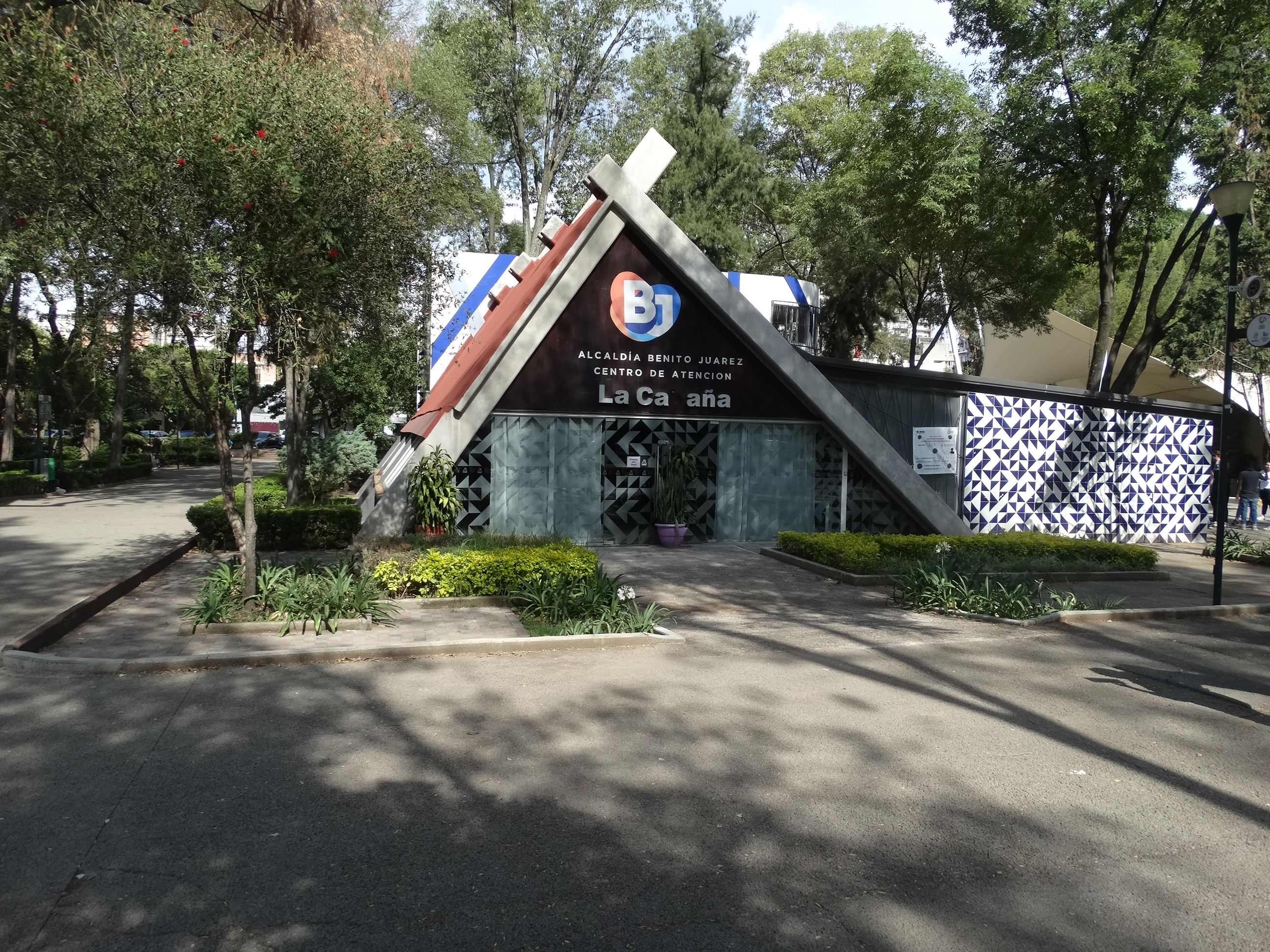
(Left, in 1975 outside of ‘La Cabaña’ I played my first game in the park with Señor Cervantes.)

My goal here is to break various taboos. In the first chapter I address a topic hardly touched by other chess players. I am talking about the emotions that affect the player during the game: a topic that I address by analysing my emotions in some games that I have played in tournaments. There are very few chess players, and one of them was the Mexican grandmaster Marcel Sisniega (a pure Aryan about my age, who passed away in 2013), who describe their moods after the rounds. I haven’t read Crónica Personal de un Torneo de Ajedrez of Sisniega, but I suppose that the descriptions I make here are more crude and direct.

In a short passage in the second chapter I try to show that chess treatises omit the biological cause that some play better than others. I also venture a program that I consider useful to face the emotions not only in defeat, but for the average player to understand and accept his skill level.

For centuries, chess theorists have avoided going into the subject of personal tragedies that have led some to seek solace in the game; tragedies that have devastated the sanity of some masters, grandmasters, and even world champions. This blind spot has existed from the 1620 treatise by Gioacchino Greco, considered the first chess professional, to Kasparov’s recent work on his predecessors. The motto of the inveterate tabletop gamer seems to be:

Elude the Knowledge of Thyself

Avoid settling accounts with the existential sting that made you seek comfort in an activity as elusive as the game of chess or any other game.

Among chess players there have been cases of crossing the line from simple escapism to madness. In the third chapter I break with the biggest taboo not only in the community of players, but of humanity in general. I talk about the cause of disorders of the spirit and what we can do when a loved one suffers a psychotic crisis. The fate of Carlos Torre, the best Latin American chess player after Capablanca, serves as a paradigm for me to point out what we should never, ever do when a family member suffers a crisis: go to the psychiatrist.

After that important chapter I include an epilogue about what I think of the game.

Juan Obregón, who gave me some information about Carlos Torre, probably has the largest number of interviews from people who knew the Mexican grandmaster. But without the help of the late Alfonso Ferriz, the great lover of the game-science in Mexico, it would have been impossible for me to collect the most relevant information about Torre. It saddens me that my conclusions from the same information that Ferriz so generously provided me cast a shadow over this wonderful person who was Don Alfonso; and I publish this little book not without some remorse in order to expose private matters that could help the West to regain its sanity.

Categories
NS booklets

SS booklet, 3

‘The SS man, when he enters the SS, voluntarily assumes the duty to choose his mate, the mother of his children’.

Categories
Artikel auf Deutsch NS booklets

Sieg der Waffen – Sieg des Kindes, 4

Übernimmt der SS-Mann freiwillig bei seinem Eintritt in die Schutzstaffel die Verpflichtung, bei der Auswahl seiner Lebensgefährtin.

Categories
PDF backup

WDH – pdf 390

Click: here
Categories
Chess Red terror

The human side of chess, 1

Preface of 2021

Although I have been a chess fan, I have only participated in one tournament duly endorsed by the International Chess Federation (FIDE in its French acronym) in 2004, which gave me a provisional rating of 2109 (the current world champion’s rating is 2847). However, after my racial awakening I cannot see my old hobby as I used to see it. Some facts from the life of world chess champion Mikhail Botvinnik (1911-1995), who won the chess crown just after the Holocaust of millions of Germans (read Tom Goodrich’s Hellstorm), will illustrate my current point of view.

According to Soviet politician Nikolai Krylenko, Botvinnik exhibited the features of a true Bolshevik and Botvinnik’s celebrated student, Garry Kasparov, described his mentor as a staunch communist, a child of the Stalin regime. In his memoirs, Botvinnik himself acknowledged that he was lucky in life because his interests coincided with those of his society. ‘I am a Jew by blood, a Russian by culture and a Soviet by education’, he said.

Estonian Paul Keres may have won the crown after world champion Alexander Alekhine suddenly died in 1946. In fact, Alekhine had practically offered him the crown by allowing him to challenge him to a title match when Alekhine was already in full decline. Young Keres made the mistake of his life by rejecting the kind white glove. I would venture to claim that the outcome of the 1948 tournament, which crowned the ethnic Jew Botvinnik as Alekhine’s successor, was the logical conclusion of the ideological Judaization of the Soviet Union and Eastern Europe (read Aleksandr Solzhenitsyn’s 200 Years Together), and the degradation of Estonians in Stalin’s post-war society.

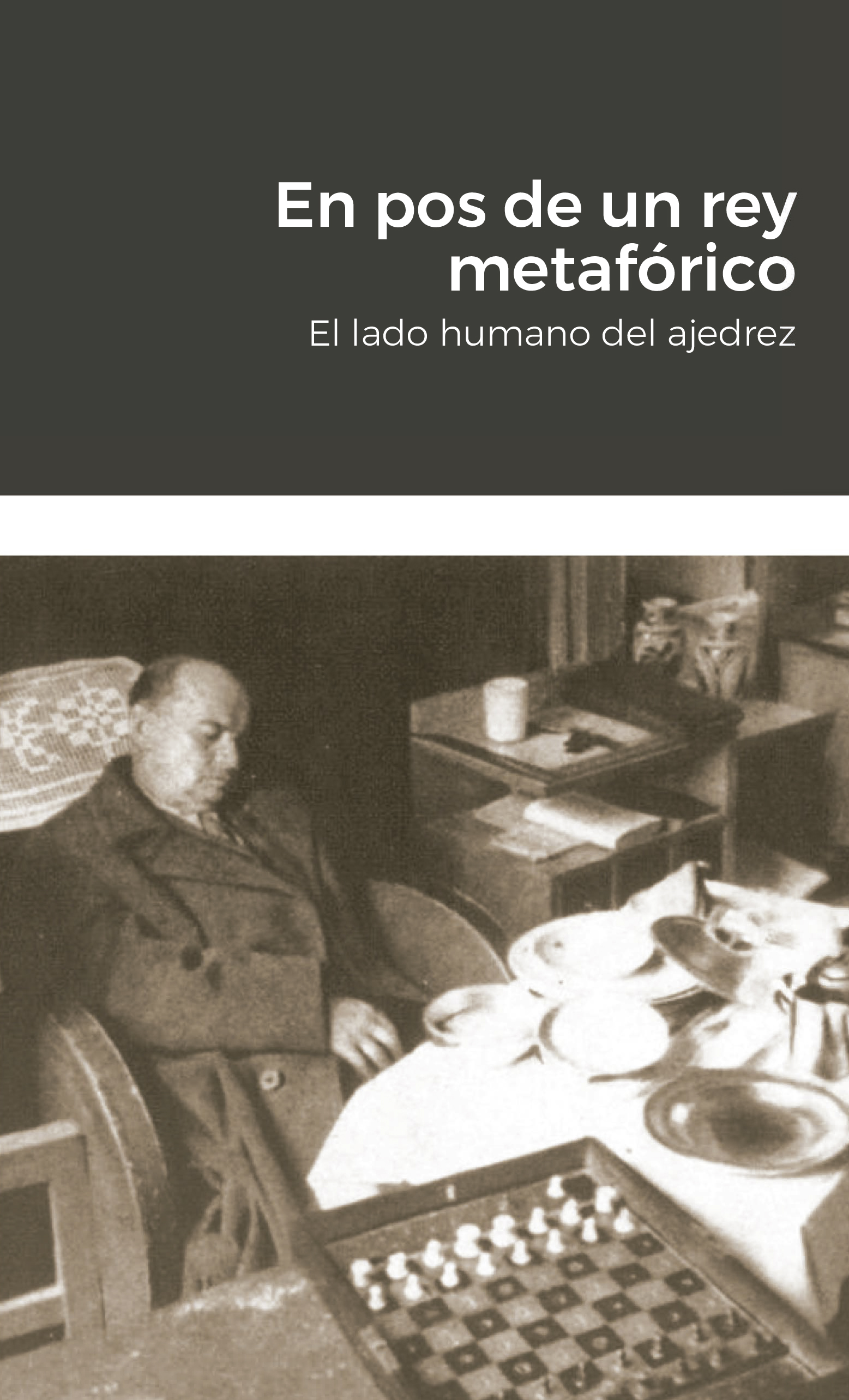
Alekhine was my idol when I was a teenager. He had belonged to the Russian aristocracy and in 1909 in Saint Petersburg he received from Tsar Nicholas II a beautiful vase of Sevres. It was the award for having won a national junior championship. It was Alekhine’s most prized possession, and when he decided to leave Russia due to the Red Terror, the vase was the only item he took with him. He even had it in his room the night he died in Portugal (see cover of the book above), fleeing to the westernmost country of Europe on accusations of having collaborated with the fascists. If the Europeans had been sane they wouldn’t have harassed him, as the fascists had been the only ones to face the red threat, unlike the Anglo-Saxons.

Interestingly, Kasparov, whose Jewish surname was Weinstein before changing it, confesses in his book about his predecessors that as a child he was Botvinnik’s favourite pupil. While his mentor played the role of teacher with other children, the former champion had regular contact with the young Garry for fourteen years—something that, Kasparov acknowledges, greatly helped him in his career to win the sceptre of chess. Life was difficult for him and his mother in those days, and Botvinnik did his best to help them and provided them with food stamps.

Currently the Norwegian Magnus Carlsen is the world chess champion, the sixteenth champion. All conventional lists of world chess champions begin with the Austrian Jew Wilhelm Steinitz. My list adds one more champion: the American Paul Morphy, as we will see in this book. To date, I am not aware of any list that reveals the ethnicity of six of the seventeen champions, if we add one more to the list starting with the number zero. The following dates indicate the year in which they conquered the world crown. Note that only one Latin American has conquered it:

0. Paul Morphy (1858) United States
1. Wilhelm Steinitz ✡(1886) Austria-Hungary
2. Emanuel Lasker ✡(1894) Germany
3. José Raúl Capablanca (1921) Cuba
4. Alexander Alekhine (1927) exiled in France
5. Max Euwe (1935) Holland
6. Mikhail Botvinnik ✡(1948) Soviet Union
7. Vasily Smyslov (1957) Soviet Union
8. Mikhail Tal ✡(1960) Soviet Union
9. Tigran Petrosian (1963) Soviet Union
10. Boris Spassky (1969) Soviet Union
11. Robert Fischer ✡(1972) United States
12. Anatoly Karpov (1975) Soviet Union
13. Garry Kasparov ✡(1985) Soviet Union
14. Vladimir Kramnik (2000) Russia
15. Viswanathan Anand (2007) India
16. Magnus Carlsen (2013) Norway

Seventeen years ago I wrote the book that appears below and circulated it to a couple of friends who love chess. Since then I have changed the way I saw the world, so I have modified some passages of the text. For example, on YouTube you can see an interview this year between chess grandmaster Hikaru Nakamura and Kasparov. The Japanese used the feminist slogan ‘close the gap’ with the former champion when saying that women would have to participate in chess tournaments in the same numerical proportion as men. Nakamura didn’t realise the biological impossibility of such a desire, as we recently demonstrated in On Beth’s cute tits (see our book list on page 3).

If I get to play other FIDE-endorsed tournaments next year, we’ll see how much my rating goes up, or down, compared to my rating the year I wrote this book…

C.T.
June 2021

Categories
NS booklets

SS booklet, 2

‘The young German receives the basics of his worldview in school and in the Hitler Youth’.