web analytics
Categories
Ancient Greece

The best whites

All these elements contributed to form a highly spiritual feeling: the Spartan felt himself as the summit of the creation, the favourite of the Gods: a privileged, magnificent, splendid, arrogant and godlike creature; a member of a holy seed, a holy race and a lucky ‘link in the eternal racial chain’, a protagonist of an unparalleled feat of an extremely profound mystical experience that he was convinced would end up leading him directly to the immortality of Olympus, as the semi-divine heroes he worshiped. He was proud of being a Spartiate because precisely the fact that to become one of them it was necessary to overcome the hardest ordeals made him feel a holder of the privilege.

Nietzsche said, ‘For a tree to reach Heaven with its branches, it must first touch Hell with its roots’, and it is said that Odin went down to the huts before ascending to the palaces. This implies that only after passing the most terrible tests the warrior has earned the right to access to higher states. No pain or suffering leads to the drunken arrogance of the one who has not hardened and is unable to take the pleasure, power and luxury with respect, care, gentleness, veneration, humility and an almost apprehensive appreciation. The Spartans had reached the bottom, sinking into the whole tragedy of their atrocious instruction, and also had passed through all the manly sensations of fullness, health, vigour, strength, power, force, dominion, glory, victory, joy, camaraderie, reward and triumph. Having covered the whole emotional range that goes from pain to pleasure made them possessors of a wisdom exclusive for the heroes and the fallen, and surely no one could appreciate more the significance and importance of pleasures than the Spartans.

It existed in Sparta, as in other places, an initiating circle of priests and priestesses. Little is known about them except that they were selected men and women, initiated at specific sites in secret ceremonies called ‘mysteries’, which made them the repositories of ancient wisdom and esoteric mystical orientation. In Greece, the mysteries represented what could not be explained rationally with words, but that was necessary to see and live it. The mysteries (of Delphi, Eleusis, Delos, Samothrace, Orpheus) became prestigious initiation schools, with important people attending from all Hellas with the intent of awakening the spirit.

(Passages from one of Evropa Soberana’s essays in The Fair Race’s Darkest Hour.)
Categories
American civil war Christian art

Granada diptych

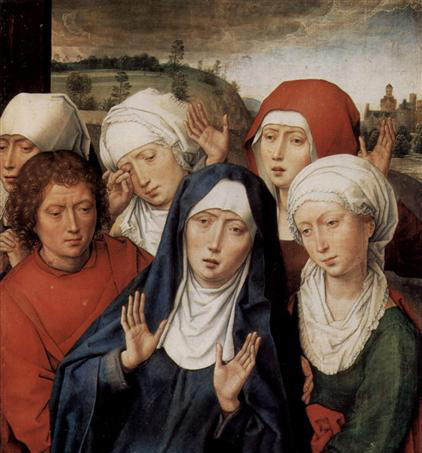
Flemish painters cultivated the theme of the Pietà with singular devotion. Mary’s group cries the dead Jew, as does the apostle John in this painting of Hans Memling in the Royal Chapel of Granada. (In my book with large illustrations where details can be appreciated, the tears are visible.) Memling also painted white people in hell, as in Last Judgement (oil on wood, 1466-1473) and Triptych of Earthly Vanity (oil on oak panel, 1485).

History has enormous inertia. What the vast majority of racially conscious whites have not seen is that, a doctrine that induces infinite guilt among whites like the Christian, leaves a huge mark once all of this crying before the corpse of a dead Jew is overcome by secularism.

It is no coincidence that the nation most dedicated to protecting Jews and defaming the memory of racially awakened Germany has been the nation that, full of guilt and full of good Christians, had waged an anti-white war in the 1860s as so many times Robert Morgan has discussed on Unz Review.

Categories
Iliad (epic book)

Choose your future spouse

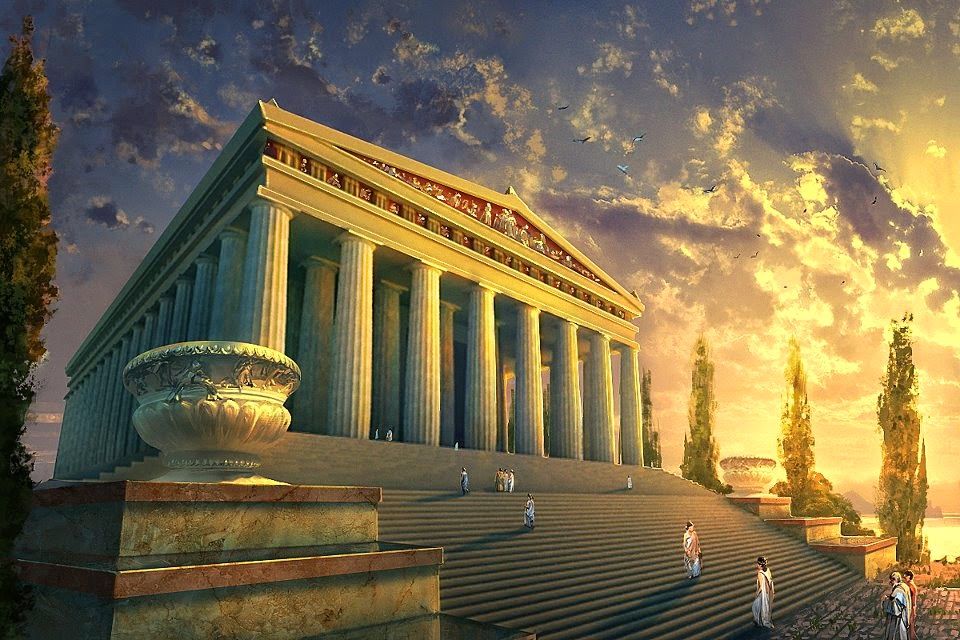
The city of Sparta had forty-three temples dedicated to various Gods and twenty-two temples dedicated to the heroes (including those of the Iliad), whose deeds inspired the flourishing generations; more than fifteen statues of Gods, four altars and numerous funerary tombs. There was also a temple dedicated to Lycurgus, worshiped as a god. In a city the size of Sparta, the number of religious buildings was very noticeable.

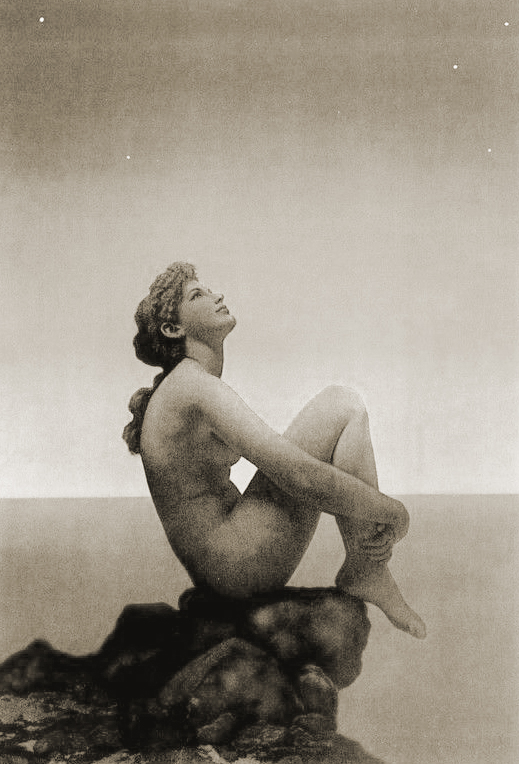
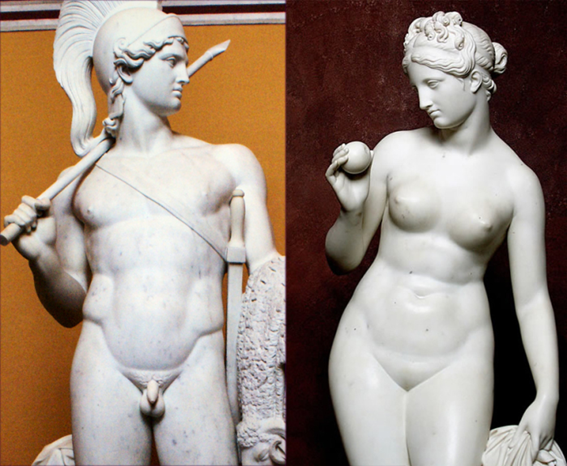
In religious ceremonies, men and women—particularly those in the age of dating—attended, entirely naked as they did during the processions, the tournaments, the beauty contests and the dances. This already implies that the Spartans were not ashamed of their bodies, but that proudly displayed them whenever they could because they were robust, well-formed and harmonious. These events were festivals of beauty, Dionysian ceremonies in which the body was worshiped and beautified by effort and sacrifice. According to Plato, a beautiful body promises a beautiful soul and ‘beauty is the splendour of truth’.

The athletic custom of shaving the body hair and smear oneself with oil before a competition was of Spartan origin, although the Celts were given to body shave before battles. They sought thereby to extol the body; give relief, volume, detail, brightness and ‘life’ to the muscles, thus proudly displaying the result of years and years of gruelling physical training and strenuous efforts, probably to find the best partner and/or gain prestige.

The guilt and sense of sin that Christianity tried to impose in the field of body pride, made a man ashamed of the very things he was proudest. Judeo-Christian morality, by condemning hygiene, care, training and the preparation of the body as ‘sinful’, ‘sensual’ and ‘pagan’ gradually achieved that the European population—converted into an amorphous herd whose attitude to any hint of divine perfection was met with resentment and mistrust—forgot that their bodies also were a creation and a gift from the Gods.

For young people of both sexes such festivals served to become familiar with each other, because we think that Sparta was a city with few inhabitants; where, thanks to public ceremonies, everyone knew everybody by sight and was integrated into the popular. It was at these events where you watched and choose your future spouse.

(Passages from one of Evropa Soberana’s essays in The Fair Race’s Darkest Hour.)
Categories
PDF backup

WDH – pdf 320

Click: here
Categories
Christian art

Virtuosos in inducing guilt

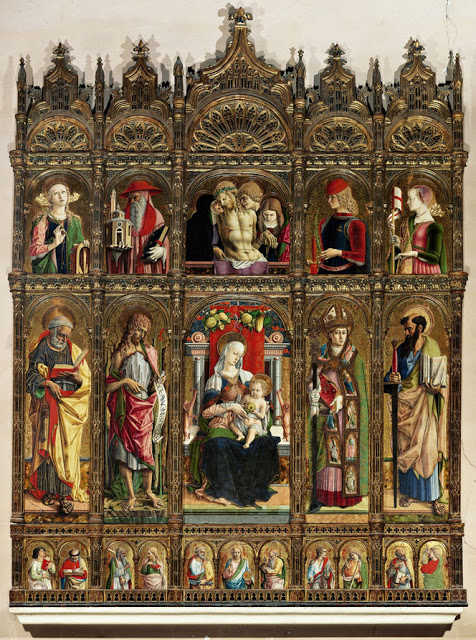
Carlo Crivelli was profoundly influenced by early Renaissance art in Padua. His Polyptych of the Cathedral St. Emidius, of 2.90×2.80 metres and divided into three rows, is exactly at the same place where it was first put in 1473.

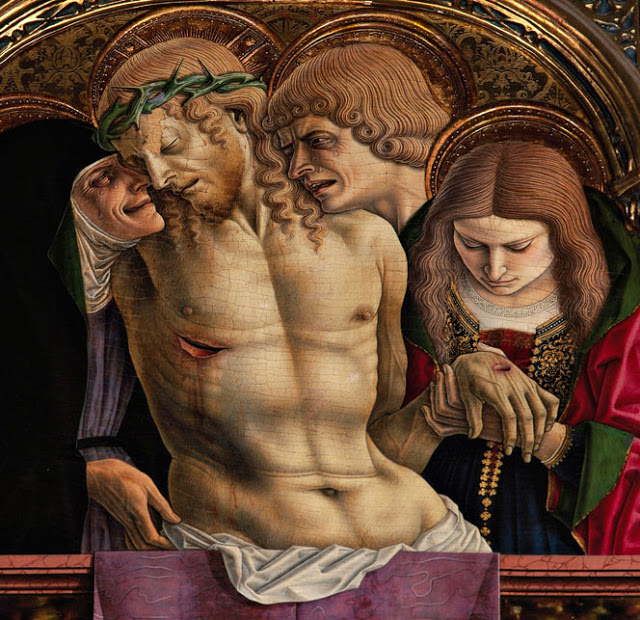
According to Catholic teaching, there was no pain similar to Mary’s before her dead Jew, as shown in this interpretation of the Pietà by Crivelli.

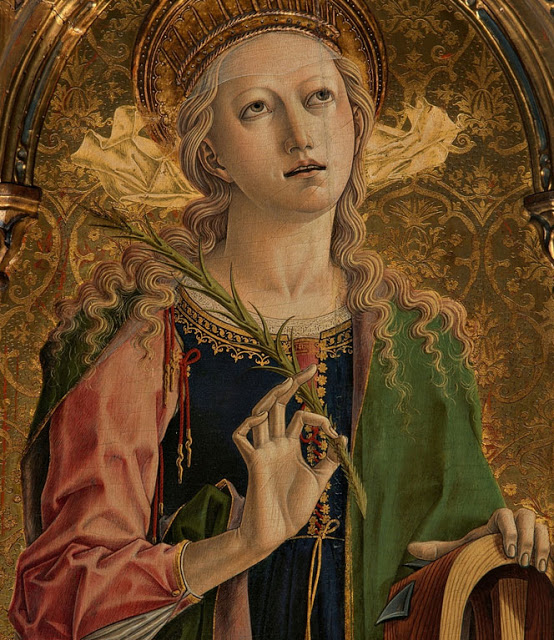
In the same Polyptych we can see St. Catherine of Alexandria (top left in the Polyptych; close-up below). According to tradition, she was a Christian saint and virgin, martyred in the early 4th century at the hands of the evil pagan emperor Maxentius.

There is only one problem with such pious legend: Catherine of Alexandria probably didn’t exist. Just as they did with World War II, where the Allies blamed the Germans for the crimes the Allied forces had committed—the genocide of millions of defenceless Germans—, instead of telling the story of Hypatia of Alexandria, a true martyr, the Christians invented the apocryphal story of St. Catherine of Alexandria…

The Christians, with their astronomic lies and fantastic inversions, are virtuosos in inducing guilt among the white peoples. Like the Jews, the goal of the Christians is to overwhelm the blond beast with massive guilt.

But it is difficult to blame Crivelli for his Polyptych. In the 15th century, books like the recently published The Myth of Persecution: How Early Christians Invented a Story of Martyrdom by Candida Moss had not been published. And anyway, Crivelli’s Catherine at least reflects Aryan female beauty.

Instead of the Jewish god…

Why not worship the Aryan Gods?

Religion in Sparta played a major role, far above any other Greek state. Spartan supremacy was not only physical, but spiritual. This apparent contradiction is explained by the Hellenic religion, drinking directly from the original Indo-European religion: a religion of the strong, not a religion of self-pity and worship of the sick, the weak, the downtrodden and unhappy. In Sparta, also, that religion had been placed at the service of a shield specifically designed to withstand the rigors of the Iron Age.

Hellenic polytheism was something deeply natural and vital, and is inextricably woven to the memory of the blood, as ‘divinity consists precisely in that there are Gods and not one god’. Our ancestors made of their Gods spiritual monuments containing all those qualities peculiar to them that had made them thrive and succeed. They deposited in them higher feelings with which they gave way and perfected together a being who existed before in a fuzzy and dormant state. The creation of Gods is something capital when valuing a people, for the Gods are the personification of the highest ideals and values of that people. One can say that the Gods created the race, and the race their Gods. Through the Gods we can know the people who worshiped them, the same way that through the people—ourselves, our ancestors, our history and our brothers—we meet the Gods.

The peoples had their Gods and the Gods had their villages. Sparta worshiped typical Hellenic deities, although two among them acquired singularly relevant and important roles and became the most worshiped deities, even by the time of the Dorian invasion: Apollo and Artemis. They were twin brothers, reconfirming the cult of ‘sacred twins’…

He was conceived as a young, blond and blue-eyed man, holding a lyre, harp or bow, and possessor of a manly, clean, youthful and pure beauty—‘Apollonian’ beauty. The mythology explained that in his childhood he killed the serpent Python (in other versions a dragon) setting in its place, with the help of the Hyperboreans, the sanctuary of Delphi. Heracles also killed a snake when he was a newborn. Such legends represent the struggle that initially led the Indo-European invaders against the telluric Gods of the pre-Indo-European peoples…

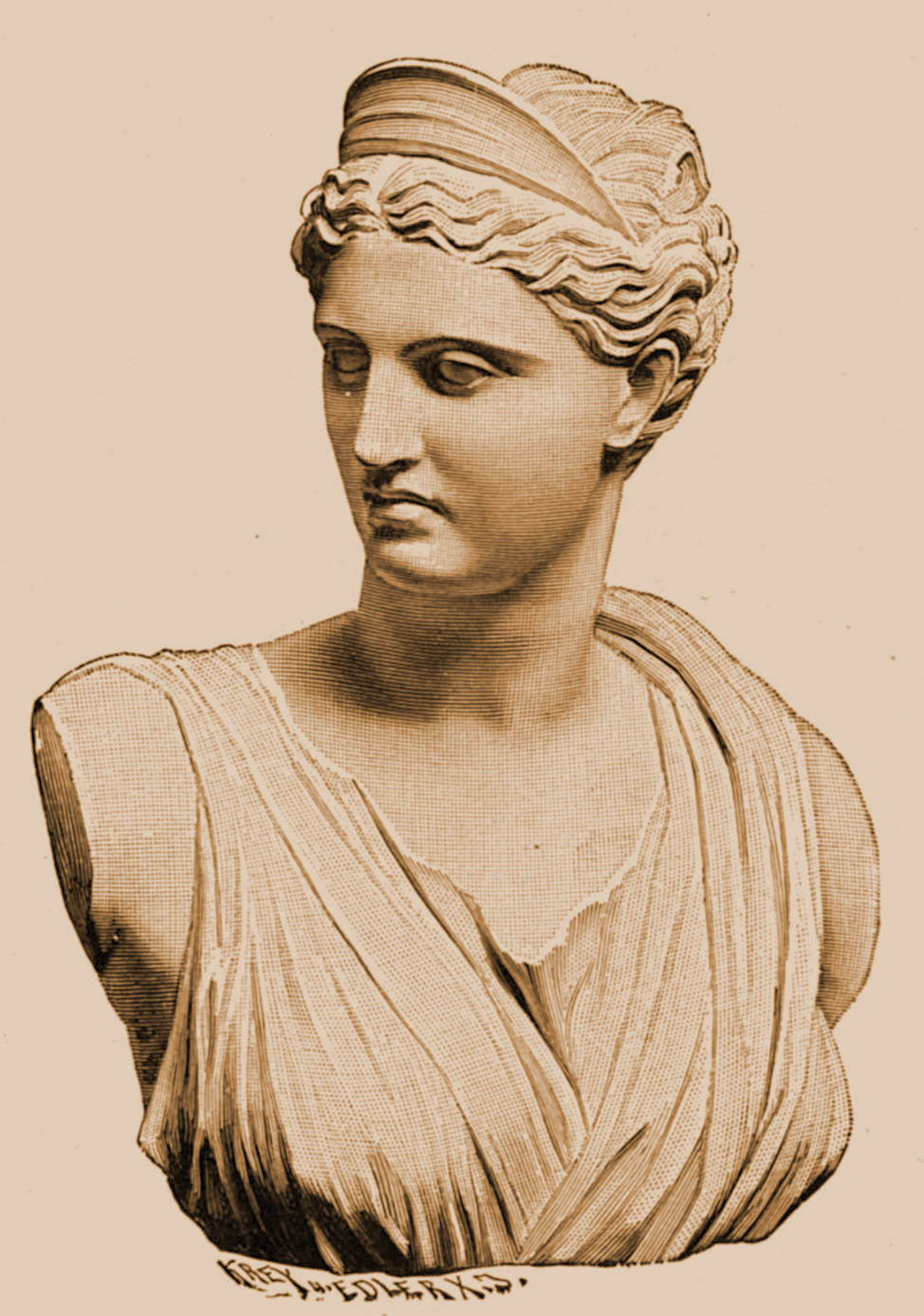
In Greek mythology Artemis was a mentor to the young Atalanta, who became the best runner of Hellas, and no one, not even a God, was closer to conquer her than the mortal hero Orion. Apollo and Artemis were, finally, the sacred twin couple; day and night, sun and moon, gold and silver. They were the juvenile archetypes of Spartan masculinity and femininity, respectively.

(Passages from one of Evropa Soberana’s essays in The Fair Race’s Darkest Hour.)
Categories
Christian art Richard Carrier

Who guilt-tripped us?

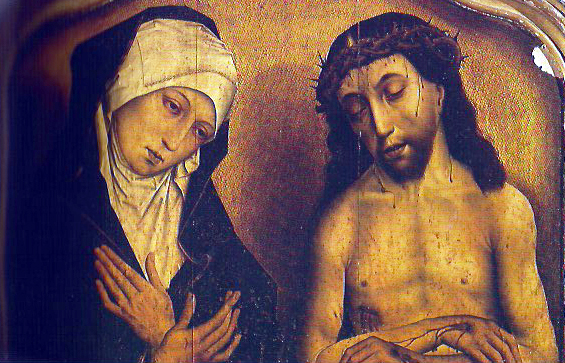
This Pieta by Early Netherlandish painter Gerard David is the central part of a triptych that is preserved in the Cagliari Cathedral Museum. The Jewess Mary, mother of Jesus, with her demurred piety contemplates the wounds that adorn the hands of the Jew martyred by evil Romans.

We can already imagine the guilt trip that, for the Aryan psyche, represented the centuries through which all whites were forced to abandon their proud Gods and ‘golden haired’ heroes, as Homer described them, to worship a rather ugly and unattractive deity of the Semites.

Who could have invented Christianity, a perfect prolefeed for us gentiles? ‘All of the evidence we have’, says Richard Carrier, ‘strongly supports the conclusion that there were actually literal rabbis that originated the sect [Christianity]’.

Categories
Ancient Greece

Spartan women

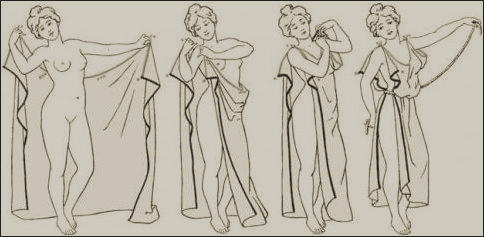
The Athenians called the Spartan women fainomérides (‘those that show the thighs’) as a reproach of their freedom of dress. This was because the Spartans were still using the old Dorian peplos, which was open in the waist side. It was part of women’s fashion, more comfortable and lighter than the female clothing in the rest of Greece: where fashions flourished of extravagant hairstyles, makeup, jewellery or perfumes. It was a fashion for healthy Spartan women.

But the rest of Hellas, as far as women are concerned, was already infected with Eastern customs: which kept them permanently locked up at home, where their bodies weakened and their sick minds developed. The Athenian poet Euripides (480-406 BCE) was shocked at the fact that the ‘daughters of the Spartans… leave home’ and ‘mingle with men showing their thighs’.

(Passages from one of Evropa Soberana’s essays in The Fair Race’s Darkest Hour.)
Categories
Christian art Theology

Shit for brains

Many years ago a friend told me that he was reading some hilarious pages from Schopenhauer and paraphrased the German philosopher with vulgar words: ‘Doctors teach us how weak man is, the lawyers how shitty mean he is—and the theologians how asshead he is!

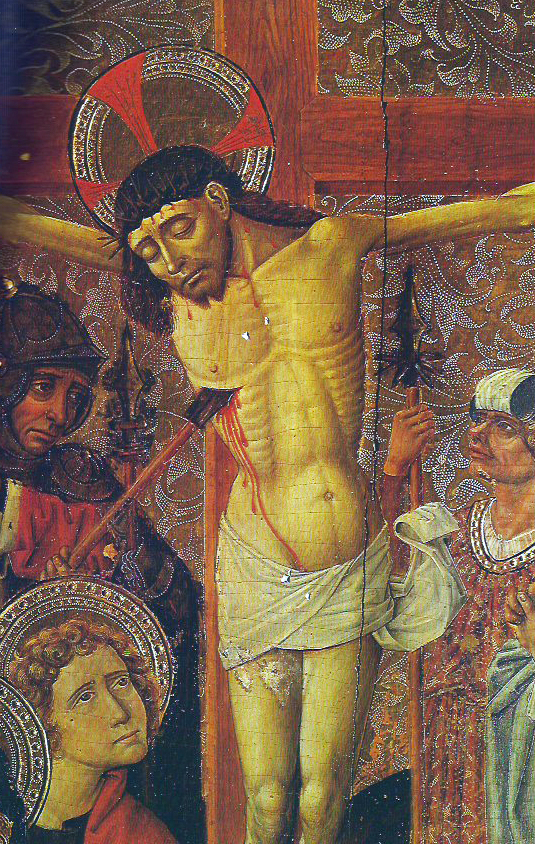
According to the theologians, just as from the side of Adam came Eve, so the Church was born from the open side of Jesus on the cross. Here is the moment of lancing in a detail of a Calvary, the work of the Visitation Master on the altarpiece (15th century) of the Segorbe Cathedral Museum, Spain.

Categories
Ancient Greece Pederasty

Balancing the eternal masculine

A soldier far from home, without a country, an ideal or a feminine image of reference—a model of perfection, an axis of divinity—immediately degenerates into a villain without honour. Conversely, if he can internalize an inner mystique and a feminine symbolism that balances the brutality he witnesses day after day, his spirit will be strengthened and his character ennoble. Sparta had no problems in this regard; Spartan women were the perfect counterpart of a good warrior…

In ancient Scandinavian meetings, as an example of the value of the feminine influence, only married men were allowed to vote. The man was the one who made the decisions, but it was assumed that he was not complete until he had at his side a complementary, feminine spirit, a Woman who could transmit certain magic every day, and inspired him with her reflections. Only then he was allowed to vote.

In practice, every marriage was a single vote. In the other Hellenic states the female presence was banished, thus unbalancing the mentality and behaviour of the warrior, and finally facilitating the emergence of pederast homosexuality. The whole issue of Spartan femininity was inconceivable in the rest of Greece.

(Passages from one of Evropa Soberana’s essays in The Fair Race’s Darkest Hour.)