web analytics
Categories
Axiology Tom Holland Tom Sunic

Dominion

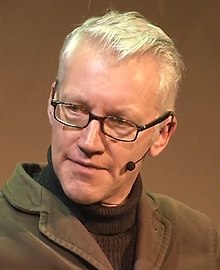
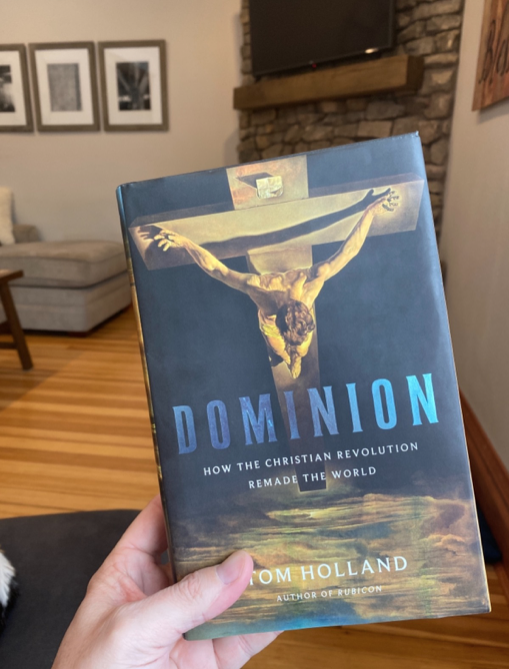
Yesterday I got the book whose review I reproduced last Sunday: Dominion: How the Christian Revolution Remade the World by Tom Holland (pictured left). I read the preface and a few pages Holland wrote about how Hitler and Himmler had broken with Christian ethics. I found what I read fascinating, and I would like to start reviewing Dominion in many entries under a new series that could be titled ‘How the Woke Monster Originated’. Although the author is a normie, Dominion demonstrates the main thesis of The West’s Darkest Hour: Christian ethics governs today’s secular, atheistic West (a moral compass that, I would add, directs us to ethnic suicide).

I have done this with another normie writer: Richard Weikart’s book on Hitler’s pantheistic religion, not to mention another normie, the late Karlheinz Deschner’s criminal history of Christianity. Alex Linder does something similar: he reads entire books on tape recordings which he then uploads onto the internet, commenting here and there on a few illustrative passages. The difference is that Linder does in audio what I do in text.

The dust cover of Holland’s book contains these words:

Today, the West is utterly saturated by Christian assumptions… Christianity is the principal reason why, today, we assume every human life to be of equal value.

Bingo! And this cannot but remind me of what, alluding to Nietzsche’s loneliness, I said the day before yesterday about my solitude—insofar as reversing Christian ethics in our moral compass results in social ostracism, even from those who argue in racialist forums.

I said that Holland is a normie. When I just started to leaf through his book yesterday, I detected a terrible flaw. In the last two chapters, he cherry-picked historical cultural milestones (which I label ‘neochristian’) from 1916 to 1967—skipping how WW2 was a vicious conflict perpetrated by Anglo-Americans who abhorred a pagan resurgence in Europe (Tom Sunic talks about this in Homo Americanus).

Another thing that irritates me greatly about Holland is that living in London, where there are still English roses, he doesn’t denounce in the least how the English Establishment is exterminating them by promoting intermarriage. It’s obvious that, despite his lucidity in Dominion, Holland suffers from a huge blind spot at the centre of his vision.

But that’s natural: the book of a true dissident—like Sunic’s Homo Americanus—wasn’t elegantly published by a prestigious publisher (as Dominion was), nor would it have reached me as quickly and efficiently via Amazon Books. And though I’ve only just started reading it, there are several things to keep in mind before the first instalment of this new series.

First, Holland, who had a Christian upbringing and then became a secular freethinker, hasn’t read Richard Carrier. As a scholar, he has no excuse since Carrier’s magnum opus was published five years before Dominion. Like many agnostics today, Holland believes that Jesus existed, though he hastens to add that the only thing that can be known about him is that he was crucified by the Romans (before Dominion, Holland wrote a book about the last days of the Roman Republic that became a bestseller).

While Holland hasn’t read Deschner’s ten volumes, there is no excuse for him not to mention the very readable book by his fellow countrywoman, Catherine Nixey, on how Christians murdered the classical world (as a conventional scholar, Holland confines himself to Gibbon’s nineteenth-century treatise).

Needless to say, in the Index at the end of Dominion, which is replete with scholarly bibliographical references, the names of David Skrbina and Tom Goodrich are missing (as I said above, WW2 should be a perfect paradigm for Dominion’s central thesis) as is missing Kevin MacDonald (Holland has written on several occasions about anti-Semitism). Has Holland even read Hitler’s after-dinner talks?

However, the last chapter of Dominion is entitled ‘Woke’, and Holland claims that this ethos is by no means a new phenomenon but, by doing a deep psychic archaeology of the West from the ancient world, it is the same mental virus albeit mutated.

If all goes well, on Monday I will start my comments on this very erudite 612-page book.
Categories
Axiology Christendom Liberalism Tom Holland

Western values are Christian values

by David Lindsay

Tom Holland has written a superb overview [Dominion: How the Christian Revolution Remade the World] of the impact of Christianity on the West. He argues we in the West are moored to our Christian past and our morals and ethics derive from Christianity. Holland believes that Christian values permeate Western culture and thinking. If anything, Christianity’s influence has been underestimated. Holland claims that many beliefs that we take for granted have Christian origins. He argues that George W. Bush was mistaken in assuming that Muslims shared a Christian worldview and such values are universal.

Holland does not fully explain what he means by Christian values. Jesus spoke repeatedly about inequality and injustice. He spent a lot of his time helping the poor and society’s outcasts. He wanted his followers to love their enemies. The Bible suggests that God is closer to the poor than to the rich. Matthew 25 states the key test for a disciple is treating the poor and the hungry as if they were Jesus. Professor Richard Hays of Duke Divinity School believes that Christians are meant to direct their energies towards the renunciation of violence, the sharing of possessions, and overcoming ethnic divisions. Holland discusses the impact of Martin Luther King and Nelson Mandela, who were both students of the Bible. They preached a message of non-violence and forgiveness.

Saint Paul claimed that Christ’s church was open to all, slave and free, Greek and Jew, male and female. He taught that everyone is equal before God and we should love one another. These were revolutionary ideas in the Roman world and we still struggle with them today. Holland argues that because God loves each of us unconditionally, we are in turn meant to love and respect our fellow man. Holland discusses the Beatles and he claims that songs like “All You Need is Love” and “Imagine” express Christian beliefs.

Holland has written extensively about Rome, ancient Greece, and Islam. He claims that the more he studied classical antiquity the more alien he found it. Holland concluded that his values were distinctly Christian. Christianity became the dominant religion in Western Europe because of the Romans. Pagan Rome was a barbaric place. It was depraved and violent. The Romans entertained themselves by having criminals eaten alive by wild animals. Rome was also corrupt and materialistic, with only the rich having any rights. Julius Caesar is fondly remembered by classical scholars but he carried out genocide in Gaul. The Romans tended to destroy societies that got in their way. The Romans and Greek philosophers like Aristotle did not care about the poor and the downtrodden, they viewed them as losers. Aristotle justified slavery as natural, claiming some humans were slaves by nature, lacking the moral reason to be regarded as the equals of free men. Christianity must have seemed an attractive option for many ordinary people in the ancient world.

Holland does not believe that God exists but he was raised a Christian. He claims that we in the West have retained our Christian morals and ethics even though many of us have stopped believing in God. The book is not a history of Christianity. He mentions theologians like Irenaeus, Anselm, Origen, Marcion, and Pelagius. It helps to have some knowledge of Christian history to understand their significance.

When the Britain Empire occupied a country it would usually be forced by Christians to ban practices they considered barbaric. In India, Hindu widows would sacrifice themselves by sitting atop their deceased husband’s funeral pyre. The British banned this practice because of pressure from Christian evangelicals. William Wilberforce was a devout Christian, who forced the British Parliament to ban the slave trade in 1807. The Bible did not seem to condemn slavery, but British Christians knew it was wrong. As Western culture has become more liberal we have embraced behavior that the Bible specifically forbids, like divorce, working on the Sabbath, and homosexuality. We are now making our own rules, but they are still rooted in the gospels.

In 2002, the World Humanist Congress affirmed “the worth, dignity, and autonomy of the individual.” Holland views this as a quintessentially Christian idea that finds no parallel in the ancient world, or in other parts of the world today. Humanists believe “that morality is an intrinsic part of human nature based on understanding and a concern for others.” Holland argues that the source of humanist values is not to be found in science or reason but in Christianity.

Holland suggests that Western secular liberals are deluding themselves in believing that Western views on human rights are universally shared. Western Liberals have insisted that Afghans should embrace gender equality. Holland claims that “To be a Muslim was to know that humans do not have rights. There was no natural law in Islam. There were only laws authored by God.” For some Islamic scholars, such as Abu Muhammad al-Maqdisi the idea of equality between men and women, or between Islam and other religions, is “a monstrous blasphemy”. There is no such thing as “human rights” only the laws of Allah; any attempt to impose those human rights on Islamic countries is infidel heresy and will lead to friction.

Holland discusses the dark side of Christian history. Over time, he writes, Christians “have themselves become agents of terror. They have put the weak in their shadow; they have brought suffering, and persecution, and slavery in their wake.” He notes, for example, that the efforts of missionaries to bring Christianity to Africa were undermined by a “colonial hierarchy” in which black people “were deemed inferior.” But he also argues that the very standard by which we condemn colonizers is itself Christian.