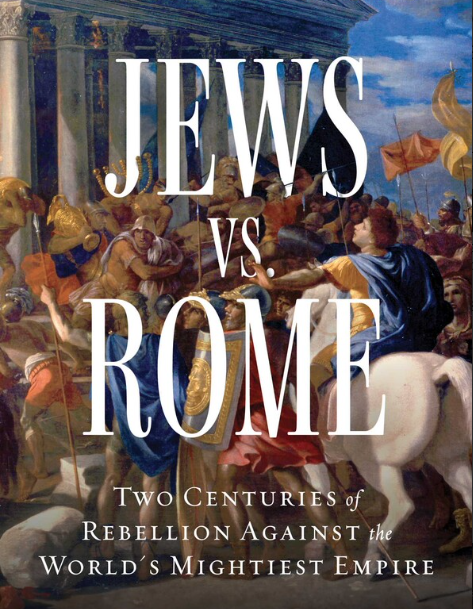
Below, selected quotes from Adam Green’s 2026 book The Jesus Deception: A Mystical Midrashic Myth:
______ 卐 ______
Judaism for Gentiles
There was a dilemma inherent in Jewish prophetic expectation: all nations were to worship the God of Israel, but they were not expected to become Jews or follow the full set of commandments given to Israel alone. God had established a covenant with His people, commanding them to keep a distinct law. Yet the scriptures also envisioned a future where Gentiles would turn to the God of Israel and be gathered into His dominion. The resolution to this theological problem ultimately manifested as Christianity, a new religious path that allowed Gentiles to honor the God of Israel without becoming Jews. This new faith evangelized to the Gentile world, but without requiring circumcision, a kosher diet, or Sabbath observance.
A pivotal turning point in legitimizing Gentile inclusion can be found in Acts 15, where James publicly approved Paul’s mission to the Gentiles. James declared that Gentile converts did not need to fully adopt Jewish law, but should instead follow a simplified set of commands: abstain from food sacrificed to idols, from blood, from meat of strangled animals, and from sexual immorality. This decision allowed Christianity to spread beyond ethnic Judaism while maintaining a theological link to Jewish tradition.
It is my judgment, therefore, that we should not make it difficult for the Gentiles who are turning to God. Instead we should write to them, telling them to abstain from food polluted by idols. from sexual immorality, from the meat of strangled animals and from blood. For the law of Moses has been preached in every city from the earliest times and is read in the synagogues on every Sabbath. —Acts 15:19-21
Scholars and theologians have often noted that these requirements closely mirror the Noahide laws found in rabbinic literature. By establishing a shared moral baseline, the early church fashioned a form of Gentile adherence that echoed Jewish ethics without requiring full Torah observance.
Paul reminded the Jerusalem Council that Gentiles were turning to the God of Israel, and this had been God’s plan from the beginning:
Brothers, you know that some time ago God made a choice among you that the Gentiles might hear from my lips the message of the gospel and believe. —Acts 15: 7
The apostles themselves testified that God confirmed this mission by signs and wonders among the nations:
The whole assembly became silent as they listened to Barnabas and Paul telling about the signs and wonders God had done among the Gentiles through them. —Acts 15:12
The Gospels, too, record Gentiles praising the God of Israel directly:
The people were amazed when they saw the mute speaking, the crippled made well, the lame walking and the blind seeing. And they praised the God of Israel. —Matthew 15:31
The earliest New Testament author, Paul, made his entire identity about being the apostle to the Gentiles. He repeatedly claimed this special mission had been entrusted to him by God: “I am talking to you Gentiles. Inasmuch as I am the apostle to the Gentiles, I take pride in my ministry” (Romans 11:13). He insists, “God, who set me apart from my mother’s womb and called me by his grace, was pleased to reveal his Son in me so that I might preach him among the Gentiles” (Galatians 1:15-16), and again, When they saw that I had been entrusted with the task of preaching the gospel to the uncircumcised, just as Peter had been to the circumcised… they gave me and Barnabas the right hand of fellowship when they recognized the grace given to me” (Galatians 2:7, 9). Paul’s focus on the gentiles continued in the Gospels with the Great Commission: “go and make disciples of all nations, baptizing them in the name of the Father and of the Son and of the Holy Spirit” (Matthew 28:19). The Gospels even symbolized this worldwide mission by sending out seventy disciples (Luke 10:1), echoing the traditional Jewish reckoning of seventy nations of the world (Genesis 10). In every strand of early Christian thought, the endgame was the same: to bring the Gentiles into acknowledgment of the God of Israel and his Messiah.
Judaism did not defeat Rome with armies, it subdued Rome with Jesus [emphasis by Ed.]. Jerusalem could not defeat Rome with a political Messiah in this world, but they could falsify a ‘prophecy fulfilling’ myth of a crucified messiah with a spiritual victory over Satan in the celestial world. Christianity was not the miracle of divine revelation, it was the natural product of a people oppressed, divided, and desperate. The scriptures had the ingredients. The times demanded a solution. And theology became the chosen tool.
It took three centuries of incremental theological infiltration and slow growth before the Jesus cult took root, and Constantine adopted Christianity as the religion of Rome, supposedly to unify the empire. At that point, Christians made up only about ten percent of the population, and the shift was an unpopular, top-down decision. Yet within a few decades, paganism was outlawed, Christianity was enshrined as the state religion, and the Jewish Messiah had triumphed over the pagan pantheon of Rome.
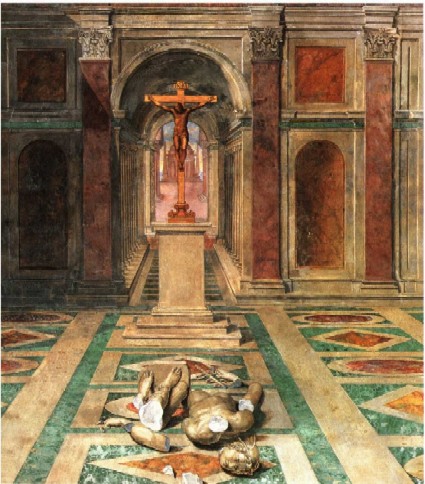
What began as a Jewish sect proclaiming a messiah went on to spread Torah based messianic Judaism across the world. Today, nearly half of humanity bows to the God of Israel. Jesus was a Jewish solution to the Pagan problem.
2 replies on “Adam, 4”
Visitors who haven’t read Rome against Judea; Judea against Rome, should read it now.
Well, when it comes to the shit depicted in this post (“judaism for the gentiles”), I have only one thing to say, using my typical erudite and cultured observation, in my native language, to add a little bit of spice; foda-se essa merda!