Below text by MythVision Podcast
(watch it here)
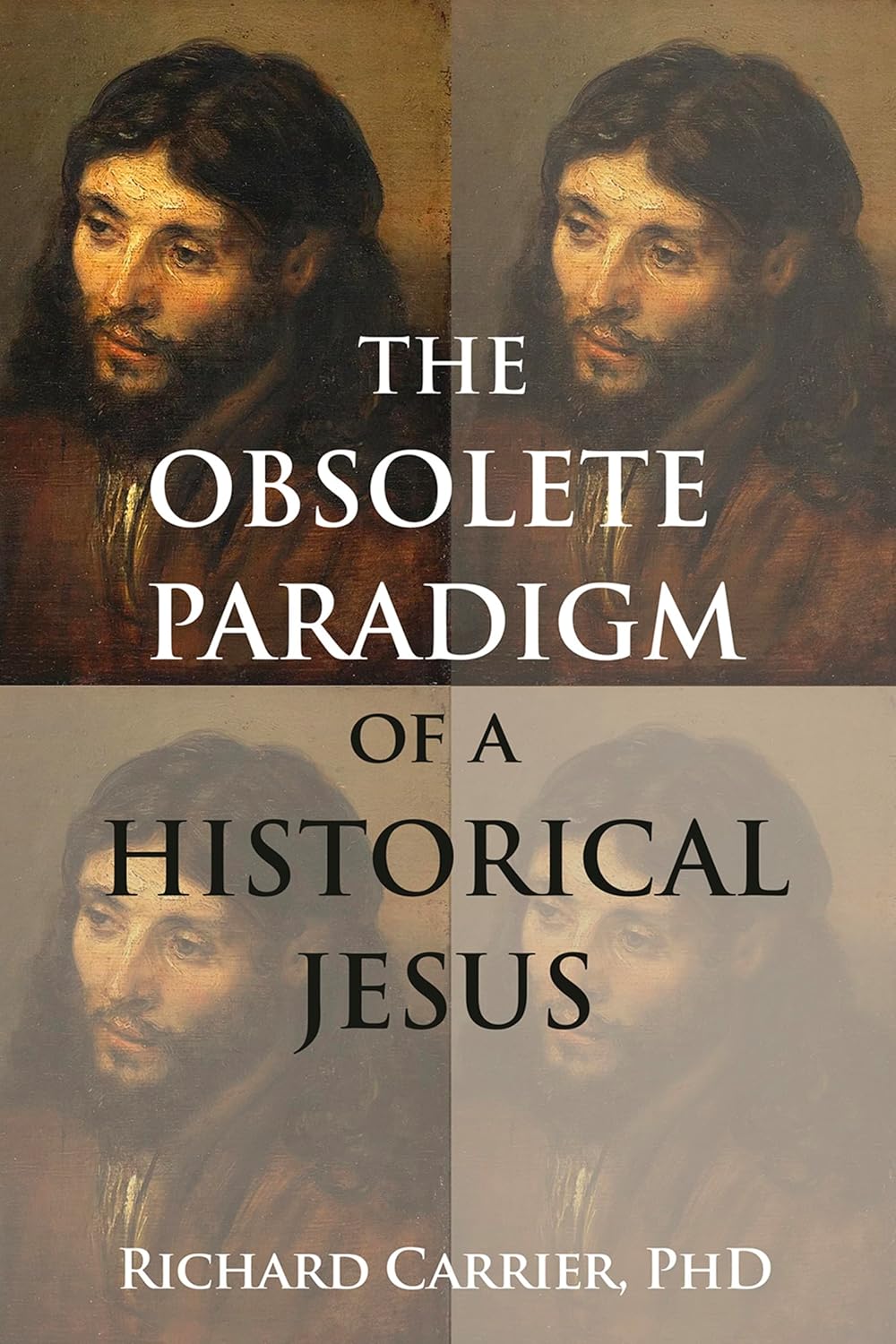 Join Derek Lambert for a live round-table with Dr. Richard Carrier, Dr. Richard C. Miller, and Dr. Aaron Adair as we dig into Carrier’s provocative new book, The Obsolete Paradigm of a Historical Jesus—and why he thinks parts of biblical studies (and even peer review) keep dodging the core arguments.
Carrier surveys a decade of responses to his and Raphael Lataster’s work and finds that many critiques avoid the actual evidence and logic, a pattern he says signals a deeper problem in the field.
A big theme tonight: why historians “must learn math.” Carrier argues that historical conclusions need explicit logic and probability—Bayesian reasoning—rather than gut feel or ad-hoc explanations.
We’ll unpack priors, likelihoods, and how to tell when we’re explaining evidence vs. explaining it away. The new book also hit several hot-button texts where Carrier says traditional readings are too thin to prove historicity:
- Romans 1:3—ambiguous and compatible with non-historical interpretations, so it can’t carry the case.
- Galatians 4:4—part of an allegorical argument, not a plain biographical claim.
- “Brother of the Lord”—in earliest Christianity, all baptized believers saw themselves as Christ’s siblings, which complicates appeals to this phrase as biographical proof.
Plus: Docetism—Carrier’s new book contends the modern category is a misconstruction of scattered ancient ideas and later polemics. We’ll examine what ancient sources actually say. Whether you agree or not, this conversation aims to model rigorous critical debate about evidence, method, and how scholarly paradigms change.
One reply on “New book”
On so-called Docetism:
Page 295.