I never visit incel websites, but yesterday I visited their encyclopaedia.
They are right that the current Western world views men as the Enemy who must be castrated, eliminating institutions like marriage, promoting feminism, etc. In this, both Andrew Anglin and Nick Fuentes for a younger audience, and F. Roger Devlin for a more academic audience in racialist forums, are correct.
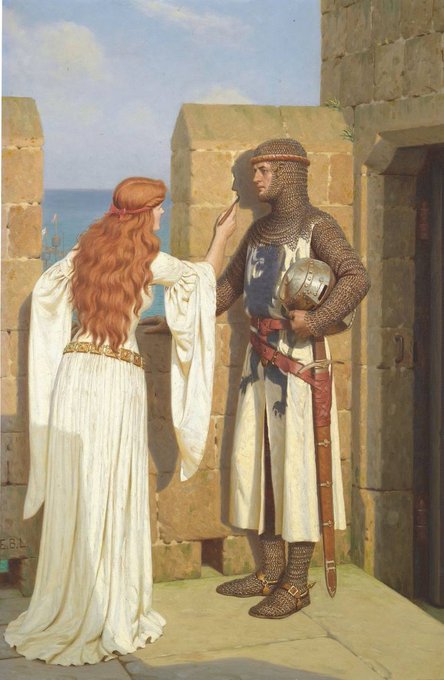 The problem is that, unlike the Aryan of yore, every Aryan male is behaving like a eunuch: instead of devising scenarios to seize power in the US and in every European nation (and the seminal novel for visualizing this would be The Turner Diaries), they simply complain online. It’s obvious that a Fourth Reich would restore Aryan male rights in any nation where we came to power. But neither white nationalists nor those who run incel forums promote a violent revolution (the last one to do so was Harold Covington, whose novels—except the last one—imitated The Turner Diaries, but he died a few years ago).
Yesterday, while briefly browsing the incel encyclopaedia, I saw the section on “What should I do” and encountered the same cowardice I see in racial right-wing forums: basically, doing nothing, not promoting a William Pierce-style revolution, which is the only way that would transvalue Gomorrahite values to their natural state.
So my feelings toward incels are the same as my feelings toward racialists: they behave like women confined in a castle when the enemy attacks, praying for things to change, but without doing anything practical about it.
Note that I am not promoting violence at the moment, only that our movement must not be reactionary (incels, white nationalists) but revolutionary. If the baboon the Jews put in the White House carries out his ultimatum to return Iran to the Stone Age (with nukes, I suppose), that event would strengthen The West’s Darkest Hour and weaken all these eunuchs who have no plan to fight in a favourable future.
4 replies on “Incels”
I think promoting stoicism is about the last thing they should be doing (and I’ve seen that wretched philosophical position come up a lot on the right over the years). Washing your hands of the world’s impact as you ‘keep doing what you’re doing’ has that Buddhist quality to it – which has already been discussed to death on here – that strikes me as an easy avoidance of duty. Besides, it represses a person, and cuts them off from introspection and emotive self-awareness. All in all, it renders people powerless, myopic, somehow self-indulgent over that apathy. I have the same problem with it that I have with the ‘mindfulness movement’.
If we render ourselves mere unaffected observers to the universe’s flow, not only do we reduce what it is to be human, but we submit to (hard) determinism, which, as I tend to reflect on, is a wonderful (for its practitioners/adherents) a priori cop out from having to account for reams of poor choices and bad decisions; to learn to do better. Ultimately, we must act.
What you say about stoicism reminded my a page from historian Will Durant:
It is a pity that racialists on X are still admiring Alexander the “Great”.
On the subject of seizing power, I do go with the TD perspective myself (and all the real life handbooks that would mirror that). However, curiously, to bolster that I was reading some broader case studies overviews. Can I recommend the entire ARIS Project books series (which I have in my collection, and have substantially dipped into) plus of course the famous Coup d’Etat: A Practical Handbook by Edward N. Luttwak and of course, as secondary material (the British Army, for example, needs to be divided to our cause), the (slightly black humoured yet sensibly written) How to Stage a Military Coup: From Planning to Execution by David Hebditch. I mention these books, as I doubt most people in WN have the initiative/planning to come up with a practical revolutionary methodology all on their own. Oh yes, and the Guerrilla Dispatch series, plus Deception by Robert M. Clark.
The issue usually isn’t so much ‘what to do’ as ‘who to put it to?’, although of course it would be have have to tailed to our specific historical conditions.
Who should we put? Have you read David Lane’s open letter to all these heterosexual fags?