Bad, 2
I had promised a critical review of the series, but the YouTuber who reviewed it on his channel, which Mauricio transcribed and linked to in my midnight post, already covered the essentials. So, aside from this one, I won’t be posting any more articles: I’ll limit myself to saying a few things about some episodes from the first and second seasons of Breaking Bad.
Episode 2
In the first subversive message against Aryan sanity, we see Walter having breakfast with his family, who judge him with their stares. Remember that the right path would be to share meals in a Syssitia, not a nuclear family, but rather an extended family. Without the proper Männerbund restoring Aryan culture is impossible (women aren’t creators of great civilisations).
This lack of manliness, stemming from eating with a woman and a disabled lad instead of soldiers, is reflected in Walter having to kill a dangerous Hispanic man in Jesse’s basement. Walter first sees a knife, a hammer, the guns and a plastic bag but he doesn’t dare do anything because, like the rest of Western men, he’s feminized (compare Walter to Earl Turner from William Pierce’s novel).
Then there’s a funny scene. Walter tells Jesse that, to put the body of another dangerous non-white in two plastic containers to dissolve it with chemicals, they have to put the limbs in one container and the torso in the other: dark humour!
But in the second subversive message we see that Walter was expecting a baby girl, according to the ultrasound. What an idiot given that Walter Jr. is disabled and, in a normal world, the father should yearn for a male heir to replace the idiot (those values no longer exist in the degenerate West). Skyler, pregnant, confronts Walter and scolds him for smoking marijuana at Jesse’s house (remember that Walter dies of cancer). That probably wouldn’t happen in a Spartan home.
It was hilarious to see that when Jesse drags the already smelly corpse of the gook guy who tried to kill him, the body bangs its head on the steps as it’s carried down, and the ultimate dark humour came when the bathtub melted as the body dissolved because Jesse didn’t follow Walter’s chemical instructions. It made me laugh big time! But before that Jesse told Walter, “It’s obvious [Walter’s wife] wears the pants in the family.”
Episode 3
“Murder is wrong,” Walter writes during his internal struggle because he doesn’t dare kill the dangerous spic, who is tied up in Jesse’s basement. Is it possible to reclaim the Old US with such Christian morality? Then, Walter calls his wife to check in because it’s late and he hasn’t arrived, as if implying that she’s the one in charge. It’s inconceivable to become a Nazi with Americans like that. Of course, Walter coughs because cancer is eating him alive, but there are countless husbands who behave like that, even without cancer.
But then Walter regains his manhood and commits his first direct murder: he finally kills the Hispanic guy. How many of those who blog on racialist forums would commit such an act?
Episode 4
In the first scene after the episode’s introduction Walter is eating with his wife, his brother-in-law Hank, and Walter Jr. Part of the feminization of men—and this must be iterated—is the absence of a Männerbund. In a virile culture, there would be something similar to the laws of Lycurgus: forcing warriors to eat together to build the martial patriarchy. Instead, this bourgeois meal between two couples and a disabled son can only diminish the man’s warrior potential. Of course, the US has long been beholden to Judaism, and the only martial act permitted in that culture is defending Israel’s interests, but that is diametrically opposed to an Aryan culture and already changing among zoomers.
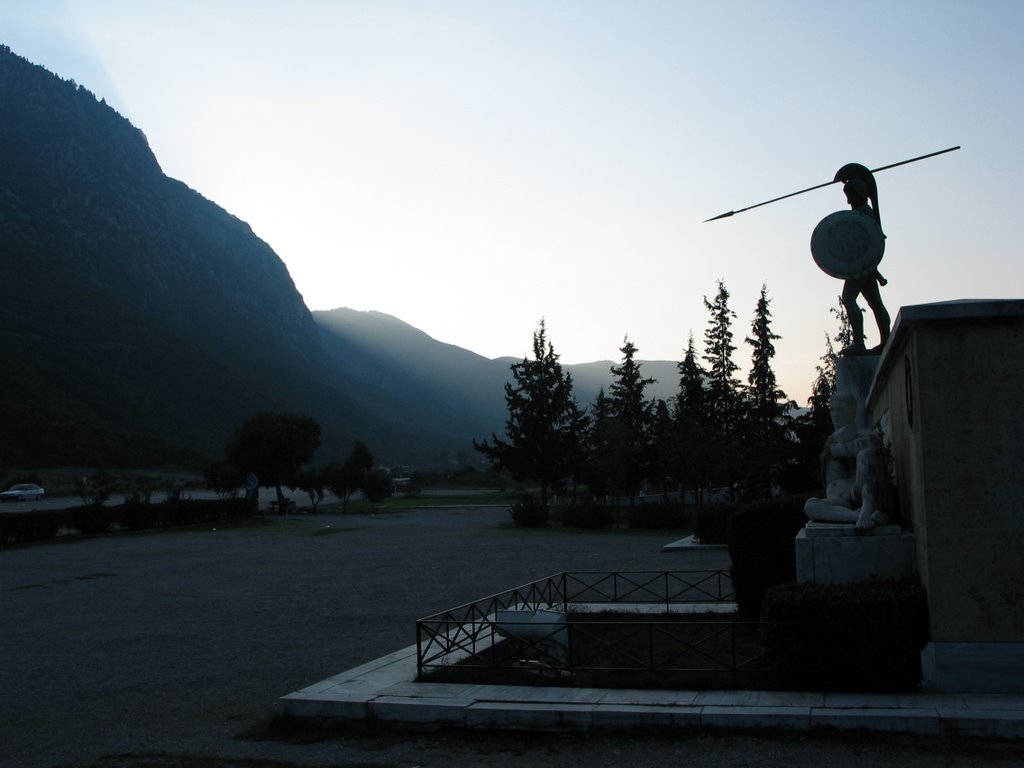
Watching the family scene in the Albuquerque, New Mexico, poolside on what appeared to be a relaxing Sunday, I thought to myself: What would the diners of a Spartan Syssitia (or its SS incarnation in Germany) be discussing at a table? Surely they’d be joking in the crudest way possible! Remember that Lycurgus ordered an effigy of the god of laughter to be placed in the dining halls of every Syssitia: coarse humour among warriors that would scandalize any little woman who dared approach such a place! Walter’s family is the opposite, and what’s worse is that white nationalists don’t even want to live together to create the necessary bonding within a small community of warriors (each Greek Syssitia consisted of relatively few men so that the bonds of friendship would be quite strong).
In contrast, upon hearing Walter and his brother-in-law talking on that family Sunday with their wives, the priest, preoccupied with the sacred words, can’t help but think that those families are talking rubbish—precisely because there are women present! (Remember that women infantilize everything because, psychologically, they are “between man and child” as Schopenhauer said.)
After revealing to his family that he has cancer, in the next scene we see Walter Jr. listening to degenerate music in his bedroom with headphones. After his family comforts Walter, in the following scene we see Jesse with two of his buddies: pure white trash. The priest has no interest in preserving people like that, but this white trash seems to be the current norm unlike, say, Norman Rockwell’s paintings (the image of Americans I was left with as a child watching old movies with my family).
The next toxic scene is that the oncologist, who charges five thousand dollars for a consultation and is one of the top ten in the country, is Black: typical of Hollywood, Netflix and HBO subversion.
Episode 5
There’s only one good scene when we see Walter with his family and Hank’s, saying he prefers quality of life to the misery of chemotherapy which would only prolong his life with terrible side effects.
Then comes a toxic scene, almost at the end: Gretchen, the Jewess wife of another Jew, Elliot Schwartz, takes pity on Walter and wants to help him financially. Walter, who needs a lot of money for his treatment, goes back to Jesse’s house and asks him, “Do you want to cook?”
Episode 6
Walter’s chosen alias for dealing with drug traffickers is mentioned for the first time: Heisenberg, in honour of the German who should have built the atomic bomb for the Third Reich. Now bald from chemotherapy, Walter has lost his fear of death and dares to go after the most dangerous Mexican distributor in town.
Episode 7
For the first time we see what would become the iconic blue methamphetamine that would make “Heisenberg” famous in the drug world.
Episode 8
Skyler scolds Walter for suddenly wanting to make love to her in the kitchen. On the other hand, Walter is becoming a man by dealing with tough thugs like Tuco, from the Juárez Cartel. But the screenwriter makes it clear that around his wife Walter behaves like a child: something that reflects today’s culture. Then there’s a scene with Hank and his own wife that also shows the crazy extremes of today’s feminism (I wouldn’t let a woman treat me the way this DEA agent did).
Episode 9
Walter and Jesse aren’t men yet. For a minute, they had Tuco Salamanca and the disabled Hector Salamanca, ruthless drug lords, at their mercy and they didn’t pull the trigger. This pair of white “heroes” wouldn’t work in the revolutionary times to come.
Episode 10
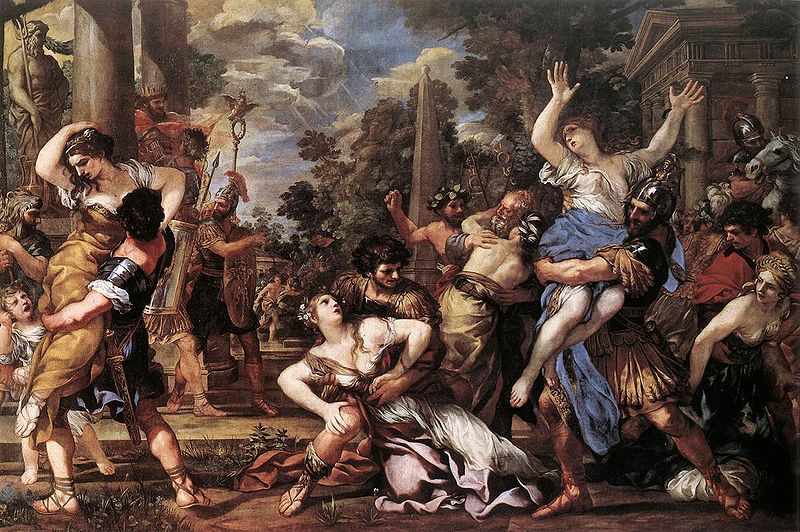
Nothing to report here except that feminism continues in the final scene, with Walter and Skyler in bed, Skyler not even letting Walter kiss her (compare it with the rape of the Sabine women: the foundation of Rome).
Episode 11
The episode begins with a subversive message: Walter tells Jesse in a small supermarket that he can’t cook right now because his wife worries if he’s gone for more than twenty minutes. Then there’s another subversive message in Walter’s breakfast scene with Skyler: the same old pandering! A great humiliation for the man.
What we see on Netflix are anti-role models par excellence, a true inversion of values: secular neochristianity taken to its apotheosis. Throughout the episode, the pregnant Skyler mistreats her husband. After Tuco’s death, all these family scenes are a tremendous anti-climax to Walter’s previous bravery with the Mexicans. And the heterosexual fag still apologizes! Can you imagine these anti-Spartans reclaiming all the territories occupied by non-Aryans in the US? “I love you,” Walter tells his wife: something we should never say to a woman.
Episode 12
Tough cop Hank has similar problems with his wife but l am fed up with these family dynamics and must stop here.
2 replies on “Breaking”
Eduardo Velasco’s essay on Sparta can be read on pages 359-456 of The Fair Race (now also available as a hard copy in addition to the PDF).
It’s a pity better media is not been made for today’s youth. Breaking Bad, The Walking Dead and Game of Thrones are probably the most popular 18+ series ever. These series are many years old now, but current media is unlikely to reach the mass appeal these series had, as its now too “leftist”.
All these series had the positive of showing that the world is brutal to a modern audience.
Post WW2 the west had a large swing to pacifism, to “shield the young”, and not oppress foreign people’s, and encourage immigration of foreigners to break and deny nationalist feelings.
But anyhow I agree there is not much benefit doing a full commentary on Breaking Bad.