Or:
How the Woke monster originated
The following quotations are taken from the section ‘Brides of Christ’ in the chapter ‘Flesh, 1300 Milan’.
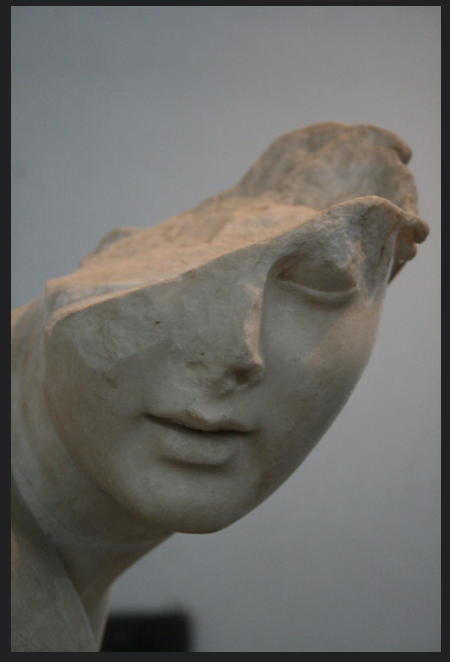
When workmen digging the foundations of a new house uncovered the statue, experts from across Siena flocked to admire the find. It did not take them long to identify the nude woman as Venus, the goddess of love. Buried and forgotten for centuries, she constituted a rare trophy for the city: an authentic masterpiece of ancient sculpture. Few people were better qualified to appreciate it than the Sienese. Renowned across Italy and far beyond for the brilliance of their artists, they knew beauty when they saw it. Everyone agreed that it would be a scandal for such a prize to be hidden away. Instead, the statue was taken to the Campo, the city’s great central piazza, and placed on top of a fountain. ‘And she was paid great honour.’ At once, everything began to go wrong. A financial crash was followed by a rout of the Sienese army. Then, some five years after the discovery of the Venus, horror almost beyond comprehension brought devastation to the city. A plague, arriving from the east, and spreading with such lethal virulence across the whole of Christendom that it came to be known simply as the Great Dying, reached Siena in May 1348…
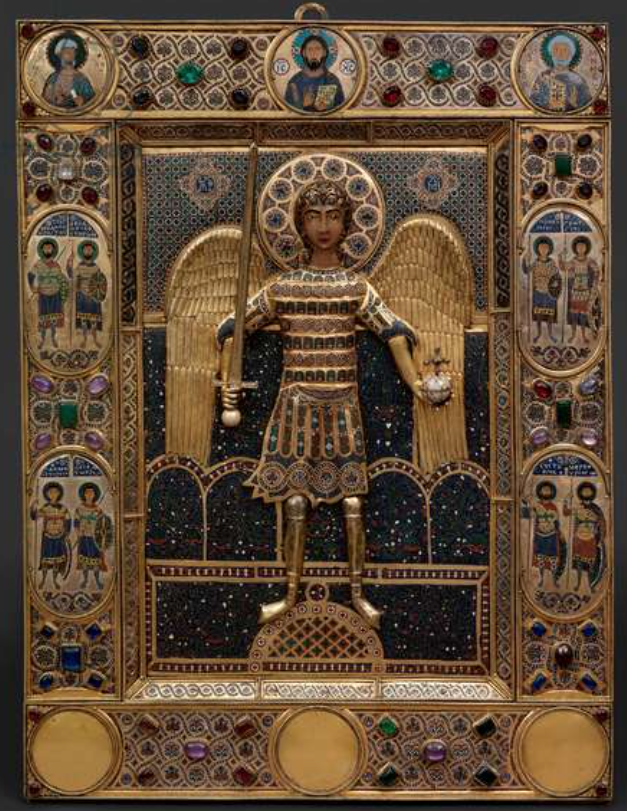
Leaders in the new governing council, looking from the Palazzo Pubblico to the statue in the Campo outside, knew what to blame. ‘From the moment we found the statue, evils have been ceaseless.’ This paranoia was hardly surprising. Admiration for ancient sculpture could not outweigh the devastating evidence for divine anger. Almost eight hundred years before, during the pontificate of Gregory the Great, it was cries of repentance that had halted the plague. It was told how Saint Michael, standing above the Tiber, had held aloft a blazing sword—and then, accepting the Romans’ prayers, had sheathed it, and at once the plague had stopped. Now, overwhelmed by calamity, the Sienese scrabbled to show repentance. On 7 November 1357, workmen pulled down the statue of Venus. Hauling it away from the piazza, they smashed it into pieces. Chunks of it were buried just beyond the border with Florence.
The insult offered by the honouring of Venus had been very great. Siena was the city of the Virgin… Those who had demanded the destruction of the Venus were right to see in its delectable and unapologetic nudity a challenge to everything that Mary represented. [pages 278-279]
Recently, in discussing The Ring of the Nibelung, I wrote about the differences between Wagner and Nietzsche, and how the latter distanced himself from his old friend when he realised that, despite rescuing Germanic paganism, Wagner was making concessions to Christian morality.
The first opera I saw was Tannhäuser. I was very impressed that in the end the symbol of Mary triumphed over the symbol of Venus in Wagner’s first masterpiece, which is loaded with sexual symbolism. I didn’t expect to find such a message, but one has to understand that Wagner, unlike the young Nietzsche who used to visit him at home, was stuck halfway across the psychological Rubicon.
This is fundamental. So fundamental in fact that it moved me to add footnotes to Savitri Devi’s book which we recently translated because, like Hitler, Savitri was more inclined to Wagner than to Nietzsche. Unlike them, I believe that if we don’t understand Christianity exactly as the German philosopher understood it, the white race will continue to die out until the end.
Tom Holland then discusses Catherine of Siena: a mystic, activist and writer who had a great influence on Italian literature. Canonised after her death, she is considered a Doctor of the Church by the Roman Catholic Church. By 1377, Catherine had become an antithesis of Venus, so to speak: the most celebrated paradigm of chastity in Christendom.
From childhood, she had made a sacrifice of her appetites. She fasted for days at a time; her diet, on those rare occasions when she did eat, would consist exclusively of raw herbs and the eucharist; she wore a chain tightly bound around her waist. Naturally, it was with sexual yearnings that the Devil most tempted her…
Not merely a virgin, she had been a bride. As a young girl pledging herself to Christ, she had defied her parents’ plans to marry her by hacking off all her hair. She was, so she had told them, already betrothed. Their fury and consternation could not make her change her mind. Sure enough, in 1367, when she was twenty years old, and Siena was celebrating the end of carnival, her reward had arrived. In the small room in her parents’ house where she would fast, and meditate, and pray, Christ had come to her. The Virgin and various saints, Paul and Dominic included, had served as witnesses. King David had played his harp. The wedding ring was Christ’s own foreskin, removed when he had been circumcised as a child, and still wet with his holy blood.[1] Invisible though it was to others, Catherine had worn it from that moment on. [pages 280-282]
___________
[1] According to her confessor, the ring was a gold band; but Catherine herself in her letters, states otherwise.