If you imagine, in so far as it is approximately possible, the sum total of distress, pain and suffering of every kind which the sun shines upon in its course, you will have to admit it would have been much better if the sun had been able to call up the phenomenon of life as little on the earth as on the moon; and if, here as there, the surface were still in a crystalline condition. [Schopenhauer, Essays and Aphorisms, page 479]
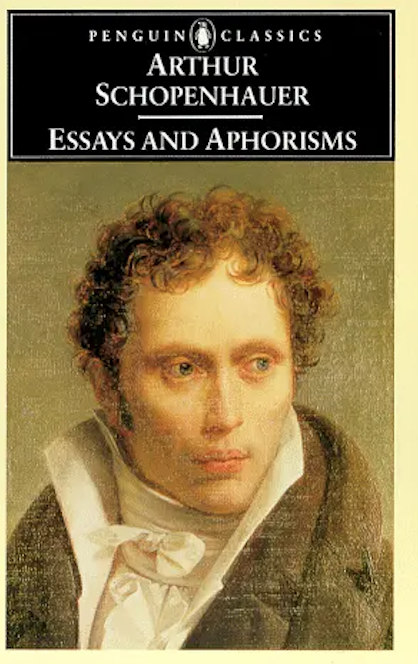
Schopenhauer lived in a time when it wasn’t yet known that, in the distant future, our sun will become a Red Giant: eliminating not only what we call unnecessary suffering, but also the necessary suffering that every creature that wants to live must endure.
As far as the commenters on this site are concerned, only Benjamin, Gaedhal, and I have rationally ventured into the subject of Schopenhauer’s pessimism. I don’t count Autisticus Spasticus because he suggests getting rid of a hundred per cent of humanity at once.
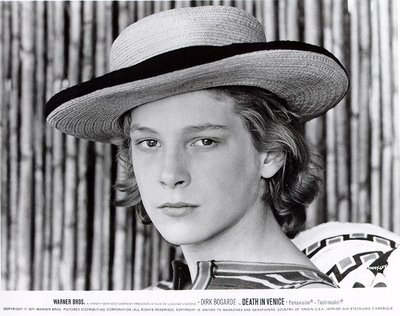
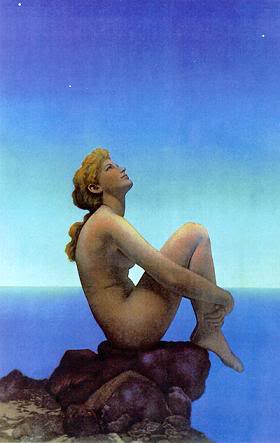
In contrast, I hope that only the Aryan race, in its Nordic version, will persist in the future and that some super-beautiful Nordids (I recently learned that actor Björn Andrésen from Death in Venice passed away this year) will become followers of the religion of the four words, and inhabit the paradise of girls on rocks painted by the American Maxfield Parrish. Spasticus’ solution isn’t rational because it would allow, say, killer whales to continue tormenting whale calves of other species once Homo sapiens became extinct. Instead, the priest of the sacred words suggests exterminating the killer whale gangs that are doing this.
With its trillions of galaxies, the universe is the mystery of mysteries. What seems to reign everywhere in the Milky Way is precisely this “crystalline condition”, to rephrase Schopenhauer, of the planets of all stars, except our own. Trying to conquer the universe for our religion seems impossible.
But modestly speaking, it is theoretically possible to try to implement the sacred words—Eliminad todo sufrimiento innecesario—at least on this planet. And for that, we need Hitlerites like Ben and me (remember that the first thing the Nazis did when they came to power was to ban vivisection).
6 replies on “Schopen quote”
I saw an article by Mauricio where he talked about “Meds,” and I want to know what he actually means by that. Does he mean only the north, or also the southern Mediterranean like Algeria, Tunisia, and Morocco? Because I’m from the northern Mediterranean myself more precisely, I was born in northern France.
I hate being a med, and I wish I were Aryan. The mixing mistake my ancestors made is unforgivable. Still, my IVF children are Aryan, with red hair and blue eyes. If my wife weren’t Aryan, my genes would never have allowed me to secure wealth for my Aryan children.
So I’m wondering: what did Mauricio mean when he said meds need to “correct” their mixing mistake? How are they supposed to do that? By mixing with Aryans generation after generation, or by staying with other meds?
The article “three types of Meds” is about how Meds react when faced with the racial truth of their admixed blood: Dismissal, Denial or Disgust.
I don’t have a breeding rulebook for today’s world of declining birthrates, collapsing economy and institutionalized child abuse.
We Meds have a long road ahead of us to clean our blood; many generations of selective breeding.
The rule of thumb should be “Breed with our own”. Meds with Meds. If you can shortcut this road with IVF, go ahead.
The ethical thing to do is to let Aryans multiply without interference.
However, the near future will do away with ethics and bring back the age-old rule: “Pussy for me, none for thee”, dictates the warlord in his bunker.
It is one of the reasons why I disagree with Dr. Robert Morgan’s Luddite-ism: if he succeeds in destroying technology, then humanity, or whatever succeeds us, will be doomed to be destroyed by solar collapse. I like to think long-term, even billions of years into the future. This makes me suspect that Morgan is a crypto-antinatalist. From what I glean from his posts, he is a man in his 70s who has never had children. He is a self-declared misanthrope, and, as David Benatar points out in Better to have Never Been, a misanthropic argument for Antinatalism can certainly be made. I haven’t quite made it to this chapter, yet, because I can only confront this book in small doses.
Billions of years, hence, we probably won’t need the sun as a source of light and heat, and perhaps might have found a way to shield the earth from its explosion.
Terrence Mc Kenna described evolution as a race against time to survive, technologically, the extinction of the sun.
Otherwise, as Bertrand Russell puts it, what we are left with is a “philosophy of unyielding despair”. Sheldrake quotes Russell in his preface of The Science Delusion. One of the things that I like about this book is that Sheldrake suggests ways to perhaps escape from this philosophy of unyielding despair. Perhaps the universe won’t end in ruins, as Russell thought, and it is this “perhaps” that I cling to. It is this “perhaps” that is my anchor in this stormy sea.
I cannot help but notice that it is when I feel the most depressed that I am the most sympathetic to Pessimism and Antinatalism. I follow the Antinatalism thread on Reddit, and a lot of Antinatalists, like myself, battle depression and have experienced a traumatic, emotionally isolated, and violent upbringing at the hands of parents. They even recently conducted a poll in this regard. Even though not an Antinatalist, I voted in this poll,as I am a lurker in this subreddit, and often feel immense sympathy both to Antinatalism and Pessimism. There are times when the beckoning “all-sufficient void”, as Schopenhauer describes both death and non-existence is an immense comfort. I begin to wonder, though, is Antinatalism merely a form of passive suicidal ideation for philosophically minded people? To conclude, with Schopenhauer, that we are better off dead; that we are better off reunited to the all-sufficient void; that existence itself is some nasty unpleasant business between two blissful eternities of non-existence, … arguably this is a form of passive suicidal ideation.
My mind is also divided on this matter.
Since I was happy in my childhood and early adolescence (before the abuse), my subconscious leans toward Eros.
But the trauma inflicted by parental abuse from my late teens onward has turned me toward Thanatos (exterminationism, etc.).
I’ve noticed that antinatalists, unlike me, didn’t have at least a few years of happiness, so they are prey to the second force without any counterbalance.
Beethoven was also a victim of his alcoholic father, and in turn, Beethoven mistreated his nephew. Our mission is to create autobiographical and philosophical “Eroicas” to save future children from the torments that murdered our souls…
Yes, I had a brief period, where life seemed to me synonymous with joy, and so I never fully became Antinatalist either.
There is also a Marxist critique of Pessimism. Marxists say that the bourgeois philosophers had a sense that their world was ending, which is why they devoted themselves to Pessimism. Bourgeois capitalism, according to Marxists, is a philosophy of unyielding despair, which is why bourgeois philosophers embraced Pessimism and Antinatalism.
I had a long conversation with Chat GPT once about how I thought that Beethoven/Schiller’s ode to joy was actually a direct response to pessimistic philosophy:
“Oh Freunde, nicht dieses töne! Sondern laßt uns angenehmere anstimmen und freudenvollere. Freude! Freude! Freude … ”.
“O friends, not these tones!
But let us
strike up more pleasant and joyful ones.
Joy! Joy! … ”
And, of course, Beethoven’s Ninth almost became like a second National Anthem during the Third Reich. ‘Strength through Joy’ is a National Socialist slogan.
My task is to obliterate those forces that ruin the joy of life. The abusiveness of Christianity, of “our parents’ religion”, as you put it, is one of these malevolent joy-distupting forces. This is where the Thanatos impulse comes from.
Last year, when I had a depressive episode remembering my dad (confessed at the end of Lágrimas), I realised that an erotic fantasy about a woman who was a former friend immediately distracted me. Since I linked an image of the super-beautiful boy from Death in Venice above, now I should include an artistic depiction of a super-beautiful girl: Eros vs. Thanatos…