“I can’t change the fact that my paintings don’t sell”.
—Vincent Van Gogh
It is curious that as a very young child, and we are talking about sixty years ago now, thanks to the artistic spirit that my dad instilled in me, I was so passionate about the great painters. But it was not until 1999 that I realised the great similarity between their unfortunate lives and mine.
I have spoken of the tragic life of Nietzsche, who by the end of the 19th century suffered a psychotic breakdown from which he never recovered, dying in the last year of the century. But curiously, it was in those same years, and at the beginning of the 20th century, that the painters I became familiar with as a child also suffered terribly and died.
The classic example is Vincent van Gogh, and I believe that unlike the anti-white poison of today’s films, anyone who believes, like Hitler, that painting plays a vital role should watch the movie Lust for Life (which can be viewed for free here).
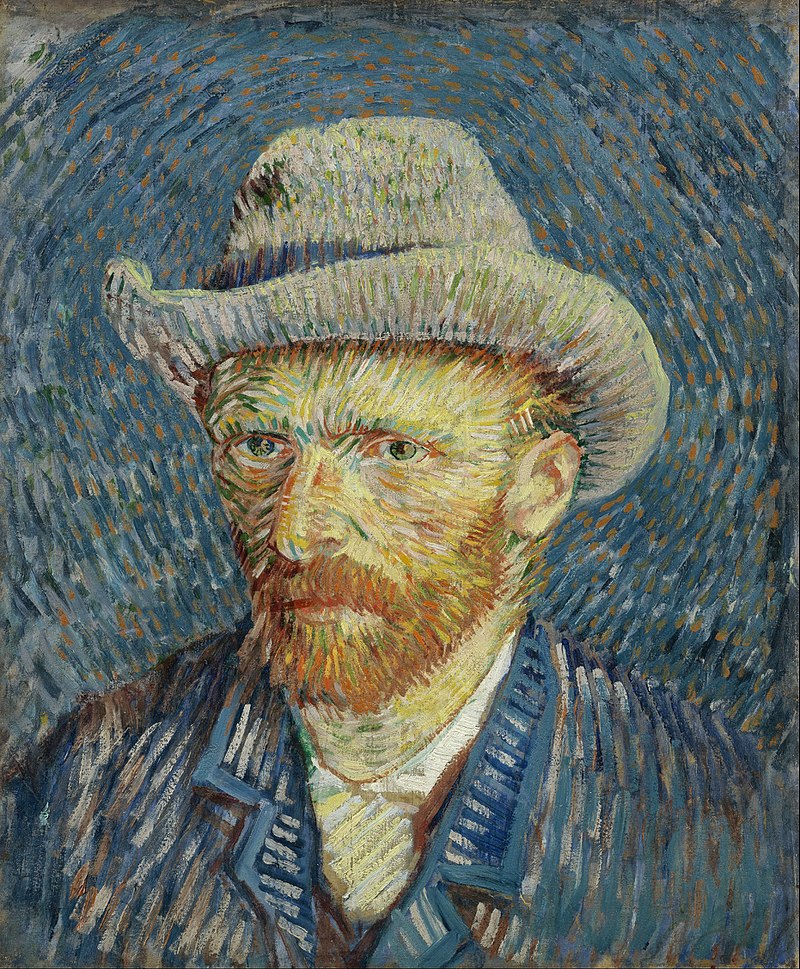 Vincent, an exponent of post-impressionism, died in 1890 at the age of thirty-seven. But Seurat, who was always financially dependent on his mother, died even younger: at the age of thirty-one, in 1891. Toulouse-Lautrec, who had been a friend of Van Gogh’s, died a decade later, in 1901, at the age of thirty-six. And Gauguin, Van Gogh’s fateful friend in Arles, died a couple of years later, in 1903. As the father of the solitary Cézanne—a post-impressionist painter like Van Gogh and Gauguin—was a banker, this misunderstood artist was financially secure and managed to reach the age I am now, dying in 1906.
I identify with these artists because I am convinced that innovative artistic expression is an escape valve from personal misfortune. Unlike academic painters, and like El Greco (it took the world three centuries to recognise the genius of this Spaniard!), these painters revealed the world in unexpected ways. And it is tragic that they sought in vain to sell their paintings during their lifetimes, because the canvases only reached fabulous prices after their deaths. For example, all art shops have reproductions of Van Gogh’s Bedroom in Arles, The Yellow Chair or Sunflowers, but the poor Dutch painter only sold a single painting in his lifetime.
That fate doesn’t terrify me so much. What really terrifies me is that what happened to Gauguin will happen to me. After he died at the age of fifty-four on one of the Marquesas Islands, a fisherman who found his works in the artist’s humble hut—threw them all into the sea!
At this point in my life, what matters is that something similar doesn’t happen to my intellectual legacy if I die prematurely or unexpectedly. That is why I have decided to translate my trilogy, and I ask visitors to save the PDFs of the featured post on their hard drives: anthologies by various writers.
5 replies on “Painters”
As a postscript, I’d like to say that there are thousands of my hand-written footnotes in the books in the thirty boxes that, for reasons of space, are now at my friend Marco’s house (as I mentioned last Tuesday); although I still have my diaries and other precious documents with me. If I die without an heir, everything will go into the trash can because my siblings couldn’t care less about my work.
You’ll probably lose everything, Cesar, because besides Benjamin no one else is really interested in your work.
Well, I intend to preserve and carry his work on, and indeed have it all saved and backed up, so no, he won’t. However successful that will be though, I can’t fathom now; I imagine not too much initially. As he mentioned above, these painters and philosophers were not recognised in their lifetimes, but they are far from forgotten now. As he said before, even if he’s not there to see it personally, he’s kind of just waiting for your types to die off also, making a paradigm shift easier.
I would recommend a simple and sincere biography on Van Gogh: Vincent Van Gogh A Biography by Julius Meier-Graefe. Though in recent years there is a story that has been circulating that states Van Gogh did not commit suicide. The story states he was killed, perhaps accidentally by two adolecents that were sons of well to do parents.
I have five books about van Gogh, including his letters to Theo. I’m not convinced by that theory, which was featured on 60 Minutes, because Theo also suffered a psychological breakdown after his brother’s death.
From my point of view, it all has to do with the awful, religious upbringing they received from their father.