I am perfectly aware that virtually all people of white nationalism, or even the alt-lite, are unaware of the psychic havoc caused by abusive parents. The exception, as I have said more than once, is Stefan Molyneux as we saw not long ago in his review of Joker.
What bothers me is that Molyneux’s mother is Jewish, and one would expect a non-Jew of the alt-lite or white nationalism to venture into a subject that I consider fundamental: the actual aetiology of mental illness (as opposed to the psychiatric lies that we hear in the universities).
If the Aryan world shakes off all Jewish influence, beginning of course with a rejection of Christianity and its secular offshoots, over time it will ‘translate’, into Aryan language, the most relevant findings of Jews on the trauma model of mental disorders. In the introduction to my work for a racialist audience I recently wrote for this site:
For now, suffice it to say that Alice Miller continued to mention Hitler under the influence of the official narrative in almost all of her texts, so I currently do not recommend any of her books. It is not that I have repudiated Miller’s findings: a Jewess who, although she suffered as a child in the Warsaw Ghetto, after changing her Jewish surname she never wanted to return to the shelter of her mother’s religion. But I must say that Miller’s psycho-biographical analysis of Hitler is based on the great lie of our times. The Swiss psychologist never considered such elemental issues as the fact that the Holocaust of millions of Ukrainians, largely perpetrated by Bolshevik Jews, caused the legitimate fear, and eventual reaction, of the German state.
But that is a separate matter. The issue that concerns us in Whispering Leaves is very different: the Dantesque hell that some parents put their children in: something that Miller got right.
The issue of abusive parents is not only taboo in all societies, as almost no one connects the dots between mental disorders and poor childrearing. Like the racial issue or the WWII theme, as to mental health the values have been completely reversed.
For example, two years ago, in March 2018, a commenter told me: ‘I have since forgiven my father and every other person of note in my life needing forgiveness’. But forgiveness is a Christian doctrine, although many secular psychotherapists also subscribe such unhealthy way of treating their patients. I answered: ‘I cannot speak for you because I ignore the full story. Generally, for an adult child to forgive a parent who never recognised his fault is psychological suicide. Alice Miller said that a child can excuse his parents, if they in their turn are prepared to recognise and admit to their failures. But the demand for forgiveness that we often encounter can pose a danger for healing. These are some quotable quotes from her’:
 • It is the resentment of the past, we are told, that is making us ill. In those by now familiar groups in which addicts and their relations go into therapy together, the following belief is invariably expressed. Only when you have forgiven your parents for everything they did to you can you get well. Even if both your parents were alcoholic, even if they mistreated, confused, exploited, beat, and totally overloaded you, you must forgive.
• The majority of therapists work under the influence of destructive interpretations culled from both Western and Oriental religions, which preach forgiveness to the once-mistreated child. Thereby, they create a new vicious circle for people who, from their earliest years, have been caught in the vicious circle of pedagogy. For forgiveness does not resolve latent hatred and self-hatred but rather covers them up in a very dangerous way.
• In my own therapy it was my experience that it was precisely the opposite of forgiveness —namely, rebellion against mistreatment suffered, the recognition and condemnation of my parents’ destructive opinions and actions, and the articulation of my own needs— that ultimately freed me from the past.
• By refusing to forgive, I give up all illusions. Why should I forgive, when no one is asking me to? I mean, my parents refuse to understand and to know what they did to me. So why should I go on trying to understand and forgive my parents and whatever happened in their childhood, with things like psychoanalysis and transactional analysis? What’s the use? Whom does it help? It doesn’t help my parents to see the truth. But it does prevent me from experiencing my feelings, the feelings that would give me access to the truth. But under the bell-jar of forgiveness, feelings cannot and may not blossom freely.
• I cannot conceive of a society in which children are not mistreated, but respected and lovingly cared for, that would develop an ideology of forgiveness for incomprehensible cruelties. This ideology is indivisible with the command “Thou shalt not be aware” [of the cruelty your parents inflicted to you] and with the repetition of that cruelty on the next generation.
I’ve added italics in the above quotations.
Again, I am not asking my audience to read Miller. But my writings translate, and expand considerably, her findings for an Aryan audience. It is a very important subject for the simple reason that mental health matters, and racialists who have had mental issues are generally clueless about what caused them.
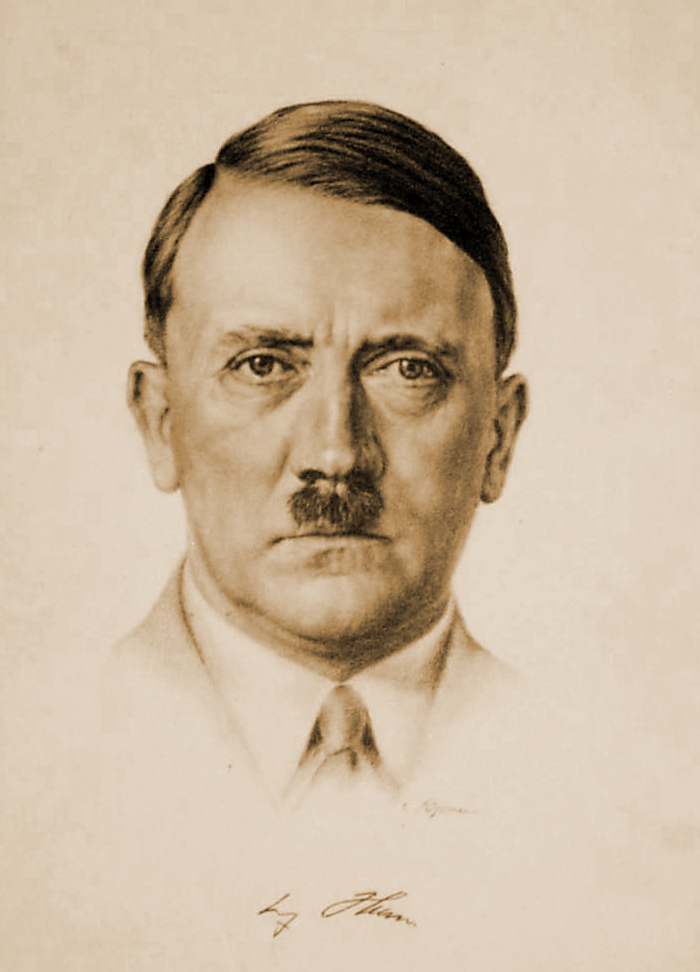 I had thought to leave the previous post, with an enlarged portrait of Uncle Adolf, at the top of this page throughout the day out of respect for his memory. But a comment in that entry motivated me to say something very obvious.