web analytics
Categories
American civil war Blacks Egalitarianism Universalism

On the US Constitution

by Jack Frost

 
“The Naturalization Act of 1790 says that the country is open to Free White Persons.”

There’s quite a bit of interesting history involved with this discussed at considerable length in the Dred Scott case from 1856, especially in the dissenting opinions given by Justice Maclean and Justice Curtis. For example, Maclean wrote:

In the argument, it was said that a colored citizen would not be an agreeable member of society. This is more a matter of taste than of law. Several of the States have admitted persons of color to the right of suffrage, and in this view have recognised them as citizens; and this has been done in the slave as well as the free States. On the question of citizenship, it must be admitted that we have not been very fastidious. Under the late treaty with Mexico, we have made citizens of all grades, combinations, and colors. The same was done in the admission of Louisiana and Florida. No one ever doubted, and no court ever held, that the people of these Territories did not become citizens under the treaty. They have exercised all the rights of citizens, without being naturalized under the acts of Congress.

Also, Curtis:

On the 25th of June, 1778, the Articles of Confederation being under consideration by the Congress, the delegates from South Carolina moved to amend this fourth article, by inserting after the word “free,” and before the word “inhabitants,” the word “white,” so that the privileges and immunities of general citizenship would be secured only to white persons. Two States voted for the amendment, eight States against it, and the vote of one State was divided. The language of the article stood unchanged, and both by its terms of inclusion, “free inhabitants,” and the strong implication from its terms of exclusion, “paupers, vagabonds, and fugitives from justice,” who alone were excepted, it is clear, that under the Confederation, and at the time of the adoption of the Constitution, free colored persons of African descent might be, and, by reason of their citizenship in certain States, were entitled to the privileges and immunities of general citizenship of the United States.

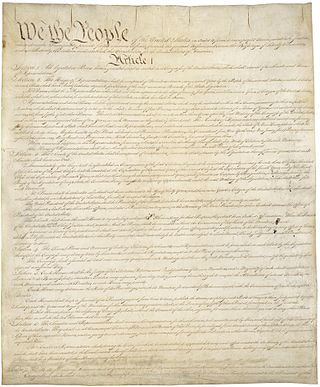
Constitution_of_the_United_States,_page_1

Did the Constitution of the United States deprive them or their descendants of citizenship?

That Constitution was ordained and established by the people of the United States, through the action, in each State, or those persons who were qualified by its laws to act thereon, in behalf of themselves and all other citizens of that State. In some of the States, as we have seen, colored persons were among those qualified by law to act on this subject. These colored persons were not only included in the body of “the people of the United States,” by whom the Constitution was ordained and established, but in at least five of the States they had the power to act, and doubtless did act, by their suffrages, upon the question of its adoption. It would be strange, if we were to find in that instrument anything which deprived of their citizenship any part of the people of the United States who were among those by whom it was established.

I can find nothing in the Constitution which, proprio vigore, deprives of their citizenship any class of persons who were citizens of the United States at the time of its adoption, or who should be native-born citizens of any State after its adoption; nor any power enabling Congress to disfranchise persons born on the soil of any State, and entitled to citizenship of such State by its Constitution and laws. And my opinion is, that, under the Constitution of the United States, every free person born on the soil of a State, who is a citizen of that State by force of its Constitution or laws, is also a citizen of the United States…

It has been often asserted that the Constitution was made exclusively by and for the white race. It has already been shown that in five of the thirteen original States, colored persons then possessed the elective franchise, and were among those by whom the Constitution was ordained and established. If so, it is not true, in point of fact, that the Constitution was made exclusively by the white race. And that it was made exclusively for the white race is, in my opinion, not only an assumption not warranted by anything in the Constitution, but contradicted by its opening declaration, that it was ordained and established by the people of the United States, for themselves and their posterity. And as free colored persons were then citizens of at least five States, and so in every sense part of the people of the United States, they were among those for whom and whose posterity the Constitution was ordained and established.

So it turns out that, despite being a nation in which white supremacy was enshrined in law, there were numerous places and times in America when this was honored more in the breach than in the observance. Without any Jewish “control” whatsoever, unless Christianity is admitted to be such a controlling influence, there had always been a strong undercurrent of anti-racism and of America being a “proposition nation,” which eventually and disastrously grew to the whirlpool of destruction that sucked the whole nation down into the carnage of the Civil War. After that, through ratification of the 13th, 14th, and 15th Amendments, it was made explicitly so.

Oh say can you see, by the dawn’s early light, a proud Christian nation of racial cuckolds? American patriotism = cuck pride!

Categories
Catholic Church Christendom Final solution Inquisition Mein Kampf (book) New Testament Protestantism Psychology Table talks

Uncle Adolf’s table talk, 81

the-real-hitler


Night of 3rd-4th February 1942

Christianity as a Jewish psyop for whites—After Jews disappear from Europe the world will recapture its sense of joy.
 

My thirteen months of imprisonment had seemed a long time—the more so because I thought I’d be there for six years. I was possessed by a frenzy of liberty. But, without my imprisonment, Mein Kampf would not have been written. That period gave me the chance of deepening various notions for which I then had only an instinctive feeling. It was during this incarceration, too, that I acquired that fearless faith, that optimism, that confidence in our destiny, which nothing could shake thereafter.

It’s from this time, too, that my conviction dates—a thing that many of my supporters never understood—that we could no longer win power by force. The State had had time to consolidate itself, and it had the weapons. My weakness, in 1923, was to depend on too many people who were not ours…

There are towns in Germany from which all joy is lacking. I’m told that it’s the same thing in certain Calvinistic regions of Switzerland. Near Würzburg, there are villages where literally all the women were burned. We know of judges of the Court of the Inquisition who gloried in having had twenty to thirty thousand “witches” burned. Long experience of such horrors cannot but leave indelible traces upon a population.

One cannot succeed in conceiving how much cruelty, ignominy and falsehood the intrusion of Christianity has spelt for this world of ours. If the misdeeds of Christianity were less serious in Italy, that’s because the people of Rome, having seen them at work, always knew exactly the worth of the Popes before whom Christendom prostrated itself. For centuries, no Pope died except by the dagger, poison or the pox.

saint-paul-preaching-in-athensI can very well imagine how this collective madness came to birth. A Jew was discovered to whom it occurred that if one presented abstruse ideas to non-Jews, the more abstruse these ideas were, the more the non-Jews would rack their brains to try to understand them. The fact of having their attention fixed on what does not exist must make them blind to what exists. An excellent calculation of the Jew’s part. So the Jew smacks his thighs to see how his diabolic stratagem has succeeded.

He bears in mind that if his victims suddenly became aware of these things, all Jews would be exterminated. But, this time, the Jews will disappear from Europe. The world will breathe freely and recover its sense of joy, when this weight is no longer crushing its shoulders.

Whites don’t mind

by Jack Frost

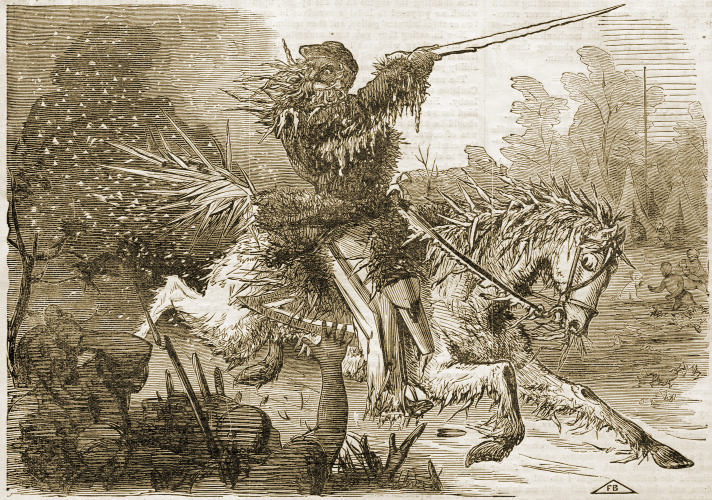
19th-century cartoon depicting Jack Frost

“Most Americans think that illegal immigration is bad but legal immigration is good. A slow start to awakening White Americans. It doesn’t do much good if we let them come here legally and they still go on welfare, do poor in school and commit crimes.”

Even more Americans think that assimilation is good and failure of immigrants to assimilate is bad. But actually, though it might, at least in the short term, be good for civilization, assimilation would only speed race mixing and hasten the extinction of the white race.

This is rather obvious, but whites don’t seem to mind.

An examination of history will show that whites are actually much more loyal to the civilization they’ve built than they are to their own existence as a race. Forced to choose between the two, they invariably try to preserve their civilization at the expense of race.

For example, the states they have built, which are the political form of this civilization takes, promote racial equality as a matter of good public policy, in order to minimize disruptions to the system caused by racial friction, while at the same time making the best use of human capital.

That such an arrangement spells the doom of discrete races is built in, but it’s apparently a result to which whites, some of them albeit reluctantly, have become reconciled. Certainly it’s a result which the Christian religion, with its teachings of racelessness, the moral value of self-sacrifice, and fanatic belief in a continued life after death, has amply prepared them to accept.

Categories
Catholic Church Protestantism Table talks

Uncle Adolf’s table talk, 85

the-real-hitler


8th February 1942, midday

The solution of the religious problem.


The evil that’s gnawing our vitals is our priests, of both creeds. I can’t at present give them the answer they’ve been asking for, but it will cost them nothing to wait. It’s all written down in my big book. The time will come when I’ll settle my account with them, and I’ll go straight to the point.

I don’t know which should be considered the more dangerous: the minister of religion who play-acts at patriotism, or the man who openly opposes the State. The fact remains that it’s their manœuvres that have led me to my decision. They’ve only got to keep at it, they’ll hear from me, all right. I shan’t let myself be hampered by juridical scruples. Only necessity has legal force. In less than ten years from now, things will have quite another look, I can promise them.

We shan’t be able to go on evading the religious problem much longer. If anyone thinks it’s really essential to build the life of human society on a foundation of lies, well, in my estimation, such a society is not worth preserving. If, on the other hand, one believes that truth is the indispensable foundation, then conscience bids one intervene in the name of truth, and exterminate the lie.

Periods that have endured such affronts without protesting will be condemned by people of the coming generations. Just as the pyres for heretics have been suppressed, so all these by- products of ignorance and bad faith will have to be eliminated in their turn.

Categories
Catholic Church Table talks

Uncle Adolf’s table talk, 88

the-real-hitler


Night of 19th-20th February 1942

The perversity of education—Regrets for the help given to Spain.
 
 
No sooner do we land in a colony than we install children’s crèches, hospitals for the natives. All that fills me with rage. White women degrading themselves in the service of the blacks. On top of that we have the shavelings shoving their oar in, with their mania for making angels! Instead of making the natives love us, all that inappropriate care makes them hate us.

From their point of view, all these manifestations are the peak of indiscretion. They don’t understand the reasons for our behaviour, and regard us as intolerable pedants who enjoy
wielding the policeman’s truncheon.

In Rome there are priests who spend their time in measuring the length of women’s sleeves and skirts and in checking whether these women have head-dresses. If God cared about such trifles, he’d have created man already dressed! The idea of nakedness torments only the priests, for the education they undergo makes them perverts.

If there hadn’t been the danger of the Red peril’s overwhelming Europe, I’d not have intervened in the revolution in Spain. The clergy would have been exterminated. If these people regained power in Germany, Europe would founder again in the darkness of the Middle Ages.

Categories
Art Christendom Degenerate art Music Table talks

Uncle Adolf’s table talk, 89

the-real-hitler


Night of 20th-2ist February 1942

The spirit in peril—The observatory at Linz—
The fight against falsehood, superstition and intolerance.


Christianity is the worst of the regressions that mankind can ever have undergone, and it’s the Jew who, thanks to this diabolic invention, has thrown him back fifteen centuries. The only thing that would be still worse would be victory for the Jew through Bolshevism. If Bolshevism triumphed, mankind would lose the gift of laughter and joy. It would become merely a shapeless mass, doomed to greyness and despair.

The priests of antiquity were closer to nature, and they sought modestly for the meaning of things. Instead of that, Christianity promulgates its inconsistent dogmas and imposes them by force. Such a religion carries within it intolerance and persecution. It’s the bloodiest conceivable.

In their fight against the Church, the Russians are purely negative. We, on the other hand, should practise the cult of the heroes who enabled humanity to pull itself out of the rut of error. Kepler lived at Linz, and that’s why I chose Linz as the place for our observatory. His mother was accused of witchcraft and was tortured several times by the Inquisition.

There’s no greater privilege, in my view, than to play the part of a patron of the arts or the sciences. Men would certainly have regarded it as a vast honour to be allowed to encourage the career of a man like Richard Wagner. Well, it’s already a great deal gained that people like him are no longer burned alive!

I shall not cease to think that the most precious possession a country can have is its great men. If I think of Bismarck, I realise that only those who have lived through 1918 could fully appreciate his worth. One sees by such examples how much it would mean if we could make the road smooth for men of talent.

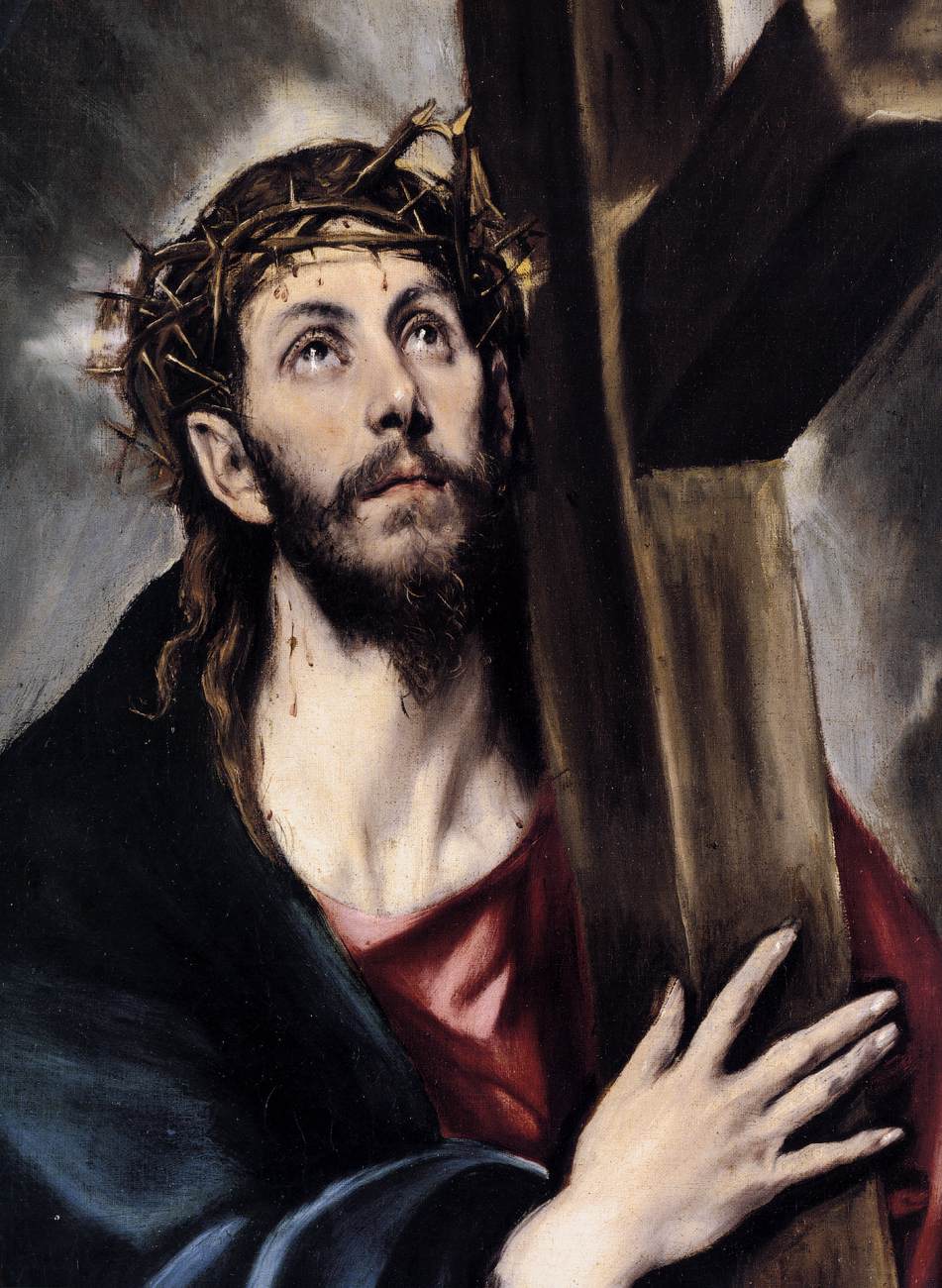
It’s only in the realm of music that I can find no satisfaction. The same thing is happening to music as is happening to beauty in a world dominated by the shavelings—the Christian religion is an enemy to beauty. The Jew has brought off the same trick upon music. He has created a new inversion of values and replaced the loveliness of music by noises. Surely the Athenian, when he entered the Parthenon to contemplate the image of Zeus, must have had another impression than the Christian who must resign himself to contemplating the grimacing face of a man crucified.

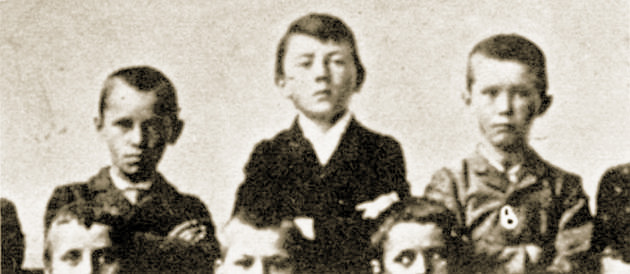
Since my fourteenth year I have felt liberated from the superstition that the priests used to teach. Apart from a few Holy Joes, I can say that none of my comrades went on believing in the miracle of the eucharist.

The only difference between then and now is that in those days I was convinced one must blow up the whole show with dynamite.

Categories
Christendom Democracy Egalitarianism Table talks

Uncle Adolf’s table talk, 94

the-real-hitler


20th February 1942, midday

The last somersaults of Christianity.


The people who call themselves democrats blame us for our social policy as if it were a kind of disloyalty: according to them, it imperils the privileges of the owning classes. They regard it as an attack on liberty; for liberty, in their view, is the right of those who have power to continue to exercise it. I understand their reaction very well—but we had no choice. National Socialism is a purely German phenomenon, and we never intended to revolutionise the world. It was enough for us to be given a free hand in Russia and to be offered a few colonies.

One can’t, in fact, bridge the gap that exists between rich and poor merely with the consolations of religion. In virtue of what law, divine or otherwise, should the rich alone have the right to govern? The world is passing at this moment through one of the most important revolutions in human history. We are witnessing the final somersaults of Christianity. It began with the Lutheran revolution.

The revolutionary nature of that rebellion lies in the fact that until then there had been only one authority, on both the spiritual and the temporal level, that of the Pope—for it was he who delegated temporal power. Dogma cannot resist the ceaselessly renewed attacks of the spirit of free enquiry. One cannot teach at ten o’clock in the morning truths which one destroys in the eleven o’clock lesson.

What is ruining Christianity to-day is what once ruined the ancient world. The pantheistic mythology would no longer suit the social conditions of the period. As soon as the idea was introduced that all men were equal before God, that world was bound to collapse.

Categories
Catholic Church Christendom Table talks

Uncle Adolf’s table talk, 96

the-real-hitler


27th February 1942, midday

On Christianity and Catholicism.


Even amongst those who claim to be good Catholics, very few really believe in this humbug. Only old women, who have given up everything because life has already withdrawn from them, go regularly to church. All that’s dead wood—and one shouldn’t waste one’s time in concerning oneself with such brains.

That little country girls and simple working men should be set dancing to that tune, that’s a thing that can be explained. But that intelligent men should make themselves accomplices to such superstitions, and that it’s because of these superstitions, and in the name of love, that hundreds of thousands of human beings have been exterminated in the course of history—that is something I cannot admit.

I shall never believe that what is founded on lies can endure forever. I believe in truth. I’m sure that, in the long run, truth must be victorious.

I shall never come personally to terms with the Christian lie. In acting as I do, I’m very far from the wish to scandalise. But I rebel when I see the very idea of Providence flouted in this fashion. It’s a great satisfaction for me to feel myself totally foreign to that world.

I adopted a definite attitude on the 21st March 1933 when I refused to take part in the religious services, organised at Potsdam by the two Churches, for the inauguration of the new Reichstag.

As far as I’m concerned, I act according to my convictions. I don’t prevent anyone from praying silently, but I’ rebel against all blasphemy. So let nobody waste prayers on me that I shall not have asked for. If my presence on earth is providential, I owe it to a superior will. But I owe nothing to the Church that traffics in the salvation of souls, and I find it really too cruel. I admit that one cannot impose one’s will by force, but I have a horror of people who enjoy inflicting sufferings on others’ bodies and tyranny upon others’ souls.

Our epoch will certainly see the end of the disease of Christianity. It will last another hundred years, two hundred years perhaps. My regret will have been that I couldn’t, like who-ever the prophet was, behold the promised land from afar.

What is important above all is that we should prevent a greater lie from replacing the lie that is disappearing. The world of Judaeo-Bolshevism must collapse.

Categories
Quotable quotes Universalism

Universalism

Paradiso_Canto_31

“Until Whites get rid of universal morality
they will be forever lost.”

Fender

Categories
Friedrich Nietzsche Solitude

Solitude

Below, my comments of the ten threads about Nietzsche’s
prologue to Thus Spoke Zarathustra in a single entry:


1

Visitors will be surprised to learn that a Spanish edition has more detailed endnotes than the academic English translation of Nietzsche’s magnum opus.

This is because Spaniards are fed up of Catholicism. North Americans have a few centuries experimenting with Christianity. Spain has more than a millennium and a half, and our parents’ religion is on its last dying breaths there.

Andrés Sánchez-Pascual’s scholarly translation of Nietzsche’s books since the early 1970s became so popular that over the decades he has received hundreds of letters from his Spanish-speaking readers. The book’s edition of Así Habló Zaratustra that I purchased this month for example (I lost the old copies that I used to read sporadically in the 1970s and 80s) is its twentieth edition.

So fed up of Catholicism are Spain’s thinking classes that, again, the copies I bought of Karlheinz Deschner’s Kriminalgeschichte des Christentums which introduction appears in my compilation The Fair Race’s Darkest Hour, were translated to Spanish for an audience unexpectedly avid of this sort of extraordinarily scholarly material (Deschner’s maximum opus has yet to be translated to English).

Another example. Manu Rodríguez, who has had a place of high honor in this site and in The Fair Race, is also an avid reader of Sánchez-Pascual’s translations of Nietzsche. Thanks to his revaluation of Christian values, Rodríguez overcame his original prejudice against National Socialism in his later posts of La Respuesta de Europa. With the exception of non-Christian geniuses like Revilo Oliver and William Pierce, I have not seen such a metamorphosis of the mind in most of the English-speaking racialists.
 

2

“Could it be possible! This old saint in his woods has not yet heard the news that God is dead!

This is one of the most quoted passages of Nietzsche’s literature. I abandoned theism long ago. Presently I don’t believe in the existence of a personal god, let alone in the existence of the Jewish god (which would be absolutely dead in the heart of any fanatic of the 14 words if the white nationalist “movement” was not all bluff). That doesn’t mean that I’m an atheist, as Hegel and other philosophers of Classic German Idealism developed a new understanding of God: panentheistic views that I am not prepared to dismiss.

The theological issues of Zarathustra’s encounter with the old hermit aside, I’d rather say something about the soliloquy in the previous post of this fictional character, something related to the very meaning of this blogsite.

The darkest hour is just before the dawn. In the endnotes about the opening soliloquy in Nietzsche’s book, Andrés Sánchez-Pascual interpreted the term Untergehen as follows: “By sinking into his decline, like the sun, Zarathustra moves to the other side. ‘Passing to the other side’ means surpassing oneself and becoming the Overman.”

This is what nationalists have failed to do, and was the message of the last pages of my compilation The Fair Race’s Darkest Hour: white nationalism as a stepping stone at the middle of a river, not as the promised land itself which is beyond the rapid waters.

That was my metaphor.

As to Nietzsche’s metaphor, we could say that today’s whites, including Christian and libertarian white nationalists, have yet to “sink themselves into their sunsets.” Some force may be with them but they’re not overmen yet; they have not surpassed themselves as Hitler’s SS men did (always keep in mind my “Where are the Syssitias?”).

The purpose of this blogsite is to prepare a few metamorphosing men, those in the process of “passing to the other side” (Übergang) from the soul’s darkest night into the coming dawn of the fair race.
 

3

I don’t claim to have reread the Zarathustra since my adolescent infatuation with Nietzsche. But these are surely the words that made a very powerful impression in my mind since my first reading:

“I teach you the Overman. Human being is something that must be overcome. What have you done to overcome him?

What is the ape to a human? A laughing stock or a painful embarrassment. And that is precisely what the human shall be to the Overman: a laughing stock or a painful embarrassment.

You have made your way from worm to human, and much in you is still worm. Once you were apes, and even now a human is still more ape than any ape.

Behold, I teach you the Overman!

The Overman is the meaning of the earth. Let your will say: the Overman shall be the meaning of the earth!”

The passage “…and you want to be the ebb of this great flood and would even rather go back to animals than overcome humans?” nails perfectly contemporary whites.

This is exactly what they are doing to themselves—white nationalists included, so reluctant to fight (or preparing to fight by saving precious metals before the dollar crashes). As Jack Frost has asked the clueless, feminized males of The Occidental Observer more than once, “Where’s the resistance?” to the anti-white, exterminationist System. Where are the cells for would-be soldiers that treasure William Pierce’s three books as their New Tablets?

I see none of it. And many Jew-wise nationalists are themselves etnosuicidal because they simply ignore that Christianity inverted healthy values—negative values that they themselves subscribe! Cowardice similar to this in the 19th century explains why Nietzsche’s Zarathustra gives the biblical verse an antithetical sense from the original.
 

4

Now Zarathustra looked at the people and he was amazed. Then he spoke thus: “Mankind is a rope fastened between animal and Overman – a rope over an abyss. What is great about human beings is that they are a bridge and not a purpose: what is lovable about human beings is that they are a crossing over and a going under.”

Again, this brings in mind my metaphor of the bridge. This is what I wrote in the final essay of The Fair Race: “White nationalism is only a stone at the middle of the rapid-flowing waters of a dangerous river; a stepping stone that can help us in our endeavor to jump to the other side. I myself used that stone during my crossing from Christianity and Liberalism to National Socialism. In fact, I could even write such a spiritual odyssey in a text that might be titled ‘From St Francis to Himmler’.” But no American white nationalist today is prepared to wear a T-shirt of Herr Himmler, not even in the privacy of their homes.

“I love the great despisers, because they are the great venerators and arrows of longing for the other shore. I love those who do not first seek behind the stars for a reason to go under and be a sacrifice, who instead sacrifice themselves for the earth, so that the earth may one day become the Overman’s. I love the one who lives in order to know, and who wants to know so that one day the Overman may live. And so he wants his going under.” [sinking in his sunset according to Sánchez-Pascual]

This cannot contrast more with today’s white nationalists, so reluctant to sacrifice themselves as Rockwell did. They want it both ways: enjoy their homely comfort zones and try to “save” the race from the ongoing extermination.
 

5

In Ecce Homo Nietzsche wrote:

In this sense Zarathustra first calls the good “the last men”… He finds them the most harmful kind of man, because they secure their existence at the expense of truth just as they do at the expense of the future.

Do “the last men” sound like contemporary whites overwhelmed with guilt? But white nationalists are the Overman’s “last men” too. Think for example of the voices from those self-righteous, Christian and atheist nationalists who recently called a lone wolf “an evil sociopath” in Dixie, basically subscribing the meme “black lives matter.”

White- or Southern nationalism is phony, was phony and will be phony until societal collapse forces the survivors to grow a hairy pair. This is Pierce’s Diaries: “His forehead was then marked with an indelible dye, and he was turned out and could be readmitted permanently only by bringing back the head of a freshly killed Black or other non-White.”
 

6

Just for the record, about 150,000 copies of a specially durable wartime Zarathustra were distributed to the German troops during the First World War.
 

7

“A nice catch of fish Zarathustra has today! No human being did he catch, but a corpse instead!” looks like me trying to convey Nietzsche’s message to a dead race!
 

8

“I want to teach humans the meaning of their being, which is the Overman, the lightning from the dark cloud ‘human being’.”

For some unfathomable causes, this sentence from the previous section, Prologue §7, reminded me my identification with the art of the pre-Raphaelites and Maxfield Parrish. One of the inner realities that distances me from white nationalists is that they don’t seem to love this 14-words art (“That the beauty of…”) as much as I do.
 

9

“It dawned on me: I need companions, and living ones – not dead companions and corpses that I carry with me wherever I want.”

Just what happened to me during my experience in counter-jihad: after these guys didn’t want to hear about the Jewish problem it was like I had to get rid of their corpses—dead companions. But it also happened to me in white nationalism! After these guys didn’t want to hear about the Christian problem it was like I had to get rid of their corpses.

“It dawned on me: let Zarathustra speak not to the people, but instead to companions!”

Pierce did something similar after the calamity of Rockwell’s murder: instead of speaking to the masses he predicated to a smaller group of companions.

“Look at the good and the just! Whom do they hate most? The one who breaks their tablets of values, the breaker, the lawbreaker – but he is the creative one.”

Hitler was the creative one. Read his table talks.

“Companions the creative one seeks and not corpses, nor herds and believers. Fellow creators the creative one seeks, who will write new values on new tablets.”

Less than a handful visitors of this blog share the moral grammar on my New Tablets…

“Fellow creators seeks Zarathustra, fellow harvesters and fellow celebrators Zarathustra seeks: what need does he have of herds and shepherds and corpses!”

…but still no one wants to become a priest of the 14 words in a latter-day “Syssitia” (like the one Rockwell had).

“I do not want to even speak again with the people – for the last time have I spoken to a dead person.”

Occasionally I still comment at The Occidental Observer but even that has to end—the commentariat and even the authors are clueless that Christian axiology enabled the Jewish problem and the Negro problem and the Mestizo problem and even the more recent empowerment of Asia.

“I shall join the creators, the harvesters, the celebrators: I shall show them the rainbow and all the steps to the Overman.”

Hitler and Pierce showed this rainbow but who among us really follows their revaluated axiology? Most white nationalists follow the Old Tablets; atheist nationalists share also the Christian moral grammar and even the neonazis have not really broken the Tablets.

“I want to go to my goal, and I go my own way; over the hesitating and dawdling I shall leap. Thus let my going be their going under!”

This describes me…
 

10

And so Nietzsche’s lyric prologue ends. Below, some snippets from the Cambridge introduction by Robert B. Pippin:

Zarathustra leaves his cave to revisit the human world because he wants both to prophesy and help hasten the advent of something like a new “attempt” on the part of mankind, a post “beyond” or “over the human” (Übermensch) aspiration. Such a goal would be free of the psychological dimensions that have led the human type into a state of some crisis (made worse by the fact that most do not think a crisis has occurred or that any new attempt is necessary).

The problem, then, that Zarathustra must address, the problem of “nihilism,” is a kind of collective failure of desire…

Nietzsche clearly thinks we cannot understand such a possibility, much less be both shamed and inspired by it, except by a literary and so “living” treatment of such an existential possibility. And Nietzsche clearly thinks he has such a chance, in the current historical context of crisis, collapse, boredom, and confusion, a chance of shaming and cajoling us away from commitments that will condemn us to a “last man” or “pale atheist” sort of existence, and of inspiring a new desire, a new “tension” of the spirit…

As noted, the problem Zarathustra confronts seems to be a failure of desire; nobody wants what he is offering, and they seem to want very little other than a rather bovine version of happiness. It is that sort of failure that proves particularly difficult to address, and that cannot be corrected by thinking up a “better argument” against such a failure.

The events that are narrated are also clearly tied to the question of what it means for Zarathustra to have a teaching, to try to impart it to an audience suffering in this unusual way, suffering from complacency or dead desire. Only at the very beginning, in the Prologue, does he try to “lecture publicly,” one might say, and this is a pretty unambiguous failure.

The reminder here of the Prologue appears to indicate that Zarathustra himself had portrayed his own teaching in a comically inadequate way, preaching to the multitudes as if people could simply begin to overcome themselves by some revolutionary act of will…

He had shifted from market place preaching to conversations with disciples in Part I, and at the end of that Part I he decides to forgo even that and to go back to his cave alone.

rosa_s_pak