web analytics
Categories
Moscow

The Führer’s monologues, 2

For the context of these translations click here,
for this monologue in German, here.

Führer Headquarters 5/6 July 1941, 11.30 a.m. – 1.50 a.m.

Conversation with [Nicolaus] v. Below[1] about whether we wouldn’t do well to publish pictures of the large-calibre gun, which had not yet been shown, now for once, for the moral shaking of the enemy. Long general discussion about car engines: the Führer’s first and later cars. [Hitler also said:]

The beauty of Crimea is made accessible to us by a motorway: the German south. Crete is hot and forestless. Cyprus would be nice, but we reach Crimea by road—Kiev. And our destination: Croatia. ‘I think there will be great joy after the war’.

Better than the railway, which is somewhat impersonal, the motor car will connect the peoples. What a factor on the way to the new Europe! Just as the autobahn [federal controlled-access highway system in Germany] made the inner-German borders disappear, the borders of the European countries will be abolished.

When asked whether it would be enough to have advanced as far as the Urals as a frontier, [I reply that] it will be enough to have advanced the frontier as far as there. Bolshevism must be eradicated; if necessary, to this end we would advance from there to wherever a new centre of resistance is forming. Moscow as the seat of this doctrine will disappear from the face of the earth as soon as the valuable goods are taken away. It won’t be possible for us to work with the Russians in the factories there. St. Petersburg [Leningrad] as a city is incomparably more beautiful than Moscow. This time, the art treasures of The Hermitage [Museum] would probably not have been transferred to the Kremlin—as in the [First] World War—but to houses in the countryside, unless they’ve been taken to the cities east of Moscow or by sea.

________

[1] Nicolaus von Below was Hitler’s Luftwaffe adjutant, last in the rank of Major General.

Categories
Charles Darwin Exterminationism Hitler's Religion (book) Richard Weikart

Hitler’s Religion: Chapter 9

One of the most serious objections lodged against the interpretation of Hitler as a pantheist is his use of the term “Creator” in his writings and speeches. Hitler occasionally referred to an Almighty Creator or Eternal Creator, and he sometimes asserted humans were made in the image of God. If Hitler believed in a God who created nature as a distinct entity, separate from himself as deity—as monotheistic religions have traditionally taught—then he would not be a pantheist. He would most likely be a deist, since he generally spurned the idea that God intervened miraculously in history.

In his speech to the 1935 Nuremberg Party Congress, Hitler called God “the Creator” of the German Volk. However, he also implied that God would not intervene miraculously on behalf of his chosen people. They would have to work and fight to gain the Almighty’s favor and blessing. Hitler stated, “In the long run God’s favor will be given only to him who deserves it. He who speaks and acts in the name of a people created by the Almighty continues to act under this commission so long as he does not sin against the substance and the future of the work of the Creator that has been placed in his hand. Therefore it is good that the conquest of power is always bound up with hard fighting.” Hitler’s God was not one who intervened super-naturally in historical developments. Rather, he rewarded people according to the way they worked and fought. God did not break into the cause and effect relationship governed by natural law.

In January 1943, Hitler again called God “Creator” yet implied this version was not a miracle-working deity; rather, he expected humans to make their own way in the world… “In this mightiest struggle of all time, we cannot expect that Providence give us victory as a present. Each and every people will be weighed, and what is judged too light will fall.”
 

______ 卐 ______

 
Editor’s note: If this is true, and I believe it is, American white nationalism will fall: it is too timid an intellectual movement.


______ 卐 ______

 
God’s judgment is thus not a decision of a personal deity but the result of natural causation: those who work hard and fight bravely win. It is also interesting to note that, according to this speech, one of the things Hitler’s God established was the Darwinian law of the struggle for existence…

Hitler explicitly rejected the creation stories of the Judeo-Christian tradition. Finally, Hitler embraced an evolutionary account of the origins of humanity.

Let’s explore these last two points in greater depth. Never did Hitler express belief in the biblical creation story—which, after all, derived from the Jewish scriptures. (We have already seen that Hitler’s anti-Semitism led him to spurn the Old Testament as a Jewish document.) He obviously did not embrace young-earth creationism (which is what most Americans mean today when they use the term creationism), since on quite a few occasions he mentioned the earth existing for hundreds of thousands, or even millions, of years. For example, in Mein Kampf, he warned pacifists that their naiveté would have disastrous consequences, because “this planet once moved through the ether for millions of years without human beings and it can do so again some day if men forget that they owe their higher existence, not to the ideas of a few crazy ideologists, but to the knowledge and ruthless application of Nature’s stern and rigid laws”…

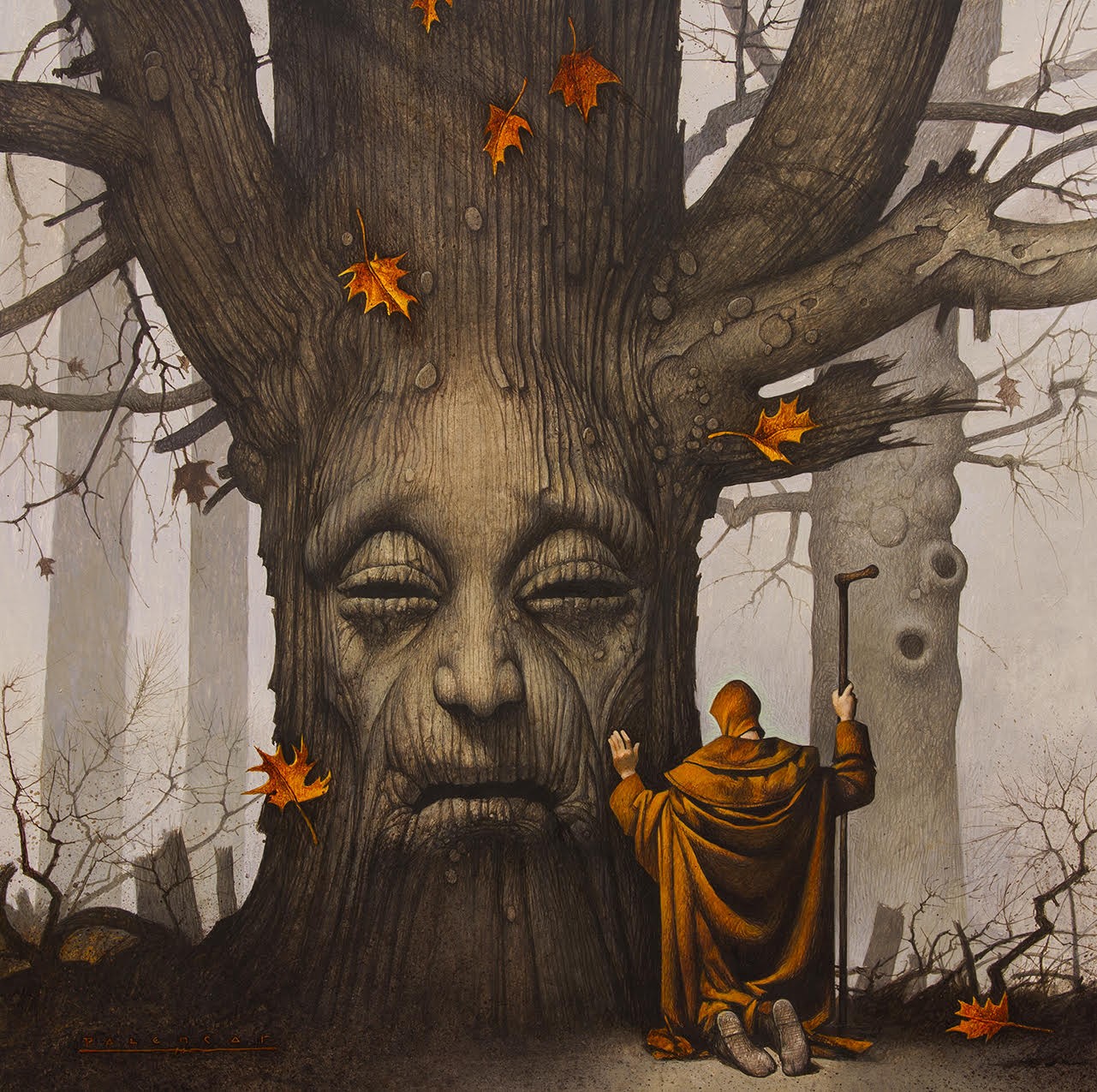
In general, Hitler regarded the Old Testament creation stories as delusional inventions of the Jewish mind. On October 24, 1941, Hitler spoke at great length to his entourage about the controversy between science and religion, and specifically between evolution and Christianity. Hitler opened this lengthy monologue on evolution by claiming that the church’s teachings are contrary to modern research. In fact, as Hitler expounded on this science-religion controversy, he clearly came down on the side of science and bashed the church, asserting, “The definition of the church is a misuse of the creation for earthly purposes.” He also divulged his pantheistic tendencies: “Whoever sees God only in an oak or in a tabernacle and not in the Whole, cannot be pious deep inside; he remains stuck in the outward.” In addition, Hitler praised the French Enlightenment thinkers’ anticlericalism and the progress of science. After expostulating on the glories of science and the ignorance of the church, Hitler pronounced his belief in the evolution of humans. He stated, “There have been humans at the rank at least of a baboon in any case for 300,000 years at least. The ape is distinguished from the lowest human less than such a human is from a thinker like, for example, Schopenhauer”…
 

______ 卐 ______

 
Editor’s note: Just what I meant in my previous post, ‘On the hermit’s cave’.

______ 卐 ______

 
[Hitler’s secretary Christa] Schroeder confirmed in considerable detail that Hitler believed in human evolution through the process of struggle and selection. Two other associates of Hitler testify that belief in Darwinian evolution was integral to his ideology. Wagener remembered a conversation in the summer of 1931 when Hitler professed, “Everywhere in life only a process of selection can prevail. Among the animals, among plants, wherever observations have been made, basically the stronger, the better survives”.

______ 卐 ______

 
Editor’s note: And the Jews are proving to be stronger than the Aryans because of the Christian malware in the latter’s head, the parasite that weakened them (compare today’s Aryans with what Flavian dynasty member Titus did in Jerusalem).
 

______ 卐 ______

 
This not only demonstrates Hitler believed in Darwinian natural selection, but it also suggests he saw the process as nonteleological, i.e., not directed by some deity. Wagener claimed that Hitler based his support for killing the weak and the sick on this vision of natural selection. Otto Dietrich generally concurred, stating that Hitler’s “evolutionary views on natural selection and survival of the fittest coincided with the ideas of Darwin and Haeckel.” Hitler was not an atheist, according to Dietrich, but believed in a Supreme Being who “had created laws for the preservation and evolution of the human race. He believed that the highest aim of mankind was to survive for the achievement of progress and perfection.” Thus, evolutionary thought was central to Hitler’s goals and policies.

In his two books, Hitler discussed evolutionary theory as vital to his theory of racial struggle and eugenics. Several times throughout Mein Kampf, he specifically employs the term “struggle for existence” (“Kampf um das Dasein”); in fact, the phrase or its plural appears three times in a passage several pages long where Hitler described why the Germans should be both pro-natalist and expansionist. Historian Robert Richards, however, inexplicably claims that Hitler’s views in this passage are un-Darwinian, because—according to Richards—a Darwinian should supposedly want population expansion only within restricted borders, which would allow the fit to triumph over the unfit. Richards argues expanding into new territory would lessen the struggle, allowing the fit and less fit “to have fairly equal chances.”

Richards, however, miscalculates here because he leaves out one of the most important factors in Hitler’s reasoning: the living space (Lebensraum) is to be taken from allegedly inferior races. Thus, expanding is part of the Darwinian racial struggle that allows the allegedly fitter Nordic race to outcompete allegedly inferior races. Contra Richards, Hitler’s discussion makes perfect sense in a Darwinian world if unequal races are waging a struggle for existence. In fact, the whole idea of Lebensraum was first formulated by Friedrich Ratzel, a Darwinian biologist who later became a geographer. In addition, many pro-natalist eugenicists with impeccable Darwinian credentials, such as Alfred Ploetz or Max von Gruber, agreed with Hitler’s position on expansionism (indeed, they may have influenced Hitler in this matter).
 

______ 卐 ______

 
Editor’s note: On the following pages (231-236) of Hitler’s Religion, pages containing a very important quotation from Hitler’s second book, we see that Hitler understood Darwinism perfectly.

The point is that this Darwinism will lead us to our exterminationist philosophy (remember what Darwin himself believed would be the fate of coloured people). Weikart continues:


______ 卐 ______


In June 1944, Hitler explained his views on war to an audience of army officers in a remarkably candid speech. He opened it by basing his philosophy of war on natural law:

“Among the processes that are essentially immutable, that remain the same throughout all time, and that only change in the form of the means applied, is war. Nature teaches us with every gaze into its workings, into its events, that the principle of selection dominates it, that the stronger remains victor and the weaker succumbs. It teaches us that what often appears to someone as cruelty, because he himself is affected or because through his education he has turned away from the laws of nature, is in reality necessary, in order to bring about a higher evolution of living organisms”.

Hitler then insisted that humans must follow the ways of nature, not the allegedly misguided path of humanitarians. If they pursue humanitarianism, Hitler warned, they will be supplanted by other organisms that take the struggle seriously.
 

______ 卐 ______

 
Editor’s note: Instead of ‘humanitarians’ or ‘humanitarianism’, the Christian author of this book didn’t dare to write simply ‘Christians’ or ‘Christianity’. If the ancient Romans would have had weapons of mass destruction and survived the next centuries instead of succumbing to Christianity, we can already imagine the fate of the Huns, the nascent Muslims or the Mongol invaders.
 

______ 卐 ______

 
As I have demonstrated above, Hitler did indeed believe in human evolution. It was not a peripheral element of his worldview, either. It helped shape his understanding of the human struggle for existence, natural selection among humans and human races, eugenics, pronatalism, killing the disabled, and expansionism. Of course, Hitler’s evolutionary views were synthesized with many other influences, such as anti-Semitism and nationalism; it was by no means the sole influence on his ideology or policies.

But in addition to all the times Hitler explicitly broached the topic of human evolution, he even more frequently discussed the racial struggle for existence, the struggle for existence within the Nordic race, natural selection, and many other Darwinian themes. He often abbreviated these terms as “racial struggle,” “struggle,” and “selection,” just as many of his contemporaries, including biologists and eugenicists, did, but key issue here is the concept, not the exact terminology. When Hitler spoke about the “selection” of the strongest organisms and the elimination of the weakest, it did not matter whether he used the exact term “natural selection” (though he did at times). He was obviously describing it, and that is the crucial issue…

“The ape is distinguished from the lowest human less than such a human is from a thinker like, for example, Schopenhauer.” In a 1933 speech at the Nuremberg Party Rally, he stated, “The gulf between the lowest creature which can still be styled man and our highest races is greater than that between the lowest type of man and the highest ape.” These last two comments paraphrase statements Haeckel made in many of his works; two examples are “the difference between the lowest primitive humans and the highest evolved cultured humans is in this respect greater than that between the former and the apes” and “the differences between the highest and the lowest humans is greater than that between the lowest human and the highest animal.”

______ 卐 ______

 
Editor’s note: Emphasis in the original. I hope that by now you understand my iterated statement on this site about “the extermination of the Neanderthals”: something I have been telling myself for decades in the cave but only in recent years dared to divulge.

______ 卐 ______

 
Hitler asserts, “Nature knows no political boundaries. First, she puts living creatures on this globe and watches the free play of forces. She then confers the master’s right on her favorite child, the strongest in courage and industry.” In other words, nature is the source of living organisms—not some Creator God—and lets these organisms fight it out among themselves. Nature is not actively intervening or doing miracles but rather allowing its laws to prevail.

Categories
Jesus Richard Carrier

‘You’re almost there!’

As the fourth chapter of Richard Weikart’s book made clear, Hitler was aware of the theme that Nietzsche (before Hitler) and Evropa Soberana (after Hitler) called Rome against Judea; Judea against Rome: a subject so important that we have called the masthead of this site.

Hitler had all the right instincts to understand the subject. Nevertheless, his view of Jesus, as it appears in that Weikart chapter, evokes Christian Identity: people incapable of breaking away altogether from the old paradigm, to the extent of producing naïve pseudo-history (or naïve pseudo-biography, in the case of Jesus).

Hitler’s apostasy from Christianity was almost absolute, in that not only the dogmatic part of Christianity was rejected, but the axiological part as well. He was almost there. But his apostasy wasn’t absolute. As Savitri said, it is necessary for the Avenger to come, who, I would add, will no longer harbour in his mind residues of Judeo-Christian introjects, but will see things even more clearly thanks to the heart tree that allows him to see the past, to the extent of realising that Jesus never existed.

If we compare all the quotes about Jesus from Hitler’s mouth that we read in Weikart’s book, we will see that Hitler’s imaginary Jesus was, from the point of view of Aryan interests, inferior to the Jesus of Evropa Soberana: who depicts Jesus simply as a zealot executed by the Romans. (Interestingly, that Jesus resembles the Jesus of the first modern exegete, Reimarus, whom we have discussed on this site.)

But we can use Carrier’s non-existent Jesus as a final step in our crossing of the psychological Rubicon. As I said to a disciple of that author, Carrier is not a full apostate in that axiologically he is still Christian (love thy neighbour even if he is black, Jewish or Chinese, etc.). Only by intellectually assimilating Carrier’s legacy of the non-historical Jesus, but unlike him transvaluing Christian ethics, will we have reached dry land, the other side of the river.

Categories
David Irving

The Führer’s monologues (vi)

A detailed discussion of the content of Hitler’s monologues can be dispensed with in this context given the extensive recent Hitler research. However, even in the context of a brief sketch, references to facts that belong to the secured state of knowledge cannot be avoided.

First and foremost, Hitler bears witness to himself in his discussions, especially during the long evening and night hours when he spoke his thoughts ‘into the impure’. The man who was at the zenith of his power, who dominated large parts of Europe and directed the deployment of his armies in Russia, who could look back on a series of steady successes lasting more than ten years until the crisis of the winter of 1941/42, undoubtedly possessed high intellectual abilities. With his present knowledge in the field of military affairs, armament and technology, he always made a strong impression on those around him. This was no less true for problems of art and especially history and politics. On the other hand, he showed much less interest, as a long-standing confidant confesses, in questions of the ‘humanistic field of knowledge’.[1] Thanks to his extraordinary memory and remarkable knowledge of literature, Hitler achieved insights and findings in specialised fields that commanded the respect of many experts. He was usually superior to them in his ability to grasp the core of a problem immediately and to reduce complicated relationships to a simple denominator. Above all, Hitler not only knew but, according to the testimony of Grand Admiral Raeder, ‘formed views and judgements from it that were often remarkable’.[2] He was able to think in large contexts and was in many respects far ahead of his advisers, for example on the question of motorizing the German army.[3]

Hitler’s monologues at his headquarters bear witness to these abilities only to a limited extent. Examples are his terse remarks on questions of environmental protection, the warning against the consequences of unrestrained exhaustion of the earth’s reserves of raw materials (Monologue 1), the demand for better utilisation of the countries’ natural resources (15, 16), or even the realisation, by no means common at the time, that the automobile would overcome borders and link peoples together more strongly than before.

For Hitler, motorisation was an important step ‘on the way to a new Europe’ (2). The correctness of these and other insights are not affected by the fact that he hindered this development through his policies. Knowledge, worldview and political practice collided.

The extent to which the ‘Führer and Reich Chancellor’ was aware of this tension will not be clear. Even during his monologues at the Führer’s headquarters, he never forgot the necessary restraint regarding his intentions and plans. Even in the smallest of circles he did not betray any secrets, did not reveal doubts or uncertainty. At no time did he weigh up the pros and cons with his advisors before making major decisions, nor did he make it clear what the motives were for his actions in concrete political and military situations.

Heim’s notes testify to Hitler’s great self-control, but also his suspicious reserve. The guests at the table were given no indication of the information coming from Germany and abroad, how the German people reacted to the sacrifices and deprivations, and what repercussions the severe crisis of the winter of 1941/42 had on the population of the occupied territories and the allied states. In general, Hitler’s thoughts were far more on the past or the future than the present. With great willpower, he repressed the problems and worries of everyday life at the dinner table and acted as an attentive host, casually talking about Bruckner and Brahms or appropriate nutrition or reporting on events or figures from the early days of the NSDAP.

In this behaviour, however, another trait of Hitler’s becomes visible. He was not a political pragmatist who concentrated on solving the issues of the day, but the representative of a world view that he wanted to help to achieve victory. That is why he looked to the future, especially in times when a lot was coming at him. Convinced that he knew the ‘eternal law of nature’ (117) and that his mission was to help it come to fruition, he made great efforts to free himself from burdens and difficulties, to defy resistance and often even facts that did not fit into his concept. He knew very well the limits imposed on human action, but believed that through energy, especially through an unshakeable and uncompromising belief in his mission, he could push them far out and force people as well as powers under his spell.

Hitler was convinced that the epoch of the bourgeoisie was over and that the bourgeois nation-states would not survive the war. In his opinion, in the world war of the present day, they would inevitably disintegrate—since they lacked inner strength and a unifying force—and the vital and unconsumed layers of the nations would then strengthen the camp that fought with particular determination and faith. Just as National Socialism had prevailed in the internal political struggle against far superior forces of the parties and the means of the power of the state, so it had to assert itself in the war with the utmost determination and readiness to believe. Not the superior weapons, but the more devout fighters would ultimately bring about the decision.

On 27 January 1944, Hitler very clearly and firmly told the field marshals and commanders that it was precisely this devout readiness of each soldier that mattered. ‘It is completely unknown to many’, he declared, ‘how far this fanaticism goes, which in the past moved so many of my party comrades to leave everything behind them, to allow themselves to be locked up in prisons, to give up a profession and everything for a conviction… Such a thing has only happened in German history in the time of the religious wars, when hundreds of thousands of people left their homes, farm and everything and went far away, poor as church mice, although they had previously been wealthy people—out of a realisation, a holy conviction. That is the case again today’.[4]

There is no doubt that the National Socialists had an advantage over the bourgeois parties of the Weimar Republic because of their readiness to believe and devote themselves. And Hitler certainly helped his party overcome defeats and serious crises by never giving up, showing confidence especially in difficult situations and thus lifting his followers. Part of his strength lay in this steadfastness and belief in his mission (32). In the same way, Hitler also tried to convey to the German people during the war the feeling of superiority and the conviction of final victory. This undoubtedly succeeded to a great extent, as long as the expectations did not contradict the realities. In the long run, however, willpower and strength of faith were not enough to withstand the growing pressure of the war opponents. Among the concrete power factors on the opposite side that became more and more apparent was the internal stability of the Soviet Union, the efficiency of the Red Army and the economic strength of the country, the unity and willingness to resist of the British population, the industrial potential of the USA, the will of the nations of Europe conquered by Germany to live and to be free.
 

______ 卐 ______

 
Note of the Editor: Free? Western nations today are slaves of an ethno-suicidal religion spawned by the Allies right after WW2!
 

______ 卐 ______

 
It cannot be assumed that Hitler failed to recognise these realities, as his statements in the Führer’s headquarters would lead one to believe. Even in the conversations in his inner circle, he did not lose sight of the psychological effect of his words. Remarks such as that the Americans are ‘the dumbest people imaginable’ (82), assertions about England’s growing difficulties (81, 88) or Germany’s perpetual superiority in weapons technology (84) were intended first and foremost to strengthen the self-confidence of those around him. He felt it necessary to counteract the sober assessments of the situation by his political advisers, who, in his opinion, inhibited the momentum of the soldiers and the population through their restraint and caution. Hitler was convinced that he had only achieved so much thanks to his ‘mountain-moving optimism’ (79).

More fundamental importance is attached to the statements on questions of domestic policy and worldview. The leader of the Third Reich was a bitter enemy of the revolution with its egalitarian and democratic driving forces. In his opinion, it was destructive and its bearers belonged to the negative selection of the people. Again and again one finds the assertion that the judiciary had nurtured criminality during the First World War, that in 1918 it was only necessary to open the prisons and already the revolution had its leaders (18, 52, 60). In other contexts, however, the achievements of the revolution are praised. It did away with the princes (20), broke up the class state, challenged the monopoly of the educated and propertied bourgeoisie and thus opened up opportunities for advancement to empower people from the lower classes (26, 50, 56). Sometimes even credit is given to the revolutionaries. Given the ‘stupid narrow-mindedness’ of the Saxon bourgeoisie, for example, the influx of workers to the KPD in that country was very understandable (13), just as communists like Ernst Thälmann generally elicited much more sympathy from him than aristocrats like the Austrian Prince Starhemberg (13), who had even taken part in the 1923 putsch in Munich in his entourage.

In all this, however, Hitler left no doubt in his discussions about how closely he felt bound to the nation-state tradition of the 19th and early 20th centuries and intended to complete what had been developed and propagated before him in the way of large-scale concepts and imperial ideas. However, he was convinced that he would only achieve this goal if he could rely on a broader, more powerful and more vital support class. The bourgeoisie and the old ruling classes seemed unsuitable for this. In unusually harsh terms, he criticised the former German ruling houses as well as the ruling princes of Europe (9, 20, 55), the nobility, the officer corps (13,28,31), the diplomats (121), civil servants and lawyers (14,48,130), the intellectuals and scientists. Again and again, the bourgeoisie in toto is accused of half-heartedness, cowardice and incompetence (13,20). The capitalist system is not spared either (15). ‘The economy’, Hitler declared bluntly, ‘consists everywhere of the same scoundrels, ice-cold money-earners. The economy only knows idealism when it comes to workers’ wages’ (39).

Well-known representatives of German industry and some bourgeois experts who heard such and even harsher statements by Hitler considered him a radical zealot or even a Bolshevik in disguise.[5] This view, however, does not get to the heart of the problem any more than the opposite view, which wants to conclude from words of appreciation for entrepreneurs and praise for the efficiency of the German economy and its promotion that Hitler was dependent on these circles. In these monologues there is no evidence that Hitler wanted to serve the interests of capital. He did not bind himself to any class, he hardly took into account the interests of certain groups and strata. In the National Socialist state, classes were to be eliminated and thus all the forces of the people were to be set free, and all sections of the population were to be given opportunities for advancement and activity. All groups were to be united in the Volksgemeinschaft, the national community a new higher unit.

However, since in the National Socialist Volksgemeinschaft the rights and functions of the social groups were not finally defined, nor were the NSDAP and its branches assigned any clearly defined tasks, it functioned as long as everyone derived advantage from it and saw part of their interests and demands realised. As the demands grew, there were signs of fatigue, resignation and communal refusals. Hitler increasingly found himself criticising state organs (107), civil servants (41, 59), judges (130, 177), party leaders and ministers for being too lenient towards individual and group interests. However, as long as there was still a basic consensus among the majority regarding the goals for which they were fighting, the state and party leader imposed his will unchallenged in all decisive questions.

That this succeeded so unreservedly was undoubtedly due to the dynamism that the leader of the NSDAP had unleashed in Germany. He did this based on the realisation that in times of social upheaval, economic and political change, authorities and institutions reacted too slowly and sluggishly, that experts in all fields had insufficient answers and solutions to offer, and that as a result of the confidence in the state and its organs was severely shaken. If unconventional methods were practised in such situations, if alternatives were developed with unused forces, then these would receive an advance of confidence from the outset. Hitler built on this. Through the establishment of special offices, the granting of special powers and special orders, the National Socialist regime gained a remarkable momentum, initially even a momentum that lasted in some areas into the first years of the war.
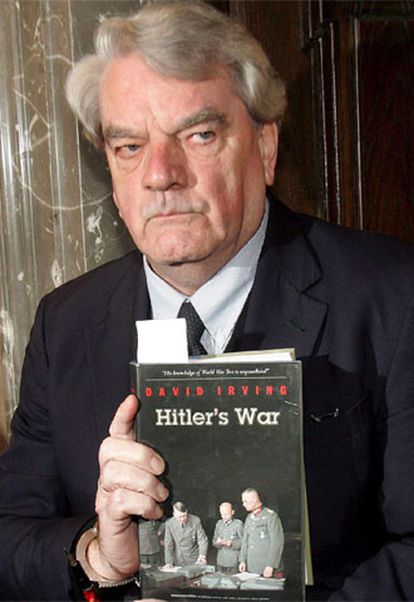
However, this process also caused considerable difficulties. A seemingly endless chain of competence disputes and rivalries developed, leading to friction, disorganisation and, in many cases, failure. Hitler, to secure the support of all forces for the speedy implementation of his plans, triggered this dynamic and held on to the system even when the disadvantages became openly apparent. David Irving concludes, therefore, that he was far from being the all-powerful leader and that his influence over those directly under him diminished, especially under the extreme stresses of war.[6] This thesis is correct insofar as Hitler’s will did not always and in all areas penetrate to the lowest state and party organs, and was also interpreted and understood differently due to a lack of ideological unity in the party. In the monologues presented here, he complains about the failure of the SA leaders (79), the high-handedness of individual Gauleiters, and the inadequate implementation of his orders. But it is wrong for Irving to conclude that the conduct of the war so absorbed Hitler’s strength and concentration that he left the areas of domestic and occupation policy to his responsible ministers and confidants, especially Himmler, Goebbels and Bormann. The reader of these monologues can convince himself of the opposite.

Without him, the Führer and Reich Chancellor believed, Germany could pack up (79), and important decisions had not been made (32). Hitler was also convinced of his indispensability at his headquarters; he was excellently informed and did not fail to intervene wherever he thought it necessary. He criticised clumsy formulations in an editorial by Reich Minister Goebbels, registered events in individual districts, paid attention to the promotion of the arts, forbade attempts at administrative simplification in the war, ordered the shooting of the arsonist of the ‘Bremen’, supervised and reprimanded the judgements of German courts, took note with indignation of the sermons of the Bishop of Münster. As the minutes of the Speer Ministry meetings and many other testimonies show, Hitler allowed himself to be informed down to the last detail and made his own decisions, especially in domestic matters. No one knew better than he that the war could only be fought if a majority of the people followed it, or at least accepted the inevitable. For this very reason, he devoted extraordinary attention to the tasks of domestic policy, especially domestic security.

Even more important is another consideration. Hitler waged the war because it was the consequence of his worldview: the living space of the German people was to be conquered and secured for many generations. He spoke about this very forcefully again and again in his headquarters. Only this gain of land would create the prerequisite for solving the social question. By offering each individual the opportunity to fully develop his abilities, the National Socialist programmer hoped to reduce or eliminate the tensions and rivalries in the community (140). In this war of worldviews, Hitler did not lose sight of the goals for which he was waging it. The most important was the consolidation of National Socialist supremacy in Europe and the expansion of German influence in the world. General questions of occupation policy in East and West, as well as cooperation with allied states and peoples, belonged in this context. In Hitler’s view, German rule could only be secured if it succeeded in winning over as many people of ‘Germanic blood’ in the world as possible (125). The prerequisite for strengthening one’s nationality, however, was the repression and elimination of all those who were considered inferior and alien to the community: Jews, Slavs, Gypsies and others. Finally, it was a question of suppressing the influence of those circles that did not recognise war as the ‘law of life of peoples’, that did not want to accept the ‘right of the strongest’ in social coexistence, nor race and descent as criteria in professional competition: Christians, Marxists, pacifists. In these areas Hitler never delegated responsibility, but reserved every fundamental decision for himself. Irving’s assertion that Hitler was not informed about essential measures precisely in this area, which was central to him, cannot be substantiated. An analysis of the monologues points’ in the opposite direction.

_____________

[1] Heinrich Hoffmann, Hitler, wie ich ihn sah. Munich-Berlin 1974, p. 160 f.

[2] Erich Raeder, Mein Leben. Vol. 2, Tübingen 1957, p. 110.

[3] Fritz Wiedemann, Der Mann, der Feldherr werden wollte. Velbert and Kettwig 1964, p. 102.

[4] Excerpts from this speech can be found in the appendix to the collection of Bormann’s Führer Talks.

[5] Walter Rohland – Bewegte Zeiten. Erinnerungen eines Eisenhüttenfachmanns (Memories of an Ironworks Expert). Stuttgart 1978, p. 82 reports on a statement of displeasure by Hitler during a meeting. Afterwards he had declared, ‘If only I had destroyed the entire intelligentsia of our people like Stalin, then everything would have been easier!’

[6] David Irving,. London 1977, p. XV.

Categories
Racial right

Uncle Adolf…

And as is typical of white nationalism, a couple of days ago they celebrated the ‘resurrection’ of a fictional Jew. But in their main forums, they never commemorate the birth day of the non-fictional Aryan who wanted to save their race.

That is American white nationalism in a nutshell.

The Daily Stormer’s new link

Since I mentioned yesterday in the hatnote of my previous post that Andrew Anglin’s site had been censored once again, I now feel compelled to put in his new address:

http://dailystormer.cn/

A few years ago, Anglin told me by email that TDS was ‘a site for normies’ (he even asked me to contribute articles to his site; this was before I went nuclear on the CQ). I think there is a lot of truth in that, as we see in the images Anglin chooses to entertain his young visitors.

In the case of this site, it is for the mature man who has crossed at least half the way of the psychological Rubicon. As we know, on the other side of the river is National Socialism, just as Uncle Adolf conceived it in his after-dinner talks.

Categories
Kali Yuga Miscegenation Souvenirs et réflexions d'une aryenne (book) Winston Churchill

Reflections of an Aryan woman, 99

What I am saying here about the decline of the Aryan is not confined to India. It is a fact observable in any country with a multiracial population, in which the State opposes the promotion of the superior ethnic elements, instead of encouraging it at all costs and by all means. This is particularly evident in any country with a multiracial population in which the state clings to democratic rule, where power rests with the majority. It is a fact which, in an ironic twist of fate, is increasingly threatening to take hold in Britain itself, as a growing multitude of non-Aryans of the most diverse races, and people of no race at all, peacefully invade and swarm.

I have been forbidden to visit England since my participation in the Hitler camp at Costwolds in August 1962, and I cannot, unfortunately, give here the result of recent personal observations. I can, however, state that the situation created nine and more years ago by the presence on British soil of almost two million Africans, Jamaicans and Pakistanis, not to mention, of course, the Jews who had arrived as early as 1933, was already alarming, if not tragic. And, according to the echoes that I have been able to hear, it has only worsened since then, as no measures have been taken to expel all these non-native elements.

There has been an attempt, it seems, or a pretence of an attempt, to exercise somewhat tighter control over the entry of these Commonwealth subjects into England. But this is not the solution to the problem. Non-Aryans, and especially Africans and Jamaicans (the latter, originally African Negroes too), are multiplying at a rate nine times faster than the average European Aryan. It is clear, therefore, that an absolute ban on even one new immigration would surely not be enough to stem the danger to Britain’s very fabric.

Assuming that not a single non-Aryan, Negro or Jew, or Indian Sudanese who have been converted to Islam for some time (for that is what a ‘Pakistani’ is), lands in England from now on, even for a temporary stay, it would make virtually no difference to the situation in the long run, that is to say, to what is already the tragedy of the race problem, in the country which has madly given itself the mission of fighting Hitler’s racism with arms. It wouldn’t change anything because, I repeat, the non-Aryan immigrants who are already settled in England—who work there, who live there with their families, who have acquired, for the most part, citizenship—multiply much faster than the English; and because the benefits, and in particular the medical benefits, which are lavished on them, only encourage their demographic growth. All further immigration being, let us assume, forbidden, the numerical proportion of the Aryan to the non-Aryan population of Great Britain during the next few decades, and a fortiori; during the centuries to come, would nevertheless shift in favour of the non-Aryans, and among these, the Negroes: the people who multiply fastest.

We must also take into account the inevitable mixing of races, all the more frequent (and more revolting) because to the growing perversity of the men and women of the advanced Dark Ages, we must add the influence of a whole literature designed to arouse and maintain a morbid sexual curiosity. Today, yesterday, ten years ago and more, it is (and was) not uncommon to see in the streets of London some beautiful blonde Englishwoman pushing in front of her a child’s carriage in which rest (or rested) one or sometimes two little Euro-African half-breeds.

You can see them even in small towns (I have seen them in Croydon, Chettleham, and elsewhere). It would only be possible to put an end to these shameful and unnatural unions and this production of half-breeds, by changing the mentality of a youth that has so far been increasingly indoctrinated with anti-racism, while taking radical measures for the definitive removal, if not the physical elimination, of current or potential undesirables.

If they are to be kept alive and their labour used, all half-breeds should be sterilised without exception, as well as Aryan women guilty of crimes against the race: for once they have been impregnated, even once, by foreign seed, they are no longer safe (there have been cases in which the child of a very acceptable husband bore a dangerous resemblance to the unacceptable lover whom his mother had left long before his conception). And all Negroes, Jews, and other non-Aryan elements should be forced to leave the national territory, or at least to live there only in exceptional cases, and then subject to laws and regulations that keep them in their place—such as the famous Nuremberg Laws of September 15, 1935 that protected the racial integrity of Germans under the Third Reich.

But for this to be possible, Britain would have to have a dictatorial government of the same type as that of Germany in 1935, and inspired like it by the ancient faith in the excellence of blood purity. Can it ever hope to have one?

Such a Government was able, across the Rhine, in 1933, to come to power ‘by the legal way’, that is to say ‘democratically’, by relying on a majority of voters (and what a majority!) in universal suffrage. It was able to do so because the German people, without having the racial homogeneity the Führer dreamed of, at least had sufficient biological unity to feel their interest linked to that of the Aryan blood. If nothing is done, and done soon, to remove the non-Aryans in Britain from participation in public affairs, it is clear that, given their soaring numbers, they will play an increasingly decisive role in the country’s internal and external politics and its cultural life. (The theatre, cinema and television already seem to have long since become the ‘reserved hunting ground’ of the Jews, without whose approval nothing is played.)

The Aryans will eventually have to abdicate the position of leadership which the virtues, inherent in their race, had given to their fathers, at a time when democracy was conceived only among equals, and there were neither Negroes nor Jews in England[1]. They can, of course, remain pure of blood. And for that to happen, they will have to take great care that their children’s minds are not contaminated by the increasingly insistent influence of the multiracial school, radio, television, cinema, the press, books (especially textbooks); in a word, all the means of dissemination that the majority, hostile to all ‘racial pride’, will have taken more and more firmly in hand.

What is certain is that their numbers will diminish more and more, and especially diminish in proportion to those of men of other races who will then call themselves, without having any right to do so, ‘the English people’ (like so many Indians today, Dravidians, or even mixed-race aborigines who, without having any more right to do so, boast of being part of the Aryajati, the Aryan race, the biological elite of their country).

Eventually, in a few centuries, they will be a hundred thousand, fifty thousand, twenty thousand, scattered over the whole surface of the British Isles, then overpopulated with half-breeds of different shades. They will be drowned in some hundred or two hundred million robots, generally dark-skinned, with the most varied features, a termite mound directed by the diabolical intelligence of a few Jewish technocrats. They will be the only creatures in this termite mound worthy of the name ‘man’ in the sense we would use it. But the world of that time will have no use for such creatures.

Perhaps they will cultivate in themselves a belatedly awakened Aryan consciousness. Perhaps they will manage, despite the distances, to meet from time to time, in small groups, and talk nostalgically about ‘old England’, now deader than the Athens of Pericles. Perhaps, at some pitiful meeting, on some historic anniversary, some man of knowledge and insight will arise and tell his brethren of the race the remote and deep causes of their downfall.

‘Behold,’ he will tell them, ‘we are paying the price of the folly of our fathers of the 19th and 20th centuries; those who, in what was once our Empire, encouraged the propaganda of the Christian missionaries, compulsory vaccination, and the adherence of the “literates” to democratic principles; of those, above all, who, moreover, stubbornly refused the hand sincerely extended to them by the greatest of all Europeans: Adolf Hitler; of those who, in response to his repeated offer of alliance and his promise to leave us the domination of the seas, unleashed the Second World War against him, drowned his country in a deluge of phosphorus and fire, and burned alive nearly five million of his compatriots, women and children, under the burning rubble or in the shelters where the liquefied asphalt of the streets penetrated in fiery streams. We are paying the price for the crimes of Mr Churchill and others and of all those who believed in them and fought against National Socialist Germany, our sister, the defender of our common race. These men, you may say, were bona fide, but short-sighted. That may be so. But that doesn’t excuse them before history. Stupidity is itself a crime when the interest of the nation, and especially of the race, is at stake. We cannot do what our fathers did—to their shame and ours—and escape punishment!’

The punishment will be to have some woolly-haired, simian-faced Christian as Prime Minister of Great Britain: a descendant of equatorial African immigrants annihilated for ‘services rendered’, and perhaps named Winston, after the gravedigger of the former British Empire. The punishment will be to live amid a brownish, camel-headed England—also, at least in large part, woolly-haired—whose former inhabitants, the legitimate inhabitants, the Aryans, whether Normans, Saxons or Celts, will number as few as the Native Americans on the reservations do today in the U.S.

Then, perhaps, groups of true Englishmen, more obstinate than the others in their resentment of the defeated and betrayed, more combative if not less desperate, will burn, every 8th of May, some effigy of Churchill, purposely grotesque; his big puffy, plump face, furnished with the legendary cigar, and smeared like that of a clown; his big belly stuffed with gunpowder. May 8 will, indeed, at last be recognised as the anniversary of the shame of England as much as of the misfortune of the ‘sister nation’, once hated, now adored with all the passion that accompanies a remorse that we know is useless. Perhaps these same Englishmen, and others, will publicly worship Adolf Hitler, the Saviour whom their ancestors of yesterday rejected and whom their ancestors of today—our contemporaries—still insult. Perhaps there will be, among the dwindling number of Aryans throughout the world, a militant minority, serene, almost happy in its unshakeable loyalty, who will worship him while waiting to become (they or their descendants) the bodyguard of the Avenger he hinted at, but was not: Kalki.

But all late repentance and retrospective devotions will remain ineffective, both in Europe and among the Aryan minorities in other countries, especially in an increasingly Jewless and negrified America. Nothing can save the youngest of humanity’s noble races from the fate that must befall it as a consequence of the crimes committed or tolerated by too many of its representatives, under the influence of an anthropocentrism of the wrong sort. These crimes will be followed by ‘return shocks’, slowly no doubt, but all the more irresistibly as those who committed or tolerated them were more responsible (or should have been) while being less detached, more focused on themselves and their narrow-minded notions, than on the Universe: the Cosmos and the essence of the Cosmos.

There are all kinds of crimes, the wages of which have been accumulating for millennia—crimes against all animal aristocracies, from mighty bison to graceful deer, from great cats to common cats, tigers in miniature; crimes against the massacred forest, against the impassive sea, sullied by all the filth of invading industry; crimes against all human aristocracies, especially against the Aryan race itself, against the Germans in Europe, against the purest Aryas in the Indies, in Asia, in the name of Christ or Christian ‘values’; in the name of Democracy or Marxism, always in the name of some faith or philosophy invented and spread by Jews.

____________

[1] There were no Jews in England from 1290, when King Edward I expelled them, until the middle of the 17th century when Cromwell, who owed their bankers enormous sums, recalled them.

Categories
Degenerate art Music Richard Wagner

Wagner’s Lohengrin

The last three days I watched Lohengrin on YouTube, one act each night, corroborating what I think of opera.

If a good film loses ten or twenty per cent of its art when seen on the small screen, opera easily loses ninety-nine per cent. It is art made to be seen live, with the flesh and blood characters in front of our seats, and with all the ritual of spending our meagre savings, as the adolescent Hitler did when he discovered Wagner; dressing up in our best clothes, and going to a palace (like this one in Mexico City: the only one where I have enjoyed an opera, inviting a lady of course, to accompany me).

Opera really misses almost one hundred per cent of its magic. It seems an outrage that in the next few days I will continue to use this medium to see other Wagnerian operas. But in the palace of the town where I live, operas by the Führer’s favourite composer are very rarely performed. And even in the single opera I have seen there, the subtitles in my native language were essential to understanding the songs and the plot.

It is impossible to understand National Socialism without enjoying the art of its background. And it is impossible to grasp Wagner’s art in all its glory without having the funds to go to Vienna or Bayreuth in Germany, where some of his operas are performed every year. But even if you have the money, say, to go to the opera theatre in the Judaized US, in recent times modern choreography has bastardised the German composer’s original vision, courtesy of the Jews (see for example these quotations of an article that was later deleted in The Occidental Observer).

In the performance I saw yesterday, embedded below, Lohengrin is not the blond Aryan that Europeans used to see in more accurate performances. While the singer I heard yesterday has a magnificent voice, we will have to wait for the Fourth Reich before we can, once again, enjoy Wagner’s works as they were seen by those born in much less obscure times than ours…

Categories
3-eyed crow Kali Yuga Souvenirs et réflexions d'une aryenne (book) Third Reich

Reflections of an Aryan woman, 83

The leaders who have led, or will lead, some phase of the eternal struggle ‘against Time’ after the limit point where a last great recovery would still have been possible—after what Virgil Ghéorghiou calls ‘the twenty-fifth hour’—, haven’t been able and won’t be able to leave behind them anything in this visible and tangible world, except a handful of clandestine disciples.

And these have, and will have, nothing to look forward to—except the coming of Kalki; or the Saoshyant of the Zoroastrians, the Maitreya Buddha of the Buddhists, the glorious fighting Christ as expected by the Christians at his ‘second coming’,[1] the Mahdi of the Mohammedans, the immortal Emperor of the Germans surging forth, armed, from his enigmatic Cave at the head of his avenging Knights. He who returns for the last time in our cycle has many names. But He is the same under all of them.

Now He is known by His action, that is, by His victory over all, followed by the dazzling dawn of the next cycle: the new Satya Yuga, or Age of Truth.

The defeat in this world of a Leader who fought against universal decadence, and therefore against the very meaning of Time, is enough to prove that this Leader, however great he may have been, was not Him. He may well have been Him in essence: the eternal Saviour, not of ‘man’ but of Life who ‘returns’ innumerable times. But he was certainly not Him, in the ultimate form in which He must reappear at the end of every cycle.

Adolf Hitler was not Kalki, though he was, essentially speaking, the same as the ancient Rama Chandra, or the historical Krishna, or Siegfried, or the Prophet Mohammed, the Leader of a true ‘holy war’ (i.e., of a ceaseless struggle against the Forces of disintegration; against the Forces of the abyss). He was, like every great Fighter against the current of Time, a Forerunner of Kalki. He was, still in essence, the Emperor of the Cave. With him the latter reappeared, intensely awake and in arms, as he had reappeared before in the person of various great German leaders, especially Frederick II of Prussia, whom Adolf Hitler so revered. But this was not his last and final reappearance in this cycle.

In both cases he had awakened to the sound of the distress of his people. Carried away by the enthusiasm of the action, he had, with his faithful barons, dashed a few steps out of the cave.

Then he returned to the shadows, the Omniscient Ravens having told him that it was, despite impressive signs, ‘not yet the time’.

Frederick II founded the Old Prussian Lodges, through which the more-than-human truth was to continue to be passed on to a few generations of initiates after him. Adolf Hitler left his admirable Testament, in which he too exhorts the best to keep their blood pure, to resist the invasion of error and lies—of the counter-Tradition—and to wait.

He knew that the ‘twenty-fifth hour’ had come, and long ago. At the age of sixteen, as I have already mentioned, he had a premonition of his own materially useless but necessary struggle.

As a German, as an Aryan, a man conscious of the excellence of the Aryan race, although he was an integral part of it, he was eager to defeat the world arrayed against him and his people. He was striving with all his strength, with all his genius, for the building of a superior and lasting society, a visible reflection of the cosmic order, the Reich of his dreams.

And he was striving against all hope, against all reason, in an inordinate effort to stop at all costs the levelling, the dumbing down, the disfigurement of the most beautiful and gifted variety of men; to prevent forever its reduction to the state of a mass without race and character. And he struggled, with all the bitterness of an artist, against the shameless destruction of the living and beautiful natural environment, in which he rightly saw an increasingly patent sign of the imminent victory of the Forces of disintegration.

His irrational confidence in an in extremis salvation using the ‘secret weapon’; his feverish expectation, under burning Berlin, of the entry into action of ‘General Wenck’s army’, which had long since ceased to exist, are reminiscent, in dramatic absurdity, whatever Christians may think, of Christ’s attitude in Gethsemane, praying that the chalice of suffering, which he had come to drink to the dregs, might be removed from his lips.

Adolf Hitler—since he was a combatant against Time, whose kingdom, if it belonged to the eternal, was also ‘of this world’—clung to the illusion of total victory and, despite everything, of an immediate recovery to the end. He clung to it, I repeat, as a German and as a man. As an insider, he knew that this was an illusion, that it was ‘too late’ already in 1920. He had seen it, on that extraordinary night on top of Freienberg in 1905. And the real leaders of the ‘Black Order’—in particular those of the Ahnenerbe, aware as he was of the inevitability of the cycle that was nearing its end—were already preparing, before 1945, the clandestine survival of the essential, beyond the collapse of National Socialist Germany.

And we who follow them and him also know that there will never be a Hitlerian civilisation.

No, hope no more to see us again,
Sacred walls that could not preserve my Hector.

I remember this verse that Racine puts in the mouth of Andromache, in scene IV of the first act of his tragedy of that name. And I think that the grandiose parades to the rhythm of the Horst Wessel Lied, under the folds of the red, white and black swastika standard, and all that glory that was the Third German Reich, the nucleus of a pan-Aryan Empire, are as irrevocably past as the splendours of prestigious Troy; as ‘past’ and as immortal, because one day Legend will recreate them, when epic poetry is again a collective need.

He who returns from age to age, both destroyer and preserver, will appear again at the very end of your cycle, to open to the best the Golden Age of the next cycle. As I have recalled in these pages, Adolf Hitler was waiting for it. He said to Hans Grimm in 1928: ‘I know that I am not the One who is to come’, that is, the last and only fully victorious Man against Time of our cycle. ‘I only take on the most urgent task of preparation (die dringlichste Vorarbeit), for there is no one to do it’.

One incommensurably harder than he will accomplish the final task—the task of rectification—on the ruins of a humanity that believed all was permitted because it is endowed with a brain capable of calculations, and which largely deserved its fall and its loss.

__________

[1] The Deuteria Parousia spoken of by the Greek Orthodox Church.

Categories
Schutzstaffel (SS) Souvenirs et réflexions d'une aryenne (book)

Reflections of an Aryan woman, 81

It remains true that, in his famous Testament, the Führer appeals to the Aryans—all Aryans, including non-Germans—‘of the centuries to come’, urging them to ‘keep their blood pure’, to fight the doctrines of subversion, especially Communism, and to remain confident in themselves and invincibly attached to the aristocratic ideal for which he fought. The National Socialist Party may be dissolved; the Führer’s name may be proscribed, his followers hunted down, silenced, dispersed. But Hitlerism, nourished at the Source of superhuman knowledge, cannot die.

It remains true, too, that not all the men of the Ahnenerbe were, after 1945, hanged as ‘war criminals’ or killed slowly in the dungeons or concentration camps of the victors. Some even seem to have enjoyed a strange immunity, as if a magic circle had surrounded and protected them, even before the ‘judges’ at the Nuremberg trials.

The section of the Ahnenerbe which was especially concerned with esoteric doctrines had, says André Brissaud, ‘an eminent collaborator in the person of Friedrich Hielscher, a friend of the Swedish explorer Sven Hedin, Karl Haushofer, Wolfram Sievers, Ernst Junger and even of Martin Buber, a Jewish philosopher’[1] (Why not, indeed, if this Jew had attained a high degree of knowledge in ‘pure metaphysics’, and had no political activity? Didn’t D. H. Lawrence write somewhere[2] that ‘flowers meet and mingle their colours at the top’?). André Brissaud ‘doesn’t know’ whether Friedrich Hielscher was a member of the Thüle Gesellschaft. He presumes he was. But he does know that this senior SS officer ‘certainly played a great role in the secret-esoteric activity of the Ahnenerbe and had a great influence on his disciple, Dr Wolfram Sievers,[3] SS Standartenführer and Secretary General of this Institute.

‘During the trial of the latter at Nuremberg’, continues the historian of the Black Order, ‘Friedrich Hielscher, who wasn’t prosecuted, came to testify curiously: he made political diversions to “drown out the fish” and made voluntarily absurd racist remarks, but said nothing about the Ahnenerbe. Sievers didn’t speak either. He listened to the evocation of his “crimes” with apparent detachment and heard himself sentenced to death with total indifference. Hielscher obtained permission from the Allies to accompany Sievers to the gallows, and it was with him that the condemned man said special prayers to a cult of which he never spoke, either during the interrogations or during his trial’.[4]

One wonders how many former SS members like Hielscher of some section of the Ahnenerbe—that guardian of the deep orthodoxy of Hitlerism: the esoteric knowledge which forms its basis—have escaped the vengeance of the victors and are still living today on the surface of our Earth, wherever they may be. There may be some in Germany itself, whom we come into contact with but don’t know, for they wear the Tarnhelm of the divine Siegfried: the helmet which enables the warrior to appear in any form he pleases, and even to make himself invisible. It would be even more interesting to know how many young people under the age of twenty-five are already affiliated, in absolute secrecy, to the fraternity of the Knights of the Black Order, whose ‘honour is called loyalty’, and are preparing, under the guidance of the elders, to climb the initiatory ladder—or have, perhaps, climbed it first.

No book like that of André Brissaud, or René Alleau, or anyone else, will ever provide the curious with information on this point which they have no use for and which, once in their possession, would sooner or later risk being spread through irresponsible gossip. For the true followers of the Führer, whether or not they met him in the visible world, the existence of such a top-secret, pan-European, even pan-Aryan network is no longer in doubt.

The raison d’être of this invisible and silent brotherhood is precisely to preserve the core of traditional—more than human—knowledge on which Hitlerism is centred, and which ensures its perpetuation. Sincere Hitlerites, but still without experience of initiation, will come to it if the masters, guardians of the faith, deem them worthy. But then they will not speak any more than Friedrich Hielscher or Wolfram Sievers, or so many others. ‘He who speaks doesn’t know; he who knows doesn’t speak’ said Lao-tse whose wisdom remains intact and complete, even if his country, the very old China, has today rejected it.

________

[1] Brissaud, Hitler et l’Ordre Noir, page 285.

[2] In The Feathered Serpent.

[3] Hitler et l’Ordre Noir, page 285.

[4] Ibid., 285-286.