web analytics
Categories
Autobiography Child abuse

2nd video

This second video is also an introduction to the greatest taboo of humankind: the psychological damage that abusive parents inflict on their children.

I recorded these videos when I was 50 years old on an island located in northwest Africa, and after a year I set them to “private” to avoid problems.

When I made them “public” again this year, I noticed that all my videos outside of this numbered series (except for some movie clips) no longer appear in my channel’s content. I don’t remember deleting them. Were they censored by mistake?

I don’t know. But the topic of the missing videos is so important that, so that the viewer takes note, only this time (I refer to my YouTube’s description of video #2) will I omit the links to my books: links visible in the rest of the videos.

Categories
Autobiography Child abuse

First video

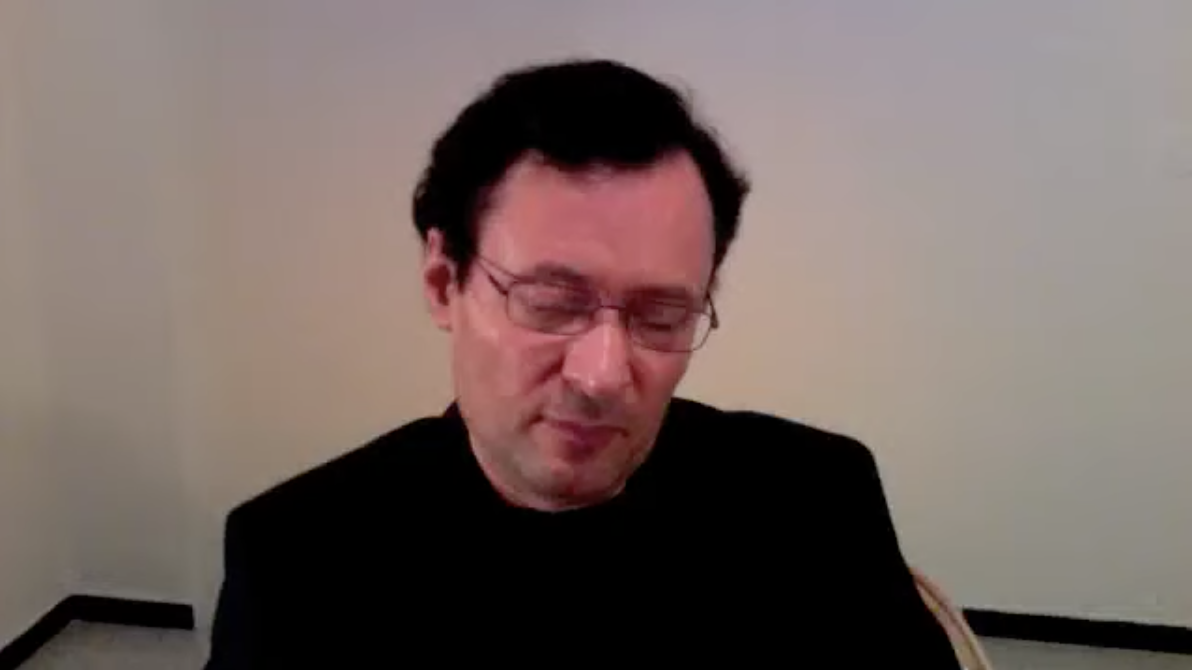
For the first time in the sixteen-year history of this blog, I dare to show my adult portrait. The reason is that Benjamin is doing me the great favour of adding English subtitles to some videos I recorded in Spain, in 2009.

It’s appropriate to add subtitles to this series of thirty videos because they summarize the tragedy of my teenage life: a taboo subject in a society that, even though secularized, still adheres to the Judeo-Christian commandment to honour one’s parent; to the point of absolutely forbidding, through the so-called mental health professions, to even imagine the possibility that parental abuse could cause a mental disorder in a child.

In the description below the YouTube video I uploaded yesterday, I’ve included links to my trilogy in Spanish and to the first chapter of Hojas Susurrantes, which is already available in English in print. The second chapter will soon be available in print in English, although some pages from it were published on Thursday in The Occidental Observer (TOO): my criticism of Sigmund Freud.

Once the upload of all thirty videos with English subtitles is complete, it will be clear that my exposé of Freud in TOO wasn’t capricious (remember that Kevin MacDonald also has a very critical chapter on Freud in his most influential book, The Culture of Critique). As I explain in the video linked above, a follower of Freud, the psychoanalyst Giuseppe Amara, contributed to destroying my teenage life. (In the TOO article, Amara’s name is linked to a Wikipedia article because this analyst was a notable figure in the country where I was born.)

César Tort at 50 years old in Gran Canaria, Spain.

As far as my appearance is concerned, I have never said that I am Aryan; although, since I live in Mexico, to Mexicans (most of whom are dark-skinned) I am a sort of castizo. But you don’t need to be a pure Aryan to be a priest of the 14 words.

Since The West’s Darkest Hour also promotes the 4 words, “eliminate all unnecessary suffering,” I hope visitors to this site will appreciate Benjamin’s hard work (he was also abused by his father and psychiatrists as a teenager) as we upload the subtitled video series I originally recorded in Spain without subtitles: just me speaking in Spanish.

Incidentally, when I filmed that series, I hadn’t yet discovered the forums of white nationalism: which I would discover that same year, also in Gran Canaria!

Categories
Child abuse Hojas Susurrantes (book)

Children’s tales

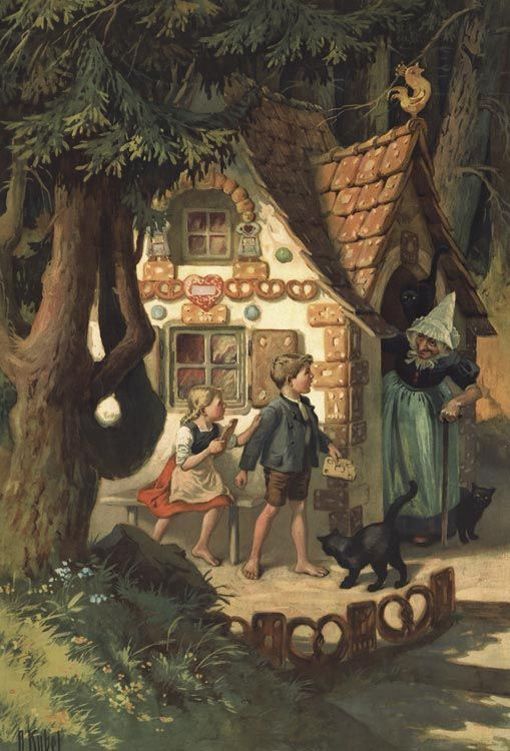
The videos I recently embedded about Snow White and Hansel and Gretel—and I’ll embed more about other stories—make me think.

One of the reasons I don’t belong to Men Going Their Own Way (MGTOW), even though I’ve been an incel my whole life, is because it’s made up of effeminate men. Real men try to take power to win back their white women by changing the treacherous laws (like Nick Fuentes advises his Groypers to infiltrate institutions, or like I advise them to read The Turner Diaries).

Something similar could be said about child abuse. One baby step toward solving the problem is to point out that the tales of the Brothers Grimm and Charles Perrault contain great wisdom on the subject, but were censored by changing the original word “mother” to “stepmother” due to the Christian commandment to honour our parents (Greek tragedies, written before the Christian upheaval, depicted horrible mothers without needing to transfer their image to a stepmother).

The pages from my autobiographical book, Hojas Susurrantes, published yesterday in The Occidental Observer, are just the tip of the iceberg of the problem (the “mental health” professions actually side with the perpetrators). These devouring mothers continue to exist today. As I confess in one part of my trilogy, after reading my Letter to mom Medusa a female friend told me that, although infanticide is no longer practised in the West, parents are still allowed to murder the souls of their children (producing broken minds, so-called “schizophrenias,” etc.).

This topic clearly relates to the sacred words, not just the four, but all fourteen. I’ve already mentioned that William Pierce’s problems with his son, Don Black’s with his, and even David Irving’s with his daughter who developed schizophrenia, are—my educated guess—related to having mistreated their children. We can only imagine what would have happened without that mistreatment! Instead of betraying the cause, Pierce’s and Black’s sons, for example, could now be a great force for good; and Irving’s daughter would be alive and able to help safeguard her father’s legacy.

The psychological devastation caused by parental abuse is an infinitely more taboo subject than the most radical racism. The US, for example, allowed George Lincoln Rockwell to flourish (one of his own group assassinated him). This doesn’t happen with the trauma model of mental disorders. There isn’t a single academic department in the world that addresses this topic! That’s why I believe I must continue translating my trilogy.

Ultimately, the goal of this site is to show that the four words are the other side of the fourteen. For example, our friend Tyrone Joseph Walsh, who used to comment here, is now in a UK prison. Before his sentencing, when he wasn’t yet incarcerated, I suggested he flee to Mexico. He refused because Joseph idealised Charles Manson and others who had been imprisoned (Manson was also horribly abused by his mother as a child).

If our friend had written a trilogy like mine, he would be free now (it’s easier to damage the System from outside prison than from inside). The fact is, Joseph didn’t internally process the damage inflicted on him at home when he was a teenager.

Children’s fairy tales, once a literary detective discovers they were altered due to the Fourth Commandment, are very wise. They are a coded language of what I now write in a way that is more understandable to our time. But I seriously doubt that the readers of The Occidental Observer, who are now reading those few pages of my Hojas Susurrantes, can conceive of the size of the iceberg that lies beneath such a small ridge of ice.

Categories
Child abuse Literature Videos

Hansel and Gretel

This topic is related to my work in Spanish, which deals precisely with parents who devour the souls of their children.

Categories
Autobiography Child abuse Literature

Snow White

The true story

Wow. What a find. I’ve always thought that fairy tales reflect realities that illustrate what I want to say in my trilogy of books I’m translating into English—and look what I found today!

In the real Middle Ages, not in fairy tales, some mothers—who we would now say suffered from malignant narcissism—killed their most beautiful daughters for reasons of power, if we understand the dynamics of the noble classes. (I couldn’t help but think of the infanticide campaign that my mother subtly unleashed during my puberty and that virulently culminated in my adolescence. But that’s another story.)

Categories
Child abuse Welfare of animals

Sacred words

The 4 words (ethics)

Eliminate all unnecessary suffering

These words are my invention and could only be fully understood after reading the autobiographical trilogy I wrote in my mother tongue. However, here I can illustrate what I mean with a couple of examples. The first thing the Nazis did when they took power was to ban cruelty to animals. And for those aware of how abusive parents murder the souls of their children, the Hitler Youth offered them a window of escape. So eliminating the unnecessary suffering of children and animals is the priority in my fight against human Neanderthalism.
 

The 14 words (aesthetics)

We must secure the existence of our people and a future for White children

These are the words of David Lane (1938-2007), evoking an 88-word paragraph from Mein Kampf (it is always good for a cause to have a slogan with few words). The American anti-white establishment put Dave Lane in jail, where he died. Although his words are self-explanatory here we could over-explain them as follows.

Unless Aryans wake up, due to mass immigration throughout the West, white North Americans, Europeans, Australians and New Zealanders will become a minority in their own countries, facing subsequent extinction.

Categories
Autobiography Child abuse

3rd edition

by Benjamin

Editor’s note: This is one of the new segments from the third edition of Ben’s autobiographical book (for context, see here):


______ 卐 ______
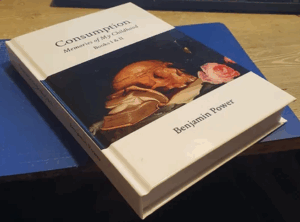
 

In time, my Mum ceased trying to defend me. Perhaps she changed her mind and began to doubt herself. More likely, she gave up in nervous strain under the force of Dad’s charming dishonesty and intellectual manipulations of the dialogues. I know around thispoint she had to start taking antidepressants herself, and, though she had put many complaints in to the doctors over their written words and their professional treatment of her, none were ever listened to. Part of me wonders if she turned a blind eye to my suffering in the house, desperate for her own sanity that it was not true.

Either way, despite the strain of defending me, my mother betrayed me in the end by this cowardly abandonment of her duty towards me, much I do see how tough it would have been for her. These days she has gone back to her familiar patter of, “oh, his life has always been good, nothing ever happened” and “I simply don’t remember those days you mention”, if an outsider inquires after my home life, or if I turn to her and demand she account for Dad. Perhaps it is easier on her to exist in complete denial. Either way, it drives me to intolerable rage, knowing that there was a time once when she did stand up for me, only to have her spirit crushed out of her again by the cold, dispassion of idiotic medical staff. I pity her very much, but I cannot forgive her. She was my only hope.

For her part, the young therapist did not seem to mind so much that I was not in the family meetings. She noted down my “hostile and aggressive” manner, and continued with Dad, ladling pejorative labels on me, and mischaracterizing my “poor” behaviour, with me never there to defend myself, or to correct Dad’s second-hand reportage each week. The sessions continued weekly for over six months. Why on earth did she think I might be upset?! Was she stupid?! If she didn’t have the natural compassion to take my side as her patient and sole charge, why was she even working in psychological healthcare?! I cursed the day I had ever been put forward for them. By now though, the constant shaming I was subjected to, and the faulty opinion-making was beginning to take its toll, and my mind was indeed starting to come apart, my ego shattered, and my sense of cognitive calm fracturing at the edges. I felt divorced from the world, hanging in the cold, dim edges, like in fog, teetering on the abyss of something vast and deep. Most days I would cover this over, but the heightened anxiety was persistent, and, eventually, one day, I just cracked

Sitting again on the chair by my computer desk, in the middle of a dull, clouded afternoon, during a light rain storm outside, once more I took a strange fascination in my healing, much-abused right arm. Long-accustomed as I was to bending down and biting away at the area when in my lower moods, this time I approached from a far odder, more mechanical angle. To this day, I cannot remember what might have stressed me, if anything, worryingly. I think in general my life around that point was more than enough, even without anything specific to obliterate my mental wellbeing.

I had just finished eating my lunch for the day, an oven bake pepperoni pizza of the kind I had begun to consume on a regular basis for ease of preparation, and still had a sharp kitchen knife on my plate; one suitable for severing the crusts of my pizza, as well as a standard fork, and a teaspoon I had been using to gently separate the melted cheese (which I had never been much of a fan of long-term) from the base. Upon finishing my meal, something drew me again to my arm, not feeling any great distress, but somehow preoccupied, as if enticed.

Taking the relatively-sharp kitchen knife, I pushed down until the flesh popped, and carved deeply into my forearm skin, feeling little pain, perhaps on account of the severed nerve endings from long before, or maybe just from my daze itself, continuing in long grooves to shape out a rectangular ‘box’ around the outsides of my main healing area. When I had finished my ‘masking work’, blood trickling a little down my arm as it always did, I began to partition the flesh inside into cubes, cutting the little squares of epidermis into neat blocks, like a piece of raw tofu, but still attached to my lower dermis layers, and to the muscle underneath. No one came to disturb me that day, and so I worked slowly, for what felt like well over an hour, delineating the rectangle’s contents into neat parcels of meat, all in a line.

Once I had finished this task, I took the point of the knife again, and slit the hypodermis under my closest blocks away from the muscle layer, releasing little globs of subcutaneous fat – a grisly process where much pressure and repetition was required, and where I was obliged now and again to stop so I could snap down and suck up any excess blood. Eventually, the skin still sticking to the muscle in various places, I was able to stick my teaspoon under the excised flaps, and lever each cube up and off my arm, sometimes with a terrible tugging, and a fresh new splatter of blood.

Eventually, I was left with another wide hole in my arm – not desperately deep, but dark and bloody, in an expanse of ravaged veins, and ripped hair follicles, and otherwise the white strands of mangled flesh and fat – and beyond that, a heap of around forty small, soft, pinky-coloured guerdons, each just under 1cm x 1cm, sat on my plate in a pool of blood and clear-yellow bodily fluids.

With my fork, I proceeded to pick up each morsel of severed skin, and, in grisly auto-cannibalistic fashion, popped them one by one into my mouth, chewing for a long time on the gristle of each lump, like a mixture of pork rinds and stale bubble gum, and sucking the sweet, wet, sickly flavour out of the pieces of my own arm. Cooling blood trickled down past my chin. I don’t think I was thinking anything at all.

True, I had bitten my arm before, many times, but never had I stooped to actually consuming my own body, preferring instead to merely leave bite wounds or otherwise allow the skin to fall away unaddressed, and thankfully, this particularly gory and disturbing incident was never to be repeated.

When my mother did come in later and discover me, I cannot remember what was said. I can guess my parents’ reactions would have been total horror, an alien sensation. All I do remember is that I was taken down to the local surgery for an examination, and from there swiftly to Broomfield Hospital again, almost a second home to me by now, and of a similar surgical quality. Sitting in a waiting room to be examined by the doctors, it was as if in a surreal film. “So, why is the patient with us today?” I heard one of the ward staff say to another. “Oh, he cut off and ate a bit of his arm, apparently” was the seemingly unconcerned reply. Perhaps they too found it hard to register.

In the end, I was dressed, and sent home again (without psychological evaluation), and further notes made for my case-file, but, bizarrely, despite the severity of this hideous personal action, nothing was ever said of it to me in aftermath, and I do not remember my then psychiatrist ever taking any particular interest. There are a great many ‘blips’ like this in my record; times I would have thought pertinent to make at least brief mention of, if not to scrutinize intently. I can only assume they too would like somehow to brush them under the rug, surely some niggling opposition to their ‘it’s a brain disease so just take your meds and you’ll be fine’ argument. As it stands today, my prior history of extreme autophagia is never mentioned by any new psychiatrists I come into contact with, and certainly not by any of their day-to-day care workers. It’s as if they’ve purged it from my history, and like none of this ever happened. I find that a great, telling, frustration.
Categories
Autobiography Child abuse

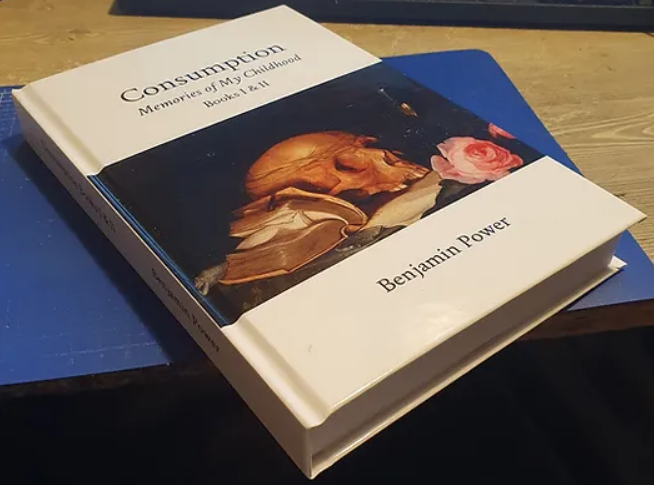
Consumption, 16

Editor’s 2 cents:

In chapter 14, we read that the father said the following to his son:

“I don’t know what you have to complain about, Benjamin; you’ve never suffered!” He has repeated this mantra several other times over the years. It was the final nail in the coffin.

This sentence perfectly portrays what a “schizogenic” father is: he who “schizophrenises” his son. The father’s repeated statement—which reminds me of what my mother used to say to me after my parents and a psychoanalyst crucified me at seventeen (and I could no longer pursue a career)—not only denotes a colossal lack of empathy towards his son, but also a complete reversal of the facts (in real life Ben suffered a maddening hell)!

Anyone who wants to understand why narcissistic parents are capable of these maddening inversions of reality could watch Richard Grannon’s videos on narcissism. However, Grannon, like other YouTubers, focuses on adults who have a narcissistic partner. In my opinion, all these channels are cowardly because the adult can easily cut off the narcissistic partner. On the other hand, as Alice Miller tells us, the child doesn’t have that option! He (or she) has to stay at home and put up with the schizogenic behaviour of the narcissistic parent (who, due to his infinite sin of pride, is unable to see the beam in his eye) until the abusive behaviour blows the child’s mind, as happened to Benjamin.

I am currently in a serious predicament because, after my siblings sold our parents’ mansion, my financial situation has become precarious. Even so, I believe I must continue translating my work on this subject although of course, instead of using Benjamin’s life as the basis for my explanation, I use my own.

Categories
Child abuse Pseudoscience

Consumption, 14

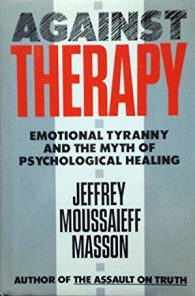
Those familiar with Jeffrey Masson’s work know that he is a critic of psychoanalysis and misnamed psychotherapies. Although this series has focused on psychiatry, as I have said in my books so-called “therapy” is the little sister of big brother: the psychiatrist. Both operate within the family and social dynamics of blaming the victim and exonerating the perpetrator: usually the victim’s parent.

In the following pages of Consumption, from those already cited in the previous instalment, I read about a shameful case that exemplifies this. In a “family therapy” session, a psychotherapist sided a hundred per cent with Benjamin’s father—the perp!—and, in the days that followed, when Ben no longer wanted to go to “therapy”, the therapist officially turned against Ben through an insulting psychoanalysis, in a letter addressed to his parents and even an academic article.

Normies have a wildly distorted idea of psychotherapy: the fantasies with which Hollywood and television brainwash us. In reality, siding with the perpetrator is extremely typical of the so-called mental health professions, whether it be psychiatry or all kinds of “psychotherapies” in talking sessions.

Unlike what I did in the previous post, here I won’t quote long paragraphs about how the female therapist only added insult to injury to the already victimised son. I have experienced something similar to what happened to Benjamin with the therapists hired by my mother more than once. What it takes adult children years to understand is that the therapist acts as a professional whose client is a kind of mobster who hires the services of a lawyer. Just as the Corleone family’s lawyer never, ever sides with the law but with the mobster, the therapist always serves the person who pays him.

Those of us who like Jeffrey Masson, Benjamin and I, know that all the therapies offered by the System are iatrogenic (counterproductive) can be counted on the fingers of one hand. Psychiatry is iatrogenic through its neurotoxins, and “psychotherapy” is iatrogenic through its continued campaign of insulting the child-victim, as happened to the author of Consumption (pages 224-234 of the copy I own).

Categories
Child abuse Film

Consumption, 12

Regarding the sixth chapter (five pages) of the second book of Consumption, I would like to quote this passage:

Mum was patient with me in her response, a brief irritation crossing her face as she considered Dad’s encouragement of atheism in me. She paused for a second, thought hard, and then replied, “you can believe whatever you want, Benjamin. I’m not stopping you. But I’d say to pray tonight and ask God to help you come to terms with things.”

“He’ll [his father] hate me, Mum.”

“No, no, it’ll be ok, son, he’s a patient person, and he loves you boundlessly; I think he’ll listen to you, provided you’re polite and respectful. Just see if this helps, ok?”

The big problem with “poisonous pedagogy” is that it idealises the figure of the father to the point of considering him a kind of God the Father in his relationship with his son. The quoted paragraph reminds me of a scene from LOTR, which also appears in Peter Jackson’s movie, in which Gandalf lies to Faramir, claiming that his father loves him when in fact he wants him dead (five years ago I talked about the lie of the “sage” Gandalf here).

In real life, unlike in fairy tales some parents not only love but hate their children at the same time: that’s why they have broken minds. As Ronald Laing once said, despite the claims of biological psychiatry, those who are labelled schizophrenic do have broken minds: their psyches are divided by this Jekyll-Hyde behaviour of the abusive parent.

What I have been quoting from Consumption gives an idea of the nightmare Benjamin lived through.

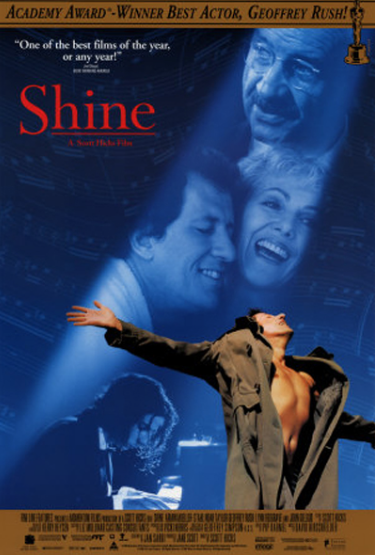
But for those looking for Hollywood-style entertainment, I would suggest watching Shine, which Ben and I saw yesterday (albeit separated by the Atlantic). Like Consumption, that film, which won an Oscar for Best Actor, gives a fairly good idea of how an abusive father can schizophrenise the son he loves most!